What are the advantages of a jet mill vs. a ball mill for high-purity ceramics? Achieve superior purity and precision.
Updated 4 months ago
The primary advantage of using a jet mill for ceramic powder preparation is the elimination of external contamination. Jet mills utilize high-speed gas streams to induce particle-on-particle collisions, removing the need for grinding media—such as steel or ceramic balls—that inevitably wear down and pollute the final product. This "self-milling" process ensures exceptional chemical purity while simultaneously producing a significantly narrower particle size distribution than conventional ball milling.
Jet milling shifts the pulverization mechanism from mechanical impact (media-on-particle) to kinetic impact (particle-on-particle). This transition solves the dual challenge of maintaining extreme material purity and achieving precise micron-scale uniformity required for high-performance advanced ceramics.
Eliminating the Source of Impurities
The Self-Milling Mechanism
Unlike conventional mills that rely on heavy grinding media, a jet mill uses supersonic airflow to accelerate particles to high velocities. Pulverization occurs primarily through intense particle-on-particle collisions, friction, and shear within a grinding chamber.
Because the material grinds itself, the process minimizes contact with the equipment walls. This fundamentally changes the nature of the output, ensuring the chemical integrity of the ceramic powder remains uncompromised by foreign substances.
Total Avoidance of Media Wear
In ball milling, the constant impact and attrition of grinding beads (even high-purity alumina or silicon nitride) lead to mechanical wear. This wear introduces microscopic fragments of the media into the ceramic slurry or powder.
Jet mills are media-free, meaning there are no beads to wear down or replace. For industries producing high-purity lithium iron phosphate (LFP) or semiconductor-grade ceramics, this total avoidance of metal contamination is a critical requirement.
Precision Control of Powder Morphology
Narrow Particle Size Distribution (PSD)
Jet mills are often equipped with internal classifying wheels that precisely manage the residence time of particles. Only particles that have reached the target size are allowed to exit the chamber, while larger particles are recycled for further grinding.
This results in a narrow particle size distribution range, such as the 4–8 µm range required for Samarium-Cobalt (Sm-Co) powders. Conventional ball mills often produce a broader distribution with "tails" of oversized or over-ground particles that can negatively affect the ceramic's final density.
Enhanced Dispersibility for Downstream Use
The dry grinding process in a jet mill produces highly dispersible fine powders. This is particularly advantageous for high-precision magnetic domain orientation or technical ceramic molding.
By avoiding the agglomeration often found in high-energy wet milling, jet-milled powders facilitate more uniform mixing in subsequent processing steps. This leads to more predictable shrinkage and structural integrity during the sintering process.
Thermal Stability and Material Integrity
The Cooling Effect of Gas Expansion
As high-pressure gas exits the Laval nozzles and expands within the grinding chamber, it undergoes a temperature drop. This inherent cooling effect helps dissipate the heat generated during the collision process.
This feature is vital for heat-sensitive materials that might oxidize or degrade at the high temperatures generated by the friction in a planetary ball mill. It ensures that the ceramic's phase purity and chemical properties remain stable.
Prevention of Oxidation
By using inert gases like nitrogen instead of compressed air, jet mills can process reactive ceramic powders in a completely oxygen-free environment. This provides an extra layer of protection for advanced materials that are prone to atmospheric degradation.
Understanding the Trade-offs
While jet mills offer superior purity and size control, they are not a universal replacement for ball mills. Jet mills are typically more energy-intensive due to the requirements of high-pressure gas compression.
Additionally, while jet mills excel at dry grinding for purity, conventional ball mills remain superior for creating molecular-level uniform mixtures of powders, binders, and solvents in slurry form. If the goal is high-energy mechanical alloying or wet-mixing, the impact forces of a planetary ball mill are often more effective.
Making the Right Choice for Your Goal
- If your primary focus is extreme chemical purity: Use a jet mill to eliminate the risk of metallic or media-based contamination during the pulverization process.
- If your primary focus is precise microstructural control: Opt for a jet mill with an internal classifier to achieve a narrow particle size distribution and high dispersibility.
- If your primary focus is uniform slurry preparation: Stick with a high-intensity ball mill or stirred mill, as these provide the multi-directional forces necessary to eliminate agglomeration in liquid mixtures.
- If your primary focus is processing heat-sensitive ceramics: Choose a jet mill to leverage the cooling effect of gas expansion and prevent thermal degradation.
By aligning the milling technology with the specific purity and structural requirements of your ceramic powder, you ensure a higher-quality final product with fewer processing defects.
Summary Table:
| Feature | Jet Mill | Conventional Ball Mill |
|---|---|---|
| Grinding Mechanism | Particle-on-particle (Supersonic air) | Media-on-particle (Steel/Ceramic balls) |
| Contamination Risk | Extremely Low (Media-free) | High (Media wear & erosion) |
| Size Distribution | Very Narrow (Internal classification) | Broad (Significant oversized/fine tails) |
| Thermal Control | Excellent (Cooling via gas expansion) | Poor (Heat generated by friction) |
| Environment | Easy to use inert gas (O2-free) | Typically atmospheric or closed vessel |
| Best Application | Ultra-pure, heat-sensitive dry powders | Uniform slurry mixing & mechanical alloying |
Elevate Your Material Research with Expert Sample Preparation
At our core, we provide complete laboratory sample preparation solutions tailored for material science. Whether you are developing semiconductor-grade ceramics or advanced battery materials, our equipment ensures the highest level of purity and structural integrity.
Our specialized range includes:
- Powder Processing: High-performance jet mills, planetary ball mills, and cryogenic grinders for precise particle size control.
- Mixing & Sizing: Specialized powder mixers, defoaming mixers, and high-accuracy sieve shakers.
- Compaction Excellence: A full spectrum of hydraulic presses, including Cold/Warm Isostatic Presses (CIP/WIP), standard lab presses, and vacuum hot presses.
Ready to eliminate contamination and optimize your powder morphology? Contact us today to discuss how our specialized equipment can enhance your laboratory’s capabilities and deliver the precision your research demands!
References
- Shigeyuki Sōmiya, Rustum Roy. Ceramic Powders for Advanced Ceramics: What are Ideal Ceramic Powders for Advanced Ceramics?. DOI: 10.14723/tmrsj.35.473
Mentioned Products
- Benchtop Micro Air Jet Mill for Ultrafine Grinding of High Value Powders
- Laboratory Classification Jet Mill for Ultrafine Powder Grinding
- Water Cooled Pulse Jet Ultra Fine Pulverizer for Continuous Grinding
- Small Airflow Ultra-Fine Grinder for Laboratory Sample Preparation
- Water Cooled Pulse Jet Ultrafine Grinder
People Also Ask
- How does an air-jet mill enhance the performance of Mo2N when used as an electrocatalyst? Optimize Electrode Efficiency
- Why is secondary jet milling necessary for products processed through HME? Achieve Precision for Inhalation Delivery
- Why is a jet mill used for the co-milling of inhalable Itraconazole microparticles? Optimize Pulmonary Drug Delivery
- What are the advantages of using a jet mill compared to a ball mill for Sm-Co magnets? Purity vs. Performance
- How does a laboratory jet mill function in the processing of crude char into rCB? Master High-Purity Particle Refinement

Tech Team · PowderPreparation
Last updated on Jun 03, 2026
Related Products
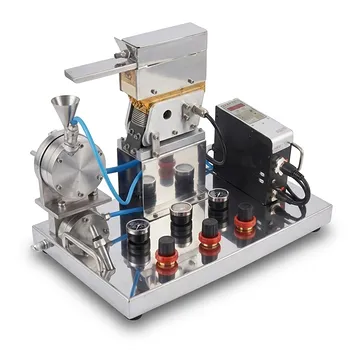
Benchtop Micro Air Jet Mill for Ultrafine Grinding of High Value Powders
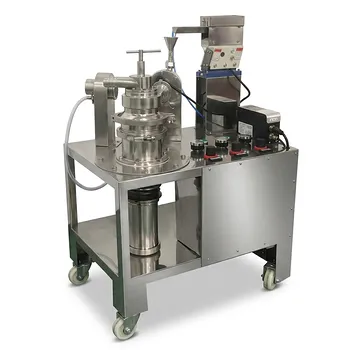
Laboratory Classification Jet Mill for Ultrafine Powder Grinding
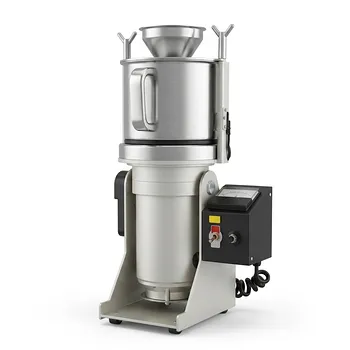
Water Cooled Pulse Jet Ultra Fine Pulverizer for Continuous Grinding
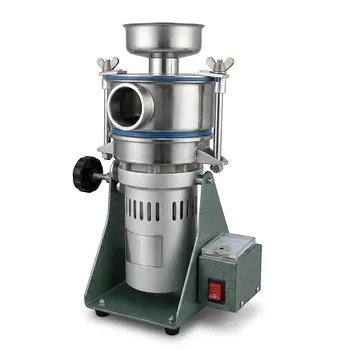
Small Airflow Ultra-Fine Grinder for Laboratory Sample Preparation
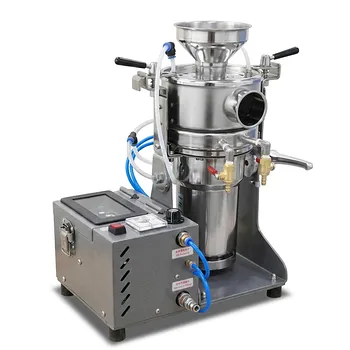
Water Cooled Pulse Jet Ultrafine Grinder
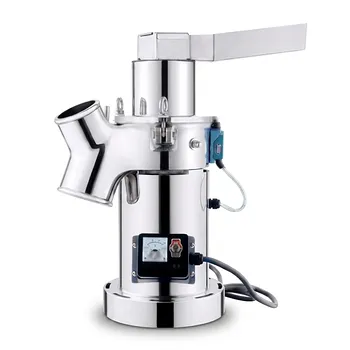
Airflow Ultrafine Pulverizer for Laboratory Ultra-fine Grinding
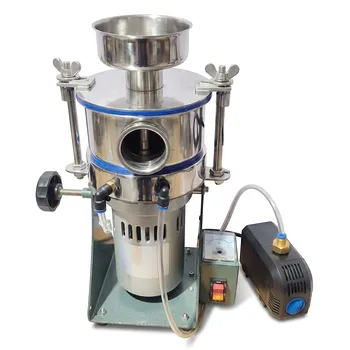
Water Cooled Airflow Ultra Fine Grinder for Low Temperature Material Processing
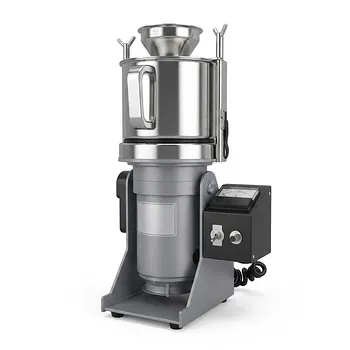
High Speed Air Induced Ultrafine Pulverizer Laboratory Superfine Powder Mill for Pharmaceutical and Material Science Sample Preparation
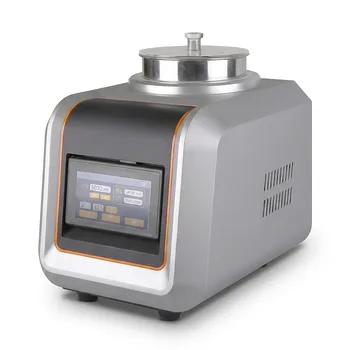
Laboratory Air Jet Sieving Machine for Fine Powder Particle Size Analysis and Deagglomeration
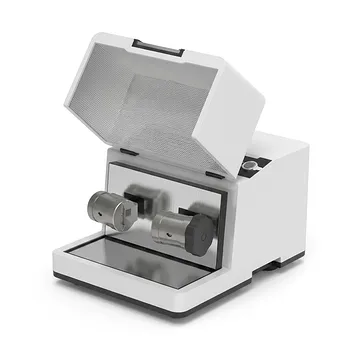
Heating Temperature Controlled High Energy Vibratory Ball Mill
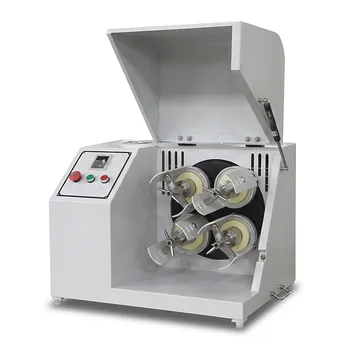
Horizontal Light Duty Planetary Ball Mill for Laboratory Sample Preparation
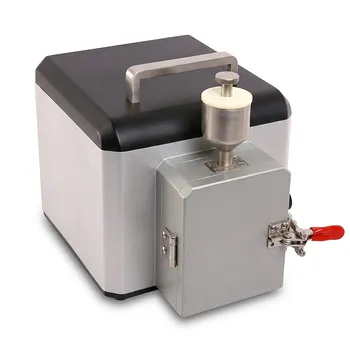
Portable Cutting Mill for Laboratory Sample Preparation and RoHS WEEE Compliance Testing
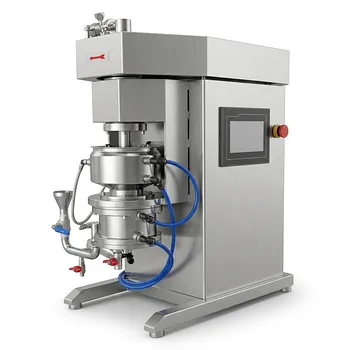
Small Ceramic Structure Laboratory Sand Mill Nanoscale Grinding Dispersion Equipment Seal-less Screen-less Design
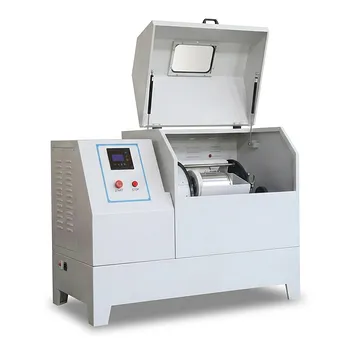
Heavy Duty Horizontal Planetary Ball Mill for Efficient Industrial Grinding and Sample Preparation
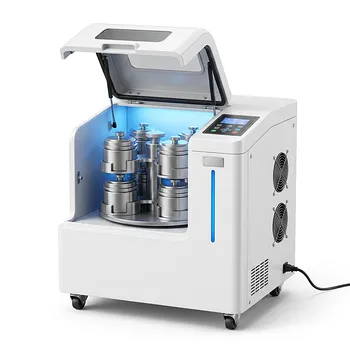
High Energy Omnidirectional Planetary Ball Mill 20L

High Energy Omnidirectional Planetary Ball Mill 16L
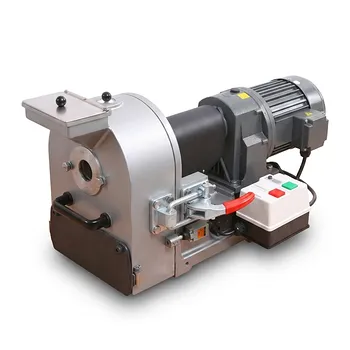
Laboratory Disc Mill for Fine Sample Preparation of Hard and Brittle Materials
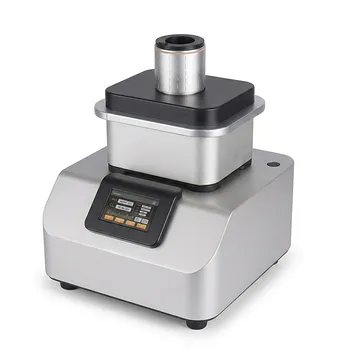
Ultra Centrifugal Mill High Speed Laboratory Grinder for Fibrous and Brittle Sample Preparation
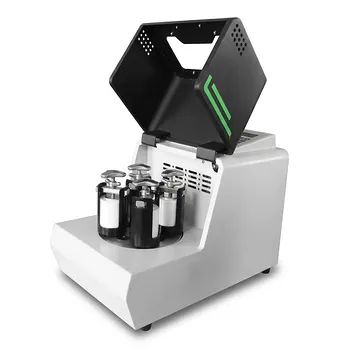
Miniature Planetary Ball Mill with Vacuum Grinding and High Efficiency for Laboratory Sample Preparation
