What are the advantages of dry milling magnesium chips for composites? Maximize Purity & Bonding
Updated 4 months ago
Industrial-grade dry milling offers a superior pathway for magnesium-alumina composite preparation by enabling the production of pure magnesium chips without the use of chemical lubricants. This specialized process yields chips several hundred micrometers in length that are entirely free from organic contaminants like oils, which is a critical prerequisite for achieving high-strength metallurgical bonding during subsequent consolidation phases.
Core Takeaway: By eliminating lubricants and preserving the magnesium's original microstructure, dry milling ensures a pristine metallic surface that maximizes bonding efficiency and structural integrity in the final composite material.
Eliminating Surface Contamination
The Role of Lubricant-Free Processing
Traditional milling often requires lubricants to prevent material adhesion, but these substances leave behind organic residues. Industrial-grade dry milling bypasses this necessity, producing magnesium chips in the micrometer range while keeping the surface chemically "clean."
Ensuring High-Strength Metallurgical Bonding
When magnesium chips are free from oils and contaminants, they can form direct metallic contact during consolidation. This purity is essential for creating a robust bond between the magnesium matrix and alumina reinforcements, directly impacting the mechanical strength of the composite.
Preserving Material Microstructure
Avoiding High Defect Densities
Unlike ball milling, which can create irregular shapes and high defect densities, dry milling allows for more controlled particle formation. This prevents the creation of excessive cracks and maintains the inherent structural qualities of the raw magnesium.
Managing Specific Surface Area
Processing chips to several hundred micrometers avoids the "excessive specific surface area" often found in fine powders. By maintaining a stable surface-to-volume ratio, the material is less prone to unwanted oxidative reactions that can degrade the microstructure of the magnesium-alumina interface.
Understanding the Trade-offs
Thermal Management Challenges
Without liquid lubricants to dissipate heat, dry milling generates significant frictional energy during the reduction process. Operators must carefully monitor system temperatures to prevent the magnesium from reaching ignition points or undergoing unwanted phase changes.
Sensitivity to Material Handling
Because the resulting chips are highly pure and lack a protective lubricant film, they are highly reactive to atmospheric moisture and oxygen. Post-milling storage and transfer must occur in strictly controlled environments to prevent the immediate formation of oxide layers.
How to Apply This to Your Project
Recommendations Based on Technical Goals
- If your primary focus is Maximum Interface Strength: Utilize dry milling to ensure the complete absence of organic films, allowing for optimal metallurgical bonding between the magnesium and alumina.
- If your primary focus is Microstructural Stability: Choose dry milling over high-energy ball milling to avoid creating high defect densities and irregular powder geometries that could compromise the material's integrity.
- If your primary focus is High-Volume Production: Ensure your industrial dry milling equipment includes integrated cooling systems and inert gas shielding to manage the inherent safety risks of processing magnesium.
By prioritizing surface purity and structural integrity through dry milling, you establish the fundamental conditions required for high-performance magnesium-alumina composites.
Summary Table:
| Feature | Dry Milling Advantage | Impact on Composite |
|---|---|---|
| Purity | Lubricant-free processing | Prevents organic contamination; ensures direct metallic contact. |
| Microstructure | Controlled particle formation | Lower defect density and fewer cracks compared to ball milling. |
| Surface Area | Stable surface-to-volume ratio | Minimizes unwanted oxidation at the magnesium-alumina interface. |
| Bonding | Clean metallic surfaces | Maximizes metallurgical bonding strength and structural integrity. |
Optimize Your Advanced Material Preparation with Expert Solutions
Achieving the perfect magnesium-alumina composite requires precision at every stage of sample preparation. We provide complete laboratory solutions for material science, specializing in the high-performance equipment needed to process and compact advanced powders.
Our extensive product line is designed to help researchers and manufacturers maintain the highest standards of purity and structural integrity:
- Powder Processing: High-efficiency planetary ball mills, jet mills, and rotor mills for controlled particle size.
- Sieving & Mixing: Vibratory sieve shakers and advanced powder/defoaming mixers for uniform material distribution.
- Compaction & Consolidation: A full spectrum of hydraulic presses, including Cold/Warm Isostatic Presses (CIP/WIP), vacuum hot presses, and standard lab presses for high-strength bonding.
Whether you are refining magnesium chips or consolidating complex metal-matrix composites, our team is ready to provide the technical expertise and equipment you need to succeed.
Ready to enhance your lab's efficiency? Contact us today to discuss your project requirements!
References
- Moara M. Castro, Terence G. Langdon. Development of a magnesium-alumina composite through cold consolidation of machining chips by high-pressure torsion. DOI: 10.1016/j.jallcom.2018.11.357
Mentioned Products
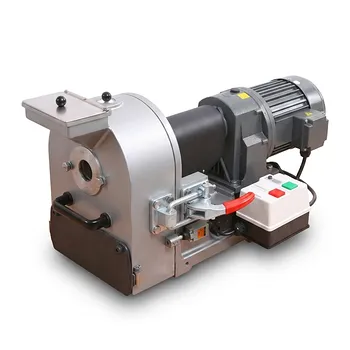
- Continuous Feeding Grinding Mill for Dry Fibrous Tough and Hard Materials in Laboratory and Small Production
- Mass Production Nano Sand Mill for Industrial Nanomaterial Grinding and Dispersion
- Vertical Square Planetary Ball Mill for Laboratory Sample Preparation and Nanoscale Grinding
- Laboratory Ultrafine Impact and Airflow Grinder for Precise Particle Size Control
- Heavy Duty Horizontal Planetary Ball Mill for Efficient Industrial Grinding and Sample Preparation
People Also Ask
- What is the technical significance of the relative collision velocity of grinding media? Maximize Milling Efficiency
- What Role Does Lab Grinding Play in Banana Fiber Thermal Coatings? Optimize Waste Into High-Performance Barriers
- Why use a grinding mill to refine mine filling samples to below 75μm? Ensure Accurate XRF and Chemical Analysis
- Why is a cutting mill utilized for processing fibrous Agarwood distillation waste? Efficient Shearing Solutions
- What is the primary function of grinding equipment during the raw material preparation stage for aluminum matrix composites?

Tech Team · PowderPreparation
Last updated on Jun 03, 2026
Related Products
Continuous Feeding Grinding Mill for Dry Fibrous Tough and Hard Materials in Laboratory and Small Production
Mass Production Nano Sand Mill for Industrial Nanomaterial Grinding and Dispersion
Vertical Square Planetary Ball Mill for Laboratory Sample Preparation and Nanoscale Grinding
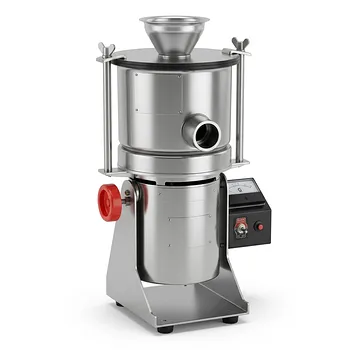
Laboratory Ultrafine Impact and Airflow Grinder for Precise Particle Size Control
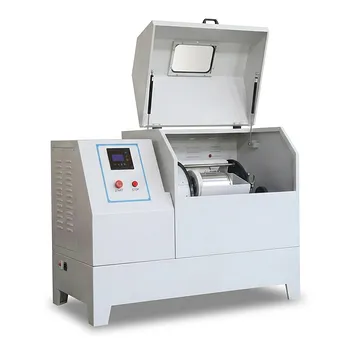
Heavy Duty Horizontal Planetary Ball Mill for Efficient Industrial Grinding and Sample Preparation
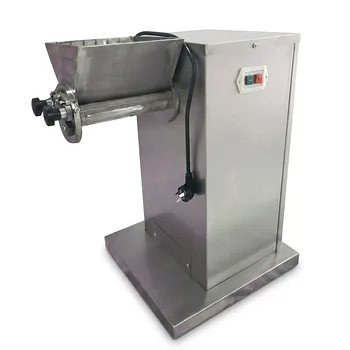
Small Laboratory Oscillating Granulator for Wet and Dry Granulation Processing

Vertical Production Planetary Ball Mill for High Throughput Powder Processing
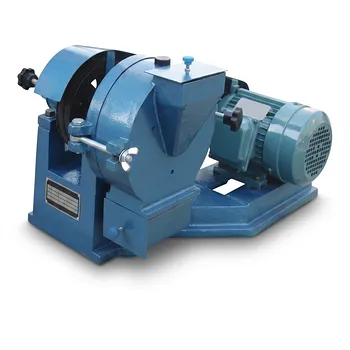
Laboratory Disc Mill for Ore and Mineral Sample Preparation
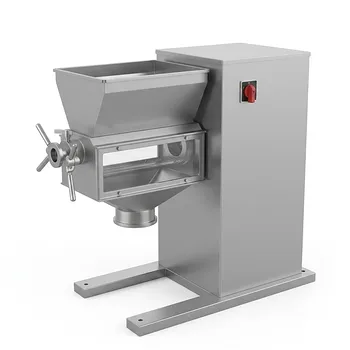
Industrial Swing Granulator for Powder Processing in Pharma Food and Chemical Industries
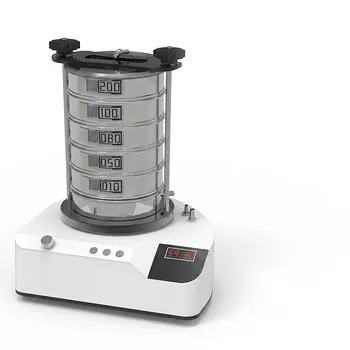
Heavy Duty Dry Three Dimensional Vibratory Sieve Shaker for Particle Separation
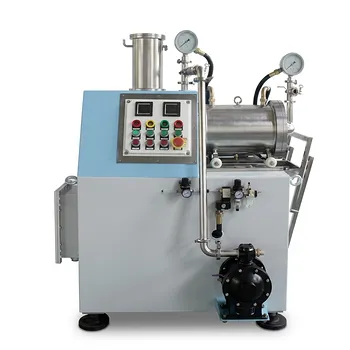
Horizontal Bead Mill for Nanoscale Grinding and Advanced Material Powder Processing