What is the technical significance of the relative collision velocity of grinding media? Maximize Milling Efficiency
Updated 4 months ago
Relative collision velocity is the primary driver of kinetic energy transfer during the comminution process. It dictates whether a specific impact possesses enough energy to exceed the ore's critical fracture threshold. Without achieving this necessary velocity, the mechanical energy is wasted as heat or noise rather than breaking the internal binding forces of the particles.
The relative velocity of grinding media determines the efficiency of a mill by ensuring collisions have sufficient energy to overcome ore strength. Optimizing this variable through mill design is the most direct path to increasing refinement speed and overall throughput.
The Energy Threshold and Particle Fracture
Overcoming Internal Binding Forces
Every ore type has a specific critical energy threshold required to initiate a crack and cause a fracture. The relative velocity of the grinding media—the speed at which two balls or a ball and the liner meet—determines the magnitude of the impact energy.
If the velocity is too low, the collision is "sub-critical," meaning it merely deforms the particle elastically without breaking it. This results in significant energy waste and low production rates.
Accelerating Ore Refinement
A higher proportion of high-velocity collisions leads to faster ore refinement. When the media hits the target at peak relative velocity, it maximizes the probability of instantaneous breakage.
This efficiency reduces the residence time required for the ore to reach the desired particle size. Consequently, the mill can process more material in less time, improving the economic viability of the operation.
Mechanical Drivers of Velocity
The Role of Liner Geometry
Liner design is the most effective way to manipulate the relative velocity of the grinding media. By increasing the lifting height, the liner carries the media further up the mill shell before releasing it.
This increased height translates potential energy into higher kinetic energy during the fall. The result is a more forceful impact when the media strikes the "toe" of the charge.
Optimizing the Falling Angle
The angle at which the media falls is just as critical as the height from which it drops. An optimized falling angle ensures that the media strikes the ore bed directly rather than hitting the liner or other media ineffectively.
When the falling angle is correctly calibrated, it maximizes the peak relative velocity at the point of impact. This ensures that the energy is directed where it is most needed: the uncrushed ore particles.
Understanding the Trade-offs
Impact Velocity vs. Component Wear
While high relative velocity increases grinding efficiency, it also accelerates the wear and tear on mill liners and grinding balls. Excessive velocity can lead to "shell-slugging," where the media hits the liner directly, causing premature failure.
The goal is to find the "sweet spot" where the velocity is high enough to break the ore but not so high that it destroys the mill's internal components. This requires constant monitoring of the mill's rotational speed and charge level.
Energy Dissipation and Noise
Not all high-velocity energy is used for grinding; some is dissipated as acoustic energy and heat. In an inefficiently tuned mill, high-velocity collisions may create significant noise without a corresponding increase in refinement.
This indicates that the media is colliding with itself rather than the ore. Proper management of the media-to-ore ratio is necessary to ensure high-velocity impacts are productive.
Applying Velocity Dynamics to Mill Operation
Strategic Recommendations
- If your primary focus is maximizing throughput: Increase the liner lift height to maximize the proportion of high-velocity impacts that exceed the ore's fracture threshold.
- If your primary focus is reducing operational costs: Calibrate the mill speed to optimize the falling angle, ensuring energy is spent on ore breakage rather than liner wear.
- If your primary focus is processing harder ore bodies: Prioritize peak relative velocity through aggressive liner profiles to ensure the internal binding forces of the material can be overcome.
By mastering the relative velocity of your grinding media, you transform a blunt mechanical process into a precision-engineered pulverization system.
Summary Table:
| Key Factor | Technical Significance | Strategic Operational Benefit |
|---|---|---|
| Relative Velocity | Determines if impact energy exceeds fracture threshold | Ensures productive ore breakage vs. wasted heat |
| Liner Geometry | Controls lifting height and potential energy | Increases impact force for faster refinement |
| Falling Angle | Calibrates the point of impact on the ore bed | Maximizes energy utility and protects liners |
| Energy Threshold | Defines the minimum energy needed for cracks | Prevents sub-critical deformations and energy waste |
Elevate Your Material Preparation with KinTek Solutions
At KinTek Solutions, we provide complete laboratory sample preparation solutions for material science, specializing in high-performance powder processing and compaction equipment. Our extensive range is engineered to help you master the dynamics of pulverization, featuring:
- Advanced Milling: Planetary ball mills, jet mills, and cryogenic grinders for precise size reduction.
- Primary Crushing: Durable jaw and roll crushers for heavy-duty ore processing.
- Compaction Excellence: A full spectrum of hydraulic presses, including Cold/Warm Isostatic Presses (CIP/WIP), XRF pellet presses, and vacuum hot presses.
- Sizing & Mixing: Vibratory sieve shakers and high-efficiency defoaming mixers.
Don't let inefficient energy transfer slow your research or production. Our equipment is designed to maximize relative collision velocity while minimizing operational wear. Contact our experts today to discover how our specialized tools can enhance your laboratory's throughput and precision.
References
- Jun Shen, Mingrong Huang. Discrete element simulation analysis of ball mill ball trajectory and liner plate structure based on EDEM. DOI: 10.55214/25768484.v9i4.6037
Mentioned Products
- Continuous Feeding Grinding Mill for Dry Fibrous Tough and Hard Materials in Laboratory and Small Production
- High Efficiency High Speed Grinder Laboratory Mill 1300W 25000rpm
- Small Laboratory Colloid Mill for Ultra-Fine Wet Grinding and Emulsification
- Vertical Square Planetary Ball Mill for Laboratory Sample Preparation and Nanoscale Grinding
- Cross Beater Mill for Brittle Material Grinding and Continuous Fine Crushing Industrial Sample Preparation
People Also Ask
- What Role Does Lab Grinding Play in Banana Fiber Thermal Coatings? Optimize Waste Into High-Performance Barriers
- Why use a grinding mill to refine mine filling samples to below 75μm? Ensure Accurate XRF and Chemical Analysis
- Why is a cutting mill utilized for processing fibrous Agarwood distillation waste? Efficient Shearing Solutions
- What is the primary function of grinding equipment during the raw material preparation stage for aluminum matrix composites?
- Why use precision filtration meshes for PEDOT:PSS? Ensure Clog-Free & High-Resolution 3D Printing

Tech Team · PowderPreparation
Last updated on Jun 03, 2026
Related Products
Continuous Feeding Grinding Mill for Dry Fibrous Tough and Hard Materials in Laboratory and Small Production
High Efficiency High Speed Grinder Laboratory Mill 1300W 25000rpm
Small Laboratory Colloid Mill for Ultra-Fine Wet Grinding and Emulsification

Vertical Square Planetary Ball Mill for Laboratory Sample Preparation and Nanoscale Grinding
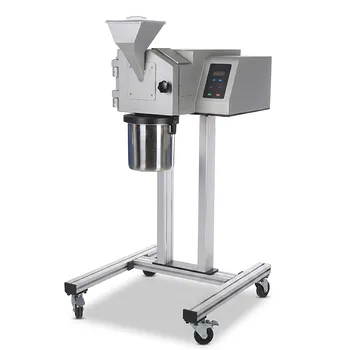
Cross Beater Mill for Brittle Material Grinding and Continuous Fine Crushing Industrial Sample Preparation
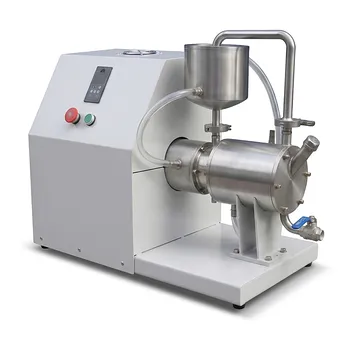
Laboratory Small Horizontal Sand Mill for Nano Materials Wet Grinding
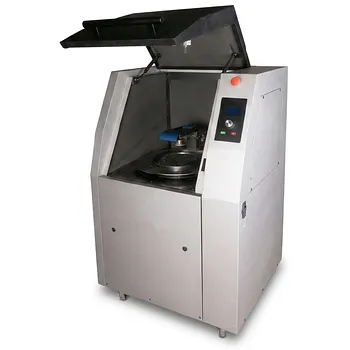
High Speed Vibratory Disc Mill for Spectral Analysis Sample Preparation and Rapid Powder Grinding

Heavy Duty Horizontal Planetary Ball Mill for Efficient Industrial Grinding and Sample Preparation
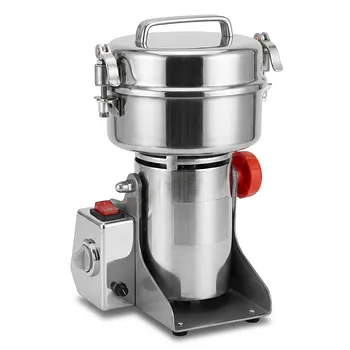
High Speed Laboratory Powder Grinder Small Batch Sample Preparation Mill
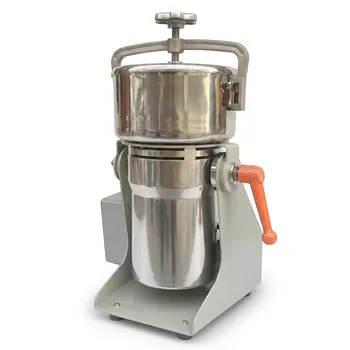
High Speed Laboratory Grinder Efficient Stainless Steel Powder Pulverizer Universal Material Science Mill for Sample Preparation
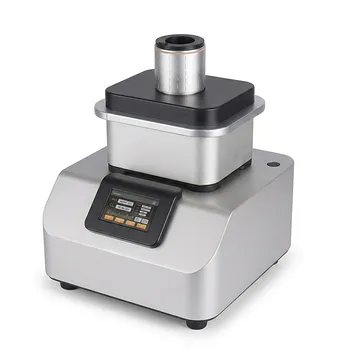
Ultra Centrifugal Mill High Speed Laboratory Grinder for Fibrous and Brittle Sample Preparation
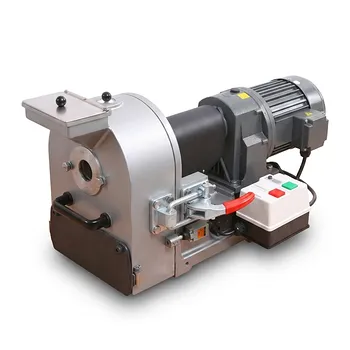
Laboratory Disc Mill for Fine Sample Preparation of Hard and Brittle Materials

High Energy Laboratory Planetary Ball Mill for Nano Grinding and Material Science Sample Preparation
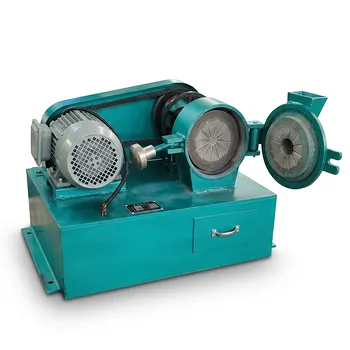
Laboratory Disc Mill Medium Hard Material Grinding Coal Coke Ore Pulverizer
Vibratory Superfine Grinder for Ultra Fine Laboratory Powder Milling
Laboratory Hammer Mill for Coal Quality Analysis and Brittle Mineral Grinding
Multifunctional High Efficiency High Speed Laboratory Grinder
Small Ceramic Structure Laboratory Sand Mill Nanoscale Grinding Dispersion Equipment Seal-less Screen-less Design

360° Rotating Omnidirectional Laboratory Planetary Ball Mill for Homogeneous Ultra-Fine Grinding and Mixing