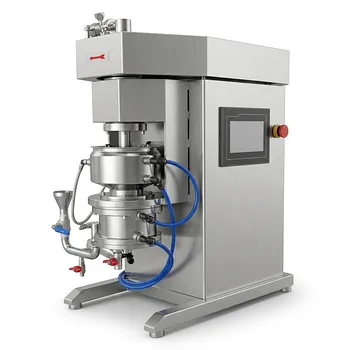
What are the primary process functions of a three-roll mill? Optimize Alumina-Epoxy Thermal Composite Homogeneity
Updated 5 months ago
The primary process functions of a three-roll mill are high-intensity shearing and de-agglomeration. By utilizing extremely narrow gaps between three rotating rollers, the mill generates the mechanical force required to integrate micron-scale alumina powder into high-viscosity epoxy resin. This process is fundamental for breaking down filler clusters and ensuring the uniform distribution necessary for high-performance thermal management.
A three-roll mill acts as a high-energy dispersion tool that transforms a raw mixture of filler and resin into a homogenized composite. By eliminating agglomerates and optimizing particle packing, it enables the formation of phonon transmission channels—the structural foundation of thermal conductivity.
Achieving Micro-Scale Homogeneity
High-Shear Agglomerate Breakdown
The most critical function of a three-roll mill is the application of intense shear forces. As the mixture passes through the converging gaps of the rollers, these forces physically tear apart alumina powder agglomerates that naturally form due to inter-particle attraction.
Forced Integration into Viscous Matrices
High-viscosity epoxy resins often resist the manual or low-energy introduction of powders. The mechanical action of the rollers forcibly embeds the alumina particles into the polymer matrix, ensuring every particle is fully wetted by the resin.
Achieving Uniform Filler Dispersion
Unlike traditional mixing, the three-roll mill provides a consistent, repeatable level of dispersion across the entire batch. This homogeneity prevents the formation of "dead zones" where the lack of filler would otherwise compromise the composite's structural or thermal integrity.
Engineering the Thermal Conductive Network
Facilitating Close Particle Packing
For a composite to be thermally conductive, alumina particles must be positioned in close proximity to one another. The milling process optimizes the spatial arrangement of these fillers, encouraging the close packing required for efficient energy transfer.
Establishing Phonon Transmission Channels
Thermal energy in solids is primarily carried by phonons. By ensuring a uniform and dense distribution of alumina, the three-roll mill helps construct a continuous thermal conductive network, often referred to as phonon transmission channels.
Enhancing Interface Contact
The reduction of particle clusters increases the total surface area of the filler in contact with the matrix. This improved interfacing reduces thermal resistance at the microscopic level, allowing heat to flow more freely through the epoxy-alumina structure.
Understanding the Trade-offs
Mechanical Wear and Contamination
The high-pressure contact between the rollers and abrasive alumina particles can lead to equipment wear over time. If not monitored, microscopic metallic particles from the rollers may contaminate the composite, potentially affecting its dielectric properties.
Temperature Rise During Processing
The high energy of the dispersion process often generates significant internal friction, leading to a rise in material temperature. This heat can inadvertently accelerate the curing process of the epoxy resin or lower its viscosity too far, requiring careful cooling of the rollers.
Making the Right Choice for Your Goal
To maximize the effectiveness of your three-roll milling process, align your parameters with your specific material requirements:
- If your primary focus is maximum thermal conductivity: Prioritize multiple passes through the mill at progressively smaller gap settings to ensure the densest possible filler network.
- If your primary focus is maintaining resin integrity: Utilize water-cooled rollers to dissipate the heat generated by friction, preventing premature gelation or degradation of the epoxy.
- If your primary focus is dielectric strength: Select ceramic rollers (such as zirconia or alumina) to eliminate the risk of metallic contamination that can occur with hardened steel components.
By mastering the mechanical shearing of the three-roll mill, you can unlock the full thermal potential of alumina-filled epoxy systems.
Summary Table:
| Process Function | Mechanism | Key Benefit for Composites |
|---|---|---|
| High-Shear Dispersion | Intense mechanical tearing in narrow gaps | Breaks down alumina agglomerates into primary particles. |
| Forced Integration | High-pressure mechanical embedding | Ensures full wetting of alumina particles in viscous epoxy. |
| Homogenization | Repeatable micro-scale distribution | Eliminates "dead zones" to ensure structural integrity. |
| Network Engineering | Optimized spatial particle packing | Establishes phonon transmission channels for heat flow. |
| Interface Refinement | Increased surface area contact | Reduces microscopic thermal resistance at the matrix-filler interface. |
Optimize Your Thermal Material Processing with Expert Solutions
Achieving the perfect dispersion in high-viscosity composites requires more than just equipment—it requires precision. At [Brand Name], we provide complete laboratory sample preparation solutions tailored for material science. Our expertise spans the entire powder processing workflow, ensuring your alumina and epoxy formulations achieve maximum thermal performance.
Our extensive product line includes:
- Advanced Milling & Grinding: Three-roll mills, planetary ball mills, jet mills, and liquid nitrogen cryogenic grinders for superior de-agglomeration.
- Precision Mixing: Specialized powder mixers and vacuum defoaming mixers to eliminate air bubbles and ensure homogeneity.
- Material Compaction: A full spectrum of hydraulic presses, including Cold/Warm Isostatic Presses (CIP/WIP), hot presses, and XRF pellet presses.
- Sizing & Analysis: Vibratory and air-jet sieve shakers for precise particle size control.
Ready to enhance your lab's efficiency and material quality? Contact our technical team today to find the ideal equipment configuration for your research or production needs.
References
- Wei Yi, Zuohua Liu. Preparation and Properties of Micron Near-Spherical Alumina Powders from Hydratable Alumina with Ammonium Fluoroborate. DOI: 10.3390/ma18194589
Mentioned Products
- Single Tank High Energy Vibratory Ball Mill for Laboratory Grinding and Mixing
- Horizontal Double Roll Crusher for Medium Fine Crushing of Coal Limestone and Ores
- Three-Dimensional Motion Mixer for Laboratory Powder and Granule Blending
- Heavy Duty Horizontal Planetary Ball Mill for Efficient Industrial Grinding and Sample Preparation
- 360° Rotating Omnidirectional Laboratory Planetary Ball Mill for Homogeneous Ultra-Fine Grinding and Mixing
People Also Ask
- What is the primary purpose of using a vibratory ball mill in the preparation of respirable carbon fiber fragments?
- What is the purpose of using a vibratory ball mill for Al-Ni-Fe alloy ribbons? Achieve High Catalytic Activity
- Why is a vibratory ball mill preferred over a planetary ball mill for rapid powder particle refinement? High-Speed Impact
- How does a high-energy vibratory ball mill improve the performance of MgH2? Optimize Hydrogen Storage Kinetics
- What role do high-energy ball mills play in the preparation of reinforcements for hybrid metal matrix composites?

Tech Team · PowderPreparation
Last updated on May 14, 2026
Related Products
Single Tank High Energy Vibratory Ball Mill for Laboratory Grinding and Mixing
Horizontal Double Roll Crusher for Medium Fine Crushing of Coal Limestone and Ores
Three-Dimensional Motion Mixer for Laboratory Powder and Granule Blending
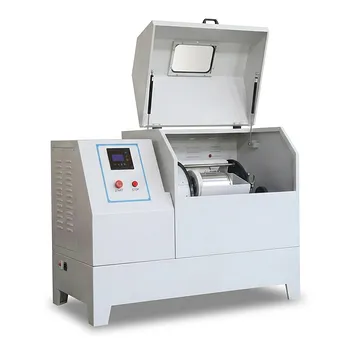
Heavy Duty Horizontal Planetary Ball Mill for Efficient Industrial Grinding and Sample Preparation
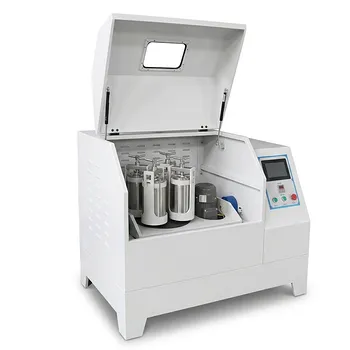
360° Rotating Omnidirectional Laboratory Planetary Ball Mill for Homogeneous Ultra-Fine Grinding and Mixing
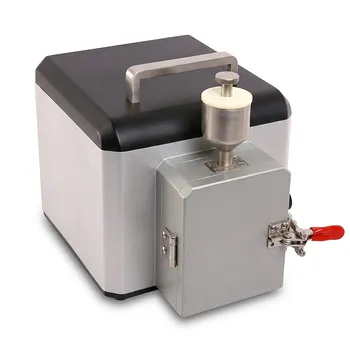
Portable Cutting Mill for Laboratory Sample Preparation and RoHS WEEE Compliance Testing
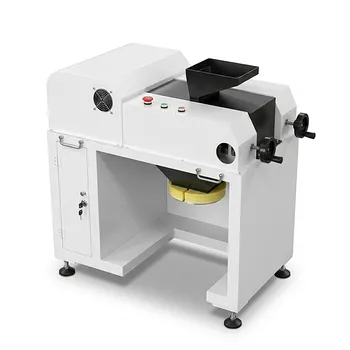
Precision Toothed Roll Crusher for Laboratory Coal and Mineral Sample Preparation
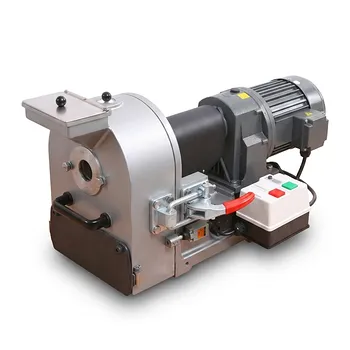
Laboratory Disc Mill for Fine Sample Preparation of Hard and Brittle Materials
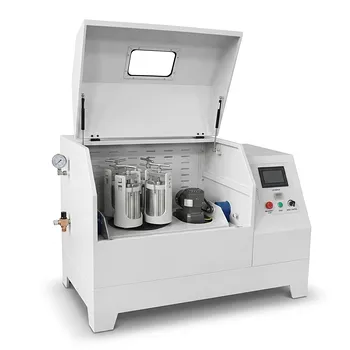
Vertical Production Planetary Ball Mill for High Throughput Powder Processing

Vertical Square Planetary Ball Mill for Laboratory Sample Preparation and Nanoscale Grinding
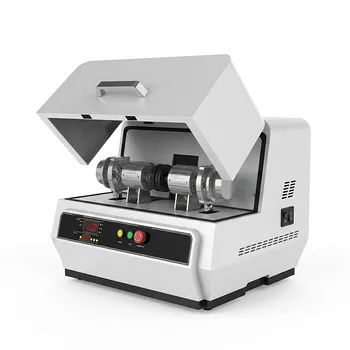
Dual Jar High Energy Vibratory Ball Mill
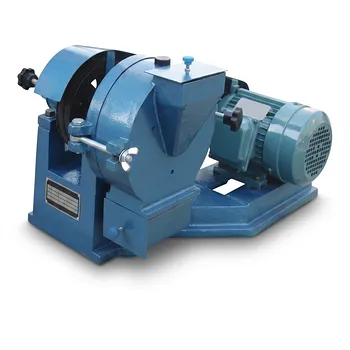
Laboratory Disc Mill for Ore and Mineral Sample Preparation
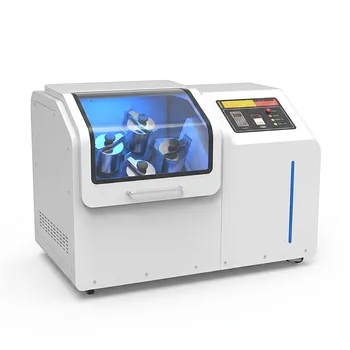
High Energy Omnidirectional Planetary Ball Mill 16L
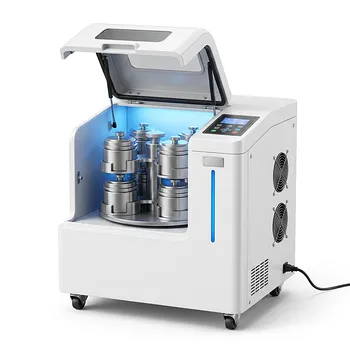
High Energy Omnidirectional Planetary Ball Mill 20L
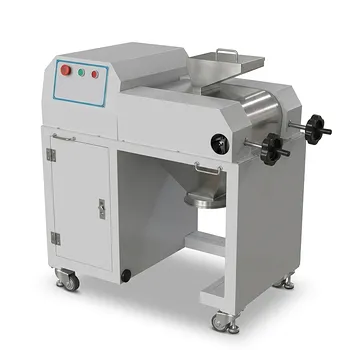
Laboratory Double Roller Crusher for Mining Construction Chemical Sample Preparation
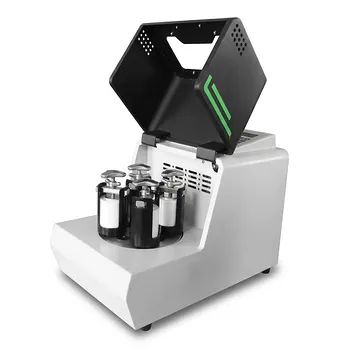
Miniature Planetary Ball Mill with Vacuum Grinding and High Efficiency for Laboratory Sample Preparation
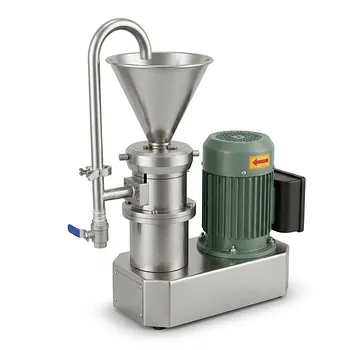
Small Laboratory Colloid Mill for Ultra-Fine Wet Grinding and Emulsification
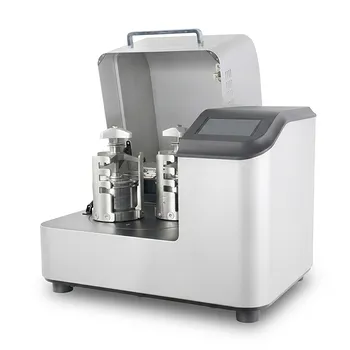
High Energy Planetary Ball Mill for Nano Scale Grinding and Mechanical Alloying
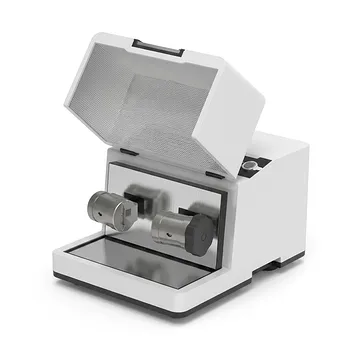
Heating Temperature Controlled High Energy Vibratory Ball Mill