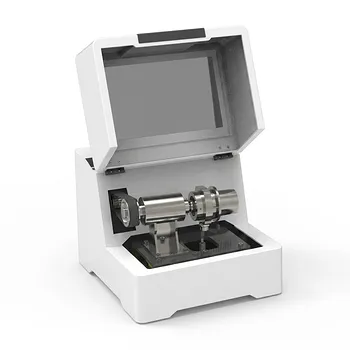
What are the primary advantages of using a planetary ball mill for dry mixing prior to PLA/PSP filament preparation?
Updated 4 months ago
The primary advantage of using a planetary ball mill for PLA/PSP composite preparation lies in its ability to achieve uniform coating and prevent filler agglomeration. By utilizing high-speed rotation to generate intense shear and impact forces, the mill ensures that modified pistachio shell powder (PSP) fine powder is distributed evenly across the surface of Polylactic Acid (PLA) granules. This creates a superior premix that maintains its integrity during the high-heat environment of melt extrusion.
A planetary ball mill provides a high-energy mixing environment that transcends simple mechanical stirring by physically coating filler particles onto the polymer matrix. This process is essential for producing high-performance filaments because it eliminates secondary agglomeration and ensures consistent material properties throughout the final product.
Achieving Superior Dispersion and Coating
High-Energy Surface Modification
A planetary ball mill operates through the simultaneous rotation of the sun wheel and grinding jars in opposite directions. This motion generates high-energy impact and shear forces that far exceed the capabilities of manual or simple mechanical stirring.
In the context of PLA/PSP composites, these forces are necessary to uniformly coat the fine pistachio shell powder onto the larger PLA granules. This physical coating creates a stable "pre-composite" that ensures the filler is already positioned where it needs to be before the melting process begins.
Overcoming Van der Waals Forces
Fine powders like PSP often suffer from high Van der Waals forces, which cause particles to stick together in clumps rather than dispersing. The mechanical energy provided by a ball mill is strong enough to break these forces, achieving a level of microscopic distribution that is otherwise unattainable.
By breaking down these small agglomerates, the mill facilitates physical intercalation of the materials. This leads to a synergistic network where the organic filler and the polymer matrix interact more effectively.
Enhancing the Melt Extrusion Workflow
Prevention of Secondary Agglomeration
One of the greatest challenges in filament production is secondary agglomeration, where filler particles regroup during the melt extrusion phase. Because the planetary ball mill has already "locked" the PSP onto the PLA surface, the particles remain separated even as the polymer melts.
This stability is critical for maintaining a consistent premix. It prevents the formation of large filler clusters that could cause clogs in the 3D printer nozzle or create weak points in the printed part.
Consistency in Composite Filaments
The result of this intensive dry mixing is a composite filament with high physical and chemical consistency. When the distribution is uniform at the atomic or microscopic level, the resulting material exhibits predictable mechanical and thermal behaviors.
This uniformity ensures that every meter of the produced filament has the same ratio of PLA to PSP. For manufacturers, this means reproducible results and fewer defects during the final fabrication process.
Microscopic Refinement and Interfacial Bonding
Particle Size Control and Surface Area
Planetary ball mills are not just for mixing; they are effective at refining particle size through mechanical grinding. By adjusting parameters like the ball-to-powder ratio and rotational speed, you can precisely control the fineness of the PSP.
Reducing the particle size significantly increases the specific surface area of the filler. A higher surface area allows for better contact between the PSP and the PLA matrix, leading to improved interfacial bonding.
Improved Diffusion and Solid-Phase Interaction
The high energy density of the mill facilitates atomic-level contact between the heterogeneous materials. This level of intimacy provides a superior foundation for any solid-phase reactions that occur during the subsequent heating stages.
When the materials are this well-integrated, the diffusion of components is enhanced. This ensures that the final filament behaves as a single, cohesive material rather than a loosely bound mixture of two different substances.
Understanding the Trade-offs
Potential for Thermal Degradation
The high-energy nature of planetary ball milling can generate significant internal heat within the grinding jars. For heat-sensitive polymers like PLA, excessive milling time could lead to premature thermal degradation or softening before the extrusion process begins.
Grinding Media Contamination
Extended milling runs can lead to wear and tear of the grinding balls and jar linings. Unless high-purity materials like tungsten carbide or zirconia are used, small amounts of the grinding media can contaminate the PLA/PSP composite, potentially altering its aesthetic or mechanical properties.
How to Apply This to Your Project
Before beginning your dry mixing process, identify your primary performance metric to optimize your ball milling strategy.
- If your primary focus is mechanical strength: Prioritize higher rotational speeds to maximize the surface area of the PSP and ensure a deep physical coating onto the PLA granules.
- If your primary focus is filament aesthetic and finish: Use a lower ball-to-powder ratio and shorter milling times to prevent the over-refinement of the PSP, which can change the natural color or texture of the composite.
- If your primary focus is preventing nozzle clogs: Focus on the "de-agglomeration" phase by using small-diameter grinding media to ensure no PSP clusters remain larger than the intended micron level.
A well-optimized planetary ball milling process is the definitive foundation for producing high-quality, high-performance composite filaments.
Summary Table:
| Key Advantage | Description | Impact on Final Filament |
|---|---|---|
| Uniform Coating | High-energy shear forces coat PSP fine powder onto PLA granules. | Ensures consistent material properties throughout. |
| De-agglomeration | Breaks Van der Waals forces between fine filler particles. | Prevents nozzle clogging and weak points. |
| Secondary Prevention | Physically "locks" filler onto the polymer surface before melting. | Maintains dispersion integrity during melt extrusion. |
| Particle Refinement | Controls filler fineness and increases specific surface area. | Enhances interfacial bonding and mechanical strength. |
Elevate Your Material Research with Precision Engineering
At [Brand Name], we provide complete laboratory sample preparation solutions tailored for advanced material science. Specializing in powder processing and compaction equipment, we help researchers achieve the microscopic uniformity necessary for high-performance PLA/PSP composites.
Our extensive product line includes:
- Advanced Milling: High-energy planetary ball mills, jet mills, and cryogenic grinders for perfect dispersion.
- Sample Preparation: Precision crushers, sieve shakers, and high-speed mixers.
- Compaction Solutions: A full spectrum of hydraulic presses, including Cold/Warm Isostatic Presses (CIP/WIP), vacuum hot presses, and XRF pellet presses.
Whether you are refining particle size or preparing filaments for 3D printing, our equipment ensures reproducible, high-quality results. Contact us today to discuss your specific application and find the ideal solution for your lab!
References
- S. Rashia Begum, Mukesh Kumar. Study on pistachio shell filled PLA composites for FDM-based processing. DOI: 10.1038/s41598-025-22006-1
Mentioned Products
- Vertical Semi Circular Planetary Ball Mill for Laboratory Precision Grinding
- High Energy Planetary Ball Mill for Nano Scale Grinding and Mechanical Alloying
- Vertical Production Planetary Ball Mill for High Throughput Powder Processing
- Heavy Duty Horizontal Planetary Ball Mill for Efficient Industrial Grinding and Sample Preparation
- 360° Rotating Omnidirectional Laboratory Planetary Ball Mill for Homogeneous Ultra-Fine Grinding and Mixing
People Also Ask
- What role does a planetary ball mill play in the synthesis of Li6PS5Cl (LPSCl)? Unlock High Ionic Conductivity
- Why is a planetary ball mill essential for SiBCN-rGO wet-spinning? Achieve Superior Dispersion and Spinnability
- Why is an intermittent grinding process required for perovskites in a planetary ball mill? Ensure Stability & Purity
- Why is a planetary ball mill required for PET micronization? Ensure Accurate Chemical Analysis of Reprocessed PET
- How does mechanized planetary ball milling compare to manual agate grinding? Optimize sulfide standard material precision.

Tech Team · PowderPreparation
Last updated on Jun 03, 2026
Related Products
Vertical Semi Circular Planetary Ball Mill for Laboratory Precision Grinding
High Energy Planetary Ball Mill for Nano Scale Grinding and Mechanical Alloying
Vertical Production Planetary Ball Mill for High Throughput Powder Processing
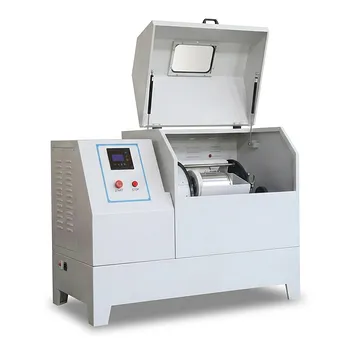
Heavy Duty Horizontal Planetary Ball Mill for Efficient Industrial Grinding and Sample Preparation
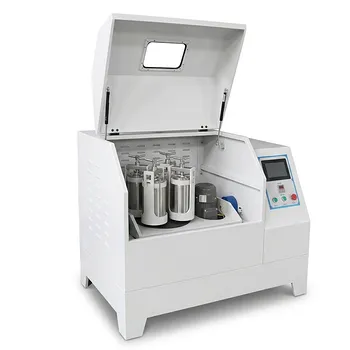
360° Rotating Omnidirectional Laboratory Planetary Ball Mill for Homogeneous Ultra-Fine Grinding and Mixing
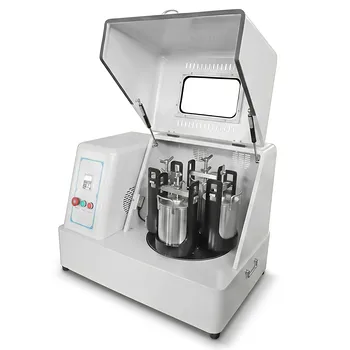
Vertical Square Planetary Ball Mill for Laboratory Sample Preparation and Nanoscale Grinding
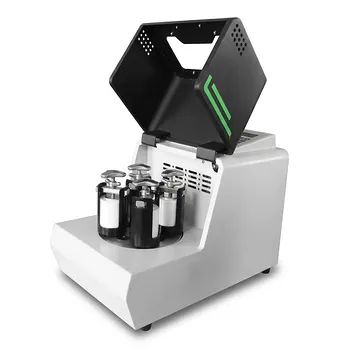
Miniature Planetary Ball Mill with Vacuum Grinding and High Efficiency for Laboratory Sample Preparation
High Energy Laboratory Planetary Ball Mill for Nano Grinding and Material Science Sample Preparation
High Energy Omnidirectional Planetary Ball Mill 16L
High Energy Planetary Ball Mill for Nano Scale Grinding and Colloidal Mixing in Material Science Research
High Energy Laboratory Planetary Ball Mill for Nano Grinding and Colloidal Mixing of Hard and Brittle Materials
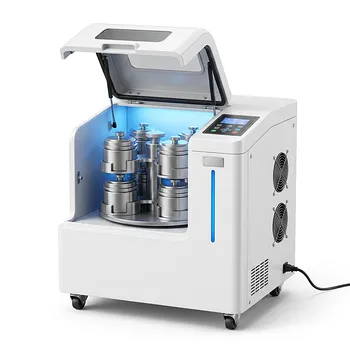
High Energy Omnidirectional Planetary Ball Mill 20L
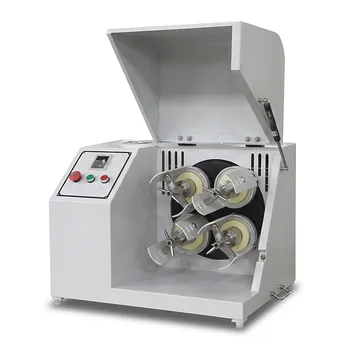
Horizontal Light Duty Planetary Ball Mill for Laboratory Sample Preparation

8L Planetary Ball Mill for Laboratory Grinding and Sample Preparation
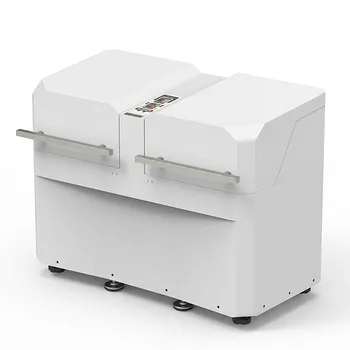
Dual Station Planetary Ball Mill 24L
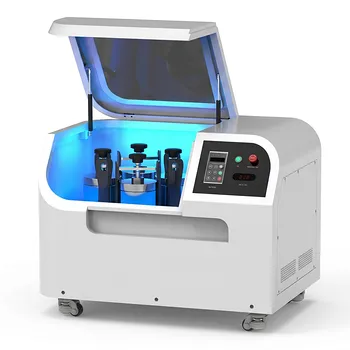
Planetary Ball Mill 12L

Nano High Energy Vibratory Ball Mill for Laboratory Sample Preparation
Multi-Platform Nanoscale High-Energy Vibratory Ball Mill
High Energy Hybrid Vibratory Ball Mill for Grinding Mixing and Cell Disruption