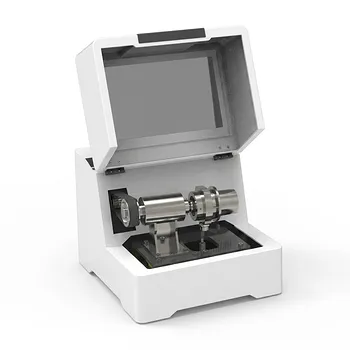
What are the advantages of planetary ball mill synthesis for Mn3AlC? Save costs and energy over traditional melting.
Updated 4 months ago
Planetary ball mill-induced self-propagating synthesis offers a radical shift in manufacturing efficiency for $Mn_3AlC$. By replacing costly high-temperature vacuum furnaces with high-energy ball mills, this method significantly slashes capital expenditures and operational energy costs. The process leverages internal exothermic heat to complete chemical transformations in seconds, bypassing the energy-intensive annealing and quenching cycles required by traditional melting.
This synthesis method transforms $Mn_3AlC$ production from a slow, furnace-dependent smelting process into a rapid, self-sustaining mechanochemical reaction. It eliminates the need for expensive thermal equipment and solvent management, providing a faster and more environmentally sustainable pathway to high-quality materials.
Rethinking Equipment and Energy Costs
From Vacuum Furnaces to Ball Mills
Traditional melting methods for $Mn_3AlC$ require high-temperature vacuum furnaces, which are expensive to purchase, maintain, and power. In contrast, planetary ball milling utilizes mechanical energy to trigger reactions, requiring significantly lower capital investment in hardware.
Harnessing Exothermic Energy
The self-propagating nature of this process uses the reaction's own heat to drive the conversion from raw materials to the final product. This "internal fuel" allows the transformation to occur almost instantaneously once initiated by the mill's mechanical forces.
Eliminating Thermal Post-Processing
Traditional methods often necessitate prolonged high-temperature annealing and rapid quenching to achieve the desired phase. This new approach eliminates these energy-heavy steps, simplifying the entire manufacturing workflow and reducing the carbon footprint of the production line.
Process Efficiency and Material Uniformity
Superior Dispersion via Mechanical Force
A planetary ball mill generates powerful composite mechanical forces through simultaneous high-speed revolution and rotation. These forces effectively break down ceramic particle agglomerates, ensuring the ceramic phase is uniformly dispersed throughout the matrix.
Managing Materials with Different Densities
Mixing materials with disparate densities, such as manganese and aluminum components, is a significant challenge in traditional melting. The high-energy mixing of a ball mill overcomes these density gaps, creating a highly uniform organizational structure in the resulting powder.
Creating a Foundation for Hot-Pressing
The uniform powder produced via this method provides an ideal starting material for subsequent consolidation steps like hot-pressing. This level of homogeneity is difficult to achieve with traditional melting without extensive secondary processing.
The Green Advantage and Operational Savings
Solvent-Free Manufacturing
Unlike many chemical synthesis routes, planetary ball milling enables a completely solvent-free reaction environment. This eliminates the need for purchasing large volumes of organic solvents and the subsequent risk of environmental pollution.
Reducing Wastewater Treatment Costs
By removing solvents from the equation, manufacturers avoid the significant costs associated with toxic wastewater treatment. For example, producing even small amounts of catalyst can save hundreds of milliliters of surfactant-heavy waste that would otherwise require specialized disposal.
Enhanced Atom Economy
This mechanochemical approach aligns with industrial green chemistry trends by maximizing atom economy. Every gram of raw material is more likely to end up in the final product, reducing waste and improving the overall profitability of the synthesis.
Understanding the Trade-offs
Equipment Wear and Contamination
High-energy ball milling involves intense physical impact between the grinding media and the material. Over time, this can lead to wear on the milling jars and balls, which may introduce trace metallic impurities into the $Mn_3AlC$ product.
Scalability Constraints
While highly efficient at the laboratory and pilot scale, scaling self-propagating reactions requires precise control over heat dissipation. If not managed correctly, the rapid release of exothermic energy in very large batches can lead to localized overheating and inconsistent product quality.
Making the Right Choice for Your Project
Choosing between planetary ball milling and traditional melting depends on your specific production priorities and infrastructure.
- If your primary focus is Capital Expenditure (CapEx): Prioritize planetary ball milling to avoid the high acquisition and maintenance costs of industrial vacuum furnaces.
- If your primary focus is Throughput and Speed: Utilize self-propagating synthesis to replace multi-hour annealing cycles with a reaction that completes the primary transformation in seconds.
- If your primary focus is Environmental Compliance: Adopt this solvent-free mechanochemical approach to eliminate wastewater streams and align with modern green manufacturing standards.
By leveraging the inherent energy of the chemical reaction itself, you can achieve superior material uniformity while drastically reducing the financial and environmental costs of production.
Summary Table:
| Feature | Planetary Ball Mill (Self-Propagating) | Traditional Melting Methods |
|---|---|---|
| Primary Equipment | Planetary Ball Mill (Lower CapEx) | High-Temp Vacuum Furnace (Higher CapEx) |
| Energy Source | Internal Exothermic Heat (Efficient) | Constant External Thermal Energy |
| Processing Time | Seconds (Post-initiation) | Hours/Days (Annealing & Quenching) |
| Material Uniformity | High (Excellent dispersion) | Low (Density segregation issues) |
| Environmental Impact | Solvent-Free & Green | Energy Intensive & Waste Heavy |
Elevate Your Material Synthesis with Precision Equipment
At [Brand Name], we provide complete laboratory sample preparation solutions tailored for material science and powder processing. Whether you are performing self-propagating synthesis or consolidating powders into high-density ceramics, our equipment ensures maximum efficiency and reliability.
Our specialized product lines include:
- Powder Processing: High-energy planetary ball mills, jet mills, and disc mills for superior particle size reduction and dispersion.
- Sample Prep: Jaw/roll crushers, cryogenic grinders, and sieve shakers (vibratory/air-jet).
- Advanced Consolidation: A full spectrum of hydraulic presses, including Hot Presses, Vacuum Hot Presses, and Cold/Warm Isostatic Presses (CIP/WIP) for perfect material density.
- Mixing Solutions: Powder mixers and defoaming mixers for homogeneous material preparation.
Ready to reduce your production costs and improve material quality? Contact us today to find the perfect solution for your lab!
References
- H.H. Ali, Z.I. Zaki. Mechanical activated self-sustaining combustion synthesis of Mn3AlC magnetic powder from MnO2+Al+C mixture. DOI: 10.1016/j.heliyon.2025.e43364
Mentioned Products
- Vertical Semi Circular Planetary Ball Mill for Laboratory Precision Grinding
- High Energy Planetary Ball Mill for Nano Scale Grinding and Mechanical Alloying
- Vertical Production Planetary Ball Mill for High Throughput Powder Processing
- Heavy Duty Horizontal Planetary Ball Mill for Efficient Industrial Grinding and Sample Preparation
- 360° Rotating Omnidirectional Laboratory Planetary Ball Mill for Homogeneous Ultra-Fine Grinding and Mixing
People Also Ask
- What role does a planetary ball mill play in the synthesis of Li6PS5Cl (LPSCl)? Unlock High Ionic Conductivity
- Why is a planetary ball mill essential for SiBCN-rGO wet-spinning? Achieve Superior Dispersion and Spinnability
- Why is an intermittent grinding process required for perovskites in a planetary ball mill? Ensure Stability & Purity
- Why is a planetary ball mill required for PET micronization? Ensure Accurate Chemical Analysis of Reprocessed PET
- How does mechanized planetary ball milling compare to manual agate grinding? Optimize sulfide standard material precision.

Tech Team · PowderPreparation
Last updated on Jun 03, 2026
Related Products
Vertical Semi Circular Planetary Ball Mill for Laboratory Precision Grinding
High Energy Planetary Ball Mill for Nano Scale Grinding and Mechanical Alloying
Vertical Production Planetary Ball Mill for High Throughput Powder Processing
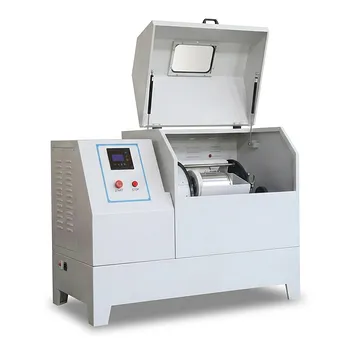
Heavy Duty Horizontal Planetary Ball Mill for Efficient Industrial Grinding and Sample Preparation
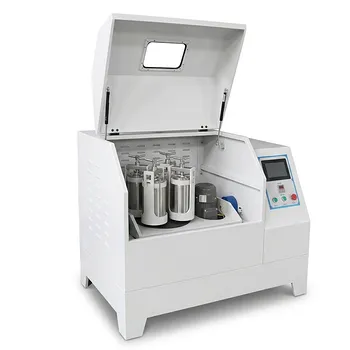
360° Rotating Omnidirectional Laboratory Planetary Ball Mill for Homogeneous Ultra-Fine Grinding and Mixing
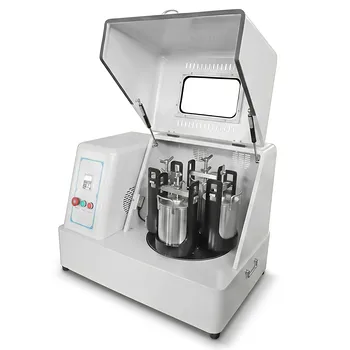
Vertical Square Planetary Ball Mill for Laboratory Sample Preparation and Nanoscale Grinding
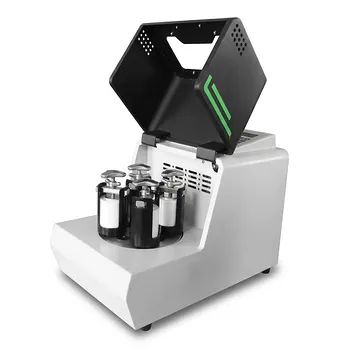
Miniature Planetary Ball Mill with Vacuum Grinding and High Efficiency for Laboratory Sample Preparation
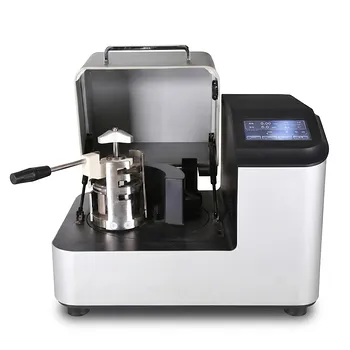
High Energy Laboratory Planetary Ball Mill for Nano Grinding and Material Science Sample Preparation
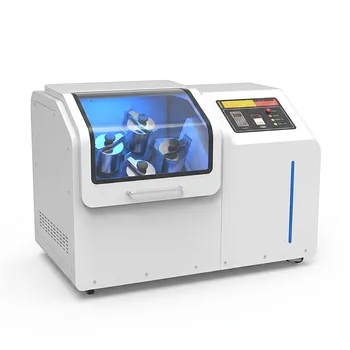
High Energy Omnidirectional Planetary Ball Mill 16L
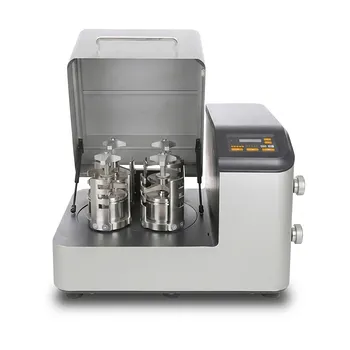
High Energy Planetary Ball Mill for Nano Scale Grinding and Colloidal Mixing in Material Science Research
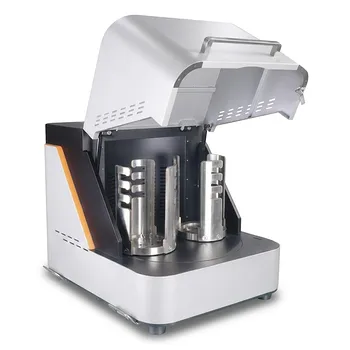
High Energy Laboratory Planetary Ball Mill for Nano Grinding and Colloidal Mixing of Hard and Brittle Materials
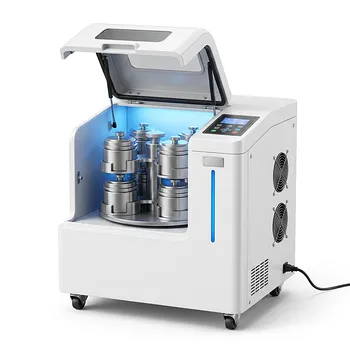
High Energy Omnidirectional Planetary Ball Mill 20L
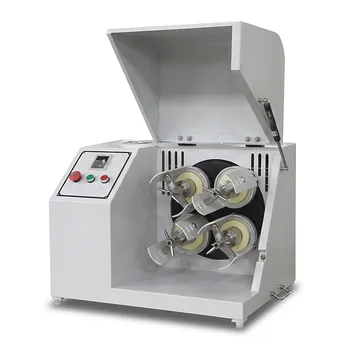
Horizontal Light Duty Planetary Ball Mill for Laboratory Sample Preparation

8L Planetary Ball Mill for Laboratory Grinding and Sample Preparation
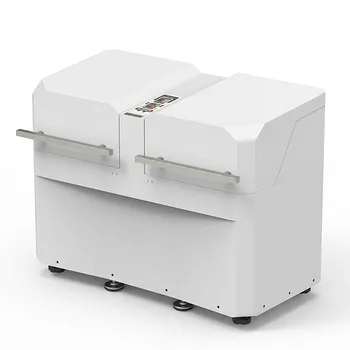
Dual Station Planetary Ball Mill 24L
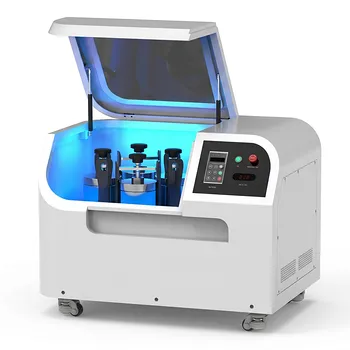
Planetary Ball Mill 12L

Nano High Energy Vibratory Ball Mill for Laboratory Sample Preparation

Multi-Platform Nanoscale High-Energy Vibratory Ball Mill

High Energy Hybrid Vibratory Ball Mill for Grinding Mixing and Cell Disruption