Electroformed vs. Woven Sieves for Drug Analysis: Why Precision Micromesh Wins for Fine Particles <20µm
Updated 4 months ago
Precision electroformed micromesh sieves provide superior accuracy for characterizing drug powders smaller than 20µm. Unlike woven sieves, which are limited by the physical constraints of wire geometry, electroformed sieves are produced through a specialized electrochemical process. This results in ultra-consistent aperture sizes and perfectly smooth surfaces, which are essential for the rigorous demands of pharmaceutical stability and dissolution testing.
The core advantage of electroformed sieves is their ability to eliminate the aperture variability inherent in woven wire, providing the exact particle sizing necessary for characterizing fine nasal powders and co-amorphous drug systems.
Superior Accuracy for Fine Particle Ranges
Overcoming the Limits of Woven Wire
Standard woven wire mesh sieves are effective for larger particle size ranges but face significant limitations as apertures shrink. The physical process of weaving wires introduces inherent irregularities, making it difficult to maintain aperture consistency at the micron level.
The Electrochemical Advantage
Electroforming is an additive manufacturing process that builds the mesh via electrodeposition. This results in highly consistent aperture sizes that are not possible with traditional weaving techniques, ensuring a higher level of precision for fine powder analysis.
Critical Performance for Nasal Powders
Characterizing extremely fine powders, such as those used in nasal drug delivery, requires extreme accuracy. Electroformed sieves provide the precise control needed to ensure these powders meet strict aerodynamic and therapeutic specifications.
Enhancing Pharmaceutical Research Outcomes
Eliminating Interference from Agglomerates
High-precision sieves are used to ensure the uniformity of drug powder after grinding. By effectively removing large agglomerates, researchers can prevent interference in subsequent stability and dissolution experiments.
Isolating Grain Sizes for Stability Studies
In the study of co-amorphous systems, isolating powders with consistent grain sizes is a prerequisite for scientific accuracy. Uniform distribution allows researchers to more accurately observe re-crystallization phenomena on particle surfaces under different storage conditions.
Supporting Scientific Comparability
A uniform particle size distribution is essential for any comparative experiment in drug development. Electroformed sieves provide the reproducible results necessary to ensure that variations in data are due to the drug formulation rather than inconsistencies in the sieving process.
Understanding the Trade-offs
Durability and Fragility
While electroformed sieves offer unmatched precision, they are generally more fragile than standard woven wire sieves. They require delicate handling and specific cleaning protocols, such as ultrasonic baths, to avoid damaging the fine micromesh.
Manufacturing and Cost Constraints
The electrochemical process used to create these sieves is more complex and time-consuming than weaving wire. Consequently, electroformed sieves carry a higher price point, making them a targeted investment for specialized analytical tasks rather than general-purpose bulk separation.
Sieve Blinding and Flow
Because electroformed sieves have a very smooth, flat surface, they can be more prone to blinding (clogging) with certain sticky or cohesive drug powders. Careful selection of sieving aids or automated vibratory equipment is often required to maintain throughput.
Selecting the Right Sieve for Your Laboratory
Choosing between woven and electroformed sieves depends entirely on the sensitivity of your application and the particle size of your material.
- If your primary focus is ultra-fine powders (<20µm): Use precision electroformed micromesh sieves to ensure the accuracy required for nasal and inhalation drug characterization.
- If your primary focus is physical stability research: Utilize electroformed sieves to isolate uniform grain sizes, which is critical for observing surface re-crystallization in co-amorphous systems.
- If your primary focus is removing large contaminants from bulk powders: Standard woven wire sieves are likely sufficient and offer greater durability and cost-efficiency.
- If your primary focus is dissolution consistency: Prioritize electroformed sieves to eliminate the influence of inconsistent particle sizes and agglomerates on your data.
By aligning your sieving technology with the specific micron-level requirements of your drug powder, you ensure the integrity and repeatability of your pharmaceutical analysis.
Summary Table:
| Feature | Electroformed Micromesh Sieves | Standard Woven Wire Sieves |
|---|---|---|
| Aperture Consistency | Ultra-precise (Electrochemical process) | Higher variability (Weaving limits) |
| Ideal Particle Size | Below 20µm (Nasal/Inhalation) | Above 20µm (Bulk materials) |
| Surface Texture | Perfectly smooth and flat | Rougher, woven wire geometry |
| Durability | Fragile; requires delicate handling | Robust and long-lasting |
| Primary Benefit | Eliminates grain size variability | Cost-effective for general sorting |
Optimize Your Pharmaceutical Analysis with Precision Equipment
Ensure the integrity of your drug stability and dissolution testing with high-accuracy sample preparation. We provide complete laboratory sample preparation solutions for material science, specializing in advanced powder processing and compaction equipment.
Our extensive product range includes:
- Sieving Excellence: Vibratory and air-jet sieve shakers with precision electroformed micromesh and standard test sieves.
- Milling & Grinding: Planetary ball, jet, and cryogenic grinders for achieving uniform grain sizes.
- Sample Compaction: A full spectrum of hydraulic presses, including Cold/Warm Isostatic Presses (CIP/WIP), XRF pellet presses, and hot presses.
- Mixing: High-performance powder and defoaming mixers for consistent formulations.
Ready to achieve superior particle size distribution? Contact our technical experts today to find the perfect solution for your laboratory needs.
References
- Satish Birhare. “Advanced Techniques for Particle Size Determination and Characterization in Aqueous Nasal Sprays: A Comprehensive Review”. DOI: 10.53555/sfs.v10i3.2969
Mentioned Products
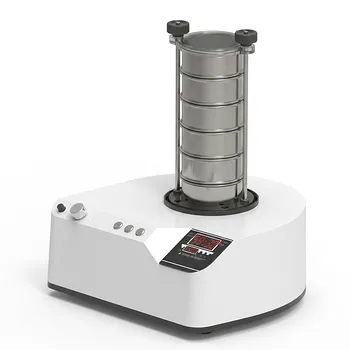
- 三维电磁微量振动筛分仪
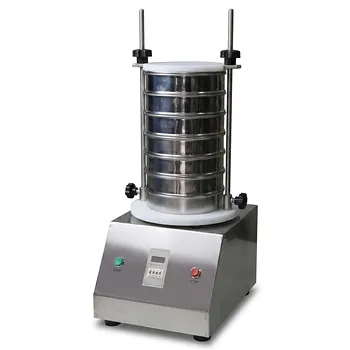
- Laboratory Vibratory Test Sieve Shaker for Precision Particle Size Analysis and Powder Grading
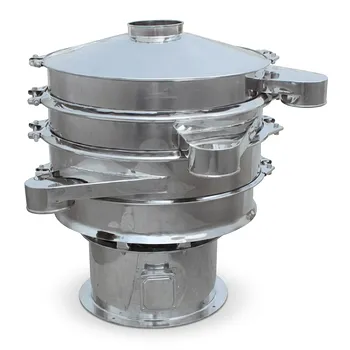
- Stainless Steel Rotary Vibrating Sieve High Precision Circular Vibratory Separator Industrial Powder Grading Machine Multi Layer Sifting Equipment
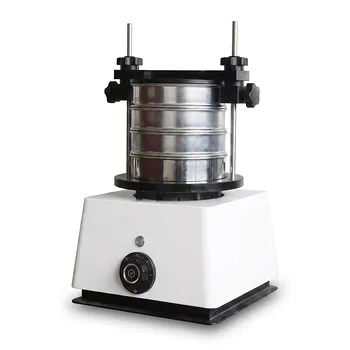
- Small Laboratory Vibrating Sieve Shaker for Precise Particle Size Analysis
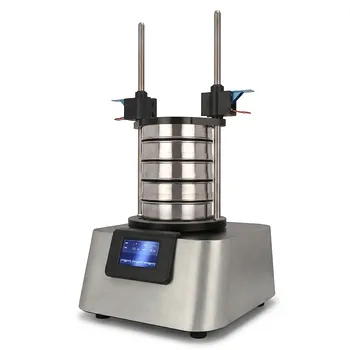
- Vibratory Sieve Shaker Electromagnetic 3D Motion Powder Particle Size Analyzer for Dry and Wet Sieving
People Also Ask
- Why is a standard sieve shaker essential for CBA powders in geopolymers? Enhance Reactivity & Material Strength
- Why are standard metal sieves and sieve shakers necessary for 5-aminotetrazole mixtures? Optimize Thermal & Kinetic Data
- Why Use Sieve Shakers for Gangue Slurry Experiments? Optimize Particle Grading for Superior Results
- What are the advantages of mechanical vs. manual sieving for road dust analysis? Achieve Superior Data Standardization.
- How do high-precision sieve shakers and powder mixers facilitate material circularity in metal PBF? Optimize AM Cycles

Tech Team · PowderPreparation
Last updated on Jun 03, 2026
Related Products
三维电磁微量振动筛分仪
Laboratory Vibratory Test Sieve Shaker for Precision Particle Size Analysis and Powder Grading
Stainless Steel Rotary Vibrating Sieve High Precision Circular Vibratory Separator Industrial Powder Grading Machine Multi Layer Sifting Equipment
Small Laboratory Vibrating Sieve Shaker for Precise Particle Size Analysis
Vibratory Sieve Shaker Electromagnetic 3D Motion Powder Particle Size Analyzer for Dry and Wet Sieving