Why use dynamic adsorption vs. static immersion for zeolite? Improve mass transfer and get reliable scale-up data.
Updated 4 months ago
Dynamic adsorption experiments provide a more accurate evaluation of modified zeolites by simulating real-world hydraulic conditions and accelerating mass transfer. Unlike static immersion, using shakers or mixers reduces the time needed to reach equilibrium and offers a more realistic assessment of maximum adsorption capacity across varying pH levels and concentrations. This methodology yields significantly more reliable data for engineering process design.
Transitioning from static to dynamic adsorption testing is essential for bridging the gap between laboratory results and industrial application. By introducing turbulence, researchers can overcome mass transfer limitations and obtain the precise kinetic and capacity data necessary for scaling water treatment solutions.
Simulating Industrial Hydraulic Conditions
Replicating Turbulent Flow
Actual water treatment plants operate under constant flow and agitation rather than stagnant conditions. Shakers and mixers mimic this turbulence, ensuring the zeolite interacts with the solute in a manner that reflects its eventual operational environment.
Bridging the Laboratory-Field Gap
Static tests often overestimate or underestimate performance because they ignore the fluid dynamics of a working reactor. Dynamic experiments provide a functional baseline that allows engineers to predict how a modified zeolite will behave in a full-scale treatment facility.
Enhancing Mass Transfer Kinetics
Overcoming Boundary Layer Resistance
In static immersion, a stagnant liquid film forms around the zeolite particles, creating a barrier to solute movement. Mechanical agitation disrupts this film, significantly accelerating the transfer of solutes from the bulk liquid to the active sites on the solid surface.
Achieving Rapid Equilibrium
Because mass transfer is optimized through mixing, the time required for the system to reach adsorption equilibrium is drastically reduced. This efficiency allows for higher throughput in laboratory testing and faster generation of kinetic models.
Improving Data Reliability for Scale-Up
Realistic Capacity Assessment
Dynamic tests provide a clearer picture of how modified zeolites perform under varying initial concentrations and pH levels. This accuracy ensures that the calculated maximum adsorption capacity is a true reflection of the material's potential in a dynamic system.
Robust Process Design Parameters
Engineering a full-scale system requires precise parameters derived from laboratory isotherms. Data from dynamic experiments reduces the risk of under-designing or over-designing treatment facilities, ultimately improving cost-efficiency and performance reliability.
Understanding the Trade-offs
Potential for Mechanical Attrition
High-speed mixing can lead to the physical breakdown of fragile modified zeolite structures into smaller particles or "fines." This mechanical degradation may skew results by artificially increasing surface area or complicating the subsequent solid-liquid separation.
Equipment and Temperature Control
Dynamic setups require specialized shakers or mixers, which involve higher initial costs and maintenance compared to simple immersion. Additionally, prolonged mixing can generate ambient heat, which must be monitored to ensure temperature-sensitive adsorption processes remain consistent.
Applying This to Your Research
Choosing the Right Methodology
- If your primary focus is industrial scale-up: Prioritize dynamic experiments to obtain the realistic kinetic data required for accurate reactor dimensioning.
- If your primary focus is rapid material screening: Use dynamic testing to quickly identify high-performing modifications without the delays caused by slow static diffusion.
- If your primary focus is material durability: Monitor the zeolite's structural integrity during high-shear mixing to evaluate its mechanical stability for long-term industrial use.
Choosing dynamic adsorption over static immersion ensures your laboratory findings translate into effective, predictable, and high-performing real-world water treatment solutions.
Summary Table:
| Feature | Static Immersion | Dynamic Adsorption (Shakers/Mixers) |
|---|---|---|
| Fluid Dynamics | Stagnant (no turbulence) | Turbulent (simulates industrial flow) |
| Mass Transfer | Slow (boundary layer resistance) | Fast (disrupts boundary layers) |
| Equilibrium Time | Long duration | Significantly shorter |
| Data Reliability | Low (risk of inaccurate estimation) | High (precise for engineering design) |
| Material Impact | Low physical stress | Potential for mechanical attrition/fines |
Optimize Your Material Research with Professional Lab Solutions
Achieve precise and reproducible results in your zeolite research with our complete laboratory sample preparation solutions. We specialize in high-performance powder processing and compaction equipment tailored for material science and industrial scale-up.
Our extensive product line includes:
- Milling & Grinding: Planetary ball mills, jet mills, disc mills, and liquid nitrogen cryogenic grinders.
- Mixing & Sizing: Powder mixers, defoaming mixers, and vibratory/air-jet sieve shakers.
- Pressing & Compaction: Cold/Warm Isostatic Presses (CIP/WIP), vacuum hot presses, and XRF pellet presses.
- Crushing: Heavy-duty jaw and roll crushers.
Whether you are refining water treatment protocols or developing new catalysts, our equipment ensures your laboratory findings translate into high-performing real-world solutions. Contact us today to discuss your project requirements!
References
- A H Mahvi, Soudabeh Pourfadakar. Sodium Dodecyl Sulfate Modified-Zeolite as a Promising Adsorbent for the Removal of Natural Organic Matter From Aqueous Environments. DOI: 10.17795/jhealthscope-29966
Mentioned Products
- Vibratory Sieve Shaker Electromagnetic 3D Motion Powder Particle Size Analyzer for Dry and Wet Sieving
- High Frequency Wet Three-Dimensional Vibrating Sieve Shaker for Dry and Wet Particle Size Analysis
- 三维电磁微量振动筛分仪
- Stainless Steel Laboratory Vibratory Test Sieve Shaker
- Small Laboratory Vibratory Sieve Shaker for Powder Gradation and Particle Size Analysis
People Also Ask
- How does a vibratory sieve shaker contribute to optimizing the performance of activated carbon? Enhance Adsorption Precision
- Why is a laboratory vibratory sieve shaker necessary for processing magnesium-based borate precursor powders? Boost Activity
- Why use a vibratory sieve shaker to verify coarse aggregate grading in rubberized concrete? Ensure Structural Integrity
- What function do vibratory sieve shakers and standard test sieves serve in the preparation of adsorbents? Key Guide
- What role does a vibratory sieve shaker play in the particle size analysis of ground corn products? Enhance QC Precision

Tech Team · PowderPreparation
Last updated on May 14, 2026
Related Products
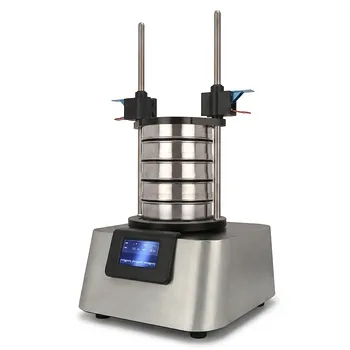
Vibratory Sieve Shaker Electromagnetic 3D Motion Powder Particle Size Analyzer for Dry and Wet Sieving
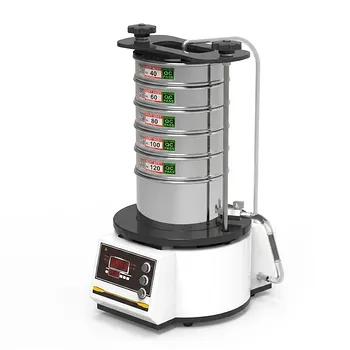
High Frequency Wet Three-Dimensional Vibrating Sieve Shaker for Dry and Wet Particle Size Analysis
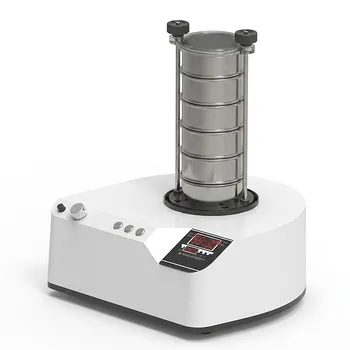
三维电磁微量振动筛分仪
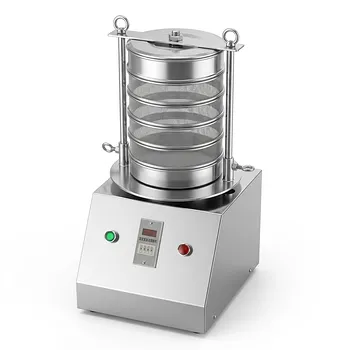
Stainless Steel Laboratory Vibratory Test Sieve Shaker
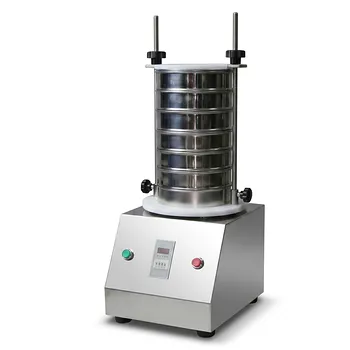
Small Laboratory Vibratory Sieve Shaker for Powder Gradation and Particle Size Analysis
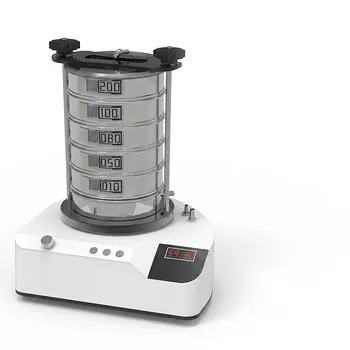
Heavy Duty Dry Three Dimensional Vibratory Sieve Shaker for Particle Separation
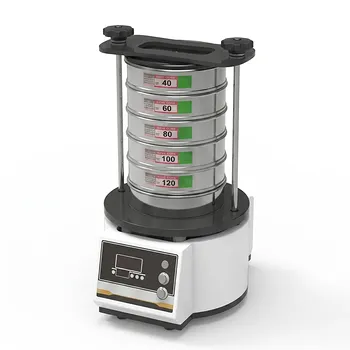
Dry Three Dimensional Vibratory Sieve Shaker
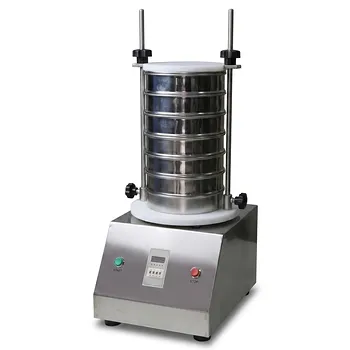
Laboratory Vibratory Test Sieve Shaker for Precision Particle Size Analysis and Powder Grading
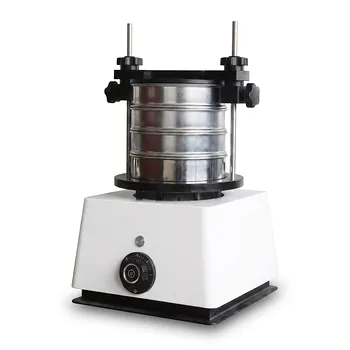
Small Laboratory Vibrating Sieve Shaker for Precise Particle Size Analysis
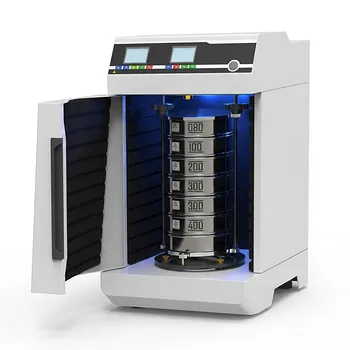
Laboratory Dry and Wet Three Dimensional Vibratory Sieve Shaker for Particle Analysis
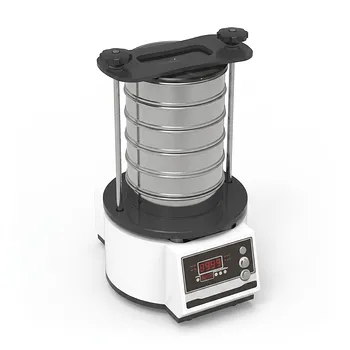
Tapping Oscillating Sieve Shaker for Dry and Wet Particle Size Analysis
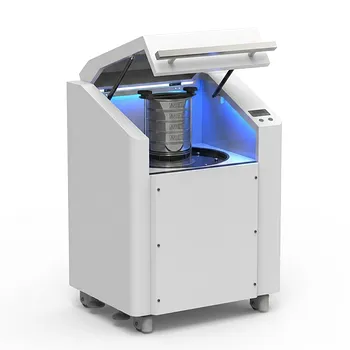
High Frequency Cabinet Type Three-Dimensional Rotary Vibrating Sieve Shaker for Dry Sieving and Particle Classification
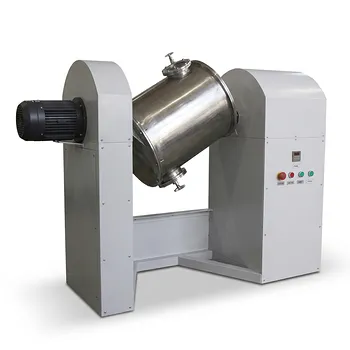
Inclined Mixer for Homogeneous Powder Blending and Grinding
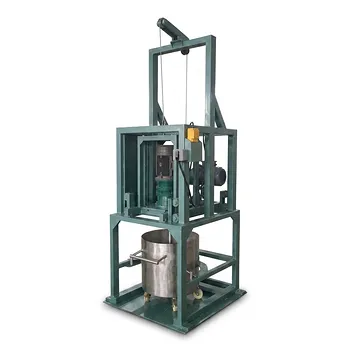
High-Speed Simple Disperser for Efficient Mixing, Dispersion, and Emulsification
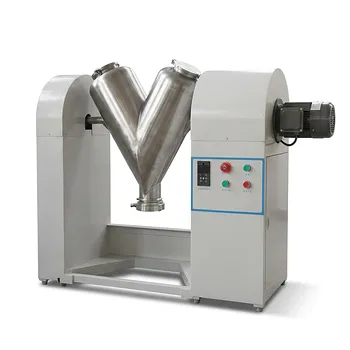
V-Type Powder Mixer for Uniform Blending of Dry Powders and Granules
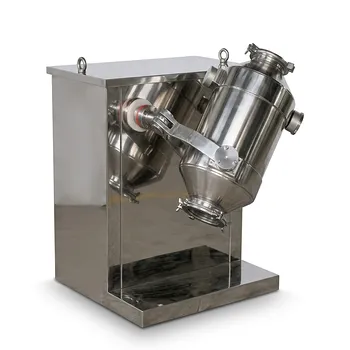
Three-Dimensional Motion Mixer for Laboratory Powder and Granule Blending
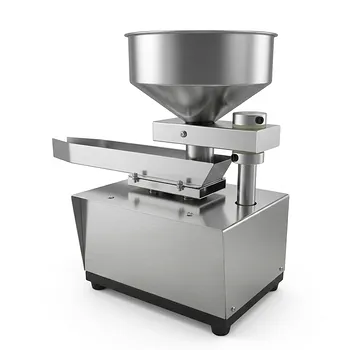
Automatic Vibrating Powder Feeder for Laboratory Material Processing Precision Vibratory Hopper Feeder for Granular and Powder Material Handling Industrial Grade Vibrating Tray Feeder for Consistent Material Sample Preparation
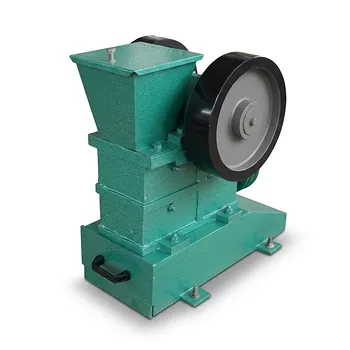
Laboratory Small Jaw Crusher 100x60mm