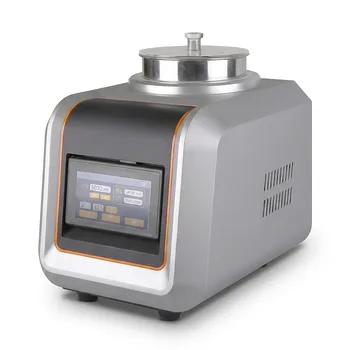
What are the advantages of using an automatic vibratory sieve shaker? Achieve Precise Grain Size Analysis
Updated 4 months ago
The primary advantages of using an automatic vibratory sieve shaker over manual sieving are the standardization of mechanical energy and the elimination of human operational bias. These machines provide a constant frequency and amplitude of vibration, ensuring that every sediment sample is processed under identical conditions. This mechanization guarantees the repeatability and high-precision grain size distribution data necessary for rigorous sedimentological research.
Core Takeaway: Automatic vibratory sieve shakers replace inconsistent human effort with standardized mechanical force, ensuring that beach sediment data—such as mean grain size and sorting coefficients—is both accurate and reproducible across different studies.
Standardizing the Sieving Environment
Constant Frequency and Amplitude
Unlike manual shaking, which varies in intensity based on the operator's strength, an automatic shaker provides constant vibration energy. This mechanical consistency ensures that sediment particles are redistributed across the sieve surface in a standardized manner.
Controlled Duration of Analysis
Automatic shakers operate for a fixed duration, typically between 10 to 15 minutes, ensuring that every sample receives the same amount of processing time. This eliminates the "random errors" associated with manual timing and guarantees that particles have sufficient opportunity to pass through the mesh.
Multi-Dimensional Movement
Advanced vibratory shakers often provide multi-dimensional or reciprocating motions that are difficult to replicate by hand. These complex movements ensure that grains are fully agitated, preventing them from becoming stuck and allowing fine particles to pass through precision pores effectively.
Enhancing Data Integrity and Precision
Elimination of Operator Fatigue
Manual sieving is physically demanding; as an operator tires, the frequency and intensity of the shaking inevitably decrease. Automatic equipment maintains peak intensity throughout the entire process, preventing measurement errors where the median grain size (D50) might appear larger than it actually is.
Repeatability Across Different Samples
Because the mechanical force is regulated, the results are highly repeatable across different laboratory sessions. This is critical for calculating sensitive metrics like sorting coefficients and mean grain size (Mz), which require high-precision data.
Improved Correlation with Fine Particles
Standardized vibration is particularly effective at separating fine sand and silt from larger grains. This accuracy is vital for researchers studying the correlation between sediment characteristics and the abundance of environmental contaminants like microplastics.
Understanding the Trade-offs
Equipment Costs and Maintenance
The most significant hurdle is the initial capital investment required to purchase high-quality vibratory shakers and standardized sieve sets. Additionally, these machines require periodic calibration and maintenance to ensure the frequency and amplitude remain within specified tolerances.
Potential for Particle Attrition
While high-intensity vibration is efficient, excessive mechanical force over long periods can cause particle breakage, particularly in fragile beach sediments like shell fragments. Operators must carefully calibrate the amplitude and duration to prevent the artificial creation of "fines" that weren't present in the original sample.
Noise and Power Requirements
Vibratory shakers generate significant acoustic noise and vibration within the laboratory environment. They also require a stable power source, making them less portable than manual sieving methods for immediate on-site field analysis.
How to Apply This to Your Research
To achieve the best results in beach sediment analysis, your choice of methodology should align with your specific research objectives.
- If your primary focus is scientific publishing or environmental monitoring: Use an automatic vibratory shaker to ensure your data meets the rigorous standards of repeatability and precision required for peer-reviewed research.
- If your primary focus is analyzing microplastic distribution: Opt for mechanical sieving to ensure the thorough separation of fine silts, where microplastics are most likely to accumulate and be missed by manual methods.
- If your primary focus is rapid, preliminary field assessment: Manual sieving may be acceptable for "ballpark" grain size estimates when portability is more important than high-precision sorting coefficients.
By transitioning from manual effort to standardized mechanical sieving, you ensure that your sedimentological data is a true reflection of the environment rather than a byproduct of human variables.
Summary Table:
| Feature | Manual Sieving | Automatic Vibratory Shaker |
|---|---|---|
| Energy Consistency | Variable (Operator dependent) | Constant Frequency & Amplitude |
| Timing Accuracy | Subject to human error | Precise digital control |
| Particle Agitation | Single-dimensional | Multi-dimensional / Reciprocating |
| Data Integrity | Prone to fatigue bias | High repeatability & precision |
| Fine Particle Separation | Low efficiency | Superior separation of silts |
| Labor Intensity | High physical demand | Fully automated operation |
Elevate Your Material Analysis with Precision Equipment
Consistency is the backbone of reliable research. At [Company Name], we provide complete laboratory sample preparation solutions for material science, specializing in powder processing and compaction equipment.
Our extensive product lines include:
- Sieving Solutions: Vibratory and air-jet sieve shakers with a full range of test meshes.
- Milling & Grinding: Planetary ball mills, jet mills, and cryogenic grinders for fine powder processing.
- Compaction Equipment: A full spectrum of hydraulic presses, including Cold/Warm Isostatic Presses (CIP/WIP), XRF pellet presses, and vacuum hot presses.
Whether you are analyzing beach sediments or developing advanced materials, our tools ensure your data is accurate and reproducible. Contact us today to discuss your specific requirements and find the ideal solution for your laboratory.
References
- Partho Banik, Jun Sun. Microplastics in Sediment of Kuakata Beach, Bangladesh: Occurrence, Spatial Distribution, and Risk Assessment. DOI: 10.3389/fmars.2022.860989
Mentioned Products
- Vibratory Sieve Shaker Electromagnetic 3D Motion Powder Particle Size Analyzer for Dry and Wet Sieving
- Laboratory Dry and Wet Three Dimensional Vibratory Sieve Shaker for Particle Analysis
- Stainless Steel Laboratory Vibratory Test Sieve Shaker
- Heavy Duty Dry Three Dimensional Vibratory Sieve Shaker for Particle Separation
- Dry Three Dimensional Vibratory Sieve Shaker
People Also Ask
- How does a vibratory sieve shaker contribute to optimizing the performance of activated carbon? Enhance Adsorption Precision
- Why is a laboratory vibratory sieve shaker necessary for processing magnesium-based borate precursor powders? Boost Activity
- Why use a vibratory sieve shaker to verify coarse aggregate grading in rubberized concrete? Ensure Structural Integrity
- What function do vibratory sieve shakers and standard test sieves serve in the preparation of adsorbents? Key Guide
- What role does a vibratory sieve shaker play in the particle size analysis of ground corn products? Enhance QC Precision

Tech Team · PowderPreparation
Last updated on May 14, 2026
Related Products
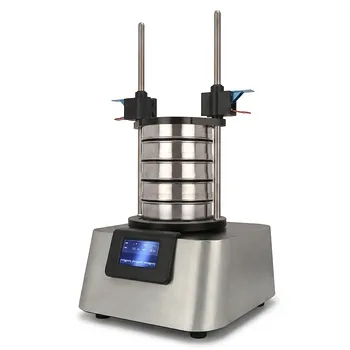
Vibratory Sieve Shaker Electromagnetic 3D Motion Powder Particle Size Analyzer for Dry and Wet Sieving
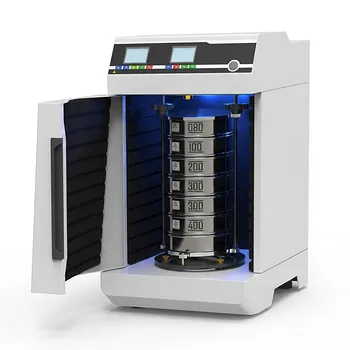
Laboratory Dry and Wet Three Dimensional Vibratory Sieve Shaker for Particle Analysis
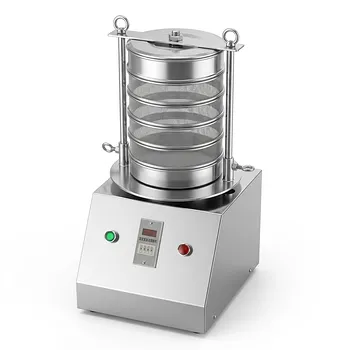
Stainless Steel Laboratory Vibratory Test Sieve Shaker
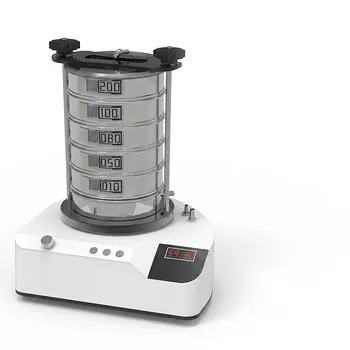
Heavy Duty Dry Three Dimensional Vibratory Sieve Shaker for Particle Separation
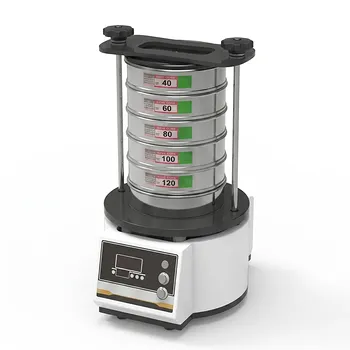
Dry Three Dimensional Vibratory Sieve Shaker
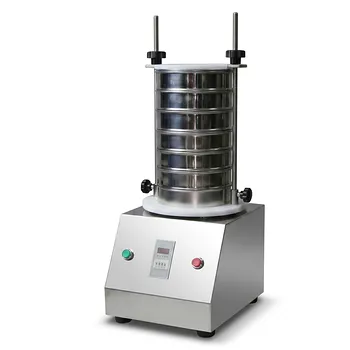
Small Laboratory Vibratory Sieve Shaker for Powder Gradation and Particle Size Analysis
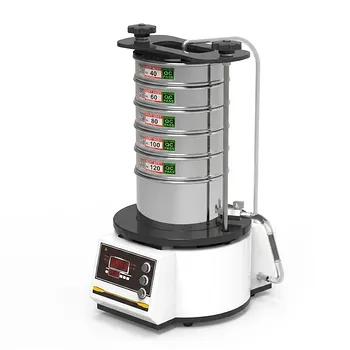
High Frequency Wet Three-Dimensional Vibrating Sieve Shaker for Dry and Wet Particle Size Analysis

Small Laboratory Vibrating Sieve Shaker for Precise Particle Size Analysis
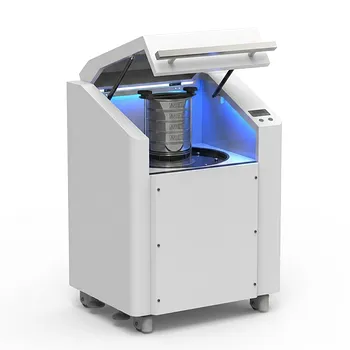
High Frequency Cabinet Type Three-Dimensional Rotary Vibrating Sieve Shaker for Dry Sieving and Particle Classification

Laboratory Vibratory Test Sieve Shaker for Precision Particle Size Analysis and Powder Grading
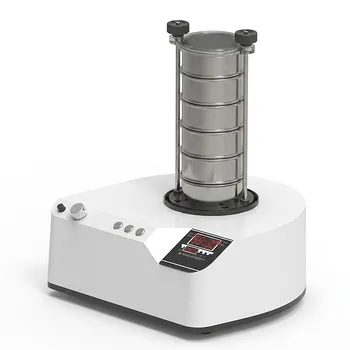
三维电磁微量振动筛分仪
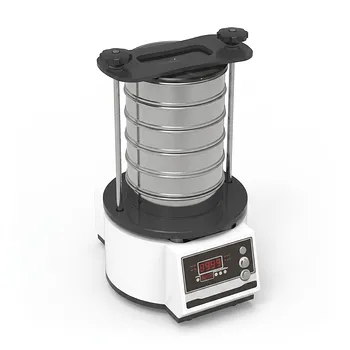
Tapping Oscillating Sieve Shaker for Dry and Wet Particle Size Analysis

Stainless Steel Rotary Vibrating Sieve High Precision Circular Vibratory Separator Industrial Powder Grading Machine Multi Layer Sifting Equipment
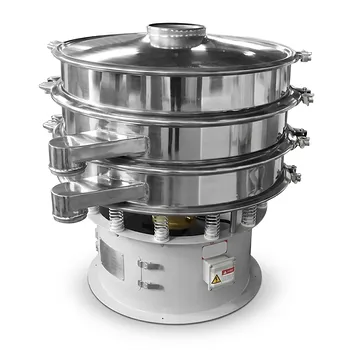
Three Dimensional Rotary Vibrating Sieve
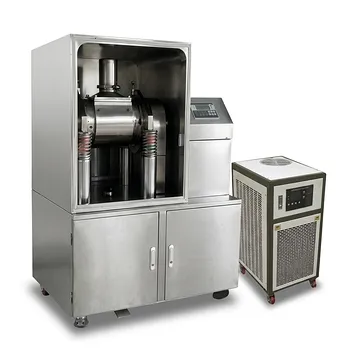
Small Vibrating Ultrafine Grinder for Traditional Chinese Medicine

Automatic Vibrating Powder Feeder for Laboratory Material Processing Precision Vibratory Hopper Feeder for Granular and Powder Material Handling Industrial Grade Vibrating Tray Feeder for Consistent Material Sample Preparation
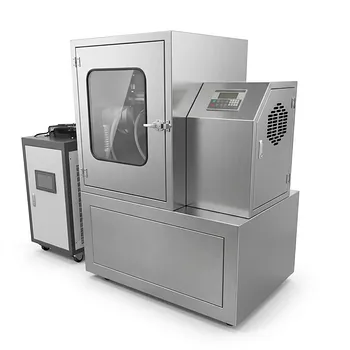
Vibratory Superfine Grinder for Ultra Fine Laboratory Powder Milling
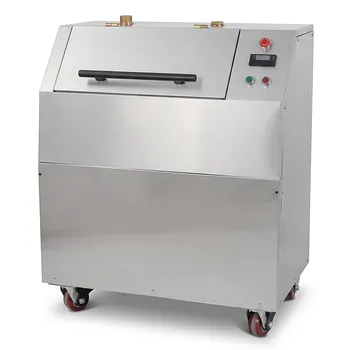
Vibratory Disc Mill for Rapid Fine Grinding and High Throughput Sample Preparation of Hard and Brittle Materials