What are the advantages of an air-jet sieve shaker for HDPE analysis? Get precise particle size distribution results.
Updated 3 months ago
Air-jet sieve shakers provide superior accuracy and repeatability for HDPE powder analysis by using a controlled, high-velocity airflow to fluidize particles and transport them through the sieve mesh. Unlike traditional mechanical vibration, this aerodynamic method effectively prevents particle agglomeration and sieve blinding, ensuring that the data reflects the true particle size distribution (PSD) necessary for evaluating catalyst performance during polymerization.
An air-jet sieve shaker is the definitive tool for HDPE powders because it replaces mechanical friction with aerodynamic dispersion, successfully overcoming the electrostatic and cohesive forces that typically distort results in fine polymer analysis.
Overcoming Physical Barriers in Fine Powder Analysis
Preventing Sieve Blinding and Clogging
Standard mechanical sieves often fail with fine HDPE powders because particles become trapped in the mesh, a phenomenon known as blinding. The air-jet shaker utilizes a rotating nozzle that directs a high-speed air stream upward through the sieve, constantly clearing the openings and allowing for continuous passage of the material.
High-Energy Deagglomeration
Fine HDPE particles are often cohesive and prone to forming clumps or agglomerates. The controlled airflow provides the energy necessary to break these bonds, ensuring that individual particles are measured rather than clusters, which would otherwise skew the data toward a coarser distribution.
Mitigating Electrostatic Charging
Polyethylene is a dielectric material that easily accumulates electrostatic charges during dry sieving, causing particles to adhere to the sieve walls or each other. The constant movement of air helps dissipate these charges and reduces particle-to-surface adhesion, which is a common challenge in traditional vibratory methods.
Preserving Particle Integrity and Analytical Precision
Reducing Mechanical Attrition
HDPE granules can be fragile; high-frequency mechanical vibration can cause particles to fracture or degrade during the test. The aerodynamic principle of air-jet sieving subjects the material to significantly less mechanical stress, preserving the original particle size and providing more reliable d50 (median particle size) data.
Enhancing Repeatability for Catalyst Evaluation
In HDPE production, the particle size distribution is a direct indicator of how catalysts influence particle growth during polymerization. Because air-jet sieving provides highly repeatable results, engineers can more accurately correlate the fineness of the powder with the efficiency of the catalyst and the final resin properties.
Suitability for Ultra-Fine Distributions
When HDPE powders require analysis at scales below 100 microns, mechanical sieving loses its effectiveness. Air-jet technology is specifically designed to handle micro-particles, ensuring the accuracy of complex metrics like the Number Density Function (NDF) used in advanced polymer modeling.
Understanding the Trade-offs
Single-Sieve Limitations
The primary trade-off of an air-jet sieve shaker is that it typically analyzes only one sieve at a time. While mechanical shakers can process a full stack of sieves simultaneously, the air-jet method requires a sequential process to maintain the necessary airflow pressure for each mesh size.
Dependency on Vacuum Infrastructure
An air-jet system requires a dedicated, high-quality industrial vacuum source to generate the airflow. This adds a layer of equipment maintenance and noise management to the laboratory environment compared to standalone vibratory units.
How to Apply This to Your Laboratory
When selecting a sieving method for HDPE, the choice depends on the specific goals of your quality control or research department.
- If your primary focus is catalyst research and development: Use air-jet sieving to ensure that your particle growth data is not corrupted by agglomeration or material degradation.
- If your primary focus is high-volume production screening of coarse resin: A traditional mechanical sieve shaker may suffice for basic grading, provided the particles are large enough (above 200μm) to resist blinding.
- If your primary focus is meeting strict international standards (e.g., EN or ASTM): Opt for the air-jet shaker, as its precision is often required for compliance when handling fine fillers and polymer powders.
By transitioning to air-jet technology, you move from mere physical separation to a high-precision analytical process that captures the true characteristics of your HDPE powder.
Summary Table:
| Feature | Air-Jet Sieve Shaker | Traditional Mechanical Sieve |
|---|---|---|
| Mechanism | Aerodynamic fluidization | Mechanical vibration/friction |
| Sieve Blinding | Prevented by rotating air nozzle | High risk with fine HDPE powders |
| Agglomeration | Breaks clusters with high-speed air | Often fails to separate fine particles |
| Static Control | Airflow helps dissipate charges | High static build-up in polymers |
| Sample Integrity | Low stress, preserves d50 data | High attrition, risk of degradation |
Elevate Your Material Analysis with Expert Sample Prep Solutions
Optimize your HDPE research and quality control with high-precision equipment from [Your Brand Name]. We provide complete laboratory sample preparation solutions for material science, specializing in advanced powder processing and compaction.
Our air-jet sieve shakers are specifically designed to overcome the electrostatic and cohesive challenges of fine polymer powders, ensuring your particle size distribution data is flawless. Beyond sieving, our extensive product line includes:
- Milling: Planetary ball mills, jet mills, and cryogenic grinders for ultra-fine processing.
- Sieving: Air-jet and vibratory sieve shakers with high-quality test meshes.
- Compaction: A full spectrum of hydraulic presses, including Cold/Warm Isostatic Presses (CIP/WIP), vacuum hot presses, and XRF pellet presses.
Contact our technical team today to discover how our specialized equipment can enhance your laboratory's accuracy and efficiency!
References
- M. A. Nikoohemmat, E. Joudaki. Investigation on Physical and Mechanical Properties of High Density Polyethylene (PE100) Using Novel Catalyst. DOI: 10.5829/ije.2022.35.11b.15
Mentioned Products
- Laboratory Air Jet Sieving Machine for Fine Powder Particle Size Analysis and Deagglomeration
- Vibratory Sieve Shaker Electromagnetic 3D Motion Powder Particle Size Analyzer for Dry and Wet Sieving
- Stainless Steel Laboratory Vibratory Test Sieve Shaker
- 三维电磁微量振动筛分仪
- Small Laboratory Vibrating Sieve Shaker for Precise Particle Size Analysis
People Also Ask
- What role do laboratory test sieves play in the nanocrystallization process of iron powder? Ensure Uniform Refinement
- What is the function of a laboratory test sieve in the river sediment sample preparation process? Ensure Precise Data
- What is the purpose of using 0.038 mm sieves in magnetite grinding? Quantify Kinetics and Boost Grinding Efficiency
- How do laboratory test sieves contribute to the analysis of soil texture composition? Optimize Particle Grading Accuracy
- Why is a 0.08mm standard sieve required for testing the fineness of cement? Optimize Recycled Pervious Concrete Quality

Tech Team · PowderPreparation
Last updated on Jun 03, 2026
Related Products
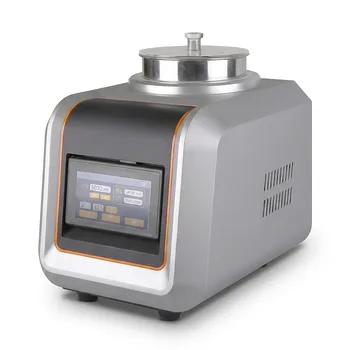
Laboratory Air Jet Sieving Machine for Fine Powder Particle Size Analysis and Deagglomeration
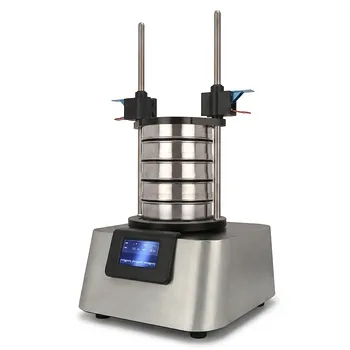
Vibratory Sieve Shaker Electromagnetic 3D Motion Powder Particle Size Analyzer for Dry and Wet Sieving
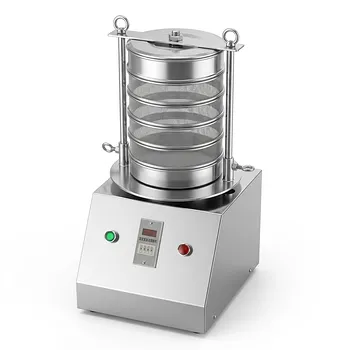
Stainless Steel Laboratory Vibratory Test Sieve Shaker
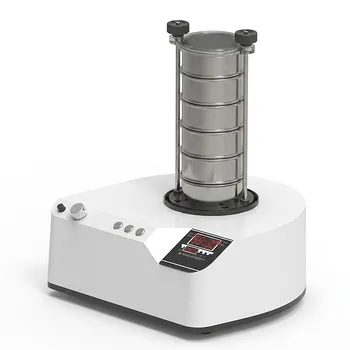
三维电磁微量振动筛分仪

Small Laboratory Vibrating Sieve Shaker for Precise Particle Size Analysis

Heavy Duty Dry Three Dimensional Vibratory Sieve Shaker for Particle Separation
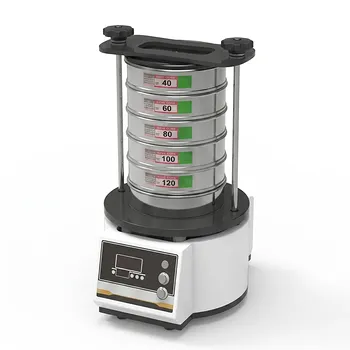
Dry Three Dimensional Vibratory Sieve Shaker
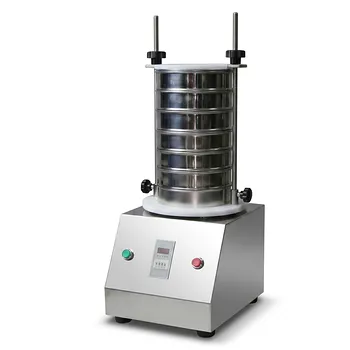
Small Laboratory Vibratory Sieve Shaker for Powder Gradation and Particle Size Analysis
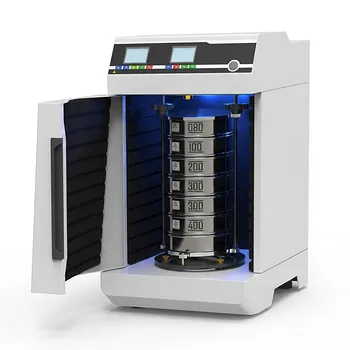
Laboratory Dry and Wet Three Dimensional Vibratory Sieve Shaker for Particle Analysis

Laboratory Vibratory Test Sieve Shaker for Precision Particle Size Analysis and Powder Grading
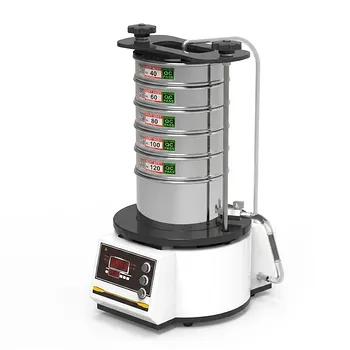
High Frequency Wet Three-Dimensional Vibrating Sieve Shaker for Dry and Wet Particle Size Analysis
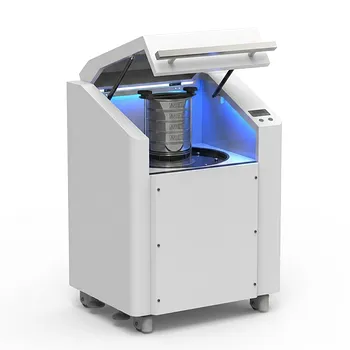
High Frequency Cabinet Type Three-Dimensional Rotary Vibrating Sieve Shaker for Dry Sieving and Particle Classification
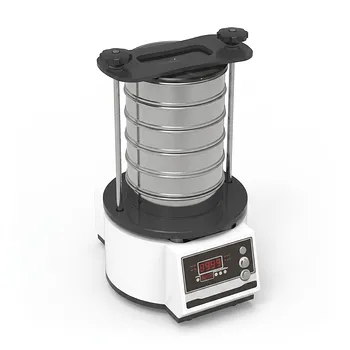
Tapping Oscillating Sieve Shaker for Dry and Wet Particle Size Analysis
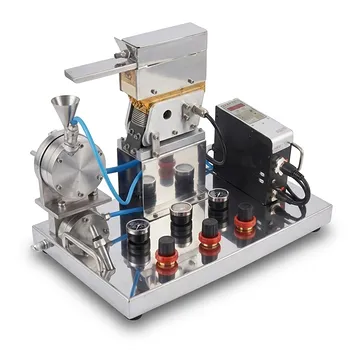
Benchtop Micro Air Jet Mill for Ultrafine Grinding of High Value Powders
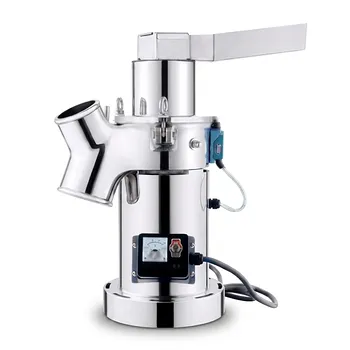
Airflow Ultrafine Pulverizer for Laboratory Ultra-fine Grinding
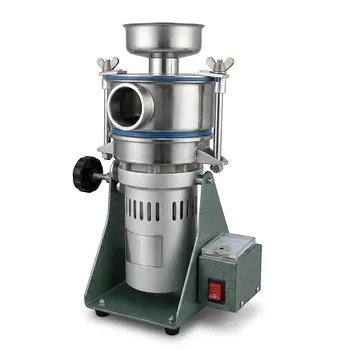
Small Airflow Ultra-Fine Grinder for Laboratory Sample Preparation
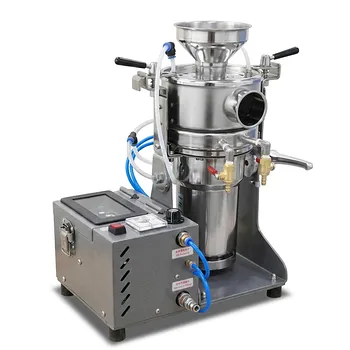
Water Cooled Pulse Jet Ultrafine Grinder