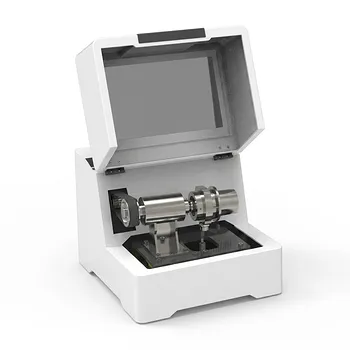
What are the advantages of using a planetary ball mill for hard alloy powders? Achieve Sub-Micron Precision
Updated 4 months ago
The use of a planetary ball mill is essential for hard alloy refinement due to its ability to generate extreme kinetic energy through dual-axis rotation. This process utilizes high-frequency impact and shear forces to reduce hard alloy fragments to sizes well below 50 μm, often reaching sub-micron or even nanoscale levels. By significantly increasing the specific surface area and ensuring microscopic homogeneity, these mills prepare powders for advanced applications such as thermogravimetric analysis, mechanochemical synthesis, and mechanical alloying.
The planetary ball mill overcomes the limitations of traditional grinding by providing a high-energy environment that facilitates mechanical alloying and ultra-fine refinement. It enables the production of uniform, uncontaminated, and highly reactive powders through a controlled cycle of repeated fracturing and cold welding.
High-Energy Dynamics and Particle Refinement
Superior Kinetic Energy Generation
A planetary ball mill operates by rotating a sun wheel while the grinding jars rotate in the opposite direction. This simultaneous revolution and rotation generates massive centrifugal and Coriolis forces within the grinding media.
The resulting high-energy impact and shear forces pulverize solid materials more efficiently than manual or standard milling methods. This environment is critical for overcoming the structural integrity of high-hardness alloy systems like Fe-Cr-Al.
Achieving Sub-Micron Precision
The intense mechanical action reduces coarse fragments to ultra-fine powders, frequently achieving particle sizes of 0.4 ± 0.3 µm. This physical fragmentation exposes more active sites on the material's surface.
By refining grain sizes to the nanoscale, the mill facilitates the production of powders that can easily pass through high-mesh test sieves. This precision is vital for the consistency required in ceramic and electronic component manufacturing.
Material Transformation and Homogenization
Microscopic Mixing and Mechanical Alloying
Planetary mills are uniquely capable of ensuring a high degree of homogeneous mixing at the microscopic and even atomic scales. The process forces various metallic elements together through repeated cycles of plastic deformation and cold welding.
This "mechanical-chemical action" allows for the synthesis of supersaturated solid solutions. These materials are often impossible to obtain through traditional melting techniques because they bypass the limitations of thermal equilibrium.
Enhanced Chemical Reactivity
The drastic increase in specific surface area directly correlates to higher chemical and pozzolanic reactivity. For materials intended for thermogravimetric analysis, this ensures the powder meets strict reactivity requirements.
Additionally, the high energy breaks down small agglomerates that typically form in fine powders. This ensures that additives, such as Polyvinyl Alcohol (PVA) solutions, can be coated uniformly onto particle surfaces.
Controlling the Processing Environment
Mitigation of Oxidation
High-energy grinding naturally generates heat and exposes fresh metallic surfaces, making powders susceptible to oxidation. Planetary ball mills address this through superior sealing capabilities.
Jars can be operated under vacuum or inert gas environments (such as argon). This is a critical advantage when processing reactive elements like iron, aluminum, or magnesium that would otherwise degrade in air.
Minimizing Contamination
To maintain the purity of hard alloys, the grinding media must be as hard or harder than the material being processed. Using tungsten carbide grinding balls and matching jars minimizes wear-related contamination.
Replaceable grinding media allow for precise control over the final material properties. This ensures that the high-energy run results in a high-purity product suitable for sensitive industrial applications.
Understanding the Trade-offs
Thermal Management Challenges
The high kinetic energy that makes planetary mills effective also generates significant internal heat. Excessive temperatures can lead to unwanted phase changes or the "caking" of powders against the jar walls.
Media Wear and Cost
While tungsten carbide is effective, it is also expensive and adds to the operational overhead. Over time, even the hardest media will wear down, requiring periodic replacement to maintain particle size consistency.
Time and Energy Consumption
Achieving sub-micron or nanoscale refinement requires extended milling periods, sometimes lasting several hours. This results in high energy consumption and requires the mill to have robust cooling systems to prevent mechanical failure.
Applying Ultra-Fine Refinement to Your Project
Recommendations Based on Your Goals
To achieve the best results with a planetary ball mill, tailor your parameters to your specific material requirements.
- If your primary focus is Chemical Reactivity or Analysis: Prioritize maximizing the specific surface area by using smaller grinding balls and longer milling durations to ensure the powder meets thermogravimetric standards.
- If your primary focus is Preventing Oxidation: Utilize airtight jars specifically designed for vacuum or argon-shielded environments to protect reactive metallic elements during high-energy cycles.
- If your primary focus is Mechanical Alloying: Focus on the ball-to-powder weight ratio and rotation speed to facilitate the forced solid solution of solute atoms into the matrix lattice.
The planetary ball mill remains the definitive tool for researchers and engineers who require total control over the microscopic characteristics of high-performance alloy powders.
Summary Table:
| Key Feature | Advantage for Hard Alloys | Typical Result |
|---|---|---|
| High Kinetic Energy | Overcomes structural integrity of hard systems | Sub-micron/Nanoscale refinement (0.4 ± 0.3 µm) |
| Dual-Axis Rotation | High-frequency impact and shear forces | Homogeneous mixing at microscopic/atomic scales |
| Sealed Environment | Vacuum or inert gas (Argon) processing | Prevention of oxidation in reactive metals |
| Mechanical Alloying | Facilitates solid-state reaction | Synthesis of supersaturated solid solutions |
| Media Versatility | Use of tungsten carbide jars/balls | High-purity product with minimal contamination |
Elevate Your Material Science Research with Precision Equipment
Are you looking to achieve sub-micron precision or successful mechanical alloying for your high-performance materials? We provide complete laboratory sample preparation solutions tailored for material science professionals.
Our specialization includes a wide range of powder processing and compaction equipment designed for durability and precision:
- Advanced Milling: Planetary ball mills, jet mills, cryogenic grinders, and rotor mills for ultra-fine refinement.
- Preparation Tools: High-performance crushers, sieve shakers (vibratory/air-jet), and powder mixers.
- Compaction Solutions: A full spectrum of hydraulic presses, including Cold/Warm Isostatic Presses (CIP/WIP), XRF pellet presses, and vacuum hot presses.
Whether you are refining hard alloys or preparing samples for thermogravimetric analysis, our expertise ensures you get uniform, uncontaminated, and highly reactive powders.
Contact us today to discuss your specific application and find the ideal equipment for your laboratory needs!
References
- Yuki OIWA, Haruka TADA. Study on Oxygen Partial Pressure Dependence and Kinetic of Oxidation and Vaporization Behavior of Insoluble Residues (Noble Metal Precipitation) in High-Level Waste. DOI: 10.15669/pnst.8.257
Mentioned Products
- Vertical Semi Circular Planetary Ball Mill for Laboratory Precision Grinding
- High Energy Planetary Ball Mill for Nano Scale Grinding and Mechanical Alloying
- Vertical Production Planetary Ball Mill for High Throughput Powder Processing
- Heavy Duty Horizontal Planetary Ball Mill for Efficient Industrial Grinding and Sample Preparation
- 360° Rotating Omnidirectional Laboratory Planetary Ball Mill for Homogeneous Ultra-Fine Grinding and Mixing
People Also Ask
- What role does a planetary ball mill play in the synthesis of Li6PS5Cl (LPSCl)? Unlock High Ionic Conductivity
- Why is a planetary ball mill essential for SiBCN-rGO wet-spinning? Achieve Superior Dispersion and Spinnability
- Why is an intermittent grinding process required for perovskites in a planetary ball mill? Ensure Stability & Purity
- Why is a planetary ball mill required for PET micronization? Ensure Accurate Chemical Analysis of Reprocessed PET
- How does mechanized planetary ball milling compare to manual agate grinding? Optimize sulfide standard material precision.

Tech Team · PowderPreparation
Last updated on Jun 03, 2026
Related Products
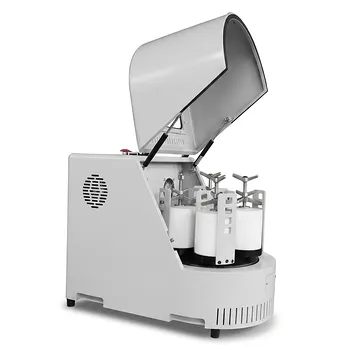
Vertical Semi Circular Planetary Ball Mill for Laboratory Precision Grinding
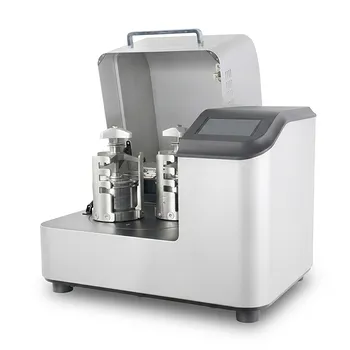
High Energy Planetary Ball Mill for Nano Scale Grinding and Mechanical Alloying
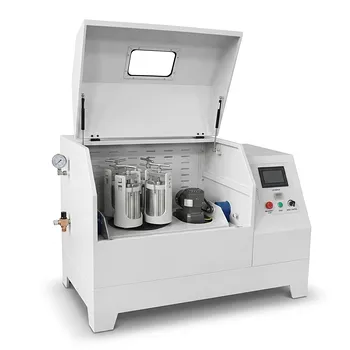
Vertical Production Planetary Ball Mill for High Throughput Powder Processing
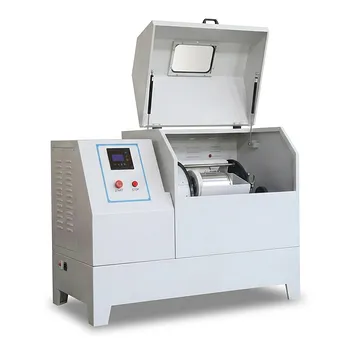
Heavy Duty Horizontal Planetary Ball Mill for Efficient Industrial Grinding and Sample Preparation
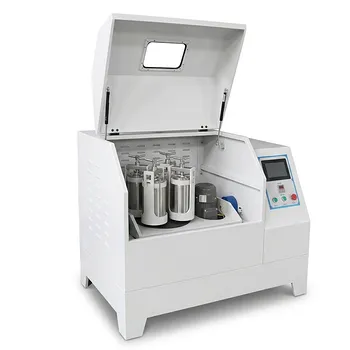
360° Rotating Omnidirectional Laboratory Planetary Ball Mill for Homogeneous Ultra-Fine Grinding and Mixing
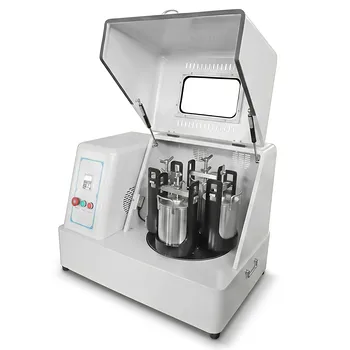
Vertical Square Planetary Ball Mill for Laboratory Sample Preparation and Nanoscale Grinding
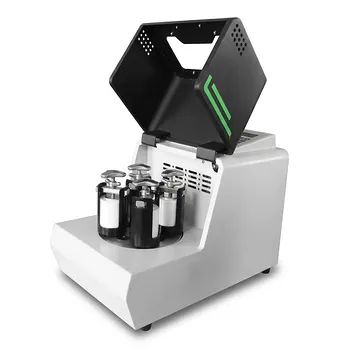
Miniature Planetary Ball Mill with Vacuum Grinding and High Efficiency for Laboratory Sample Preparation
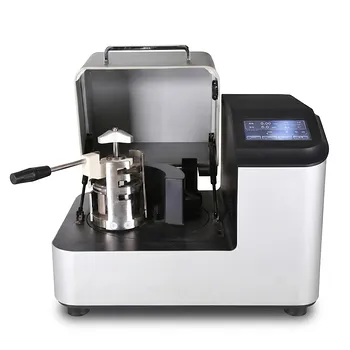
High Energy Laboratory Planetary Ball Mill for Nano Grinding and Material Science Sample Preparation
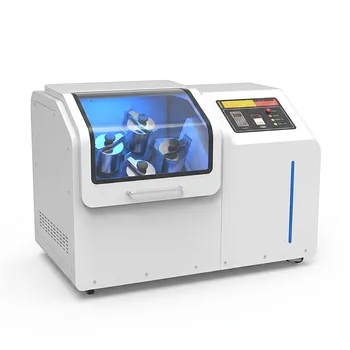
High Energy Omnidirectional Planetary Ball Mill 16L
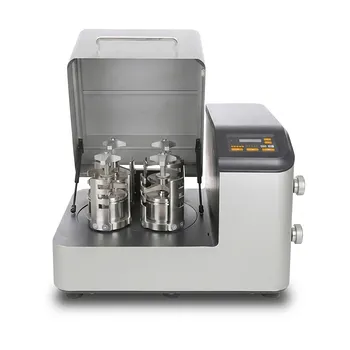
High Energy Planetary Ball Mill for Nano Scale Grinding and Colloidal Mixing in Material Science Research
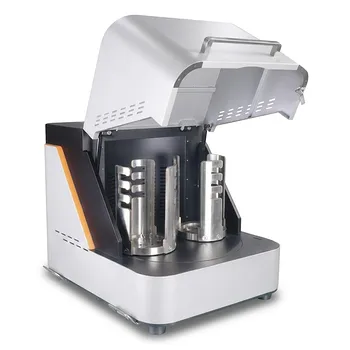
High Energy Laboratory Planetary Ball Mill for Nano Grinding and Colloidal Mixing of Hard and Brittle Materials
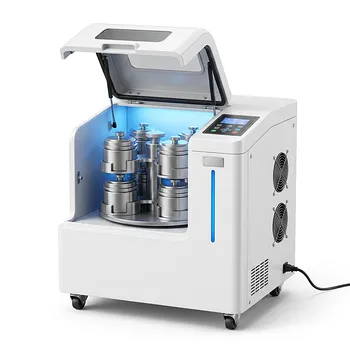
High Energy Omnidirectional Planetary Ball Mill 20L
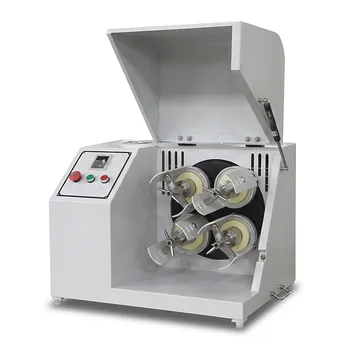
Horizontal Light Duty Planetary Ball Mill for Laboratory Sample Preparation

8L Planetary Ball Mill for Laboratory Grinding and Sample Preparation
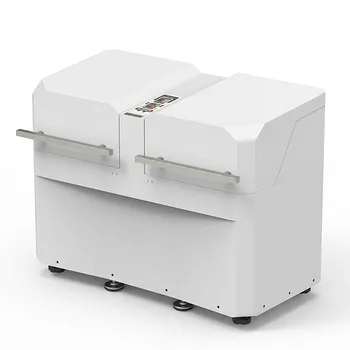
Dual Station Planetary Ball Mill 24L
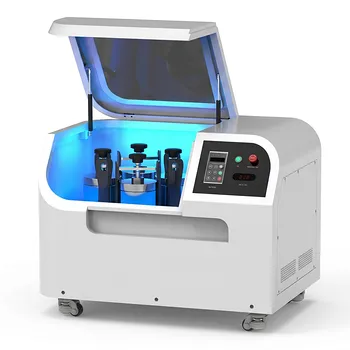
Planetary Ball Mill 12L

Nano High Energy Vibratory Ball Mill for Laboratory Sample Preparation

Multi-Platform Nanoscale High-Energy Vibratory Ball Mill

High Energy Hybrid Vibratory Ball Mill for Grinding Mixing and Cell Disruption