What are the advantages of using a mechanical sieve shaker over manual sieving? Improve Soil PSD Analysis Accuracy
Updated 5 months ago
Mechanical sieve shakers deliver standardized, multi-dimensional vibration patterns that ensure superior repeatability and accuracy compared to manual methods. By automating the agitation process, these devices provide a constant frequency and amplitude that eliminates human operational bias, significantly reduces labor time, and ensures that soil particle size distribution (PSD) data is consistent across different laboratory environments.
A mechanical sieve shaker replaces inconsistent human effort with regulated, high-frequency energy, resulting in the precise separation of soil components and the generation of highly repeatable PSD curves. This transition from manual to mechanical methods is essential for maintaining scientific integrity and data comparability in soil analysis.
Enhancing Data Integrity Through Standardization
Eliminating Human Operational Bias
Manual sieving is inherently subjective, as the intensity, direction, and duration of shaking vary between technicians. Mechanical sieve shakers eliminate these random errors by utilizing programmed vibration frequencies and fixed time settings.
This level of control ensures that every soil sample is subjected to the exact same energy levels. Consequently, the resulting data for sand, silt, and gravel content becomes reliable and reproducible, regardless of who operates the equipment.
Constant Frequency and Amplitude
Equipment typically operates at a constant frequency, such as 278 cycles per minute, providing a stable energy output that manual shaking cannot replicate. This stability allows soil particles to move effectively across the mesh, ensuring they have the maximum opportunity to pass through the correct apertures.
By maintaining a regulated timeframe, the shaker ensures that the physical separation of components is completed thoroughly. This is particularly critical when analyzing poorly graded soils or specific classifications like A-7-5, where precision is paramount.
Optimizing Particle Dynamics and Efficiency
Multi-Dimensional Movement and Rearrangement
Mechanical shakers utilize high-frequency vibration to cause soil particles to jump and rotate across the sieve surface. This multi-dimensional movement ensures that particles are constantly rearranged, preventing them from simply sitting in one position.
Thorough rearrangement is necessary to accurately calculate the average particle diameter. Without this motion, flat or elongated particles might fail to pass through the mesh, leading to an incorrect description of the soil's physical morphology.
Prevention of Sieve Mesh Clogging
One of the primary advantages of intensive, standardized screening power is the prevention of mesh clogging (blinding). The high-frequency agitation keeps smaller particles in motion, preventing them from becoming wedged in the sieve openings.
When the mesh remains clear, the sieving efficiency increases significantly. This leads to a more accurate representation of the percentage distribution of different grain sizes, especially in coarse-grained soils.
Understanding the Trade-offs
Equipment Investment and Maintenance
While a mechanical shaker reduces long-term labor costs, it requires an initial capital investment and periodic maintenance. Components like motors and springs must be checked to ensure the vibration frequency remains within the calibrated range.
Risk of Particle Degradation
If a mechanical shaker is run for an excessive duration, the intensive vibration may cause particle degradation, where friable soil grains break down into smaller pieces. It is vital to establish optimized time settings to prevent "over-sieving" and the subsequent skewing of PSD curves.
Noise and Laboratory Footprint
Mechanical shakers generate significant noise and vibration, which may require dedicated space or sound-dampening enclosures. Manual sieving is quieter and requires no power source, making it more portable for field-based preliminary assessments.
Applying Mechanical Sieving to Your Project
Recommendations for Implementation
Selecting the right approach depends on your specific data requirements and laboratory throughput.
- If your primary focus is regulatory compliance or research: Utilize a mechanical shaker with programmable settings to ensure the highest degree of repeatability and precision across different laboratories.
- If your primary focus is high-volume commercial testing: Implement automatic sieve shakers to maximize efficiency and reduce labor costs while maintaining standardized results for coarse-grained soil distribution.
- If your primary focus is evaluating granulation methods: Use mechanical vibration to scientifically assess the impact of dry versus wet granulation on particle morphology.
By integrating mechanical sieve shakers into your workflow, you transition from subjective manual estimates to a standardized, high-precision analytical framework.
Summary Table:
| Feature | Manual Sieving | Mechanical Sieve Shaker |
|---|---|---|
| Consistency | Low (subjective intensity/duration) | High (programmed frequency & time) |
| Data Integrity | Prone to human operational bias | Standardized & highly repeatable |
| Sieving Efficiency | Lower; prone to mesh clogging | Higher; multi-dimensional movement |
| Labor Intensity | High physical effort required | Automated; reduces labor costs |
| Best Application | Preliminary field assessments | Regulatory research & high-volume labs |
Elevate Your Laboratory Precision with Professional Sample Prep Solutions
Achieving consistent results in material science starts with the right equipment. At [Your Brand Name], we provide complete laboratory sample preparation solutions specializing in powder processing and compaction. Whether you are conducting soil PSD analysis or advanced material research, our extensive product line is designed to ensure scientific integrity.
Our Specialized Equipment Includes:
- Sieving & Analysis: Vibratory and air-jet sieve shakers with a full range of test sieves and meshes.
- Milling & Grinding: Planetary ball mills, jet mills, cryogenic grinders, and crushers (jaw/roll).
- Mixing: High-performance powder mixers and defoaming mixers.
- Compaction Excellence: A full spectrum of hydraulic presses, including Cold/Warm Isostatic Presses (CIP/WIP), XRF pellet presses, and vacuum hot presses.
Ready to transition from manual variability to mechanical precision? Contact our experts today to find the perfect solution for your specific application requirements!
References
- J. J. Vordoagu. Evaluation of Wet and Dry Methods of Sieve Analysis for Tropical Lateritic Soils in Ghana. DOI: 10.26437/ajar.v10i2.844
Mentioned Products
- 三维电磁微量振动筛分仪
- Vibratory Sieve Shaker Electromagnetic 3D Motion Powder Particle Size Analyzer for Dry and Wet Sieving
- Laboratory Dry and Wet Three Dimensional Vibratory Sieve Shaker for Particle Analysis
- Small Laboratory Vibrating Sieve Shaker for Precise Particle Size Analysis
- Stainless Steel Laboratory Vibratory Test Sieve Shaker
People Also Ask
- Why is a standard sieve shaker essential for CBA powders in geopolymers? Enhance Reactivity & Material Strength
- Why are standard metal sieves and sieve shakers necessary for 5-aminotetrazole mixtures? Optimize Thermal & Kinetic Data
- Why Use Sieve Shakers for Gangue Slurry Experiments? Optimize Particle Grading for Superior Results
- What are the advantages of mechanical vs. manual sieving for road dust analysis? Achieve Superior Data Standardization.
- How do high-precision sieve shakers and powder mixers facilitate material circularity in metal PBF? Optimize AM Cycles

Tech Team · PowderPreparation
Last updated on May 14, 2026
Related Products
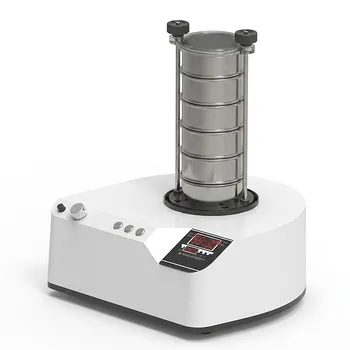
三维电磁微量振动筛分仪
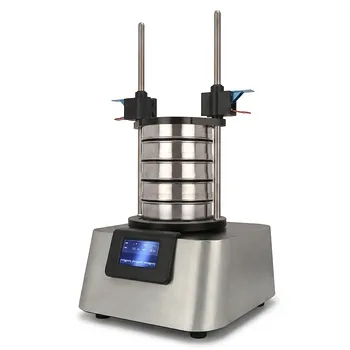
Vibratory Sieve Shaker Electromagnetic 3D Motion Powder Particle Size Analyzer for Dry and Wet Sieving
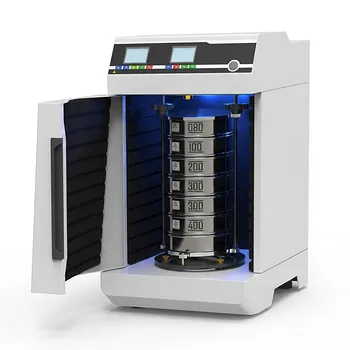
Laboratory Dry and Wet Three Dimensional Vibratory Sieve Shaker for Particle Analysis
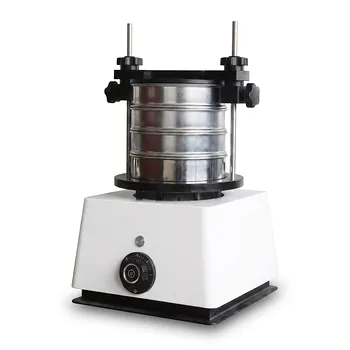
Small Laboratory Vibrating Sieve Shaker for Precise Particle Size Analysis
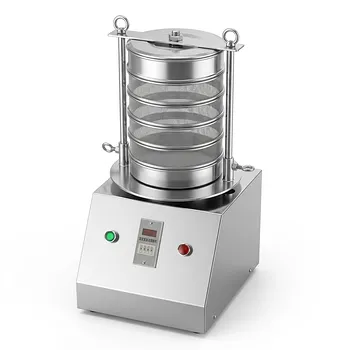
Stainless Steel Laboratory Vibratory Test Sieve Shaker
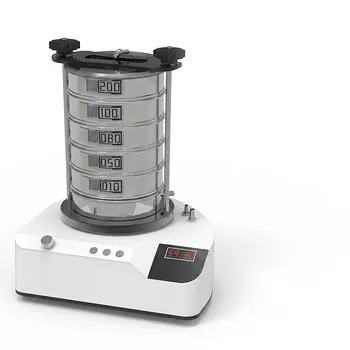
Heavy Duty Dry Three Dimensional Vibratory Sieve Shaker for Particle Separation
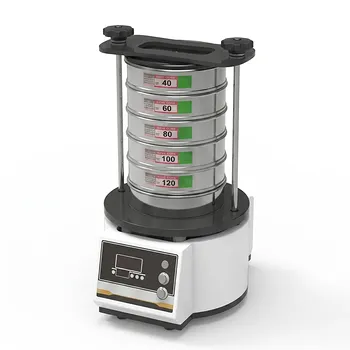
Dry Three Dimensional Vibratory Sieve Shaker
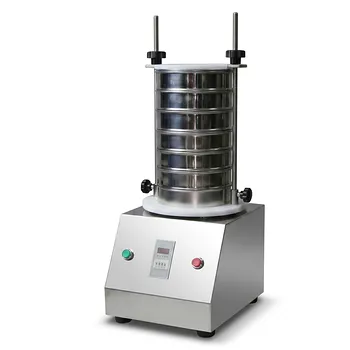
Small Laboratory Vibratory Sieve Shaker for Powder Gradation and Particle Size Analysis
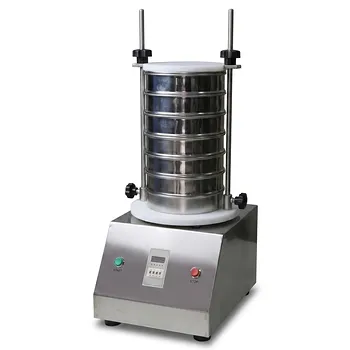
Laboratory Vibratory Test Sieve Shaker for Precision Particle Size Analysis and Powder Grading
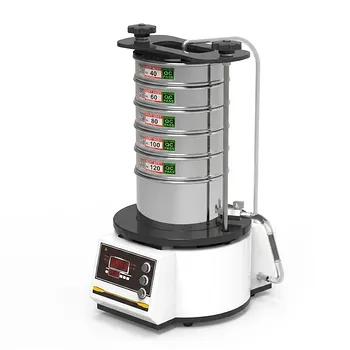
High Frequency Wet Three-Dimensional Vibrating Sieve Shaker for Dry and Wet Particle Size Analysis
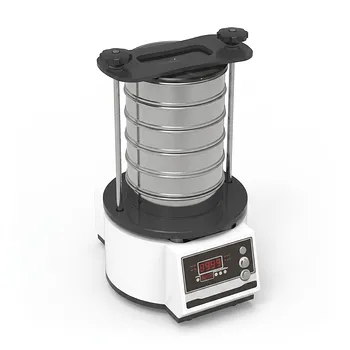
Tapping Oscillating Sieve Shaker for Dry and Wet Particle Size Analysis
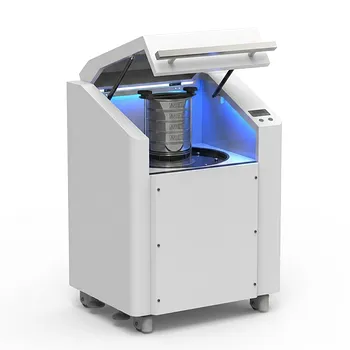
High Frequency Cabinet Type Three-Dimensional Rotary Vibrating Sieve Shaker for Dry Sieving and Particle Classification
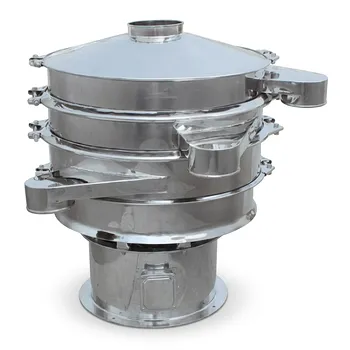
Stainless Steel Rotary Vibrating Sieve High Precision Circular Vibratory Separator Industrial Powder Grading Machine Multi Layer Sifting Equipment
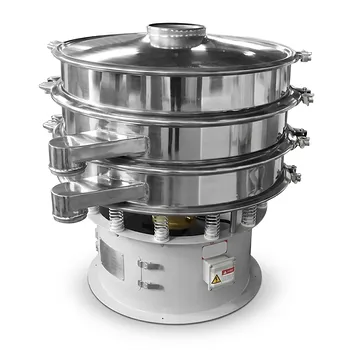
Three Dimensional Rotary Vibrating Sieve