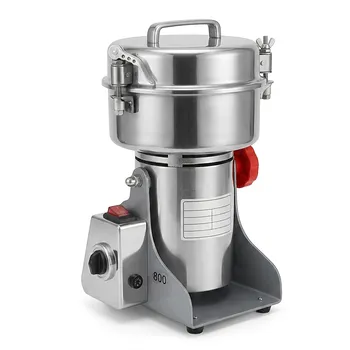
What is the role of a high-speed attrition mill in SrTiO3 powder preparation? Enhance Mixing & Chemical Activation
Updated 5 months ago
The high-speed attrition mill serves as the critical "activation engine" in the initial preparation of Strontium Titanate ($SrTiO_3$). By operating at speeds near 1000 rpm, the mill uses high-energy impact and shear forces to achieve microscopic mixing uniformity between Strontium Carbonate ($SrCO_3$) and Titanium Dioxide ($TiO_2$) powders. This process facilitates mechanochemical activation, ensuring an accurate stoichiometric ratio and lowering the energy required for the subsequent calcination reaction at 975 °C.
Core Takeaway: The attrition mill transforms a simple physical mixture into a highly reactive, homogenous precursor. This mechanical intervention is essential for producing phase-pure $SrTiO_3$ with precise chemical composition during high-temperature synthesis.
Driving Solid-State Reactions via Mechanochemical Activation
Increasing Surface Area and Contact Points
The high-energy impact forces generated by the mill significantly reduce the particle size of the raw $SrCO_3$ and $TiO_2$ powders. By refining these materials, the mill vastly increases the specific surface area, creating a maximum number of contact points between the two reactants. This increased contact area is the physical foundation required for efficient chemical diffusion during the heating process.
Lowering the Thermal Activation Energy
The intense mechanical stress from the stirring rods and milling media induces severe plastic deformation and structural defects in the powder particles. This state of mechanochemical activation stores energy within the crystal lattice of the raw materials. Consequently, the activation energy required for the solid-state reaction is lowered, allowing for the synthesis of pure-phase $SrTiO_3$ at lower temperatures than would otherwise be possible.
Ensuring Precise Stoichiometry and Phase Purity
Achieving Microscopic Mixing Uniformity
For Strontium Titanate to function correctly in electronic applications, the ratio of Strontium to Titanium must be perfectly balanced. The high-speed attrition mill ensures extreme mixing uniformity, distributing the components so thoroughly that the stoichiometric ratio is maintained at the microscopic level. This prevents the formation of unwanted secondary phases or "pockets" of unreacted material during calcination.
Eliminating Hard Agglomerates
Raw ceramic powders often contain hard clusters, or agglomerates, that resist traditional mixing methods. The intense shear forces of an attrition mill effectively break down these agglomerates, ensuring that every particle is available for the reaction. This de-agglomeration is vital for obtaining a dense, high-quality microstructure in the final ceramic product.
Understanding the Trade-offs and Limitations
Potential for Media Contamination
The high-energy nature of the process means that the milling media (such as stainless steel or ceramic balls) and the mill liner are subject to significant wear. This wear can introduce trace impurities into the $SrTiO_3$ powder, which may negatively impact the dielectric or semiconducting properties of the final material. Selecting the appropriate media material is critical to maintaining high purity levels.
Heat Generation and Material Sensitivity
High-speed milling generates substantial internal heat due to constant friction and impact. If not properly cooled, this temperature rise can cause unintended premature reactions or phase changes in sensitive raw materials. Efficient cooling systems or controlled milling intervals are often required to maintain the stability of the precursor mixture.
How to Apply This to Your Process
When integrating high-speed attrition milling into your $SrTiO_3$ production workflow, your specific goals will dictate your milling parameters.
- If your primary focus is Phase Purity: Prioritize longer milling times at moderate speeds to ensure every particle of $SrCO_3$ and $TiO_2$ is in intimate contact before the 975 °C calcination.
- If your primary focus is Nanocrystalline Structure: Utilize maximum RPM (1000+) and high-density milling media to maximize the mechanical energy input and achieve the smallest possible grain size.
- If your primary focus is High Dielectric Performance: Select high-purity ceramic milling media (like Zirconia) to minimize metallic contamination that could degrade the final electrical properties.
By mastering the mechanical activation stage in the attrition mill, you establish the chemical and physical blueprint for high-performance Strontium Titanate.
Summary Table:
| Key Role | Mechanical Mechanism | Impact on SrTiO3 Quality |
|---|---|---|
| Particle Refinement | High-energy impact | Increases surface area for faster chemical diffusion |
| Mechanochemical Activation | Lattice structural deformation | Lowers thermal activation energy for calcination |
| Microscopic Mixing | Intense shear forces | Ensures precise stoichiometry and phase purity |
| De-agglomeration | Breaking hard clusters | Produces a dense, high-quality final microstructure |
| Thermal Management | Controlled friction/cooling | Prevents premature reactions in sensitive precursors |
Optimize Your Material Synthesis with Professional Powder Solutions
Achieving phase-pure Strontium Titanate (SrTiO3) requires precision at every stage—from initial milling to final compaction. Our brand provides complete laboratory sample preparation solutions for material science, specializing in high-performance powder processing and compaction equipment designed for rigorous R&D and production environments.
Our extensive product line supports your entire workflow:
- Advanced Milling: High-speed attrition mills, planetary ball mills, jet mills, and cryogenic grinders for superior particle size control.
- Precision Mixing: Powder and defoaming mixers to ensure microscopic homogeneity.
- Compaction Excellence: A full spectrum of hydraulic presses, including Cold/Warm Isostatic Presses (CIP/WIP), standard lab presses, and vacuum hot presses for high-density ceramics.
- Sizing & Analysis: Vibratory and air-jet sieve shakers for accurate particle distribution.
Ready to elevate your lab's efficiency and material performance? Contact our technical experts today to find the perfect equipment configuration for your specific material challenges.
References
- Jan‐Helmut Preusker, Wolfgang Rheinheimer. Impact of AC and DC Electric Fields on the Microstructure Evolution in Strontium Titanate. DOI: 10.1002/adem.202201848
Mentioned Products
- High Speed Laboratory Grinder Efficient Stainless Steel Powder Pulverizer Universal Material Science Mill for Sample Preparation
- High Speed Laboratory Powder Grinder Small Batch Sample Preparation Mill
- Vertical Production Planetary Ball Mill for High Throughput Powder Processing
- High Speed Vibratory Disc Mill for Spectral Analysis Sample Preparation and Rapid Powder Grinding
- Small Trace Sample High Speed Pulverizer Grinder Laboratory Powder Mill
People Also Ask
- What role does a laboratory grinder play in the pretreatment of sunflower seed shell-based adsorbents? Boost Efficiency.
- How does a laboratory grinder or mill enhance the adsorption performance of agricultural waste materials? Boost Surface Area
- What is the function of a laboratory high-speed pulverizer in the preparation of eggshell powder? Essential Pretreatment
- What are the technical advantages of using a high-speed laboratory pulverizer for grinding tablets into powders? 20K RPM
- Why must soil samples be ground before XRD or XRF analysis? Ensure Precision & Homogeneity in Lab Results

Tech Team · PowderPreparation
Last updated on May 14, 2026
Related Products
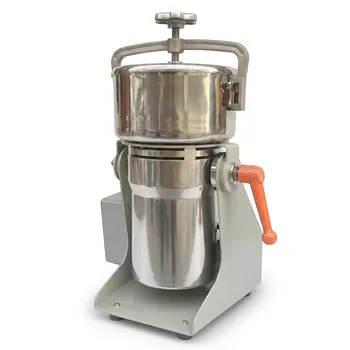
High Speed Laboratory Grinder Efficient Stainless Steel Powder Pulverizer Universal Material Science Mill for Sample Preparation
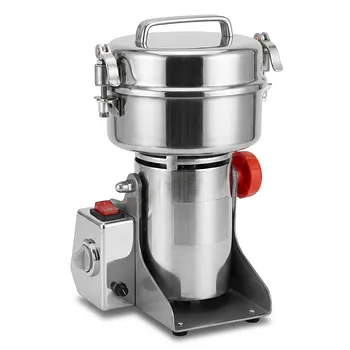
High Speed Laboratory Powder Grinder Small Batch Sample Preparation Mill

Vertical Production Planetary Ball Mill for High Throughput Powder Processing
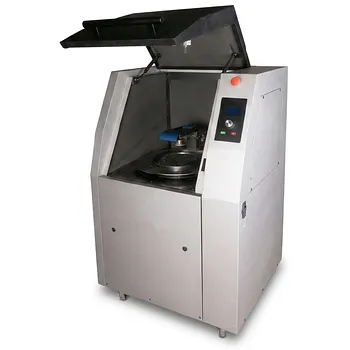
High Speed Vibratory Disc Mill for Spectral Analysis Sample Preparation and Rapid Powder Grinding
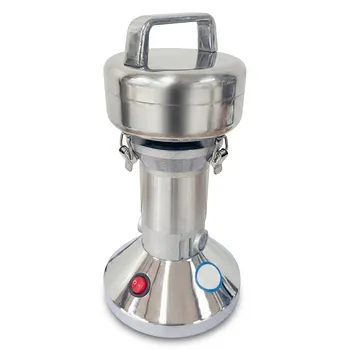
Small Trace Sample High Speed Pulverizer Grinder Laboratory Powder Mill
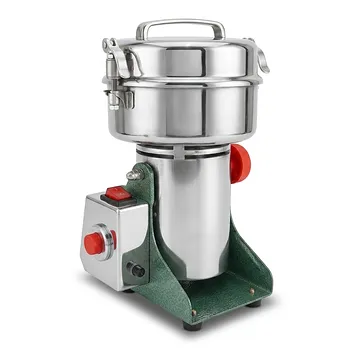
Small High-Speed Laboratory Grinder for Powder Processing
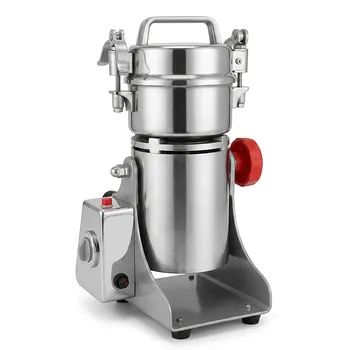
Industrial High Speed Small Sample Pulverizer Swing Type Laboratory Grinder for Powder Processing
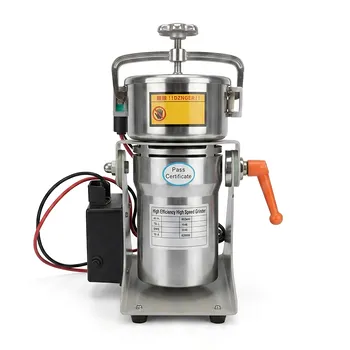
High Efficiency High Speed Grinder Laboratory Mill 1300W 25000rpm
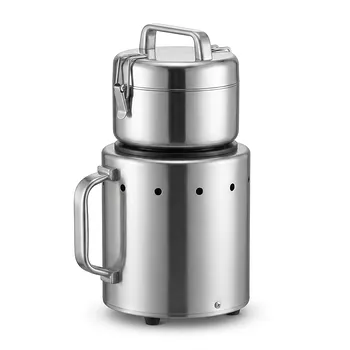
Small High Speed Grinder for Laboratory Sample Preparation
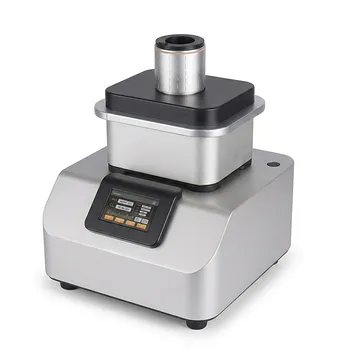
Ultra Centrifugal Mill High Speed Laboratory Grinder for Fibrous and Brittle Sample Preparation
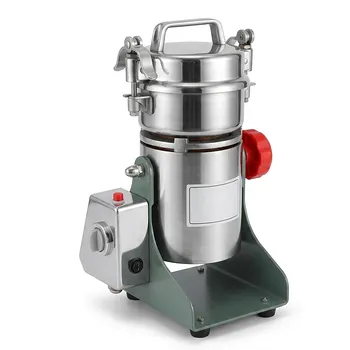
High Speed Swing Type Laboratory Pulverizer for Fine Powder Grinding and Sample Preparation
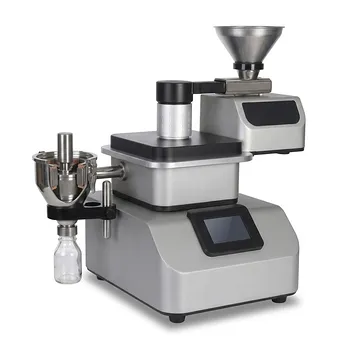
Ultra Centrifugal Mill for Rapid Laboratory Sample Preparation and Fine Powder Grinding
High Efficiency High Speed Grinder 2200W 25000 RPM Laboratory Sample Preparation
Benchtop Micro Air Jet Mill for Ultrafine Grinding of High Value Powders
Small High-Speed Grinder for Efficient Laboratory Sample Preparation
Small High Speed Grinder for Laboratory Sample Preparation
Vibratory Disc Mill for Rapid Fine Grinding and High Throughput Sample Preparation of Hard and Brittle Materials
Multifunctional High Efficiency High Speed Laboratory Grinder