Why use a double-length lab ball mill for hard ore tests? Advantages for industrial scale-up and accuracy
Updated 4 months ago
The double-length laboratory ball mill serves as a critical bridge between bench-scale experimentation and industrial-scale production. By doubling the equipment’s length, researchers can process a significantly larger mass of material without altering the grinding media charge ratio. This approach drastically reduces measurement uncertainty and provides a far more accurate simulation of the residence time and breakage characteristics found in full-scale industrial ore processing.
Core Takeaway: Utilizing a double-length mill enhances the statistical reliability of grinding tests by increasing sample size and mimicking the physical dynamics of industrial mills, ensuring that lab results translate effectively to real-world hard ore processing.
Enhancing Statistical Reliability and Representativeness
Processing Larger Material Masses
Increasing the internal dimensions of the mill allows for a larger mass of ore to be tested in a single cycle. For hard ores, which often exhibit varying degrees of mineral distribution, a larger sample ensures that the test material is truly representative of the bulk ore body.
Reducing Measurement Uncertainty
Small-scale tests are often prone to high margins of error due to the "nugget effect" or minor variations in feed size. A longer mill minimizes these measurement uncertainties by providing a larger data set within every individual test run.
Maintaining Grinding Media Ratios
Because the length is doubled while the diameter remains consistent, the media charge ratio stays stable. This allows for a direct comparison with standard tests while benefiting from the increased volume and more stable mechanical environment.
Simulating Industrial-Scale Dynamics
Optimizing Residence Time
A primary challenge in lab testing is that material often passes through the grinding zone too quickly to simulate industrial reality. A double-length mill better approximates the actual residence time that ore experiences as it travels through a full-scale industrial drum.
Capturing Realistic Breakage Characteristics
The mechanical interaction between the media and the ore changes as the material moves through the mill. A longer chamber allows for a more developed breakage profile, capturing how hard ores respond to sustained impact and friction over time.
Improving Mineral Liberation
Hard ores require precise energy application to separate valuable minerals from waste rock. The extended path within a double-length mill ensures that the mechanochemical action—the combination of impact and friction—has sufficient time to reach the required degree of liberation.
Understanding the Trade-offs and Limitations
Increased Material and Energy Requirements
While larger samples improve accuracy, they also require significantly more raw material for every test. This can be a logistical challenge if the ore is difficult to transport or if the total available sample size is limited.
Operational and Handling Complexity
A double-length mill is heavier and more cumbersome than a standard unit. Operators may face increased difficulty with manual handling, cleaning, and discharging the mill, potentially requiring specialized mechanical aids.
Risk of Over-Pulverization
If the grinding time is not precisely calibrated to the increased length, there is a risk of over-pulverization. Excessive grinding can lead to an abundance of "slimes" or ultra-fine particles, which can hinder the efficiency of subsequent separation processes like flotation or gravity concentration.
How to Apply These Insights to Your Project
Determining the Best Equipment for Your Goals
Choosing the right mill depends on whether your priority is rapid screening or precise industrial modeling.
- If your primary focus is industrial scale-up: Use a double-length mill to ensure the residence time and breakage characteristics align with your future production environment.
- If your primary focus is rapid, low-cost screening: A standard laboratory mill is sufficient for initial comparisons where high representativeness is less critical than speed.
- If your primary focus is high-precision liberation studies: Opt for the double-length mill to reduce measurement uncertainty and ensure the hard ore is processed uniformly.
Selecting the appropriate mill length is the first step toward transforming laboratory data into a reliable blueprint for industrial success.
Summary Table:
| Feature | Standard Laboratory Mill | Double-Length Laboratory Mill | Key Benefit |
|---|---|---|---|
| Sample Mass | Smaller volume; higher error risk | 2x capacity; higher representativeness | Reduces "nugget effect" and uncertainty |
| Residence Time | Short; limited industrial mimicry | Extended; simulates industrial drum flow | More accurate breakage characteristics |
| Media Charge Ratio | Standard | Constant (Length doubled, Diameter same) | Ensures direct comparison with standard tests |
| Mineral Liberation | May be incomplete | Enhanced mechanochemical action | Better separation of valuable minerals |
| Energy & Material | Lower requirements | Higher material/power consumption | Necessary for high-precision modeling |
Optimize Your Mineral Processing with Precision Equipment
Transitioning from lab results to industrial production requires equipment that delivers reliable, scalable data. At [Brand Name], we provide complete laboratory sample preparation solutions for material science, specializing in high-performance powder processing and compaction equipment.
Our extensive line includes everything you need for hard ore analysis and material development:
- Advanced Milling: Planetary ball mills, jet mills, and specialized laboratory ball mills.
- Size Reduction: Heavy-duty jaw and roll crushers, plus liquid nitrogen cryogenic grinders.
- Classification: Vibratory and air-jet sieve shakers with a full range of test meshes.
- Compaction: A full spectrum of hydraulic presses, including Cold/Warm Isostatic Presses (CIP/WIP), vacuum hot presses, and XRF pellet presses.
Whether you are refining mineral liberation or scaling up production, our tools ensure your lab data becomes a blueprint for industrial success. Contact our experts today to find the perfect milling solution for your specific application!
References
- Wladmir José Gomes Florêncio, Vládia Cristina Gonçalves de Souza. The Effect of Particle Size Distribution on the BWI and Energy Consumption of Harder Ores. DOI: 10.4236/jmmce.2025.135015
Mentioned Products
- Dual Station Planetary Ball Mill 24L
- High Energy Laboratory Planetary Ball Mill for Nano Grinding and Colloidal Mixing of Hard and Brittle Materials
- 8L Planetary Ball Mill for Laboratory Grinding and Sample Preparation
- Dual Jar High Energy Vibratory Ball Mill
- Planetary Ball Mill 12L
People Also Ask
- Why is a planetary ball mill required for PET micronization? Ensure Accurate Chemical Analysis of Reprocessed PET
- What is the core role of a planetary ball mill in the preparation of modified cellulose fillers? Key Insights
- How does a planetary ball mill contribute to the homogenization of trace elements? Achieve Sub-Micron Uniformity
- Why is an intermittent grinding process required for perovskites in a planetary ball mill? Ensure Stability & Purity
- What role does a planetary ball mill play in the synthesis of Li6PS5Cl (LPSCl)? Unlock High Ionic Conductivity

Tech Team · PowderPreparation
Last updated on Jun 03, 2026
Related Products
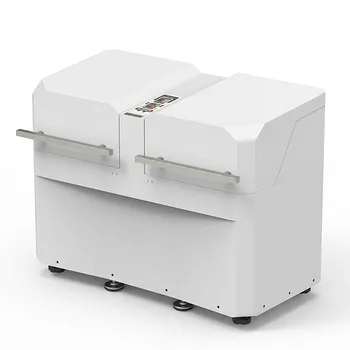
Dual Station Planetary Ball Mill 24L
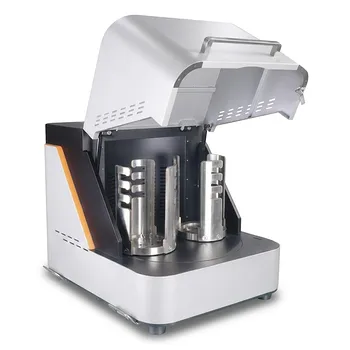
High Energy Laboratory Planetary Ball Mill for Nano Grinding and Colloidal Mixing of Hard and Brittle Materials
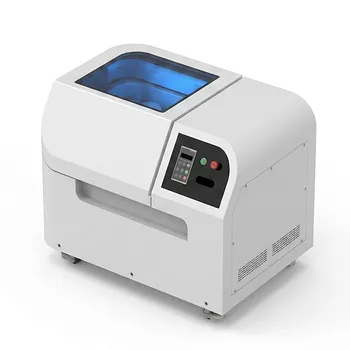
8L Planetary Ball Mill for Laboratory Grinding and Sample Preparation
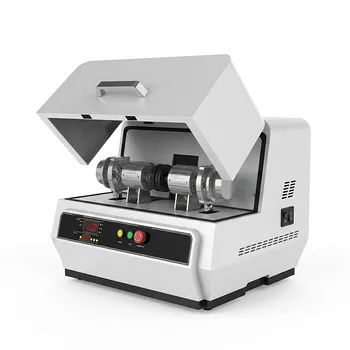
Dual Jar High Energy Vibratory Ball Mill
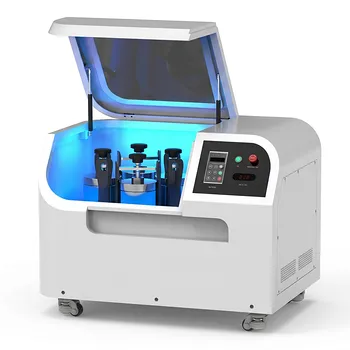
Planetary Ball Mill 12L
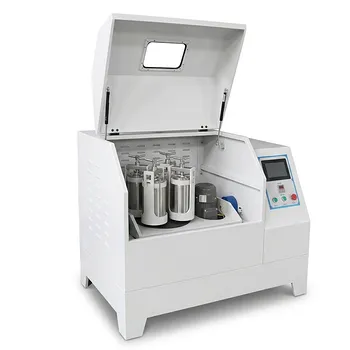
360° Rotating Omnidirectional Laboratory Planetary Ball Mill for Homogeneous Ultra-Fine Grinding and Mixing
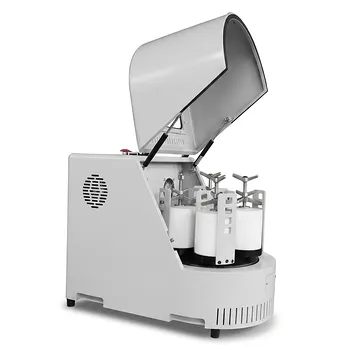
Vertical Semi Circular Planetary Ball Mill for Laboratory Precision Grinding
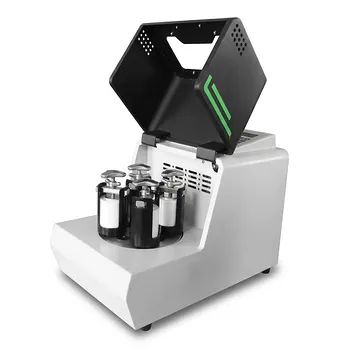
Miniature Planetary Ball Mill with Vacuum Grinding and High Efficiency for Laboratory Sample Preparation
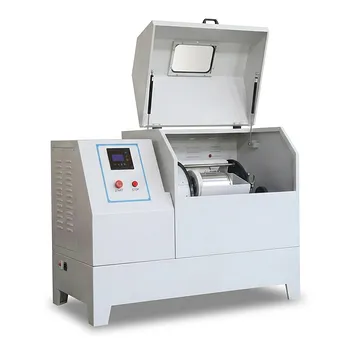
Heavy Duty Horizontal Planetary Ball Mill for Efficient Industrial Grinding and Sample Preparation
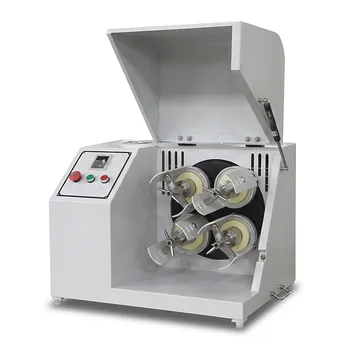
Horizontal Light Duty Planetary Ball Mill for Laboratory Sample Preparation
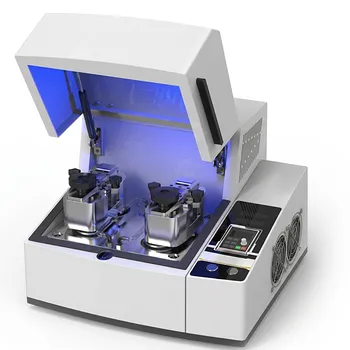
Laboratory Nano High Energy Ball Mill Ultrafine Grinding Mechanical Alloying
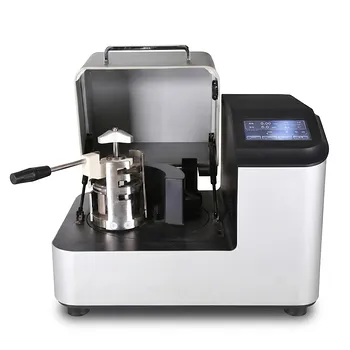
High Energy Laboratory Planetary Ball Mill for Nano Grinding and Material Science Sample Preparation
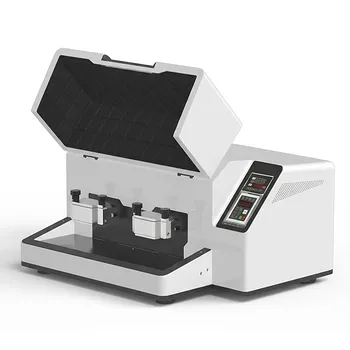
Nanoscale High-Energy Vibratory Ball Mill for Laboratory Sample Preparation, Mechanochemistry, and Mechanical Alloying
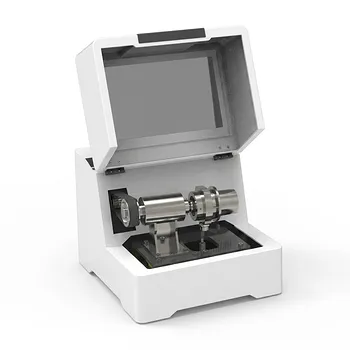
Single Tank High Energy Vibratory Ball Mill for Laboratory Grinding and Mixing
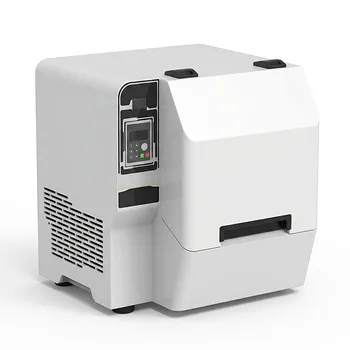
Nano High Energy Vibratory Ball Mill for Laboratory Sample Preparation
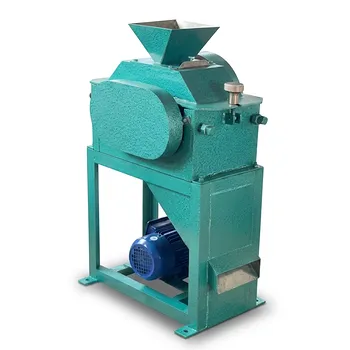
Laboratory Double Roll Crusher for Medium Hardness Materials Coal Ore Sample Preparation
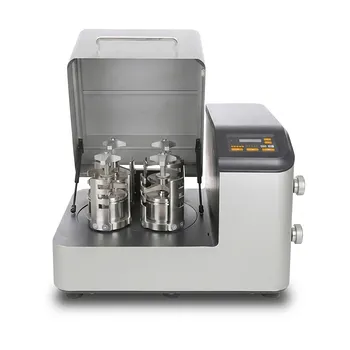
High Energy Planetary Ball Mill for Nano Scale Grinding and Colloidal Mixing in Material Science Research
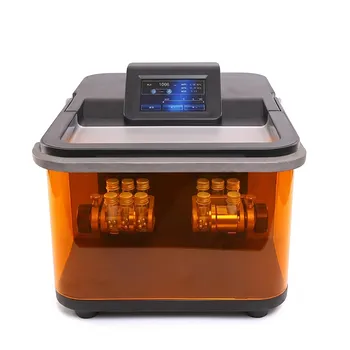
High Throughput Micro Ball Mill for Cryogenic Grinding and Laboratory Cell Disruption
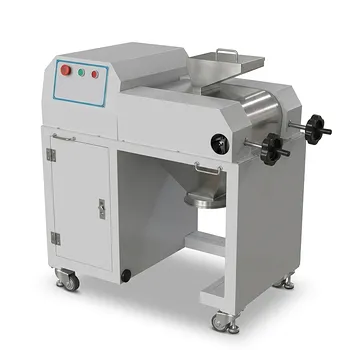
Laboratory Double Roller Crusher for Mining Construction Chemical Sample Preparation