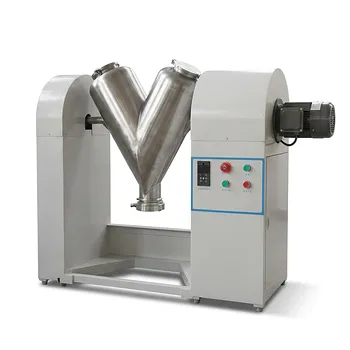
What are the advantages of centrifugal defoaming mixers for recycled slurries? Achieve Superior Electrode Quality
Updated 4 months ago
The primary advantage of a centrifugal defoaming mixer is its ability to provide high-energy dispersion and simultaneous vacuum defoaming through synchronized revolution and rotation. Unlike standard mixing equipment, this dual-motion process rapidly eliminates micro-bubbles and breaks down stubborn agglomerates within the slurry. For recycled materials like black mass, this ensures a dense, defect-free electrode surface and a highly consistent electronic conductive network.
Centrifugal defoaming mixers solve the dual challenge of homogenization and aeration by using composite centrifugal forces to achieve uniform particle distribution while stripping away micro-bubbles. This results in a high-quality, stable slurry that is essential for the performance of electrodes derived from recycled materials.
Superior Homogenization of Recycled Feedstocks
Breaking Down Complex Agglomerates
Recycled black mass and conductive agents often contain micro-agglomerates that standard mixers struggle to penetrate. The synchronized revolution and rotation of a centrifugal mixer generate intense shear forces that mechanically decouple these clusters.
This ensures that active materials and conductive carbon black are uniformly distributed at a nanoscale level. Such precision is vital when working with recycled components that may have varied particle sizes or surface characteristics.
Optimized Rheological Properties
The high-energy environment of a centrifugal mixer ensures that binders are thoroughly integrated with the solvent and solids in a very short time. This efficiency produces a slurry with optimal flow characteristics, or rheology, which is necessary for industrial roll-to-roll coating.
By achieving a stable suspension quickly, the equipment prevents the sedimentation of heavier recycled particles. This stability leads to high adhesion and consistent thickness during the subsequent coating process.
Integrated Defoaming and Surface Integrity
Elimination of Micro-bubbles
Standard mixing often introduces air into the slurry, leading to "pinholes" or defects in the final electrode sheet. Centrifugal mixers utilize composite centrifugal forces to perform vacuum defoaming during the mixing cycle itself.
This process removes even the smallest micro-bubbles, which are often trapped within viscous polymer solutions. Removing these bubbles is critical for ensuring the electrode has a dense microstructure and a stable interface.
Enhancing the Conductive Network
A defect-free slurry allows for a more robust electronic conductive network between particles. By ensuring that conductive additives are perfectly positioned around the active recycled material, the mixer improves the overall efficiency of the electrode.
This uniformity is particularly important for Hybrid Solid Electrolyte (HSE) slurries. The mixer ensures inorganic ceramic powders are distributed without agglomeration, building continuous ion transport channels.
Understanding the Trade-offs
Heat Generation and Sensitivity
The intense mechanical energy and shear forces generated by high-speed rotation can lead to significant heat buildup. For certain temperature-sensitive binders or solvents, this may require active cooling or carefully timed mixing intervals to prevent degradation.
Batch Size and Scalability
Centrifugal mixers are often designed for batch processing rather than continuous flow. While they are incredibly efficient for high-value or high-solid-content slurries, scaling to massive industrial volumes may require multiple units or larger, more expensive specialized equipment compared to standard stirred-tanks.
Applying This to Your Battery Production
Recommendations for Slurry Preparation
Choosing the right mixing strategy depends on your specific material consistency and production volume.
- If your primary focus is maximizing electrode density: Utilize a centrifugal mixer with integrated vacuum capabilities to ensure the complete removal of micro-bubbles and the creation of a defect-free coating.
- If your primary focus is processing high-viscosity recycled materials: Leverage the high-shear forces of the planetary motion to break down stubborn agglomerates that standard impellers cannot reach.
- If your primary focus is rapid prototyping or small-batch consistency: Use this equipment to achieve high homogenization in a fraction of the time required by traditional methods.
By integrating centrifugal defoaming technology, you ensure that recycled materials perform with the same reliability and efficiency as virgin feedstocks.
Summary Table:
| Feature | Centrifugal Defoaming Mixer Benefit | Impact on Recycled Materials |
|---|---|---|
| Mixing Action | Dual revolution and rotation | Breaks down stubborn black mass agglomerates |
| Air Removal | Integrated vacuum defoaming | Eliminates micro-bubbles to prevent pinhole defects |
| Dispersion | High-energy shear forces | Achieves nanoscale distribution of conductive agents |
| Stability | Rapid homogenization | Prevents sedimentation of heavy recycled particles |
| Coating Prep | Optimized rheology | Ensures consistent thickness for roll-to-roll coating |
Elevate Your Battery Material Processing with Precision Equipment
Transitioning from recycled feedstocks to high-performance electrodes requires equipment that can handle complex material characteristics. We provide complete laboratory sample preparation solutions tailored for material science, specializing in advanced powder processing and compaction technology.
Our extensive product line is designed to optimize every stage of your workflow:
- Mixing & Dispersion: High-performance centrifugal defoaming mixers and planetary ball mills for defect-free electrode slurries.
- Size Reduction & Analysis: Jaw/roll crushers, jet mills, and vibratory sieve shakers for precise particle size control.
- Advanced Compaction: A full spectrum of hydraulic presses, including Cold/Warm Isostatic Presses (CIP/WIP), vacuum hot presses, and XRF pellet presses.
Whether you are refining recycled black mass or developing next-generation solid-state batteries, our solutions ensure your materials perform with the reliability of virgin feedstocks.
Ready to eliminate defects and enhance your conductive networks? Contact our technical experts today to find the perfect equipment for your laboratory needs.
References
- Anton Zorin, Emma Kendrick. Acid-Assisted Separation of Cathodic Material from Spent Electric Vehicle Batteries for Recycling. DOI: 10.3390/met13071276
Mentioned Products
- Industrial Planetary Centrifugal Vacuum Defoaming Mixer for High Viscosity Paste and Powder Homogenization
- Industrial Planetary Centrifugal Vacuum Defoaming Mixer for High Viscosity Paste and Advanced Material Science
- High Viscosity Planetary Centrifugal Vacuum Mixer for Material Defoaming and Uniform Mixing
- Dual Cup Vacuum Centrifugal Mixer Planetary Paste Defoaming Machine Industrial Material Processor
- High Efficiency Vacuum Planetary Centrifugal Mixer and Defoaming Machine for Industrial Material Research and Precise Laboratory Powder Dispersion
People Also Ask
- What are the advantages of planetary centrifugal mixers for LSM-CeO2 slurries? Superior Results
- Why is a planetary centrifugal defoaming mixer essential in battery slurry? Achieve High Homogeneity & Degassing
- What process advantages do planetary gravity mixers provide for r-GO/RuO2 electrodes? Achieve Superior Nanoscale Dispersion
- What is the function of industrial planetary centrifugal mixers in 3D printing inks? Achieve Perfect Homogenization
- What are the primary advantages of planetary centrifugal mixers? Master Bladeless Mixing & Vacuum Defoaming

Tech Team · PowderPreparation
Last updated on Jun 03, 2026
Related Products
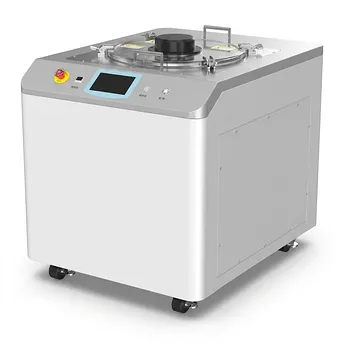
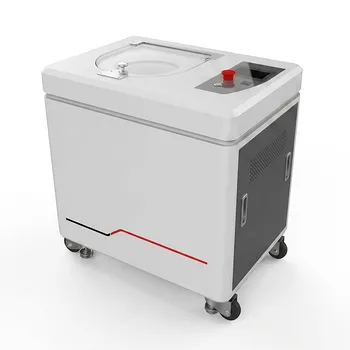
Industrial Planetary Centrifugal Vacuum Defoaming Mixer for High Viscosity Paste and Powder Homogenization
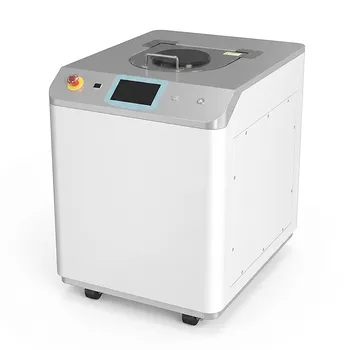
Industrial Planetary Centrifugal Vacuum Defoaming Mixer for High Viscosity Paste and Advanced Material Science
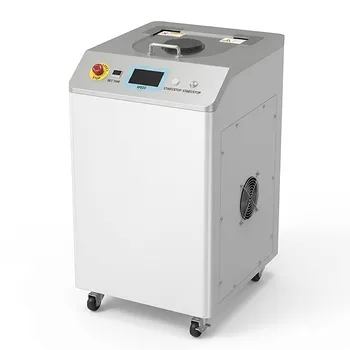
High Viscosity Planetary Centrifugal Vacuum Mixer for Material Defoaming and Uniform Mixing
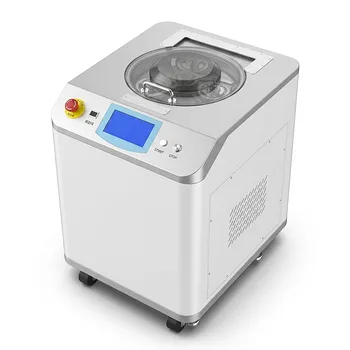
Dual Cup Vacuum Centrifugal Mixer Planetary Paste Defoaming Machine Industrial Material Processor
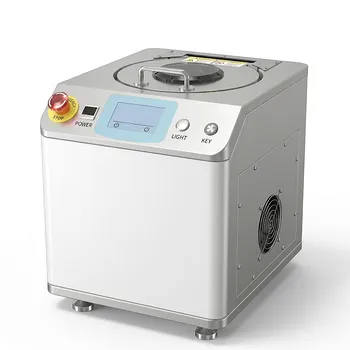
High Efficiency Vacuum Planetary Centrifugal Mixer and Defoaming Machine for Industrial Material Research and Precise Laboratory Powder Dispersion
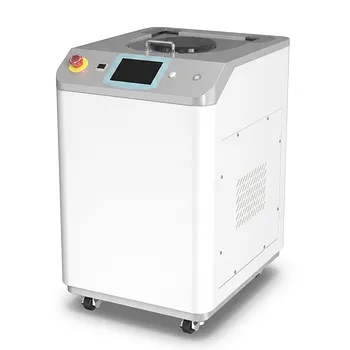
High Viscosity Planetary Centrifugal Mixing and Vacuum Defoaming Machine for Laboratory Material Preparation
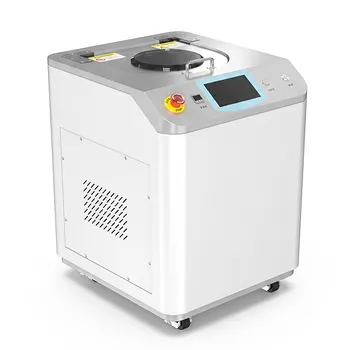
High Speed Vacuum Planetary Centrifugal Mixer and Defoamer for Industrial Paste Processing
非介入式材料均质机真空脱泡行星搅拌高粘度混合设备
Ultra Centrifugal Mill for Rapid Laboratory Sample Preparation and Fine Powder Grinding
Ultra Centrifugal Mill High Speed Laboratory Grinder for Fibrous and Brittle Sample Preparation
Inclined Mixer for Homogeneous Powder Blending and Grinding
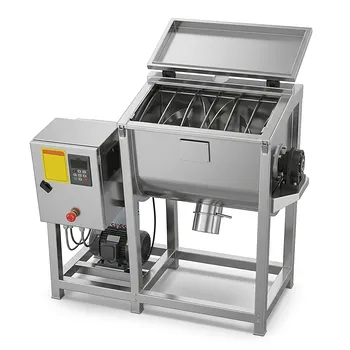
Horizontal Ribbon Mixer for Uniform Powder and Slurry Mixing
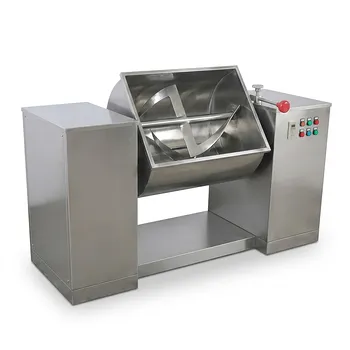
Horizontal Trough Mixer for Uniform Powder and Paste Blending
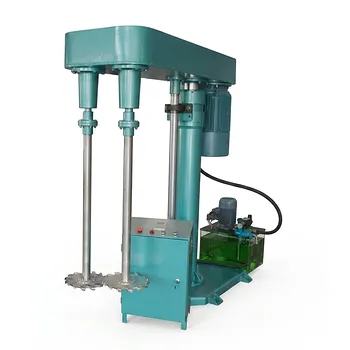
Hydraulic Double Shaft Disperser for High Viscosity Liquid Mixing and Dispersion
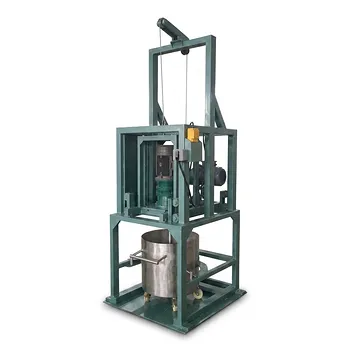
High-Speed Simple Disperser for Efficient Mixing, Dispersion, and Emulsification
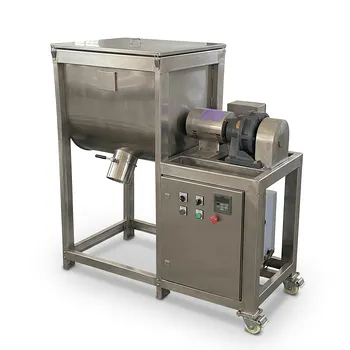
Horizontal Ribbon Mixer for Dry Powder and Slurry Blending
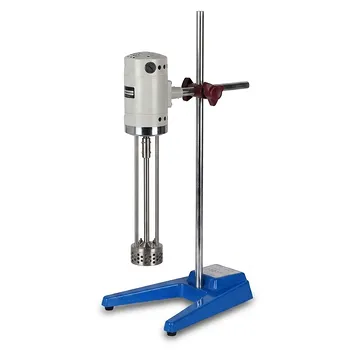
High Shear Laboratory Emulsifier for Mixing and Homogenization
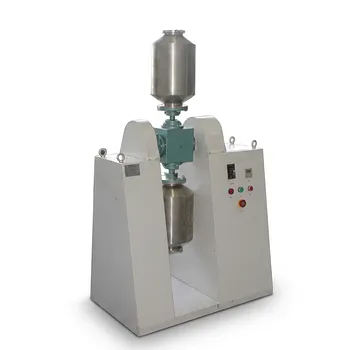
Multi Dimensional Universal Mixer for High Uniformity Powder Blending
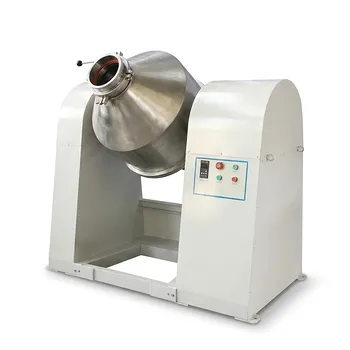
Industrial Double Cone Mixer for Powder Blending and Homogeneous Mixing