What are the advantages of ball mill mixing? Achieve Microscopic Homogenization for Composite Filter Elements
Updated 4 months ago
Ball mill mixing provides superior microscopic homogenization by utilizing mechanical energy to break down nanoparticle agglomeration. Unlike regular stirring, which primarily achieves macro-level blending, ball milling uses grinding media to forcibly eliminate clusters in materials like nano-scale coconut shell and clay. This ensures that the chemical adsorption capacity and physical strength are uniform across every section of the final sintered filter element.
Ball mill mixing shifts the process from simple blending to high-intensity homogenization, ensuring that nano-scale additives are perfectly dispersed within the clay matrix. This process eliminates "dead zones" and structural weak spots that common mechanical stirring often fails to address.
Breaking the Limits of Macro-Stirring
Elimination of Nanoparticle Agglomeration
Regular stirring lacks the mechanical energy required to overcome the Van der Waals forces that cause nanoparticles to clump together. Ball mills use the low-speed rolling action of grinding balls to provide high-intensity impact and shear, effectively shattering these clusters.
Achieving Microscopic Homogenization
While regular stirring moves bulk material, ball milling ensures that heterogeneous powders, such as activated carbon and clay, are intercalated at a microscopic scale. This results in a uniform coating of additives onto the base matrix, which is impossible to achieve with standard blades or paddles.
Preventing Component Segregation
Regular stirring often leads to density-based settling or segregation of different raw materials once the mixing stops. The composite motion of a ball mill keeps materials in a high-energy state, ensuring a stable premix that prevents components from separating before the sintering process.
Enhancing Filter Performance and Integrity
Consistent Chemical Adsorption
By ensuring a high-level distribution of activated carbon and coconut shell, ball milling guarantees that the chemical adsorption capacity is identical throughout the filter. This prevents "channeling," where water might pass through a section of the filter that lacks sufficient active material.
Mechanochemical Surface Activation
High-energy ball milling does more than just mix; it induces mechanochemical effects that can refine particles and increase their surface activity. This increased activity leads to a more effective sintering mechanism, creating a stronger ceramic bond between the clay and the functional additives.
Structural Uniformity and Longevity
A filter element mixed via ball milling exhibits consistent physical properties across its entire geometry. This uniformity reduces the risk of internal stresses or cracks during the sintering phase, leading to a more durable product with a predictable service life.
Understanding the Trade-offs
Process Time and Energy Consumption
Ball milling is generally a slower and more energy-intensive process compared to high-speed stirring or manual blending. Achieving the desired level of homogenization requires specific rotational speeds and durations that may increase production cycles.
Media Wear and Contamination
The use of grinding balls introduces the risk of media wear, where small amounts of the ball material (such as alumina or steel) may wear down into the mix. Selecting the correct media material is critical to ensure that these trace elements do not negatively impact the filter's purity or performance.
Complexity of Scale-up
Transitioning from a laboratory-scale ball mill to a mass-production environment requires careful calibration of ball-to-powder ratios and mill dimensions. Improper scaling can lead to "dead spots" in the mill where material is not effectively processed, negating the advantages of the method.
Applying This to Your Production Process
Choosing the Right Method for Your Goal
- If your primary focus is maximizing adsorption efficiency: Use a planetary ball mill to ensure that nano-scale coconut shell is perfectly dispersed at a molecular level.
- If your primary focus is high-volume, low-cost production: Regular stirring may be sufficient if your raw materials are macro-sized and do not require nanoparticle de-agglomeration.
- If your primary focus is structural ceramic strength: Implement ball milling to optimize the distribution of fluxing components within the clay matrix for better sintering.
- If your primary focus is minimizing contamination: Use high-purity zirconia or ceramic grinding media to prevent metallic trace elements from entering the filter composition.
By transitioning to ball mill mixing, manufacturers can move beyond simple blending to create a truly integrated composite material with superior filtration characteristics.
Summary Table:
| Feature | Regular Stirring | Ball Mill Mixing |
|---|---|---|
| Homogenization | Macro-level blending | Microscopic/Nano-scale intercalation |
| Agglomeration | Cannot break nanoparticle clusters | Shatters clusters via high-intensity impact |
| Surface Activity | Minimal impact on particles | Induces mechanochemical surface activation |
| Product Quality | Risk of component segregation | Uniform adsorption and structural integrity |
| Energy/Time | Lower consumption, faster | Higher energy required, longer cycles |
Optimize Your Composite Material Production Today
Unlock the full potential of your filtration products with superior homogenization. We provide complete laboratory sample preparation solutions for material science, specializing in advanced powder processing and compaction equipment.
Whether you need to eliminate nanoparticle agglomeration or achieve high-density compaction, our extensive product line has you covered:
- Advanced Milling: Planetary ball mills, jet mills, and cryogenic grinders for perfect dispersion.
- Precision Sizing: Sieve shakers (vibratory/air-jet) and specialized test sieves.
- Superior Compaction: A full spectrum of hydraulic presses, including Cold/Warm Isostatic Presses (CIP/WIP), hot presses, and vacuum hot presses.
Ready to enhance your material consistency and filter longevity? Contact us today to discuss your specific application and find the ideal equipment for your laboratory or production line!
References
- Adedayo Deborah Adeyinka-Aderanti, Johnson Olumuyiwa Agunsoye. Effect of Process Parameters on the Properties of Clay-Based Composite Filter for Water Purification. DOI: 10.52968/72017829
Mentioned Products
- Heavy Duty Horizontal Planetary Ball Mill for Efficient Industrial Grinding and Sample Preparation
- Vertical Semi Circular Planetary Ball Mill for Laboratory Precision Grinding
- Vertical Production Planetary Ball Mill for High Throughput Powder Processing
- Vertical Square Planetary Ball Mill for Laboratory Sample Preparation and Nanoscale Grinding
- High Energy Planetary Ball Mill for Nano Scale Grinding and Mechanical Alloying
People Also Ask
- Why grind lime-pozzolan specimens for TG/DTA for 3 mins? Master sample prep for high-precision thermal analysis.
- What is the role of a planetary ball mill in the mechanical activation of ZTA powder? Boost Sintering Performance
- What is the function of a planetary ball mill in wollastonite ceramic prep? Achieve Molecular Homogenization & Reactivity
- How does a planetary ball mill contribute to the homogenization of trace elements? Achieve Sub-Micron Uniformity
- What is the function of a high-performance planetary ball mill in AMZ laminates? Master Ceramic Homogenization.

Tech Team · PowderPreparation
Last updated on Jun 03, 2026
Related Products
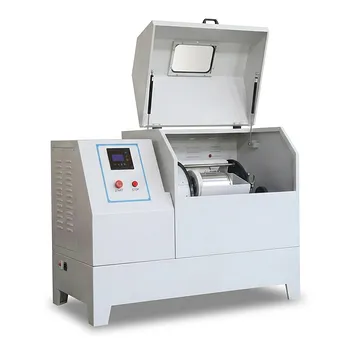
Heavy Duty Horizontal Planetary Ball Mill for Efficient Industrial Grinding and Sample Preparation
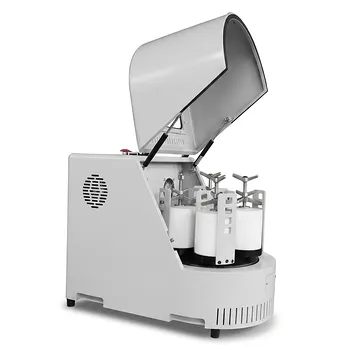
Vertical Semi Circular Planetary Ball Mill for Laboratory Precision Grinding

Vertical Production Planetary Ball Mill for High Throughput Powder Processing

Vertical Square Planetary Ball Mill for Laboratory Sample Preparation and Nanoscale Grinding
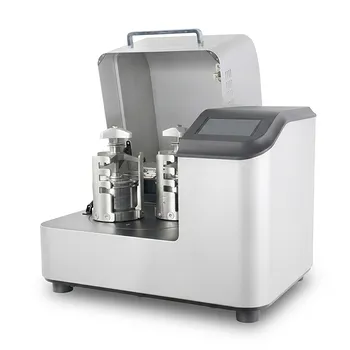
High Energy Planetary Ball Mill for Nano Scale Grinding and Mechanical Alloying
Dual Station Planetary Ball Mill 24L
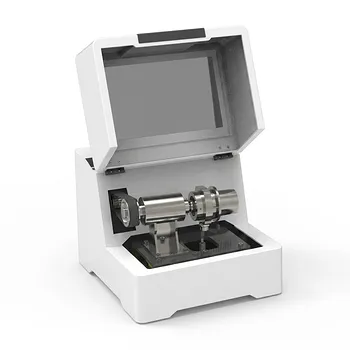
Single Tank High Energy Vibratory Ball Mill for Laboratory Grinding and Mixing
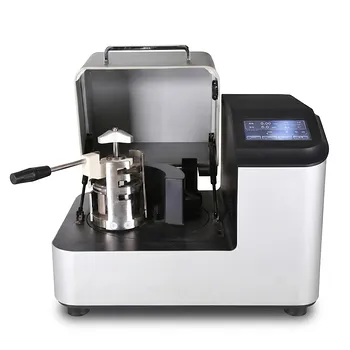
High Energy Laboratory Planetary Ball Mill for Nano Grinding and Material Science Sample Preparation

Miniature Planetary Ball Mill with Vacuum Grinding and High Efficiency for Laboratory Sample Preparation

High Energy Omnidirectional Planetary Ball Mill 16L
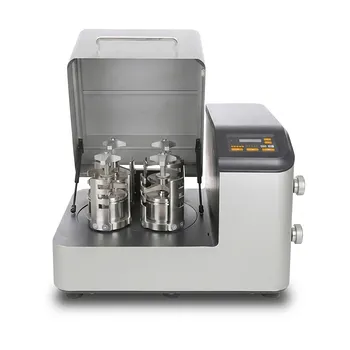
High Energy Planetary Ball Mill for Nano Scale Grinding and Colloidal Mixing in Material Science Research

360° Rotating Omnidirectional Laboratory Planetary Ball Mill for Homogeneous Ultra-Fine Grinding and Mixing
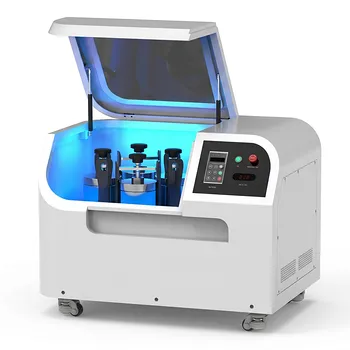
Planetary Ball Mill 12L
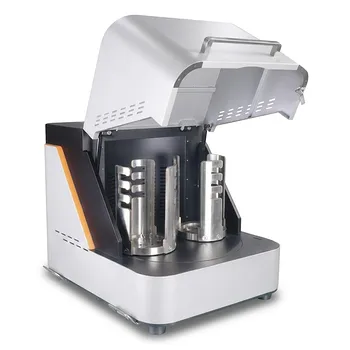
High Energy Laboratory Planetary Ball Mill for Nano Grinding and Colloidal Mixing of Hard and Brittle Materials
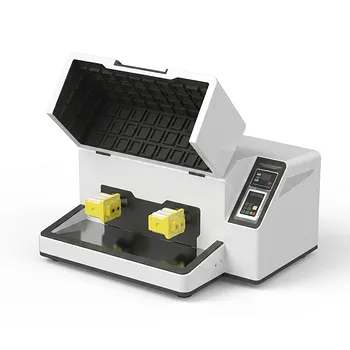
Multi-Platform Nanoscale High-Energy Vibratory Ball Mill
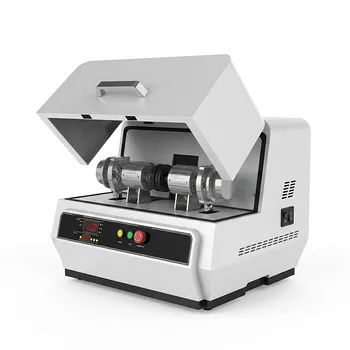
Dual Jar High Energy Vibratory Ball Mill
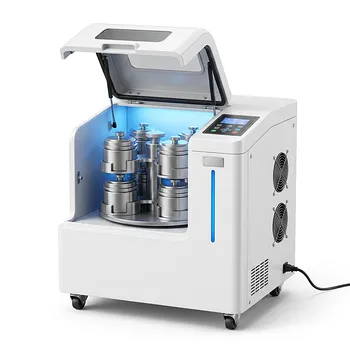
High Energy Omnidirectional Planetary Ball Mill 20L
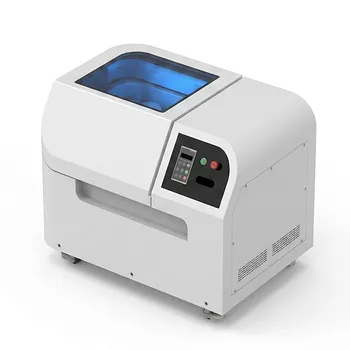
8L Planetary Ball Mill for Laboratory Grinding and Sample Preparation

Nano High Energy Vibratory Ball Mill for Laboratory Sample Preparation