What advantages does 6-hour planetary ball milling provide for MgH2? Unlock High-Efficiency Hydrogen Storage Performance
Updated 3 months ago
The 6-hour composite grinding process transforms magnesium hydride into a highly efficient hydrogen storage medium. By extending planetary ball milling to this duration, the material achieves atomic-level contact between the catalysts and the magnesium hydride (MgH2) matrix. This creates tight hetero-interfaces and facilitates the in-situ formation of "hydrogen pump" phases, which significantly accelerate hydrogen absorption and desorption while maintaining high capacity over repeated cycles.
This intensive mechanical process optimizes MgH2 systems by combining nanoscale refinement with the chemical activation of catalysts, ensuring both rapid kinetic performance and long-term structural stability.
Optimizing the Catalyst-Matrix Interface
Atomic-Level Contact and Distribution
Extending the grinding time to six hours ensures that catalysts are not merely mixed but atomically integrated into the MgH2 matrix. This deep compounding ensures a uniform distribution of active sites throughout the material, rather than localized clusters.
Formation of Tight Hetero-interfaces
The sustained mechanical energy creates tight hetero-interfaces between the host material and catalysts like LaH3 or NbH. these interfaces act as highly efficient transition zones that facilitate the movement of hydrogen atoms between phases.
In-Situ 'Hydrogen Pump' Generation
A critical advantage of this specific duration is the facilitation of in-situ phase generation. During dehydrogenation, critical phases such as Mg2Ni and Mg2NiH4 are formed, which act as "hydrogen pumps" to expedite the release and uptake of hydrogen.
Enhancing Kinetic Performance through Microstructural Change
Nanoscale Refinement and Surface Area
High-energy planetary ball milling utilizes intense impact and shear forces to reduce magnesium particles to the nanoscale. This drastic reduction in size exponentially increases the reactive specific surface area, providing more locations for hydrogen interactions.
Lattice Defects and Diffusion Channels
The 6-hour grinding duration introduces a high density of lattice defects, grain boundaries, and mechanical strains. These structural irregularities serve as fast diffusion channels, allowing hydrogen atoms to move through the solid material with significantly less resistance.
Lowering Activation Energy
By refining the grain size and increasing defect density, the process effectively lowers the dehydrogenation activation energy. This physical modification allows the MgH2 to release hydrogen at lower temperatures than unmodified magnesium powder.
Improving Cyclic Stability and Longevity
Suppression of Particle Coarsening
One of the primary failure modes of hydrogen storage materials is the agglomeration and coarsening of particles over repeated cycles. The 6-hour composite grinding induces a microstructural state that effectively suppresses this growth, preserving the material’s surface area.
Capacity Retention
Because the catalysts are so deeply integrated and the particles are stabilized, the system maintains high hydrogen storage capacity retention. This ensures that the energy density of the system does not degrade rapidly after multiple charging and discharging cycles.
Removal of Surface Barriers
The high-energy friction inherent in the planetary mill helps destroy the oxide layer naturally found on magnesium particles. Removing this barrier is essential for allowing hydrogen to enter the interior of the metal during the initial hydrogenation stages.
Understanding the Trade-offs
Risk of Material Contamination
The primary downside of extended high-energy milling is the potential for contamination from the milling media. Over six hours, small amounts of iron or other elements from the jars and balls can wear off and incorporate into the powder, potentially altering its purity.
Energy Intensity and Cost
Planetary ball milling is a highly energy-intensive process. While 6 hours provides superior material properties, the energy cost and wear on equipment must be balanced against the performance gains in commercial applications.
Over-milling and Amorphization
Excessive milling can sometimes lead to unwanted amorphization or the loss of specific crystalline structures. While defects are beneficial, an absolute loss of crystallinity can occasionally complicate the predictable behavior of the hydride phase during rapid cycling.
How to Apply This to Your Project
When implementing 6-hour planetary ball milling for MgH2 systems, consider your specific performance requirements to balance processing time with material quality.
- If your primary focus is rapid kinetics: Prioritize the 6-hour duration to ensure the maximum density of lattice defects and grain boundaries for fast diffusion.
- If your primary focus is long-term stability: Use the full 6-hour process to achieve the atomic-level contact necessary to suppress particle coarsening over hundreds of cycles.
- If your primary focus is low-temperature operation: Ensure the inclusion of catalysts like Ni or TiS2 during the milling process to facilitate the in-situ formation of hydrogen pump phases.
By precisely controlling the mechanical energy delivered during this 6-hour window, you can engineer a magnesium hydride system that overcomes its inherent thermodynamic and kinetic limitations.
Summary Table:
| Feature | Impact on MgH2 System | Key Performance Result |
|---|---|---|
| Atomic Integration | Catalysts integrated at the atomic level | Uniform active site distribution |
| Nanoscale Refinement | Drastic increase in reactive surface area | Accelerated hydrogen absorption |
| Lattice Defects | Creation of fast diffusion channels | Lowered dehydrogenation energy |
| Phase Generation | In-situ formation of "hydrogen pumps" | Rapid kinetics & high capacity |
| Structural Stability | Suppression of particle coarsening | Enhanced long-term cyclic longevity |
Optimize Your Hydrogen Storage Research with Precision Equipment
Ready to achieve atomic-level integration in your materials? At KINTEK, we provide complete laboratory sample preparation solutions for material science, specializing in advanced powder processing and compaction equipment.
Whether you need high-energy planetary ball mills for intensive 6-hour grinding, jet or rotor mills for refinement, or sieve shakers for precise particle analysis, our tools are designed to maximize your research efficiency. We also offer a full spectrum of compaction solutions, including Cold/Warm Isostatic Presses (CIP/WIP), vacuum hot presses, and XRF pellet presses to help you transition from powder to high-density pellets.
Enhance your kinetic performance and ensure material stability today. Contact our experts now to find the perfect milling and pressing solution for your magnesium hydride projects.
References
- Ya‐Ke Wu, Liu‐Ting Zhang. Constructing a Favorable Microenvironment for Robust Hydrogen Storage in MgH <sub>2</sub> Through Synergistic Cooperation With Mn and Mg <sub>2</sub> Ni. DOI: 10.1002/rar2.70038
Mentioned Products
- Vertical Semi Circular Planetary Ball Mill for Laboratory Precision Grinding
- High Energy Planetary Ball Mill for Nano Scale Grinding and Mechanical Alloying
- Vertical Production Planetary Ball Mill for High Throughput Powder Processing
- Heavy Duty Horizontal Planetary Ball Mill for Efficient Industrial Grinding and Sample Preparation
- 360° Rotating Omnidirectional Laboratory Planetary Ball Mill for Homogeneous Ultra-Fine Grinding and Mixing
People Also Ask
- What role does a planetary ball mill play in the synthesis of Li6PS5Cl (LPSCl)? Unlock High Ionic Conductivity
- Why is a planetary ball mill essential for SiBCN-rGO wet-spinning? Achieve Superior Dispersion and Spinnability
- Why is an intermittent grinding process required for perovskites in a planetary ball mill? Ensure Stability & Purity
- Why is a planetary ball mill required for PET micronization? Ensure Accurate Chemical Analysis of Reprocessed PET
- How does mechanized planetary ball milling compare to manual agate grinding? Optimize sulfide standard material precision.

Tech Team · PowderPreparation
Last updated on Jun 03, 2026
Related Products
Vertical Semi Circular Planetary Ball Mill for Laboratory Precision Grinding
High Energy Planetary Ball Mill for Nano Scale Grinding and Mechanical Alloying
Vertical Production Planetary Ball Mill for High Throughput Powder Processing
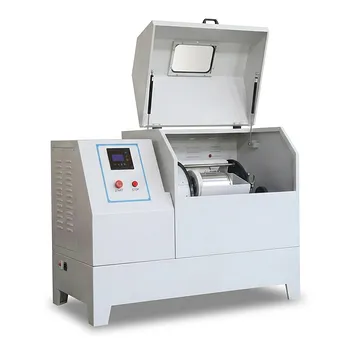
Heavy Duty Horizontal Planetary Ball Mill for Efficient Industrial Grinding and Sample Preparation
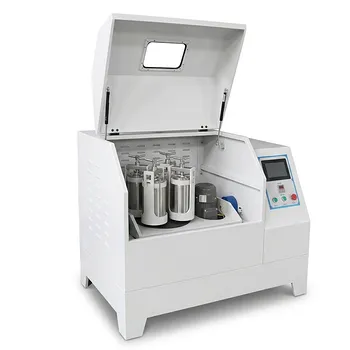
360° Rotating Omnidirectional Laboratory Planetary Ball Mill for Homogeneous Ultra-Fine Grinding and Mixing

Vertical Square Planetary Ball Mill for Laboratory Sample Preparation and Nanoscale Grinding
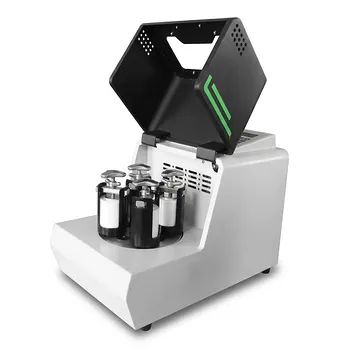
Miniature Planetary Ball Mill with Vacuum Grinding and High Efficiency for Laboratory Sample Preparation

High Energy Laboratory Planetary Ball Mill for Nano Grinding and Material Science Sample Preparation
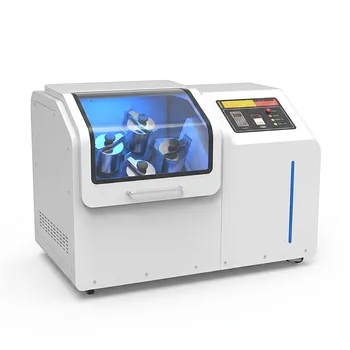
High Energy Omnidirectional Planetary Ball Mill 16L
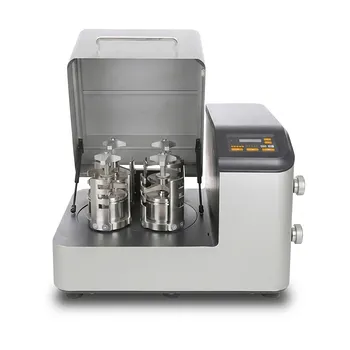
High Energy Planetary Ball Mill for Nano Scale Grinding and Colloidal Mixing in Material Science Research
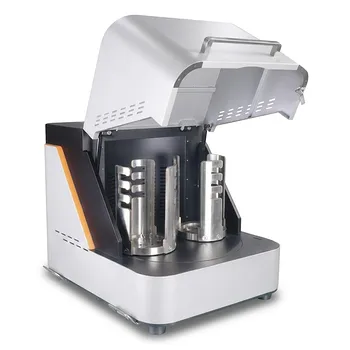
High Energy Laboratory Planetary Ball Mill for Nano Grinding and Colloidal Mixing of Hard and Brittle Materials
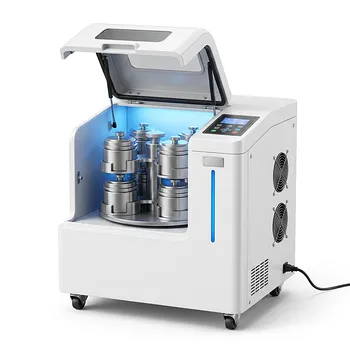
High Energy Omnidirectional Planetary Ball Mill 20L
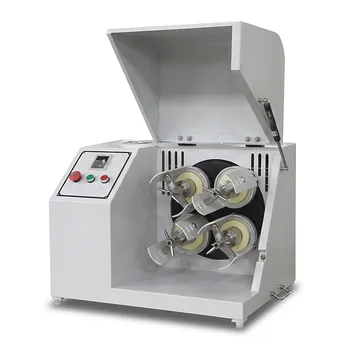
Horizontal Light Duty Planetary Ball Mill for Laboratory Sample Preparation

8L Planetary Ball Mill for Laboratory Grinding and Sample Preparation
Dual Station Planetary Ball Mill 24L
Planetary Ball Mill 12L

Nano High Energy Vibratory Ball Mill for Laboratory Sample Preparation

Multi-Platform Nanoscale High-Energy Vibratory Ball Mill

High Energy Hybrid Vibratory Ball Mill for Grinding Mixing and Cell Disruption