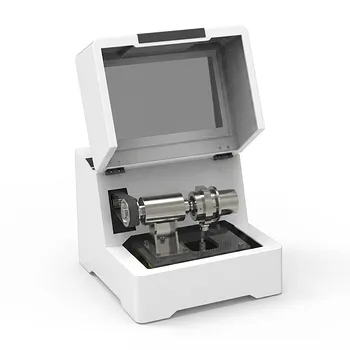
What advantages do large-scale planetary ball mills offer for perovskite production? Achieve Linear Scale-Up & Purity
Updated 4 months ago
Transitioning to large-scale planetary ball mills allows for the linear scale-up of perovskite production by providing a high-capacity environment where energy transfer remains uniform. These systems utilize a complex force field—combining rotation and revolution—to ensure that the phase purity and crystallinity achieved in small laboratory batches are maintained at the kilogram scale.
Core Takeaway: Large-scale planetary ball mills bridge the gap between lab discovery and industrial production by maintaining high energy input densities and microscopic mixing uniformity across large volumes, preventing the phase separation often seen in scaled-up vibratory milling.
Enhanced Capacity and Linear Scalability
High-Volume Jar Configurations
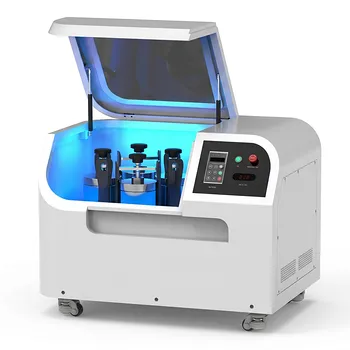
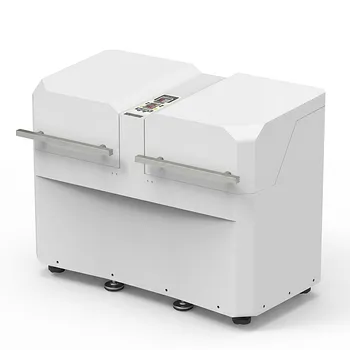
Large-scale planetary mills utilize high-capacity jars (often 250 mL or larger) and multiple grinding stations to increase throughput significantly. This multi-station design allows for the simultaneous processing of large batches, facilitating a linear scale-up from tens of grams to kilogram-scale production.
Maintaining Energy Density at Scale
Unlike vibratory mills, which can struggle to distribute energy evenly through large mass loads, industrial planetary mills maintain high energy input densities. This ensures that the mechanical activation required for perovskite formation remains consistent, regardless of the batch size.
The Superiority of Planetary Motion Mechanics
Complex Force Environments
The defining advantage of the planetary mill is the simultaneous rotation and revolution of the grinding jars. This motion creates a sophisticated force environment where centrifugal, impact, and shear forces work in tandem to break down precursors.
Adjustable Revolution-to-Rotation Ratios
Operators can fine-tune the ratio of revolution to rotation to optimize mechanical energy transfer. This level of control allows for precise adjustments to the force field, ensuring the material is subjected to uniform stress even as the volume increases.
Overcoming Material Agglomeration
High rotational speeds (up to 800 rpm) generate Coriolis forces that effectively eliminate agglomeration in precursor powders. This is critical for perovskites, as it ensures that five or more metal elements can achieve the microscopic mixing uniformity required for entropy stabilization.
Ensuring Material Quality and Phase Purity
Consistency in Crystallinity
Large-scale planetary mills are engineered to replicate the phase purity found in laboratory-scale samples. By providing a more uniform mechanical force field, these mills prevent local compositional deviations that lead to the precipitation of unwanted secondary phases.
Achieving Sub-Micron Fineness
The high dynamic energy produced by planetary motion allows for the production of ultrafine powders with sub-micron fineness. This increased surface area is essential for the subsequent sintering behavior and electronic performance of the final perovskite material.
Understanding the Trade-offs and Pitfalls
Heat Management and Thermal Control
The high energy density of planetary milling generates significant frictional heat, which can lead to unwanted phase transitions or degradation in sensitive perovskite precursors. Industrial units often require specialized cooling systems or intermittent milling cycles to manage these temperatures effectively.
Grinding Media Contamination
The intense impact and shear forces can cause wear on the grinding jars and media, potentially introducing impurities like tungsten carbide or zirconia into the sample. While replaceable high-purity media help mitigate this, users must balance energy input with the risk of material contamination.
Optimization Complexity
Setting up a large-scale planetary mill is more complex than a simple vibratory mill, requiring the optimization of jar filling ratios, ball-to-powder weight ratios, and speed settings. Small errors in these parameters can lead to "dead zones" within the jar where material is not properly processed.
How to Apply This to Your Production Scale
Making the Right Choice for Your Goal
- If your primary focus is phase purity in complex compositions: Utilize planetary mills with high-speed settings to ensure the "cocktail effect" and entropy stabilization through microscopic mixing.
- If your primary focus is rapid throughput for simple oxides: Focus on maximizing jar volume and multi-station configurations to achieve kilogram targets without over-engineering the rotation ratios.
- If your primary focus is minimizing contamination: Select specialized grinding media like tungsten carbide and implement lower-speed, longer-duration milling cycles to reduce media wear.
By leveraging the sophisticated force dynamics of planetary ball mills, producers can successfully transition perovskite synthesis from the lab bench to industrial-scale batch production without sacrificing material integrity.
Summary Table:
| Feature | Large-Scale Planetary Mill | Lab-Scale Vibratory Mill |
|---|---|---|
| Production Capacity | Kilogram-scale (Multi-station) | Gram-scale (Batch limited) |
| Energy Density | High & Uniform across large volumes | Inconsistent in large mass loads |
| Mixing Mechanism | Simultaneous Rotation & Revolution | High-frequency vibration |
| Scalability | Linear (Maintains phase purity) | Nonlinear (Risk of phase separation) |
| Particle Control | Sub-micron fineness & anti-agglomeration | Limited control over fine distribution |
Scale Your Perovskite Production with Precision
Transitioning from lab discovery to industrial-scale manufacturing requires equipment that guarantees consistency. [Brand Name] provides complete laboratory sample preparation solutions for material science, specializing in advanced powder processing and compaction technology.
Whether you are optimizing entropy-stabilized materials or scaling simple oxides, our extensive line of equipment supports your entire workflow:
- Advanced Milling: Planetary ball mills (large & lab scale), jet mills, and cryogenic grinders for sub-micron fineness.
- Sample Preparation: Jaw/roll crushers and sieve shakers for precise particle size distribution.
- Material Compaction: A full spectrum of hydraulic presses, including Cold/Warm Isostatic Presses (CIP/WIP), vacuum hot presses, and XRF pellet presses.
Ready to achieve superior phase purity at the kilogram scale? Contact our technical experts today to find the perfect milling and compaction solution for your specific material requirements.
References
- Zonghan Hong, Han Sen Soo. Completely Solvent-free Protocols to Access Phase-Pure, Metastable Metal Halide Perovskites and Functional Photodetectors from the Precursor Salts. DOI: 10.1016/j.isci.2019.05.042
Mentioned Products
- Heavy Duty Horizontal Planetary Ball Mill for Efficient Industrial Grinding and Sample Preparation
- Vertical Production Planetary Ball Mill for High Throughput Powder Processing
- Vertical Square Planetary Ball Mill for Laboratory Sample Preparation and Nanoscale Grinding
- Planetary Ball Mill 12L
- 8L Planetary Ball Mill for Laboratory Grinding and Sample Preparation
People Also Ask
- Why grind lime-pozzolan specimens for TG/DTA for 3 mins? Master sample prep for high-precision thermal analysis.
- What is the role of a planetary ball mill in the mechanical activation of ZTA powder? Boost Sintering Performance
- What is the function of a planetary ball mill in wollastonite ceramic prep? Achieve Molecular Homogenization & Reactivity
- How does a planetary ball mill contribute to the homogenization of trace elements? Achieve Sub-Micron Uniformity
- What is the function of a high-performance planetary ball mill in AMZ laminates? Master Ceramic Homogenization.

Tech Team · PowderPreparation
Last updated on Jun 03, 2026
Related Products
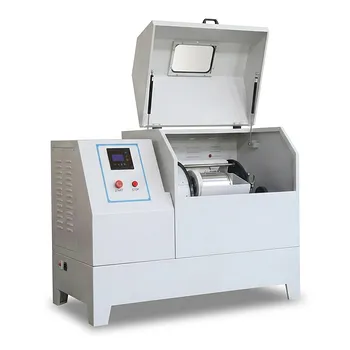
Heavy Duty Horizontal Planetary Ball Mill for Efficient Industrial Grinding and Sample Preparation
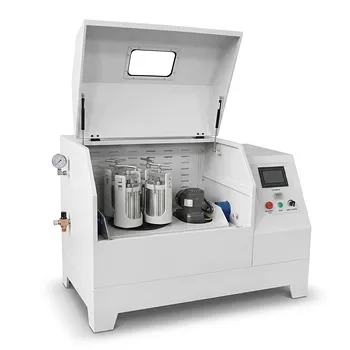
Vertical Production Planetary Ball Mill for High Throughput Powder Processing
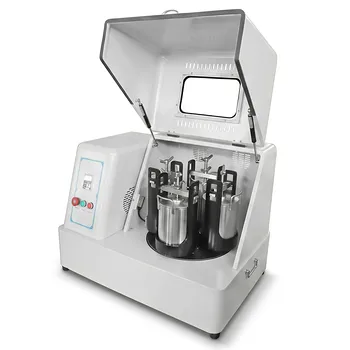
Vertical Square Planetary Ball Mill for Laboratory Sample Preparation and Nanoscale Grinding
Planetary Ball Mill 12L
8L Planetary Ball Mill for Laboratory Grinding and Sample Preparation
High Energy Planetary Ball Mill for Nano Scale Grinding and Colloidal Mixing in Material Science Research
Dual Station Planetary Ball Mill 24L
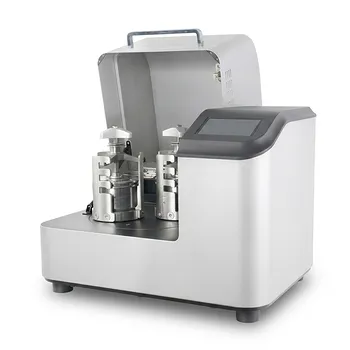
High Energy Planetary Ball Mill for Nano Scale Grinding and Mechanical Alloying
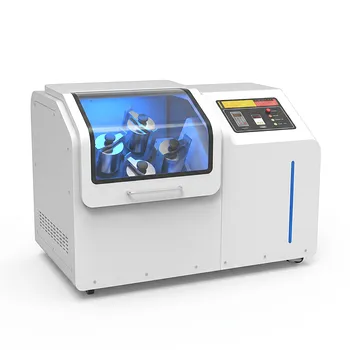
High Energy Omnidirectional Planetary Ball Mill 16L
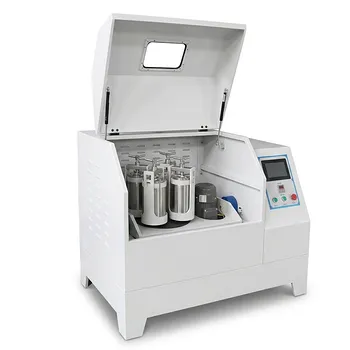
360° Rotating Omnidirectional Laboratory Planetary Ball Mill for Homogeneous Ultra-Fine Grinding and Mixing
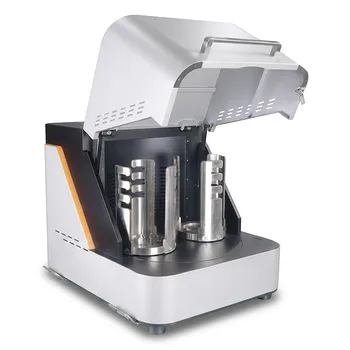
High Energy Laboratory Planetary Ball Mill for Nano Grinding and Colloidal Mixing of Hard and Brittle Materials
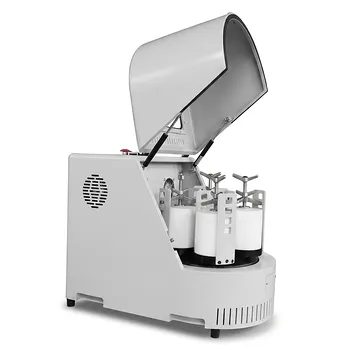
Vertical Semi Circular Planetary Ball Mill for Laboratory Precision Grinding
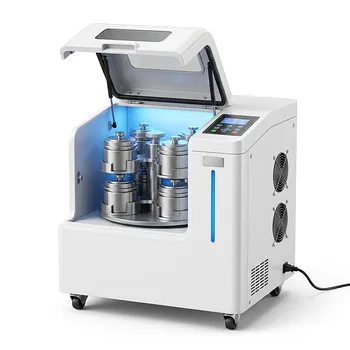
High Energy Omnidirectional Planetary Ball Mill 20L
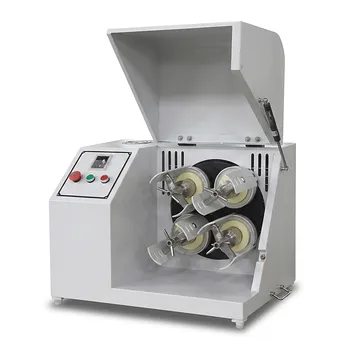
Horizontal Light Duty Planetary Ball Mill for Laboratory Sample Preparation
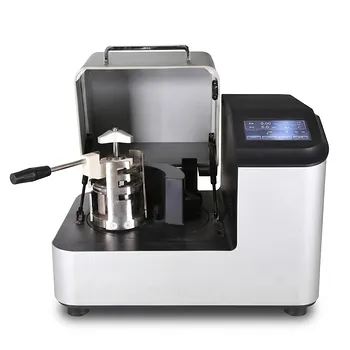
High Energy Laboratory Planetary Ball Mill for Nano Grinding and Material Science Sample Preparation
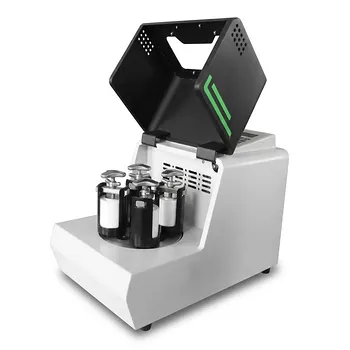
Miniature Planetary Ball Mill with Vacuum Grinding and High Efficiency for Laboratory Sample Preparation
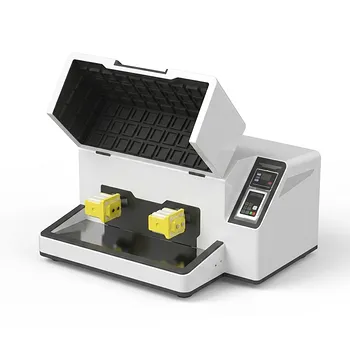
Multi-Platform Nanoscale High-Energy Vibratory Ball Mill
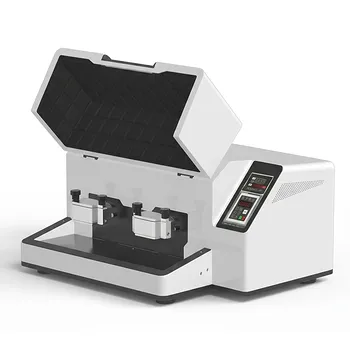
Nanoscale High-Energy Vibratory Ball Mill for Laboratory Sample Preparation, Mechanochemistry, and Mechanical Alloying
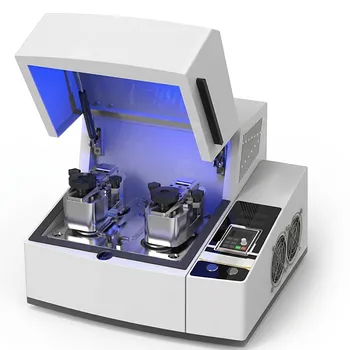
Laboratory Nano High Energy Ball Mill Ultrafine Grinding Mechanical Alloying