How should a mixing device be selected for non-flowable powders? Expert Guide for UO2 fuel pellet preparation.
Updated 4 months ago
The selection of an industrial ribbon mixer equipped with an agitator is the standard for non-flowable Uranium Dioxide (UO2) powders. This choice is driven by the need for a convective mixing mechanism which can effectively overcome the high internal friction of cohesive materials to ensure a uniform distribution of Gadolinium Oxide (Gd2O3).
For non-flowable UO2 powders, convective ribbon mixers provide superior homogeneity and lower standard deviation in Gd2O3 distribution compared to shear-based double-cone mixers. Success depends on utilizing high-torque drives and adjustable rotation speeds to manage the unique mechanical properties of cohesive nuclear fuels.
Why Ribbon Mixers Outperform Double-Cone Designs
The Advantage of Convective Mixing
Unlike traditional equipment, ribbon mixers utilize a convective mechanism to move large batches of material through the vessel. This active displacement is essential for non-free-flowing powders like UO2, which do not move easily under gravity alone.
Limitations of Shear-Based Motion
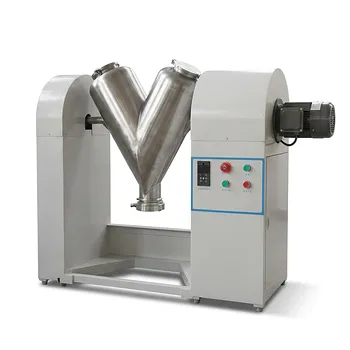
Double-cone mixers rely primarily on the shear motion of particle layers as the vessel rotates. For cohesive powders, this often results in poor material turnover and "dead zones" where the Gd2O3 dopant fails to integrate into the UO2 matrix.
Achieving Chemical Homogeneity
The agitator within a ribbon mixer ensures that the Gd2O3 additive is distributed with a high degree of precision. This results in a significantly lower standard deviation in the final fuel pellet composition, which is critical for nuclear safety and performance.
Mechanical Requirements for Cohesive Materials
Managing High Internal Friction
Non-flowable powders exhibit high internal friction, which places unique demands on the mixer's mechanical assembly. This friction leads to significantly higher startup and average torques during the initial stages of the mixing cycle.
Power and Torque Dynamics
Mixing equipment for UO2 must be specified with higher drive power to compensate for the resistance of the powder bed. Cohesive materials also tend to suppress torque fluctuations, altering the phase relationship between the blade position and the resistance encountered.
Optimizing the Circulation Path
Operators must have the ability to adjust rotation speeds to ensure the material follows the intended circulation path. Proper speed calibration prevents the powder from simply "clumping" and ensures every part of the batch is actively engaged by the ribbon blades.
Understanding the Trade-offs and Pitfalls
Energy Consumption and Heat Generation
Because ribbon mixers require high-power drives to overcome friction, they consume more electrical energy than gravity-fed systems. This increased energy input can also lead to localized heat generation, which may need to be monitored depending on the specific characteristics of the powder blend.
Mechanical Wear and Maintenance
The aggressive nature of moving high-friction, dense UO2 powder can increase the wear rate on the ribbon blades and the vessel lining. Utilizing an agitator adds mechanical complexity, requiring a more robust preventative maintenance schedule to avoid contamination from worn components.
Risk of Material Stagnation
If the rotation speed is not correctly calibrated to the specific density and moisture content of the UO2, the powder may stagnate in the bottom of the trough. This failure in the "circulation path" can lead to a batch that appears mixed but contains pockets of unblended Gd2O3.
How to Apply This to Your Production Line
Selecting the right setup depends on your specific throughput requirements and the physical properties of your raw UO2 supply.
- If your primary focus is Maximum Homogeneity: Prioritize a ribbon mixer with a high-speed internal agitator to aggressively break up cohesive clusters of Gd2O3.
- If your primary focus is Equipment Longevity: Invest in reinforced drive shafts and wear-resistant blade coatings to handle the high-torque demands of UO2 powders.
- If your primary focus is Process Flexibility: Select a drive system with a Variable Frequency Drive (VFD) to allow operators to optimize rotation speeds for different powder batches.
By prioritizing convective motion over simple shear, you ensure the precise dopant distribution required for high-quality nuclear fuel fabrication.
Summary Table:
| Feature | Ribbon Mixer (Recommended) | Double-Cone Mixer | Impact on UO2-Gd2O3 Mix |
|---|---|---|---|
| Mixing Mechanism | Convective (Active Displacement) | Shear-Based (Gravity/Rotation) | Better homogeneity in cohesive powders |
| Powder Suitability | Non-flowable / Cohesive | Free-flowing / Granular | Eliminates dead zones in UO2 matrix |
| Torque Demand | High Drive Power Required | Lower Power Required | Handles high internal friction of UO2 |
| Precision | High (Lower Standard Deviation) | Lower (Risk of Stagnation) | Essential for nuclear fuel safety |
| Control | Variable Speed/VFD Preferred | Fixed Rotation Common | Optimizes circulation for dense batches |
Elevate Your Material Science Research with Precision Powder Solutions
Are you facing challenges with cohesive powder homogeneity or high-friction material processing? At [Company Name], we specialize in providing complete laboratory sample preparation solutions tailored for material science and nuclear fuel research.
From industrial-grade powder mixers and defoaming mixers to specialized crushers (jaw/roll), planetary ball mills, and jet mills, our equipment is designed to handle the most demanding mechanical properties. We also offer a full spectrum of compaction technology, including:
- Cold/Warm Isostatic Presses (CIP/WIP)
- Standard Lab Presses & XRF Pellet Presses
- Vacuum Hot Presses for advanced sintering
Ensure the integrity of your UO2-Gd2O3 fuel pellets today. Contact our technical experts to find the perfect equipment configuration for your specific production requirements.
References
- Palanki Balakrishna. Fabrication of UO<sub>2</sub>-Gd<sub>2</sub>O<sub>3</sub> Fuel Pellets. DOI: 10.4236/msce.2016.42002
Mentioned Products
- 非介入式材料均质机真空脱泡行星搅拌高粘度混合设备
- Horizontal Ribbon Mixer for Dry Powder and Slurry Blending
- Horizontal Ribbon Mixer for Uniform Powder and Slurry Mixing
- Horizontal Trough Mixer for Uniform Powder and Paste Blending
- High Viscosity Planetary Centrifugal Mixing and Vacuum Defoaming Machine for Laboratory Material Preparation
People Also Ask
- How does a planetary vacuum defoaming mixer help magnesium calcium phosphate slurries? Achieve Flawless 3D Printed Bone
- Why is vacuum defoaming necessary for PDMS mixtures before microwave irradiation curing? Key to Structural Integrity
- What role does a vacuum defoaming mixer play in BNT MLCC slurry? Ensure High Dielectric Strength & Pinhole-Free Prep
- Why is a vacuum defoaming mixer essential for DLP 3D printing ceramic slurries? Key to Structural Integrity
- What is the purpose of using a high-vacuum defoaming mixer for SiC/Cf composites? Optimize Density and Strength

Tech Team · PowderPreparation
Last updated on Jun 03, 2026
Related Products
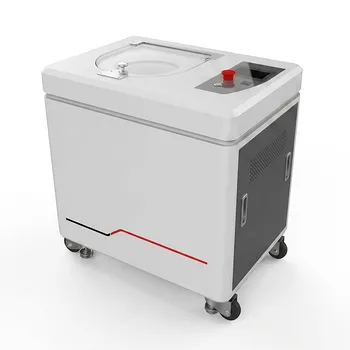
非介入式材料均质机真空脱泡行星搅拌高粘度混合设备
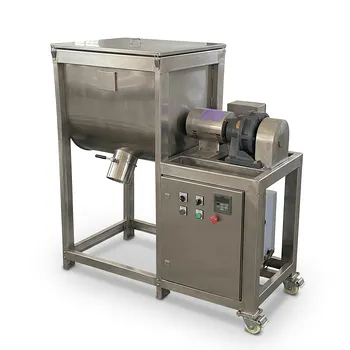
Horizontal Ribbon Mixer for Dry Powder and Slurry Blending
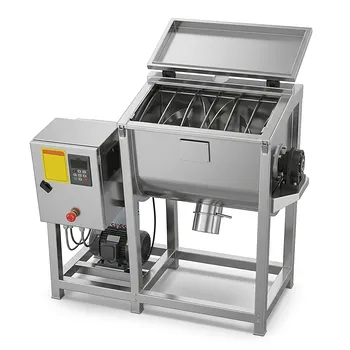
Horizontal Ribbon Mixer for Uniform Powder and Slurry Mixing
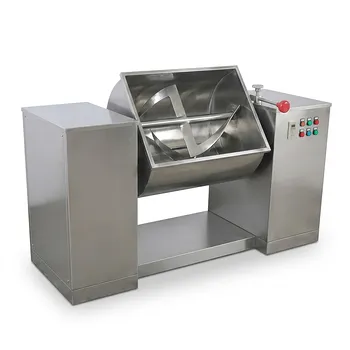
Horizontal Trough Mixer for Uniform Powder and Paste Blending
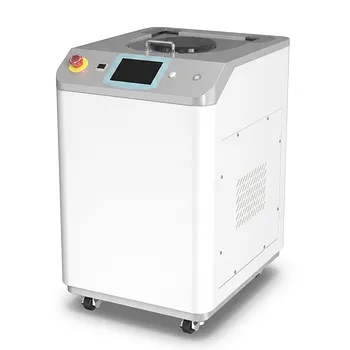
High Viscosity Planetary Centrifugal Mixing and Vacuum Defoaming Machine for Laboratory Material Preparation
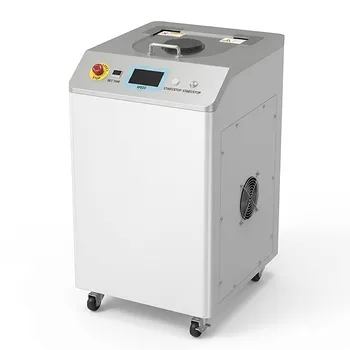
High Viscosity Planetary Centrifugal Vacuum Mixer for Material Defoaming and Uniform Mixing
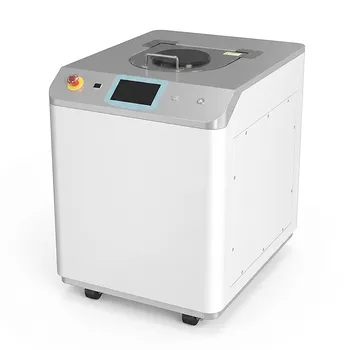
Industrial Planetary Centrifugal Vacuum Defoaming Mixer for High Viscosity Paste and Advanced Material Science
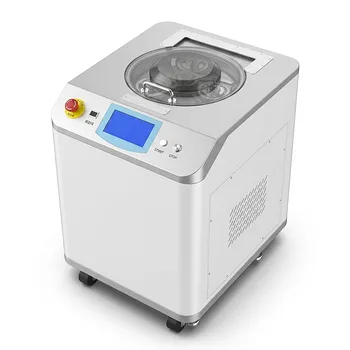
Dual Cup Vacuum Centrifugal Mixer Planetary Paste Defoaming Machine Industrial Material Processor
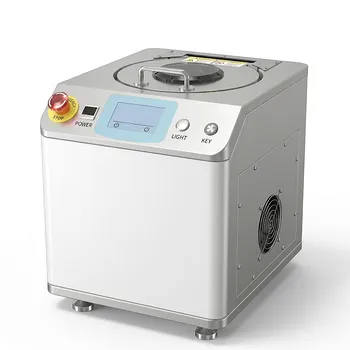
High Efficiency Vacuum Planetary Centrifugal Mixer and Defoaming Machine for Industrial Material Research and Precise Laboratory Powder Dispersion
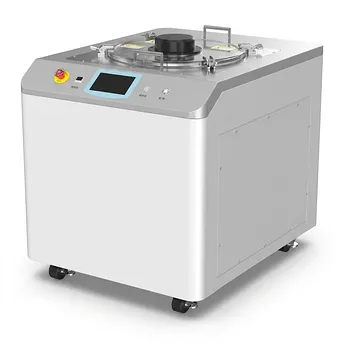
Industrial Planetary Centrifugal Vacuum Defoaming Mixer for High Viscosity Paste and Powder Homogenization
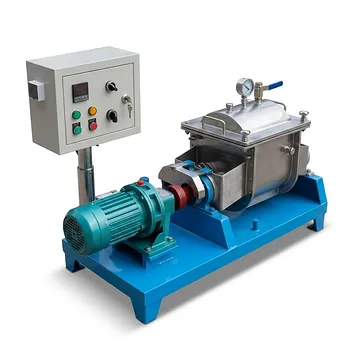
Industrial Vacuum Kneader for High-Viscosity Silicone, Rubber, and Compound Mixing
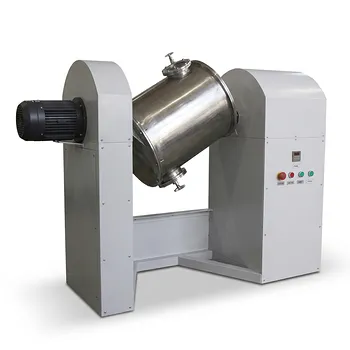
Inclined Mixer for Homogeneous Powder Blending and Grinding
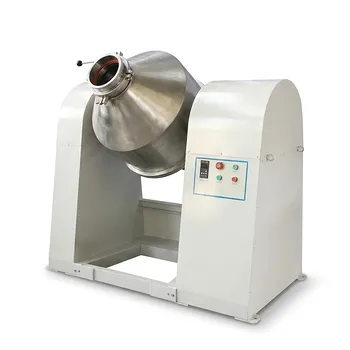
Industrial Double Cone Mixer for Powder Blending and Homogeneous Mixing
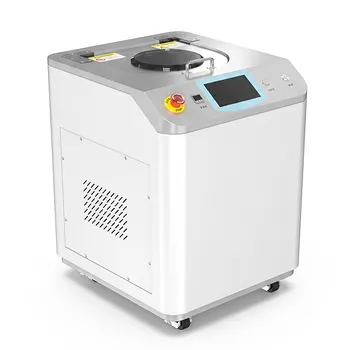
High Speed Vacuum Planetary Centrifugal Mixer and Defoamer for Industrial Paste Processing
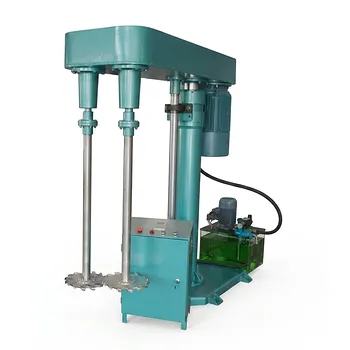
Hydraulic Double Shaft Disperser for High Viscosity Liquid Mixing and Dispersion
Multi Dimensional Universal Mixer for High Uniformity Powder Blending
High-Speed Simple Disperser for Efficient Mixing, Dispersion, and Emulsification