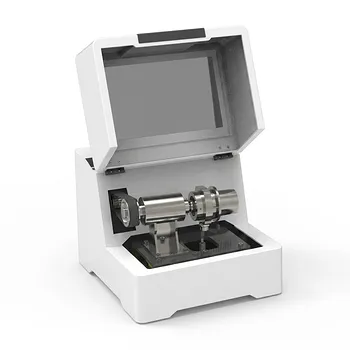
How is a planetary ball mill utilized in the preparation of Li-Si alloy anodes? Optimize Battery Performance
Updated 4 months ago
The planetary ball mill is the essential refinement tool for lithium-silicon (Li-Si) alloy anodes, used primarily to pulverize bulk alloys into uniform micro-nanoscale powders. By applying high-energy impact and shear forces, the mill transforms the raw material produced during thermal synthesis into a powder with a high specific surface area. This physical refinement is critical for ensuring the solid-solid contact required for efficient ion transport in solid-state battery architectures.
Core Takeaway: Planetary ball milling bridges the gap between chemical synthesis and battery assembly by optimizing the alloy's physical structure, thereby maximizing the electrochemical reactivity and interface stability of the Li-Si anode.
Refining Particle Size for Interface Optimization
Achieving Micro-Nanoscale Precision
The primary role of the mill is to reduce bulk Li-Si alloy into micro-nanoscale particles. By precisely controlling rotation speeds and milling durations, researchers can achieve a highly uniform particle size distribution.
Maximizing Specific Surface Area
Reducing particle size significantly increases the specific surface area of the anode material. This is vital in solid-state batteries because, unlike liquid electrolytes, solid electrolytes cannot "flow" to fill gaps, making surface exposure a key driver of performance.
Enhancing Solid-Solid Contact
Fine particles allow for a more intimate solid-solid contact interface between the Li-Si alloy and the solid electrolyte. This improved contact reduces interfacial resistance and facilitates smoother lithium-ion movement during charge and discharge cycles.
Optimizing Kinetic and Chemical Performance
Improving Kinetic Performance
The refinement process directly enhances the kinetic performance of the anode. Smaller particles shorten the diffusion path for lithium ions within the silicon lattice, allowing for faster charging and higher power density.
Homogenizing Material Composition
High-energy milling effectively breaks down particle agglomerates that often form during initial synthesis. This ensures that the active Li-Si material, conductive additives, and binders are distributed uniformly throughout the electrode matrix.
Enabling Mechanochemical Activation
Beyond simple grinding, the planetary ball mill can induce mechanochemical reactions. This process can be used to pre-alloy components or create amorphous structures that better accommodate the volume expansion of silicon during cycling.
Navigating Environmental and Structural Constraints
Milling Under Inert Atmospheres
Lithium-silicon alloys are highly sensitive to moisture and oxygen. Planetary ball mills allow for processing under inert gas environments, preventing oxidation and maintaining the chemical purity of the anode material.
Preparing for Sintering and Compaction
The uniform powder produced by the mill provides an ideal physical foundation for subsequent processing steps. It ensures that when the material is subjected to hydraulic pressing or sintering, the resulting anode is dense and structurally cohesive.
Mitigating Volume Expansion
By achieving a sub-micron scale, the mill helps distribute the stresses associated with silicon's volume expansion. A more uniform microscopic structure helps prevent the pulverization of the electrode during long-term battery cycling.
Understanding the Trade-offs
Risk of Impurity Contamination
The high-energy nature of planetary milling can lead to the wear of grinding media (balls and jars). This wear can introduce trace amounts of materials like zirconia or stainless steel into the Li-Si alloy, potentially affecting electrochemical stability.
Temperature-Induced Phase Changes
Excessive milling speeds generate significant heat, which may trigger unwanted phase transitions in the Li-Si alloy. Careful monitoring and intermittent cooling cycles are often required to maintain the desired crystalline or amorphous state.
Balancing Energy and Time
While longer milling times generally lead to finer particles, there is a point of diminishing returns. Excessive milling can lead to over-grinding, where particles begin to re-agglomerate due to high surface energy, increasing processing costs without adding performance value.
Implementation Strategies for Battery Development
How to Apply This to Your Project
To achieve the best results with Li-Si alloy preparation, the milling strategy must be tailored to the specific battery chemistry and performance targets.
- If your primary focus is high power density: Utilize higher rotation speeds and longer durations to achieve the smallest possible nano-scale particles, maximizing the reaction surface.
- If your primary focus is cycle life: Prioritize a milling regime that produces a stable, amorphous alloy structure to better accommodate volume changes and prevent particle fracture.
- If your primary focus is material purity: Select grinding media (such as silicon nitride or tungsten carbide) that minimize the impact of wear debris on the specific electrochemical environment of your cell.
By mastering the mechanical refinement of Li-Si alloys, researchers can unlock the full potential of high-capacity anodes for the next generation of solid-state energy storage.
Summary Table:
| Key Milling Function | Impact on Li-Si Alloy Material | Benefit to Solid-State Battery |
|---|---|---|
| Particle Refinement | Achieves uniform micro-nanoscale powders | Increases power density and shortens ion diffusion |
| Surface Optimization | Maximizes specific surface area | Lowers interfacial resistance through better solid-solid contact |
| Homogenization | Breaks agglomerates & blends additives | Ensures uniform electrochemical activity across the electrode |
| Inert Processing | Prevents oxidation during milling | Maintains high chemical purity and material stability |
| Mechanochemistry | Enables pre-alloying and amorphization | Better accommodates volume expansion during cycling |
Elevate Your Battery Research with Precision Powder Processing
Are you developing high-capacity Li-Si anodes for the next generation of solid-state energy storage? At MSE Supplies, we provide complete laboratory sample preparation solutions specifically tailored for material science.
Our high-performance planetary ball mills, jet mills, and cryogenic grinders ensure precise micro-nanoscale refinement while maintaining material purity. To achieve the dense, structurally cohesive anodes required for solid-state architectures, we offer a full spectrum of hydraulic presses, including Cold/Warm Isostatic Presses (CIP/WIP), vacuum hot presses, and XRF pellet presses.
From initial crushing to final powder mixing and compaction, our equipment is designed to help you master the mechanical refinement of advanced battery materials. Contact us today to find the perfect equipment solution for your lab!
References
- Hiroshi Nagata, Kunimitsu Kataoka. Affordable High-performance Sulfur Positive Composite Electrode for All-solid-state Li-S Batteries Prepared by One-step Mechanical Milling without Solid Electrolyte or Li<sub>2</sub>S. DOI: 10.5796/electrochemistry.25-00111
Mentioned Products
- Vertical Semi Circular Planetary Ball Mill for Laboratory Precision Grinding
- High Energy Planetary Ball Mill for Nano Scale Grinding and Mechanical Alloying
- Vertical Production Planetary Ball Mill for High Throughput Powder Processing
- Heavy Duty Horizontal Planetary Ball Mill for Efficient Industrial Grinding and Sample Preparation
- 360° Rotating Omnidirectional Laboratory Planetary Ball Mill for Homogeneous Ultra-Fine Grinding and Mixing
People Also Ask
- What role does a planetary ball mill play in the synthesis of Li6PS5Cl (LPSCl)? Unlock High Ionic Conductivity
- Why is a planetary ball mill essential for SiBCN-rGO wet-spinning? Achieve Superior Dispersion and Spinnability
- Why is an intermittent grinding process required for perovskites in a planetary ball mill? Ensure Stability & Purity
- Why is a planetary ball mill required for PET micronization? Ensure Accurate Chemical Analysis of Reprocessed PET
- How does mechanized planetary ball milling compare to manual agate grinding? Optimize sulfide standard material precision.

Tech Team · PowderPreparation
Last updated on Jun 03, 2026
Related Products
Vertical Semi Circular Planetary Ball Mill for Laboratory Precision Grinding

High Energy Planetary Ball Mill for Nano Scale Grinding and Mechanical Alloying

Vertical Production Planetary Ball Mill for High Throughput Powder Processing

Heavy Duty Horizontal Planetary Ball Mill for Efficient Industrial Grinding and Sample Preparation
360° Rotating Omnidirectional Laboratory Planetary Ball Mill for Homogeneous Ultra-Fine Grinding and Mixing

Vertical Square Planetary Ball Mill for Laboratory Sample Preparation and Nanoscale Grinding

Miniature Planetary Ball Mill with Vacuum Grinding and High Efficiency for Laboratory Sample Preparation
High Energy Laboratory Planetary Ball Mill for Nano Grinding and Material Science Sample Preparation

High Energy Omnidirectional Planetary Ball Mill 16L
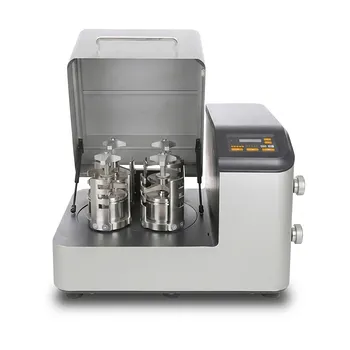
High Energy Planetary Ball Mill for Nano Scale Grinding and Colloidal Mixing in Material Science Research
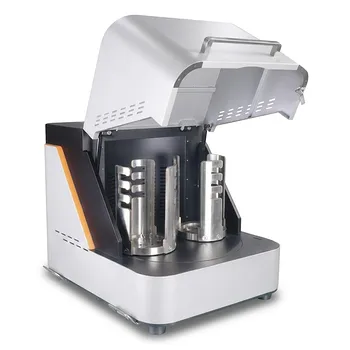
High Energy Laboratory Planetary Ball Mill for Nano Grinding and Colloidal Mixing of Hard and Brittle Materials
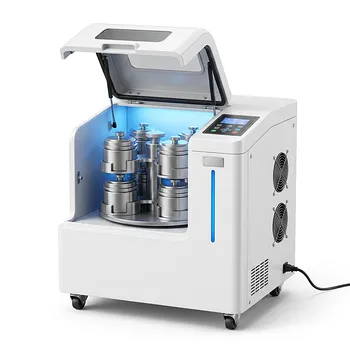
High Energy Omnidirectional Planetary Ball Mill 20L
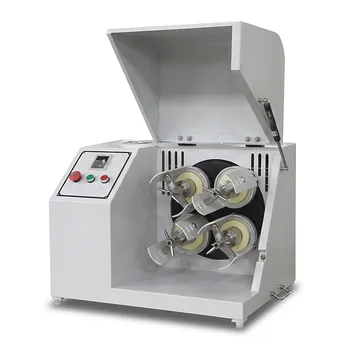
Horizontal Light Duty Planetary Ball Mill for Laboratory Sample Preparation
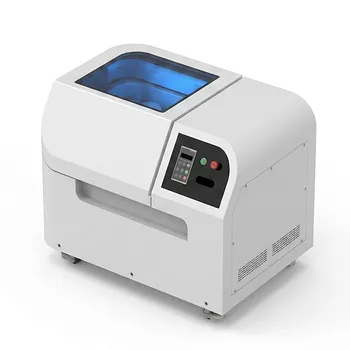
8L Planetary Ball Mill for Laboratory Grinding and Sample Preparation
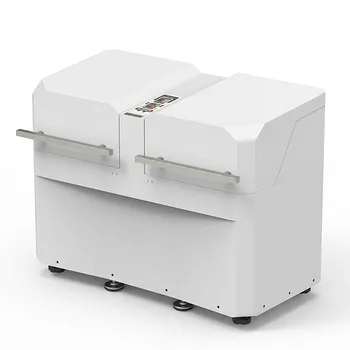
Dual Station Planetary Ball Mill 24L
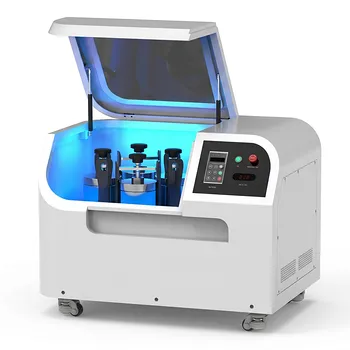
Planetary Ball Mill 12L
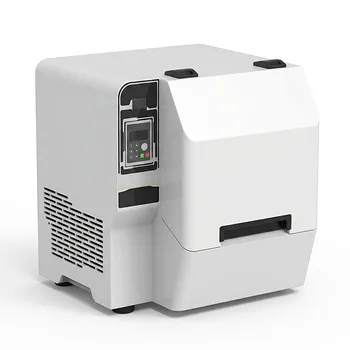
Nano High Energy Vibratory Ball Mill for Laboratory Sample Preparation
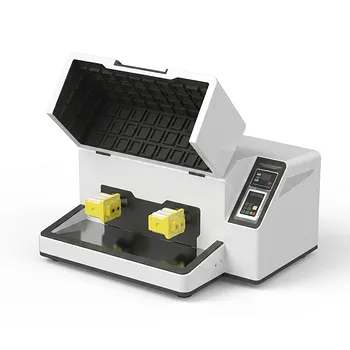
Multi-Platform Nanoscale High-Energy Vibratory Ball Mill

High Energy Hybrid Vibratory Ball Mill for Grinding Mixing and Cell Disruption