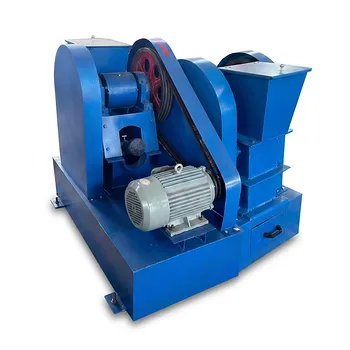
How does the use of a laboratory hydraulic press to apply 700 MPa influence Ni2MnSn alloys? Optimize Density & Phase
Updated 4 months ago
The application of 700 MPa via a laboratory hydraulic press is a critical densification step that transforms loose Ni2MnSn powder into high-density green pellets. This intense mechanical pressure maximizes particle-to-particle contact area, which is the fundamental prerequisite for efficient atomic diffusion and the successful formation of the ordered L21 Heusler phase during subsequent thermal treatments.
Compacting Ni2MnSn powder at 700 MPa creates an intimate physical interface between particles that facilitates rapid liquid-solid reactions during annealing. This high-pressure preparation is essential for accelerating phase nucleation and ensuring a homogenous, structurally sound alloy.
Enhancing Phase Formation and Diffusion
Maximizing Inter-particle Contact Area
Applying 700 MPa of pressure forces individual particles into much closer physical proximity than manual packing could achieve. This maximal contact area creates a high-density "green body" where atomic pathways are shortened across particle boundaries.
Accelerating the L21 Heusler Phase Nucleation
The increased contact area is particularly vital during subsequent annealing stages. By establishing tight interfaces, the press ensures that atomic diffusion occurs rapidly once thermal energy is applied.
Facilitating Liquid-Solid Reactions
Ni2MnSn preparation often involves reactions near the melting point of Tin (Sn). The hydraulic press ensures that when Sn melts, it interacts immediately with surrounding nickel and manganese, accelerating the growth of the stable L21 Heusler phase.
Achieving Structural Integrity and Density
Elimination of Internal Porosity
High-pressure compaction effectively eliminates voids and pores trapped between powder particles. Removing these gaps is essential for creating a solid material that does not crumble or undergo excessive shrinkage during sintering.
Improving Green Body Density
The 700 MPa force overcomes internal friction within the powder mass to reach a high initial density. This provides a stable mechanical foundation, allowing the pellet to be handled and processed through high-temperature stages without losing its geometric shape.
Expulsion of Trapped Gases
The mechanical force of the laboratory press helps to expel excess gas from the powder mixture. This prevents the formation of internal gas pockets that could lead to non-uniform microstructures or cracking during the heating process.
Understanding the Trade-offs
The Risk of Internal Micro-Cracks
While high pressure increases density, excessive or uneven pressure can lead to stress concentrations within the pellet. If the pressure is not controlled precisely, the resulting green body may develop micro-cracks that compromise the final material's electrical or magnetic properties.
Non-Uniform Density Gradients
Friction between the powder and the mold walls can cause pressure gradients, where the center of the pellet is less dense than the exterior. This requires high-quality, lubricated molds and consistent pressure application to ensure the Ni2MnSn alloy remains homogenous.
Mechanical Stress on Tooling
Operating at 700 MPa puts significant mechanical strain on the hydraulic press and the die sets. Using pressures of this magnitude requires robust laboratory equipment and regular maintenance to prevent deformation of the compaction tools.
How to Apply This to Your Project
Making the Right Choice for Your Goal
- If your primary focus is phase purity: Ensure the 700 MPa pressure is held for a sufficient dwell time to maximize particle deformation and surface contact before annealing.
- If your primary focus is structural durability: Carefully monitor the ejection of the pellet from the mold to ensure that internal stresses from the 700 MPa compaction do not cause delamination.
- If your primary focus is rapid synthesis: Leverage the high-pressure contact to reduce annealing times, as the established interfaces will significantly lower the barrier for atomic diffusion.
By masterfully controlling the compaction pressure of the laboratory hydraulic press, you establish the precise physical environment necessary for the chemical and structural success of the Ni2MnSn alloy.
Summary Table:
| Parameter | Influence on Ni2MnSn Alloy Preparation |
|---|---|
| Particle Contact | Maximizes interface area for rapid atomic diffusion and reaction |
| Phase Formation | Accelerates the nucleation and growth of the L21 Heusler phase |
| Structural Density | Eliminates internal porosity and creates a stable green body |
| Gas Removal | Expels trapped air to prevent cracking during subsequent sintering |
| Key Risks | Potential for micro-cracks or density gradients if not controlled |
Achieve Precision in Material Synthesis with Our Expert Solutions
Successful Ni2MnSn alloy preparation requires exact pressure control and superior sample preparation. We provide complete laboratory sample preparation solutions for material science, specializing in high-performance powder processing and compaction equipment designed to meet the rigorous demands of 700 MPa applications.
Our extensive product lines include:
- Advanced Compaction: Standard lab presses, XRF pellet presses, and Cold/Warm Isostatic Presses (CIP/WIP).
- Thermal Processing: High-performance hot presses and vacuum hot presses.
- Powder Preparation: Crushers (jaw/roll), liquid nitrogen cryogenic grinders, and various mills (planetary ball, jet, sand, disc, rotor).
- Analysis & Mixing: Sieve shakers, powder mixers, and defoaming mixers.
Whether you are focusing on phase purity or structural durability, our robust equipment ensures uniform density and reliable results. Contact our technical team today to find the perfect solution for your laboratory research!
References
- Florin Popa, I. Chicinaş. Phase Evolution by Annealing of Mechanically Activated Ni, Mn, and Sn Elemental Powders Mixture with the Ni2MnSn Heusler Compound Ratio. DOI: 10.3390/ma18245642
Mentioned Products
- 6-Ton Small Single-Punch Tablet Press — Laboratory Powder & Granule Tableting Equipment / Tablet Forming Machine
- 5 Ton Single Punch Tablet Press Laboratory Small Batch Production
- Manual Tablet Press with Dual Scale Pressure Gauge for Pharmaceutical Food Chemical Laboratory Sample Preparation
- 6 Ton Variable Frequency Single Punch Tablet Press
- High Shear Laboratory Emulsifier for Mixing and Homogenization
People Also Ask
- What is the function of a laboratory press in Cr-Ti alloy evaluation? Quantify Fracture Stress & Strength
- What is the function of a laboratory press in assessing the hydrophobic performance of modified vermiculite fillers?
- What is the core function of a laboratory press in the forming of ceramic filter element green bodies? Maximize Density.
- What is the function of a laboratory press in the preparation of ceramic feed rods? Master Density and Precision
- Why is vacuum sealing and flexible packaging necessary for Aluminum Titanate powders during CIP? Ensure Peak Density

Tech Team · PowderPreparation
Last updated on Jun 03, 2026
Related Products
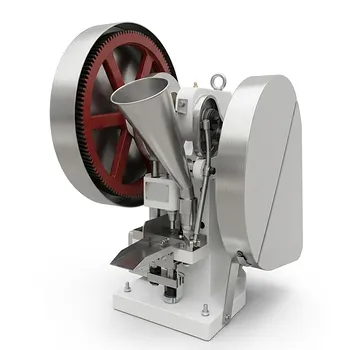
6-Ton Small Single-Punch Tablet Press — Laboratory Powder & Granule Tableting Equipment / Tablet Forming Machine
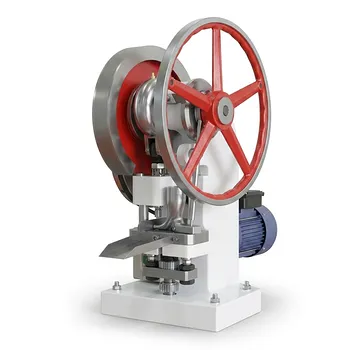
5 Ton Single Punch Tablet Press Laboratory Small Batch Production
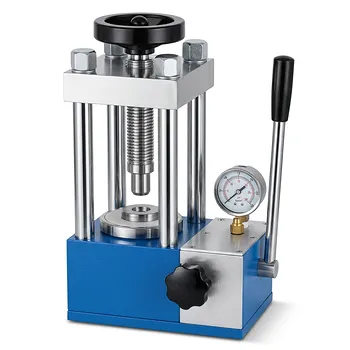
Manual Tablet Press with Dual Scale Pressure Gauge for Pharmaceutical Food Chemical Laboratory Sample Preparation
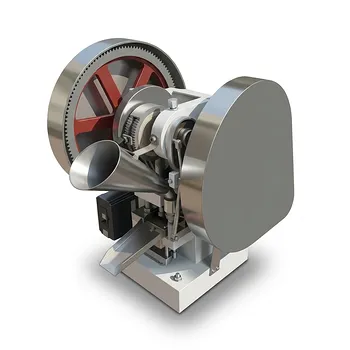
6 Ton Variable Frequency Single Punch Tablet Press
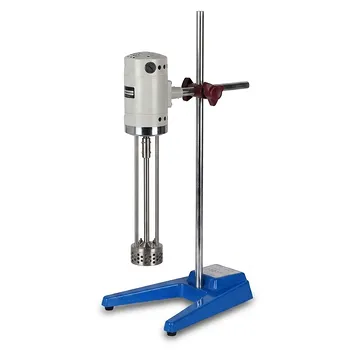
High Shear Laboratory Emulsifier for Mixing and Homogenization
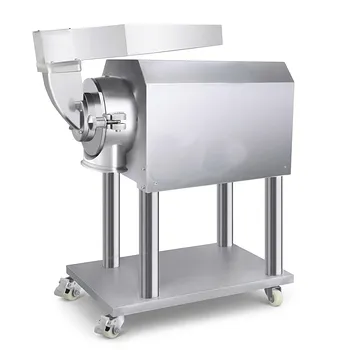
High Speed Small Laboratory Crusher for Dry Material Sample Preparation
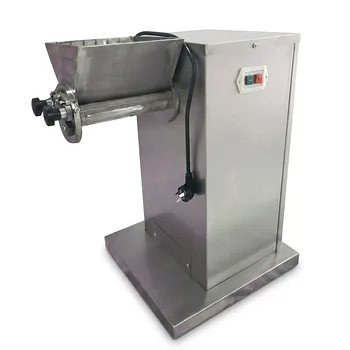
Small Laboratory Oscillating Granulator for Wet and Dry Granulation Processing
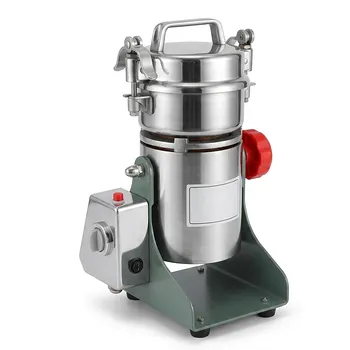
High Speed Swing Type Laboratory Pulverizer for Fine Powder Grinding and Sample Preparation