How does the use of a 200 μm vibratory sieve contribute to ceramic powder mixing? Optimize Density and Quality
Updated 5 months ago
The integration of a 200 μm vibratory sieve is a critical quality control step that ensures particle size uniformity in ceramic powders. By strictly removing coarse particles and hard agglomerates from materials like crushed or calcined kaolin, the sieve creates a powder with superior flowability and packing characteristics. This process is essential for achieving a uniform density in "green bodies"—the unfired ceramic shapes—during pressing and molding operations.
Effective ceramic production relies on a narrow particle size distribution to ensure consistent compaction and sintering. A 200 μm vibratory sieve acts as the final gatekeeper, eliminating defects at the powder stage to prevent structural failures or density gradients in the final ceramic component.
The Role of Particle Classification in Ceramic Quality
Eliminating Agglomerates and Coarse Fractions
During the crushing and calcination of raw materials, particles often form secondary agglomerates or remain as oversized "coarse" fragments. A 200 μm vibratory sieve mechanically separates these outliers from the bulk powder.
Removing these large particles is vital because they act as stress concentrators in the final ceramic. If left in the mix, they create localized areas of different density, which can lead to cracking during the drying or firing stages.
Enhancing Powder Flowability and Filling
For ceramic powder to be effectively molded, it must flow like a liquid into the pressing dies. The sieving process ensures that the particle size distribution is narrow and predictable.
Consistent particle sizes reduce internal friction, allowing the powder to settle into the mold with maximum filling consistency. This fluidity is especially critical in automated dry pressing and cold isostatic pressing (CIP) environments.
Impact on Compaction and Sintering
Achieving Uniform Green Body Density
The primary goal of using a vibratory sieve is to produce a green body with uniform density. When the powder size is controlled at the 200 μm threshold, the particles pack together more tightly during the pressing stage.
A uniform green body is the foundation of a defect-free ceramic. If the density varies across the shape, the ceramic will warp or shrink unevenly when it is eventually fired in the kiln.
Influencing Sintering Kinetics and Microstructure
The precision of the powder affects the distribution of internal microscopic pores in the final product. By removing large agglomerates, the sieve ensures that the pores are small and evenly distributed throughout the material.
This uniformity promotes even grain growth during the sintering process. For specialized ceramics, such as electrolytes or high-frequency insulators, this level of control is necessary to achieve ultra-low dielectric loss and high structural integrity.
Understanding the Trade-offs
Mechanical Wear and Sieve Blinding
While vibratory sieving is efficient, the high-frequency vibration can lead to sieve blinding, where particles become wedged in the mesh apertures. This reduces the effective screening area and can lead to inconsistent throughput if not monitored.
Material Loss and Processing Time
Strictly grading powder to a 200 μm limit naturally results in the rejection of oversized material. Depending on the quality of the initial ball milling or crushing, this can lead to higher material waste or the need for secondary milling cycles.
Limitations of Single-Stage Sieving
A 200 μm sieve is excellent for removing coarse impurities, but it cannot control the "fines" (extremely small particles). Relying solely on a top-end cut-off may still leave a powder with a wide distribution if the milling process is not equally controlled.
Applying This to Your Production Process
Recommendations Based on Production Goals
- If your primary focus is structural integrity and strength: Use the 200 μm sieve as a mandatory post-calcination step to eliminate the "hard" agglomerates that cause internal fractures.
- If your primary focus is surface finish and flatness: Ensure the vibratory sieve is used immediately before the pressing stage to maintain the flowability required for a smooth, uniform mold fill.
- If your primary focus is electrical or dielectric performance: Consider a two-stage sieving process, using the 200 μm sieve for bulk removal followed by a finer 200-mesh (74 μm) sieve to further tighten the particle distribution.
Mastering particle size through vibratory sieving transforms raw minerals into a precision engineered material ready for high-performance applications.
Summary Table:
| Process Stage | Role of 200 μm Sieving | Impact on Final Ceramic |
|---|---|---|
| Classification | Removes coarse fragments & hard agglomerates | Prevents stress concentrators and cracking |
| Powder Flow | Ensures narrow particle size distribution | Achieves maximum filling consistency in dies |
| Compaction | Promotes tight particle packing | Produces uniform green body density |
| Sintering | Controls internal pore distribution | Prevents warping and ensures even grain growth |
Elevate Your Ceramic Material Integrity
Achieve flawless production results with our complete laboratory sample preparation solutions. At [Company Name], we specialize in the high-precision equipment required for advanced material science, ensuring your powders meet the strictest standards for consistency and performance.
Our extensive product line supports your entire workflow:
- Powder Processing: Advanced vibratory and air-jet sieve shakers, planetary ball mills, and jet mills for perfect particle size control.
- Compaction Excellence: A full spectrum of hydraulic presses, including Cold Isostatic Presses (CIP) and Warm Isostatic Presses (WIP), designed to produce high-density green bodies.
- Sample Prep: Crushers, disc mills, and specialized defoaming mixers for optimized material homogeneity.
Whether you are refining kaolin or engineering high-frequency insulators, our equipment eliminates structural failures and density gradients at the source.
Contact our specialists today to optimize your powder processing workflow!
References
- F. Zenikheri, Noureddine Karboua. Elaboration of porous gehlenite and anorthite based ceramics using low price raw materials. DOI: 10.1590/0366-69132016623632005
Mentioned Products
- Stainless Steel Laboratory Vibratory Test Sieve Shaker
- Stainless Steel Rotary Vibrating Sieve High Precision Circular Vibratory Separator Industrial Powder Grading Machine Multi Layer Sifting Equipment
- Vibratory Sieve Shaker Electromagnetic 3D Motion Powder Particle Size Analyzer for Dry and Wet Sieving
- Small Laboratory Vibratory Sieve Shaker for Powder Gradation and Particle Size Analysis
- Small Laboratory Vibrating Sieve Shaker for Precise Particle Size Analysis
People Also Ask
- What function does a laboratory vibratory sieve shaker serve in the production process of metakaolin? Optimize Reactivity
- Why is a precision laboratory vibratory sieve shaker necessary for particle size control? Optimize Biomass Carbonization
- What is the function of a laboratory vibratory sieve shaker? Enhance Coal Particle Size Distribution (PSD) Analysis
- What role do laboratory vibratory sieve shakers and test sieves play before the molding of Nb-Cu composite powders?
- What is the primary function of a laboratory vibratory sieve shaker in the evaluation of sand liquefaction potential?

Tech Team · PowderPreparation
Last updated on May 14, 2026
Related Products
Stainless Steel Laboratory Vibratory Test Sieve Shaker
Stainless Steel Rotary Vibrating Sieve High Precision Circular Vibratory Separator Industrial Powder Grading Machine Multi Layer Sifting Equipment
Vibratory Sieve Shaker Electromagnetic 3D Motion Powder Particle Size Analyzer for Dry and Wet Sieving
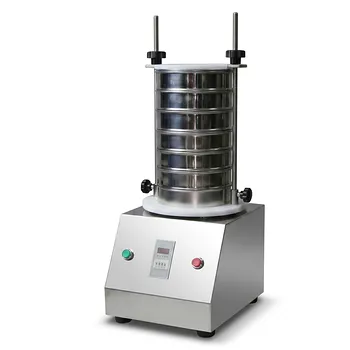
Small Laboratory Vibratory Sieve Shaker for Powder Gradation and Particle Size Analysis
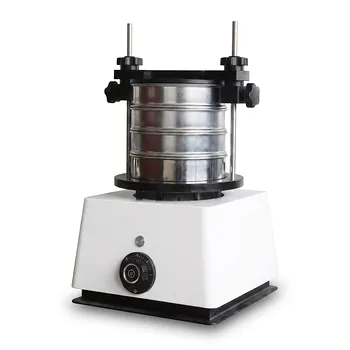
Small Laboratory Vibrating Sieve Shaker for Precise Particle Size Analysis
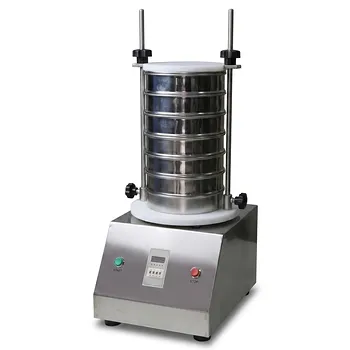
Laboratory Vibratory Test Sieve Shaker for Precision Particle Size Analysis and Powder Grading
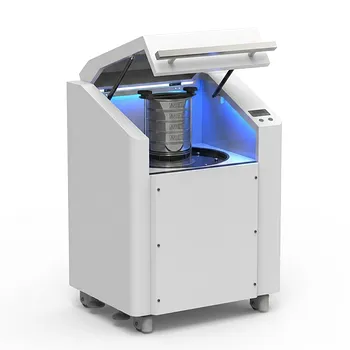
High Frequency Cabinet Type Three-Dimensional Rotary Vibrating Sieve Shaker for Dry Sieving and Particle Classification
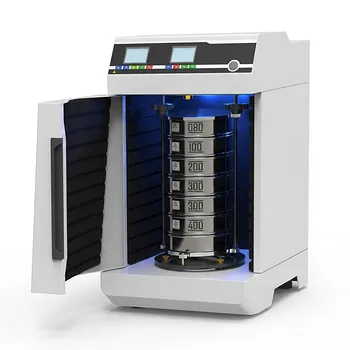
Laboratory Dry and Wet Three Dimensional Vibratory Sieve Shaker for Particle Analysis
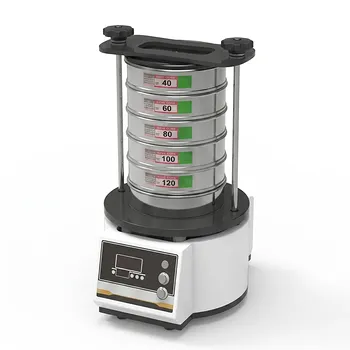
Dry Three Dimensional Vibratory Sieve Shaker
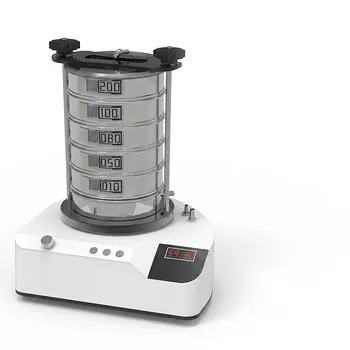
Heavy Duty Dry Three Dimensional Vibratory Sieve Shaker for Particle Separation
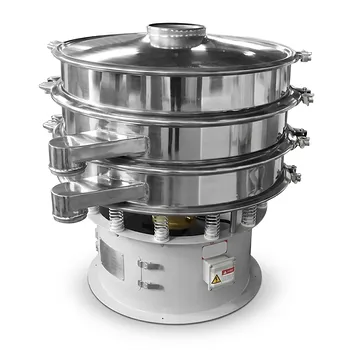
Three Dimensional Rotary Vibrating Sieve
High Frequency Wet Three-Dimensional Vibrating Sieve Shaker for Dry and Wet Particle Size Analysis
三维电磁微量振动筛分仪
Small Vibrating Ultrafine Grinder for Traditional Chinese Medicine
Laboratory Micro Vibration Grinding Mill for Trace Sample Preparation
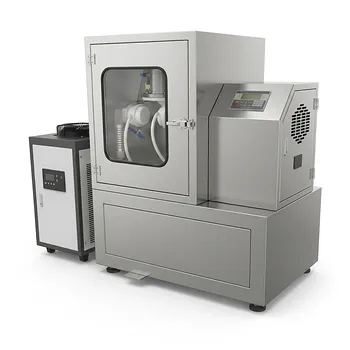
Vibratory Ultra-Low Temperature Ultrafine Grinder for Cryogenic Powder Processing
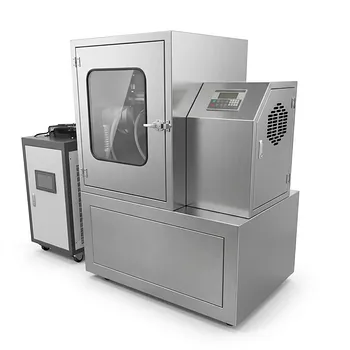
Vibratory Superfine Grinder for Ultra Fine Laboratory Powder Milling
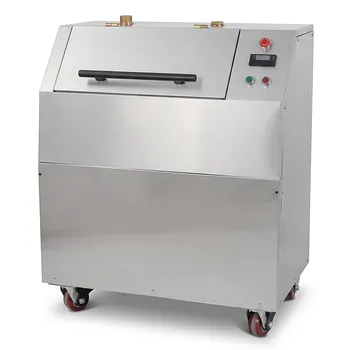
Vibratory Disc Mill for Rapid Fine Grinding and High Throughput Sample Preparation of Hard and Brittle Materials
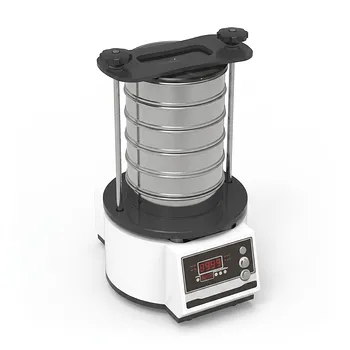
Tapping Oscillating Sieve Shaker for Dry and Wet Particle Size Analysis