How does the rotation speed control system of a ball mill ensure data consistency in wear prediction models? Expert Guide
Updated 4 months ago
Precision in rotation speed is the cornerstone of reliable wear modeling. A ball mill’s control system maintains a constant velocity, which dictates the specific motion trajectory of the grinding media. By eliminating fluctuations in energy input, the system ensures that the resulting wear data reflects the actual material degradation rather than noise caused by mechanical inconsistency.
Consistency in wear prediction relies on the elimination of external energy variables. A robust rotation speed control system stabilizes the grinding environment, allowing models to map the non-linear relationship between speed and media consumption with high mathematical fidelity.
The Link Between Velocity and Motion Dynamics
Defining Media Trajectories
The speed control system dictates whether the steel balls follow a cascading or cataracting path. Maintaining a specific trajectory is vital because different states produce drastically different wear patterns on the mill liner and the balls themselves.
Eliminating Kinetic Noise
Fluctuations in rotation speed introduce "experimental noise" into the data set. By stabilizing speed, the system ensures that changes in wear rate are attributable to the intentional speed settings rather than random energy spikes.
Standardizing Impact Force
When speed is held constant, the kinetic energy of each impact remains predictable. This allows engineers to calculate the cumulative fatigue on components without the data being skewed by unexpected velocity surges.
Data Integrity in Non-Linear Modeling
Isolating the Speed Variable
Wear rates do not scale linearly with rotation speed; they follow complex curves influenced by centrifugal forces. A precise control system allows researchers to isolate speed as a primary variable, ensuring the non-linear relationship is captured accurately.
Quantifying Energy Distribution
Uniform energy input is required to calibrate predictive models effectively. If the speed fluctuates, the total energy dissipated in the mill becomes unpredictable, rendering the wear data useless for long-term forecasting.
Establishing a Baseline for Comparison
Consistent speed control allows for the creation of a stable "control group" in data collection. This baseline is essential for testing how other variables, such as ore hardness or moisture content, affect the overall wear rate.
Understanding the Trade-offs
Control Loop Latency
While speed control is essential, every system has a response time (latency). Sudden changes in ore hardness or feed size can cause temporary speed dips before the system corrects, which may still introduce minor data skewing.
Precision vs. Hardware Cost
Achieving extreme precision in speed control often requires sophisticated Variable Frequency Drives (VFDs) and high-resolution feedback loops. There is an inherent trade-off between the financial cost of this hardware and the incremental gain in model accuracy.
Sensor Reliability
The consistency of the data is only as good as the sensors monitoring the rotation. If the tachometer or encoder experiences drift, the system may "stably" maintain the wrong speed, leading to fundamentally flawed wear predictions.
Applying Speed Control to Your Modeling Goals
Depending on your specific operational objectives, the way you utilize rotation speed control will vary:
- If your primary focus is model accuracy: Invest in high-resolution feedback loops to ensure speed fluctuations remain below 0.1%, providing the cleanest possible data for non-linear wear mapping.
- If your primary focus is extending liner life: Use the control system to maintain a strictly cascading motion, which reduces high-energy impacts that lead to premature liner cracking.
- If your primary focus is maximizing throughput: Prioritize a control system that can rapidly adjust to load changes, maintaining a target speed even when the mill charge increases significantly.
By mastering the stability of rotation speed, you transform a chaotic mechanical process into a predictable environment suitable for advanced data science.
Summary Table:
| Feature | Impact on Wear Prediction | Data Consistency Benefit |
|---|---|---|
| Trajectory Control | Maintains cascading/cataracting paths | Standardizes mechanical stress patterns |
| Noise Reduction | Eliminates random energy fluctuations | Isolates material-specific degradation |
| Energy Calibration | Standardizes kinetic impact force | Enables accurate non-linear modeling |
| Loop Stability | Minimizes velocity surges/dips | Provides a reliable baseline for comparison |
Optimize Your Material Research with Precision Engineering
Consistency in data starts with high-performance equipment. We provide complete laboratory sample preparation solutions tailored for material science professionals. Our extensive product line ensures your grinding and compaction processes are both repeatable and accurate:
- Advanced Milling: Planetary ball mills, jet mills, and cryogenic grinders for precise particle size reduction.
- Powder Processing: High-efficiency mixers (including vacuum and defoaming) and sieve shakers.
- Compaction Excellence: A full spectrum of hydraulic presses, including Cold/Warm Isostatic Presses (CIP/WIP), XRF pellet presses, and hot presses.
Whether you are a researcher aiming for high-fidelity wear models or a distributor seeking reliable OEM/ODM support, our team is ready to assist.
Contact us today to find the perfect solution for your laboratory!
References
- Asghar Azizi, Nader Mollayi. Modeling and prediction of wear rate of grinding media in mineral processing industry using multiple kernel support vector machine. DOI: 10.1007/s42452-020-03212-0
Mentioned Products
- Heavy Duty Horizontal Planetary Ball Mill for Efficient Industrial Grinding and Sample Preparation
- Vertical Semi Circular Planetary Ball Mill for Laboratory Precision Grinding
- Vertical Production Planetary Ball Mill for High Throughput Powder Processing
- Vertical Square Planetary Ball Mill for Laboratory Sample Preparation and Nanoscale Grinding
- High Energy Planetary Ball Mill for Nano Scale Grinding and Mechanical Alloying
People Also Ask
- Why grind lime-pozzolan specimens for TG/DTA for 3 mins? Master sample prep for high-precision thermal analysis.
- What is the role of a planetary ball mill in the mechanical activation of ZTA powder? Boost Sintering Performance
- What is the function of a planetary ball mill in wollastonite ceramic prep? Achieve Molecular Homogenization & Reactivity
- How does a planetary ball mill contribute to the homogenization of trace elements? Achieve Sub-Micron Uniformity
- What is the function of a high-performance planetary ball mill in AMZ laminates? Master Ceramic Homogenization.

Tech Team · PowderPreparation
Last updated on Jun 03, 2026
Related Products
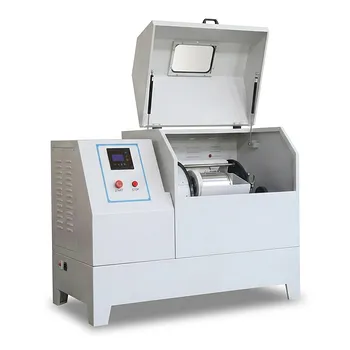
Heavy Duty Horizontal Planetary Ball Mill for Efficient Industrial Grinding and Sample Preparation
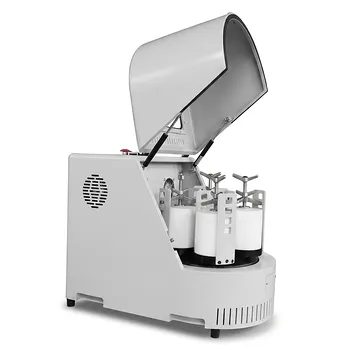
Vertical Semi Circular Planetary Ball Mill for Laboratory Precision Grinding
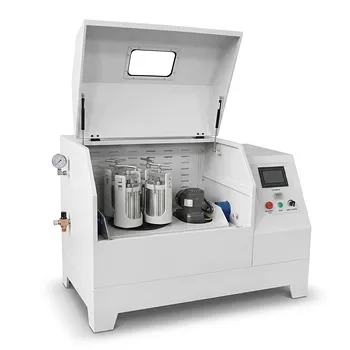
Vertical Production Planetary Ball Mill for High Throughput Powder Processing
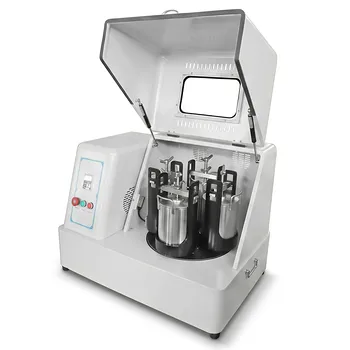
Vertical Square Planetary Ball Mill for Laboratory Sample Preparation and Nanoscale Grinding
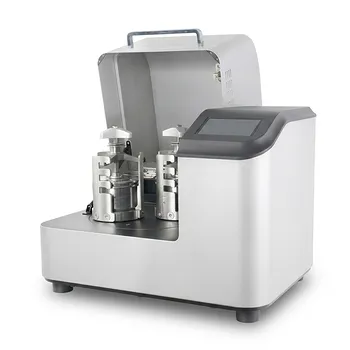
High Energy Planetary Ball Mill for Nano Scale Grinding and Mechanical Alloying
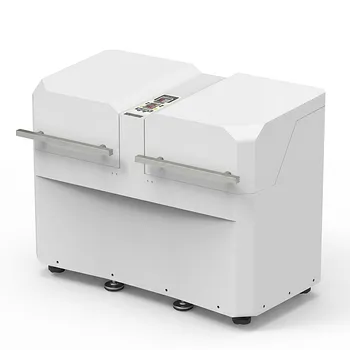
Dual Station Planetary Ball Mill 24L
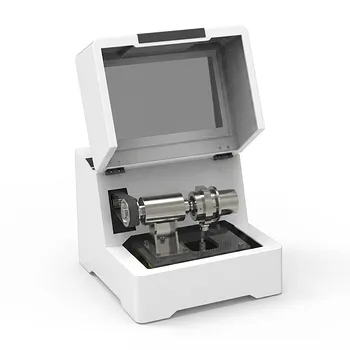
Single Tank High Energy Vibratory Ball Mill for Laboratory Grinding and Mixing
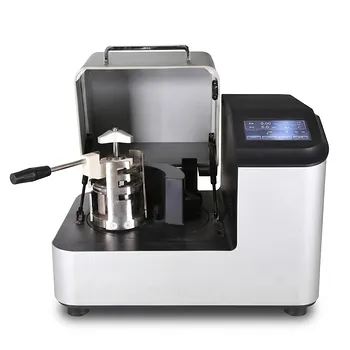
High Energy Laboratory Planetary Ball Mill for Nano Grinding and Material Science Sample Preparation
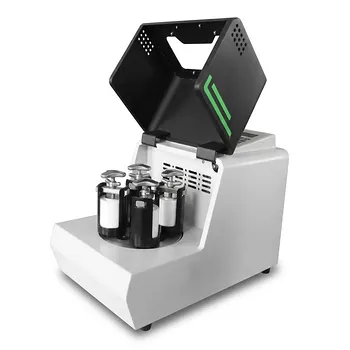
Miniature Planetary Ball Mill with Vacuum Grinding and High Efficiency for Laboratory Sample Preparation
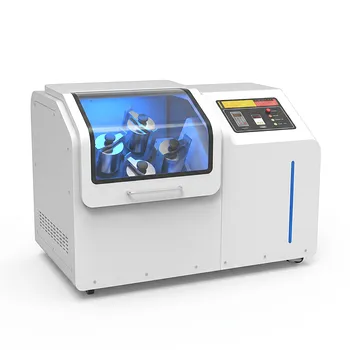
High Energy Omnidirectional Planetary Ball Mill 16L
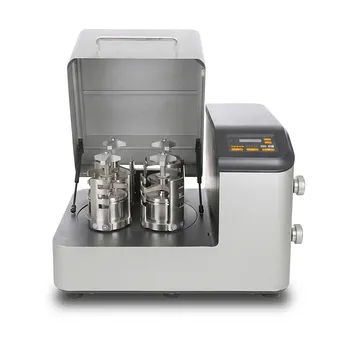
High Energy Planetary Ball Mill for Nano Scale Grinding and Colloidal Mixing in Material Science Research
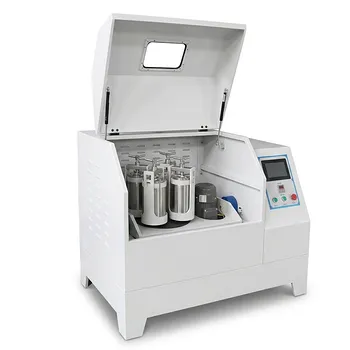
360° Rotating Omnidirectional Laboratory Planetary Ball Mill for Homogeneous Ultra-Fine Grinding and Mixing
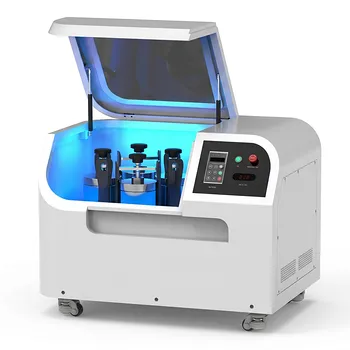
Planetary Ball Mill 12L
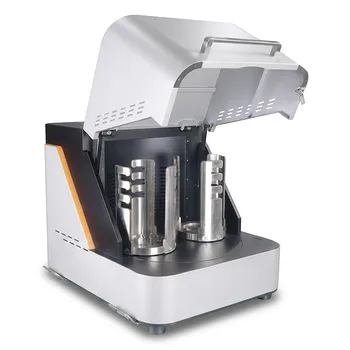
High Energy Laboratory Planetary Ball Mill for Nano Grinding and Colloidal Mixing of Hard and Brittle Materials
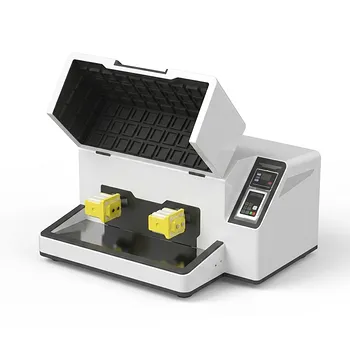
Multi-Platform Nanoscale High-Energy Vibratory Ball Mill
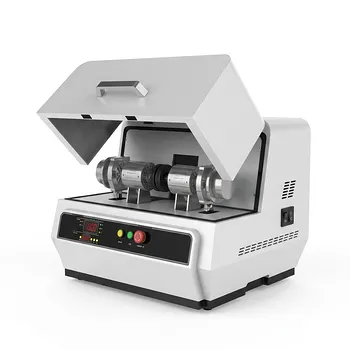
Dual Jar High Energy Vibratory Ball Mill
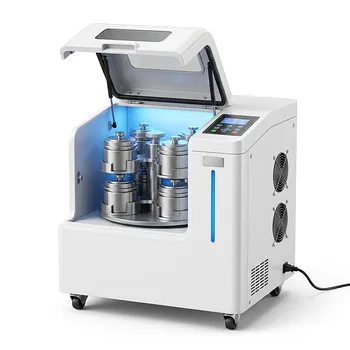
High Energy Omnidirectional Planetary Ball Mill 20L
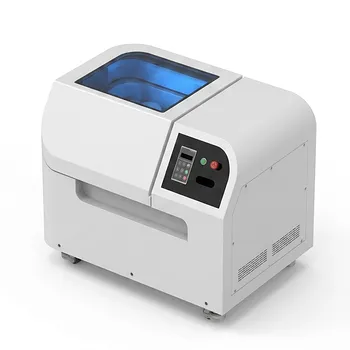
8L Planetary Ball Mill for Laboratory Grinding and Sample Preparation

Nano High Energy Vibratory Ball Mill for Laboratory Sample Preparation