How does heating and pressing equipment enable clean PU foam recycling? Optimize Solid-State Material Recovery
Updated 4 months ago
The integration of high-efficiency heating and pressing equipment transforms polyurethane (PU) foam recycling from a chemical-heavy process into a clean, mechanical one.
By precisely controlling heat and pressure, these systems exploit the material's thermoplastic transition properties to achieve "solid-state recovery." This method eliminates the need for harmful chemical solvents or external adhesives, creating a streamlined, low-pollution cycle that significantly reduces both environmental impact and equipment investment costs.
Core Takeaway: This integrated approach replaces traditional chemical decomposition with a physical, thermal-mechanical process. It leverages the material's own properties to reform waste into reusable solids, offering a more sustainable and cost-effective path to a circular economy.
The Mechanism of Solid-State Recovery
Leveraging Thermoplastic Transitions
PU foam waste is traditionally difficult to manage due to its low density and complex structure. High-efficiency heating equipment brings the material to a precise temperature where it undergoes a thermoplastic transition, becoming pliable without total molecular degradation.
The Role of Integrated Pressing
Once the material is softened, integrated pressing equipment applies uniform force to achieve solid-state recovery. This mechanical coupling compacts the cellular structure of the foam into a dense, manageable solid that can be reintroduced into manufacturing streams.
Precision Control for Material Integrity
The success of this process depends on the precise coupling of heat and pressure. High-efficiency machines ensure that the temperature is high enough to allow reshaping but low enough to prevent scorching or toxic outgassing, preserving the material's value.
Why Integrated Equipment Outperforms Traditional Methods
Eliminating Chemical Polyolysis
Traditional recycling often relies on polyolysis, a complex chemical process used to break down polymers into liquid components. Mechanical integration bypasses these hazardous chemical reactions entirely, resulting in a significantly "cleaner" output and a safer working environment.
Removing the Need for Added Adhesives
Standard mechanical recycling usually requires the addition of glues or binders to hold foam scraps together. High-efficiency systems use the material's own thermal properties to create bonds under pressure, ensuring the final recycled product remains pure and adhesive-free.
Reducing Investment and Operational Costs
By removing the need for chemical reactors and expensive adhesive supplies, companies can lower their total equipment investment. The streamlined nature of heating and pressing also reduces the complexity of the recycling line, leading to lower maintenance overhead.
Understanding the Trade-offs and Challenges
Requirements for Material Sorting
While this process is cleaner, it requires a relatively homogeneous waste stream. Mixing different types of foam or including contaminants can interfere with the thermoplastic transition, potentially compromising the strength of the recovered solid.
Energy Consumption Dynamics
While you eliminate the cost of chemicals, these systems require consistent electrical energy for thermal and hydraulic functions. The overall sustainability of the project often depends on the efficiency of the heating elements and the local cost of power.
Throughput vs. Precision
High-efficiency systems prioritize quality and "clean" recovery, which may require slower processing speeds compared to simple incineration or crude shredding. Users must balance their need for high-volume output with the technical requirements of solid-state recovery.
How to Apply This to Your Recycling Project
Selecting the right equipment depends on your specific operational goals and the nature of your PU waste.
- If your primary focus is Environmental Compliance: Prioritize integrated thermal systems to eliminate the VOCs and hazardous waste streams associated with chemical polyolysis.
- If your primary focus is Product Purity: Use high-efficiency pressing to create adhesive-free recycled solids that are easier to reprocess into high-grade consumer goods.
- If your primary focus is Supply Chain Efficiency: Invest in densification via heating and pressing to turn bulky foam waste into high-density blocks that are cheaper to transport and store.
By shifting from chemical dependency to precise mechanical integration, facilities can achieve a truly sustainable and profitable "green cycle" for polyurethane waste.
Summary Table:
| Feature | Traditional Chemical Polyolysis | Integrated Heating & Pressing |
|---|---|---|
| Mechanism | Chemical decomposition (Solvents) | Thermal-mechanical transition |
| Additives | Requires catalysts & solvents | No external adhesives required |
| Output Purity | Liquid components (Polyols) | Pure, adhesive-free recycled solids |
| Eco-Impact | High (VOCs & hazardous waste) | Low (Physical process, clean cycle) |
| Cost Drivers | Chemical supply & reactor upkeep | Electricity & precision equipment |
Elevate Your Material Science Research with Precision Compaction Solutions
At KINTEK, we provide complete laboratory sample preparation solutions tailored for material science and industrial recycling innovation. Our expertise in powder processing and compaction equipment ensures your facility achieves maximum efficiency in solid-state recovery and material densification.
Our extensive product range supports every stage of the recycling and preparation workflow:
- Size Reduction: High-performance crushers (jaw/roll) and advanced mills (planetary ball, jet, rotor).
- Precision Heating & Pressing: A full spectrum of hydraulic presses, including Cold/Warm Isostatic Presses (CIP/WIP), vacuum hot presses, and standard lab presses designed for precise thermal-mechanical coupling.
- Material Refining: Vibratory sieve shakers and specialized powder/defoaming mixers for high-purity outputs.
Whether you are optimizing polyurethane recycling or developing next-generation composites, our equipment delivers the reliability and control you need. Contact us today to find the perfect solution for your lab!
References
- Ľubomír Šooš, Jozef Bábics. Research into Efficient Technology for Material Recovery of Waste Polyurethane Foams. DOI: 10.3390/recycling10030107
Mentioned Products
- Enhanced 9 Punch Rotary Tablet Press for Powder Compaction
- 6-Ton Small Single-Punch Tablet Press — Laboratory Powder & Granule Tableting Equipment / Tablet Forming Machine
- Heating Temperature Controlled High Energy Vibratory Ball Mill
- Liquid Nitrogen Cryogenic Grinder for Plastic and Heat-Sensitive Materials
- Laboratory Liquid Nitrogen Cryogenic Grinder for Polymer and Elastomer Materials
People Also Ask
- What is the purpose of adding lubricants like zinc stearate during Al-Al2O3 powder pressing? Achieve Superior Density
- Why is a laboratory hydraulic press required for FT-IR KBr pellets? Achieve Precise Sample Clarity for ZrC–SiC Analysis
- What role does a high-strength stainless steel mold kit play in the uniaxial die compaction process? Ensuring Precision
- Why is a laboratory hydraulic press required to compress oyster shell powder before XRF analysis? Improve Data Accuracy.
- Why is vacuum sealing and flexible packaging necessary for Aluminum Titanate powders during CIP? Ensure Peak Density

Tech Team · PowderPreparation
Last updated on Jun 03, 2026
Related Products
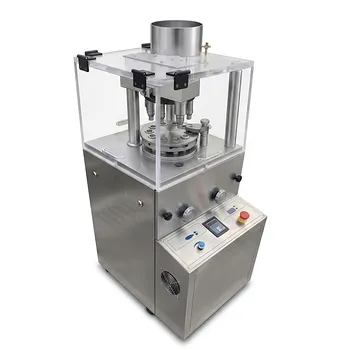
Enhanced 9 Punch Rotary Tablet Press for Powder Compaction
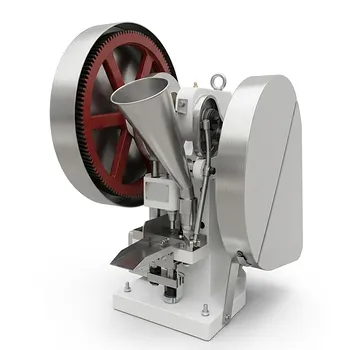
6-Ton Small Single-Punch Tablet Press — Laboratory Powder & Granule Tableting Equipment / Tablet Forming Machine
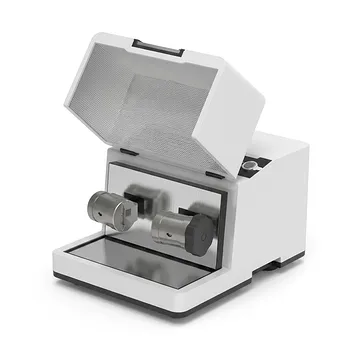
Heating Temperature Controlled High Energy Vibratory Ball Mill
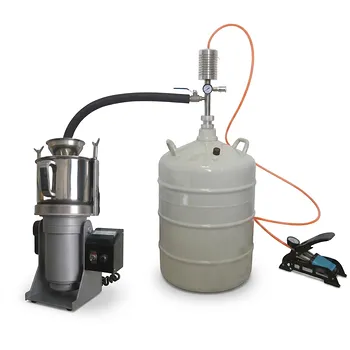
Liquid Nitrogen Cryogenic Grinder for Plastic and Heat-Sensitive Materials
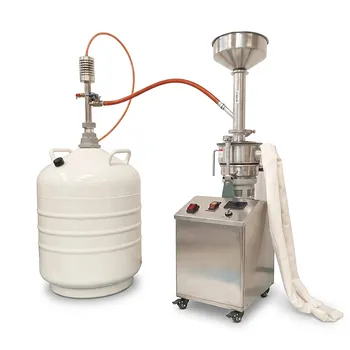
Laboratory Liquid Nitrogen Cryogenic Grinder for Polymer and Elastomer Materials