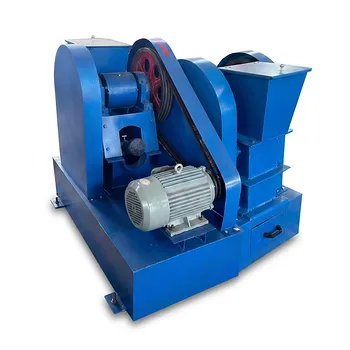
How does high pressure from a lab hydraulic press impact ceramic support formation? Enhance Density & Strength
Updated 4 months ago
High pressure is the critical catalyst for structural integrity in ceramic manufacturing. By applying forces typically ranging from 20 MPa to over 400 MPa, a laboratory hydraulic press transforms loose ceramic powder into a cohesive "green body." This process forces particle rearrangement, eliminates internal voids, and maximizes contact points, creating the dense physical foundation necessary for successful high-temperature sintering and mechanical durability.
Core Takeaway: The high pressure from a hydraulic press is essential for achieving high packing density and reducing pore non-uniformity. This compaction provides the green body with the structural strength needed for handling and establishes the ideal conditions for solid-phase diffusion during the sintering process.
The Physical Transformation of Ceramic Powders
Particle Rearrangement and Displacement
When the hydraulic press applies axial pressure to the powder within a mold, it forces individual particles to overcome inter-particle friction. The particles displace and rearrange themselves into a more efficient packing configuration.
This rearrangement leads to mechanical interlocking, where the particles bond tightly even before heat is applied. This initial bond gives the "green body" sufficient strength for handling and turnover during the production cycle.
Elimination of Voids and Micro-pores
High-pressure molding is the primary defense against internal defects. By forcing particles into the empty spaces between them, the press effectively eliminates trapped air and reduces the size of internal micro-pores.
Reducing these voids is critical for the final product's performance. It minimizes water absorption (often to below 0.5%) and ensures a uniform internal density distribution, which prevents cracks during the cooling phase.
Plastic Deformation and Bonding
Under extreme loads, such as those reaching 466 MPa, ceramic particles may undergo plastic deformation. This deformation increases the surface area of contact between particles.
The increased contact area creates particle contact points that are essential for later stages. Without these points, the ceramic would remain brittle and fail to reach its maximum theoretical density.
Establishing the Foundation for Sintering
Facilitating Solid-Phase Diffusion
The high-density foundation created by the press is vital for the sintering stage. Because particles are in closer proximity, solid-phase diffusion can occur more efficiently at temperatures like 950 °C.
This proximity promotes sintering neck growth, where the boundaries between particles merge. High initial pressure ensures that these "necks" form quickly and uniformly throughout the material.
Improving Breakdown and Fracture Strength
The precision of a laboratory press allows researchers to regulate the compactness of the material. A higher packing density directly correlates to improved fracture resistance in the final sintered ceramic.
By minimizing large pores and non-uniformity, the press ensures the ceramic can withstand higher mechanical loads. This results in a final support with superior breakdown strength and structural longevity.
Understanding the Trade-offs
The Risk of Non-Uniform Density
While high pressure is beneficial, unidirectional pressing can sometimes lead to density gradients. The friction between the powder and the mold walls can cause the top of the ceramic to be denser than the bottom.
To mitigate this, precision stainless steel molds and lubricants are often used. If the pressure is not applied evenly, the ceramic may warp or crack during the sintering process due to uneven shrinkage.
The Law of Diminishing Returns
There is often an economical pressure value beyond which additional force provides negligible gains in density. For many alumina powders, pressing beyond a certain threshold (e.g., 400 bar) may not significantly improve water absorption or apparent density.
Researchers must identify the "sweet spot" where maximum apparent density (typically around 2.5 g/cm³) is achieved without unnecessary wear on the equipment or molds. Excessive pressure can also lead to "springback" effects, where the green body expands and cracks upon release from the mold.
Optimizing Pressure for Your Production Goals
To achieve the best results with a laboratory hydraulic press, the pressure settings must be aligned with the specific requirements of the ceramic support.
- If your primary focus is mechanical durability: Utilize higher pressures (up to 466 MPa) to maximize particle contact area and eliminate fracture-inducing micro-pores.
- If your primary focus is industrial scalability: Identify the minimum economical pressure (often between 21 MPa and 50 MPa) that achieves your required density to reduce equipment wear and energy costs.
- If your primary focus is rapid sintering: Prioritize pressures that ensure high green body density, as this provides the necessary physical conditions for faster solid-phase diffusion.
Precise pressure control is the fundamental bridge between raw ceramic powder and a high-performance engineered support.
Summary Table:
| Impact Factor | Physical Mechanism | Resulting Benefit |
|---|---|---|
| Particle Arrangement | Overcomes friction for mechanical interlocking | Increased "green body" handling strength |
| Void Elimination | Removes trapped air and micro-pores | Minimal water absorption & reduced cracking |
| Plastic Deformation | Increases particle surface contact area | Optimized conditions for solid-phase diffusion |
| Packing Density | Creates a uniform internal structure | Higher fracture resistance & breakdown strength |
| Sintering Prep | Facilitates sintering neck growth | Faster, more uniform high-temperature sintering |
Optimize Your Ceramic Research with Precision Compaction
Achieving the perfect ceramic support requires more than just force—it requires precision control and reliable equipment. [Brand Name] provides complete laboratory sample preparation solutions tailored for material science. We specialize in high-performance powder processing and compaction equipment designed to help you reach maximum theoretical density with ease.
Our extensive hydraulic press lineup includes:
- Cold/Warm Isostatic Presses (CIP/WIP) for uniform density.
- Standard Lab Presses & XRF Pellet Presses for rapid sample prep.
- Hot Presses & Vacuum Hot Presses for advanced sintering research.
Beyond pressing, we offer a full suite of equipment including crushers (jaw/roll), liquid nitrogen cryogenic grinders, planetary ball mills, and vibratory sieve shakers to ensure your powder is perfectly prepared before it ever hits the mold.
Ready to elevate your material integrity? Contact our experts today to find the ideal equipment solution for your laboratory's specific needs!
References
- Xiaoqin Yin, Jianqing Wu. A preparation method for the highly permeable ceramic microfiltration membrane – precursor film firing method. DOI: 10.1039/c7ra12314k
Mentioned Products
- 6-Ton Small Single-Punch Tablet Press — Laboratory Powder & Granule Tableting Equipment / Tablet Forming Machine
- 5 Ton Single Punch Tablet Press Laboratory Small Batch Production
- Manual Tablet Press with Dual Scale Pressure Gauge for Pharmaceutical Food Chemical Laboratory Sample Preparation
- 6 Ton Variable Frequency Single Punch Tablet Press
- High Shear Laboratory Emulsifier for Mixing and Homogenization
People Also Ask
- What is the function of a laboratory press in Cr-Ti alloy evaluation? Quantify Fracture Stress & Strength
- What is the function of a laboratory press in assessing the hydrophobic performance of modified vermiculite fillers?
- What is the core function of a laboratory press in the forming of ceramic filter element green bodies? Maximize Density.
- What is the function of a laboratory press in the preparation of ceramic feed rods? Master Density and Precision
- Why is vacuum sealing and flexible packaging necessary for Aluminum Titanate powders during CIP? Ensure Peak Density

Tech Team · PowderPreparation
Last updated on Jun 03, 2026
Related Products
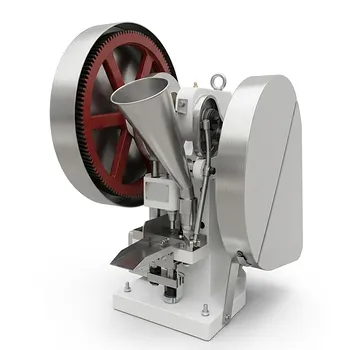
6-Ton Small Single-Punch Tablet Press — Laboratory Powder & Granule Tableting Equipment / Tablet Forming Machine
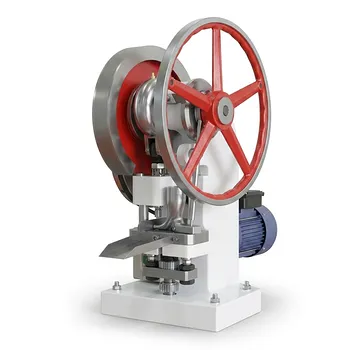
5 Ton Single Punch Tablet Press Laboratory Small Batch Production
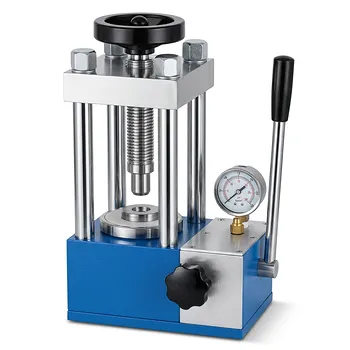
Manual Tablet Press with Dual Scale Pressure Gauge for Pharmaceutical Food Chemical Laboratory Sample Preparation
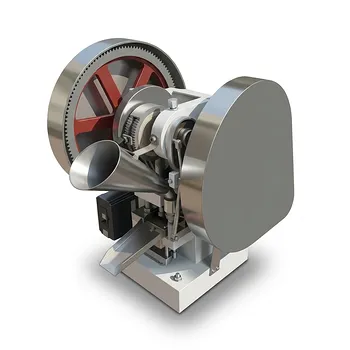
6 Ton Variable Frequency Single Punch Tablet Press
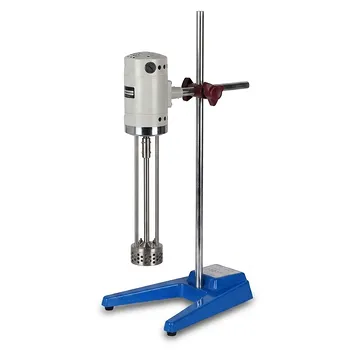
High Shear Laboratory Emulsifier for Mixing and Homogenization
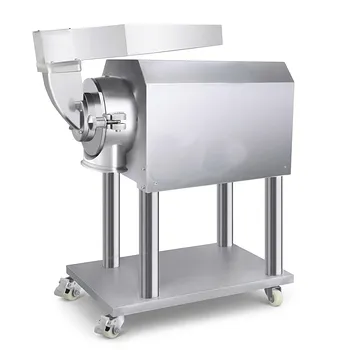
High Speed Small Laboratory Crusher for Dry Material Sample Preparation
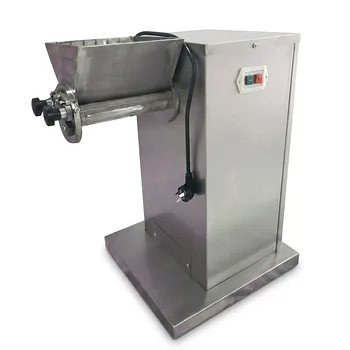
Small Laboratory Oscillating Granulator for Wet and Dry Granulation Processing
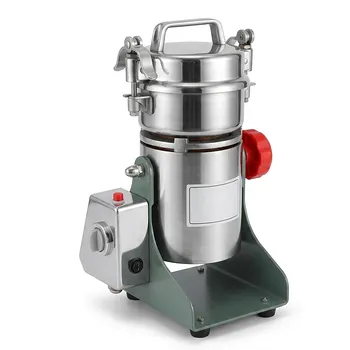
High Speed Swing Type Laboratory Pulverizer for Fine Powder Grinding and Sample Preparation