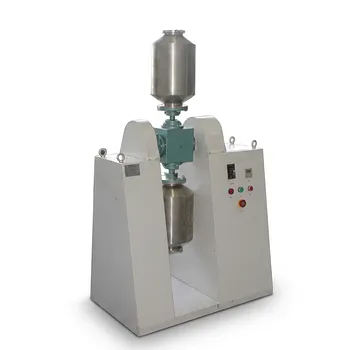
How does centrifugal mixer discharge port height affect uniformity? Optimize residence time for perfect mixing.
Updated 5 months ago
The height of the discharge port in a high-speed centrifugal mixer is the primary regulator of particle residence time. By adjusting this height, operators control how long materials remain subjected to the mixer's kinetic energy before exiting the chamber. If the port is positioned too low, heavier particles settle and discharge prematurely due to gravity, leading to component separation and poor mixture uniformity.
Core Takeaway: To achieve optimal mixing uniformity, the discharge port height must be calibrated to balance particle suspension time with discharge speed. For materials like desulfurized gypsum and fly ash, a height of approximately 145 mm provides the necessary residence time to ensure all components are fully integrated.
The Impact of Residence Time on Material Homogeneity
Preventing Gravitational Segregation
The height of the discharge port determines the "cutoff" point for material exiting the system. When the port is set at an insufficient height, gravity outweighs centrifugal lift for denser particles, causing them to exit the chamber before they have transitioned through the necessary flow trajectories.
The 145 mm Calibration Standard
Empirical data suggests that for mineral-based mixtures, a discharge height of 145 mm serves as a critical equilibrium point. This specific height ensures that the particles remain in the "active zone" long enough to interact with the high-speed rotor while maintaining a steady throughput.
Achieving Equilibrium in Suspension
A correctly positioned port allows particles to reach a state of dynamic suspension. This state is vital because it ensures that both light and heavy components are processed by the rotor for the same duration, effectively neutralizing density disparities that typically cause layering.
How Port Height Interacts with Centrifugal Forces
Synergizing with Rotor Dynamics
The rotor disk acts as the kinetic core, transferring mechanical energy to particles to generate radial acceleration. The discharge port height must be high enough to allow the rotor to accelerate these particles into crossing trajectories, which is the fundamental mechanism for breaking down segregation.
Managing Eddy Currents and Flow Intensity
Rotor speed influences the intensity of eddy currents within the mixing chamber. If the discharge port is improperly aligned with the flow field, these currents can cause back-mixing or stagnant zones, which degrade the final quality of the output.
Spatial Constraints and Fluid Interfaces
The aspect ratio of the container and the port height together define the spatial constraints of the internal flow field. A rational structural design promotes the collapse of fluid interfaces, ensuring that chaotic convective mixing occurs before the material reaches the discharge threshold.
Understanding the Trade-offs
Throughput Speed vs. Mixing Quality
A lower discharge port facilitates a higher volumetric flow rate, which may be desirable for high-volume production. However, this often comes at the cost of uniformity, as the reduced residence time prevents the full dissipation of vortex structures.
Energy Consumption and Over-Mixing
Conversely, setting the discharge port excessively high can lead to over-mixing and unnecessary energy expenditure. If particles remain in the chamber too long, the increased friction can generate heat or cause material degradation, particularly in sensitive chemical blends.
Material Build-up and Clogging
High discharge ports can occasionally lead to material accumulation if the centrifugal force is insufficient to lift the particles to the exit level. This creates a "dead zone" at the bottom of the mixer where materials may harden or clump, eventually obstructing the flow.
Optimizing Your Mixer Configuration
Achieving the perfect blend requires aligning the physical geometry of the mixer with the specific properties of your raw materials.
- If your primary focus is high-density mineral blending: Set the discharge port to a mid-to-high position (approx. 145 mm) to prevent the premature settling of heavy components.
- If your primary focus is maximizing throughput with light materials: A slightly lower discharge port may be used, provided the rotor speed is high enough to maintain chaotic convection.
- If your primary focus is preventing heat-sensitive degradation: Use a lower port height combined with increased rotor acceleration to minimize the time materials spend under mechanical friction.
By precisely calibrating the discharge port height, you transform the mixer from a simple agitator into a high-precision instrument capable of overcoming the inherent physical challenges of material segregation.
Summary Table:
| Port Height Setting | Impact on Mix Uniformity | Ideal Application / Outcome |
|---|---|---|
| Low Position | High throughput; risk of component separation | High-volume production of light materials |
| Standard (145 mm) | Optimal residence time; prevents settling | High-density minerals (e.g., gypsum, fly ash) |
| High Position | Maximum homogeneity; risk of heat buildup | Sensitive blends requiring extreme dispersion |
| Too High | Potential material clumping or "dead zones" | Avoid unless using very high centrifugal force |
Achieve Superior Material Uniformity with Expert Solutions
Precise control over your mixing parameters is the difference between a failed batch and a perfect product. At KINTEK, we provide complete laboratory sample preparation solutions for material science, specializing in high-performance powder processing and compaction equipment designed to meet the most rigorous standards.
From optimizing particle residence time in our advanced mixers to achieving ultra-fine particle sizes, our extensive product line supports your entire workflow:
- Milling & Grinding: Planetary ball mills, jet mills, rotor mills, and liquid nitrogen cryogenic grinders.
- Sieving & Mixing: Vibratory sieve shakers, air-jet sieves, powder mixers, and high-speed defoaming mixers.
- Crushing: Heavy-duty jaw and roll crushers.
- Advanced Pressing: A full spectrum of hydraulic presses, including Cold/Warm Isostatic Presses (CIP/WIP), standard lab presses, XRF pellet presses, and vacuum hot presses.
Whether you are processing minerals, ceramics, or sensitive chemical blends, our equipment is engineered to eliminate segregation and maximize efficiency.
Ready to optimize your laboratory's output? Contact our technical team today to find the perfect equipment configuration for your specific material challenges!
References
- Hongjun Li, Ying Zuo. Research and Optimization Design of Mixing Characteristics of High-speed Centrifugal Mixer Based on DEM. DOI: 10.1088/1742-6596/2095/1/012071
Mentioned Products
- High Speed Vacuum Planetary Centrifugal Mixer and Defoamer for Industrial Paste Processing
- Ultra Centrifugal Mill High Speed Laboratory Grinder for Fibrous and Brittle Sample Preparation
- High Efficiency Vacuum Planetary Centrifugal Mixer and Defoaming Machine for Industrial Material Research and Precise Laboratory Powder Dispersion
- High Viscosity Planetary Centrifugal Vacuum Mixer for Material Defoaming and Uniform Mixing
- High Viscosity Planetary Centrifugal Mixing and Vacuum Defoaming Machine for Laboratory Material Preparation
People Also Ask
- Why increase revolution radius for high-viscosity materials? Optimize Mixing Performance with Centrifugal Acceleration
- What is the function of a planetary centrifugal mixer in electrode slurry prep? Achieve high-energy, uniform dispersion.
- Why is a planetary centrifugal mixer utilized for wood powder and HPMC? Achieve uniform dispersion & rapid defoaming.
- How does a planetary centrifugal mixer contribute to the preparation of magnetic polymer composites? Expert Guide
- How does a planetary centrifugal mixer address key challenges in Tyr-CDs@EVA optical films? Ensure Optical Clarity.

Tech Team · PowderPreparation
Last updated on May 14, 2026
Related Products
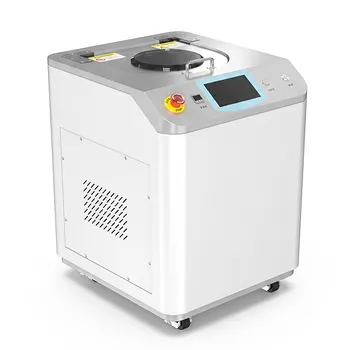
High Speed Vacuum Planetary Centrifugal Mixer and Defoamer for Industrial Paste Processing
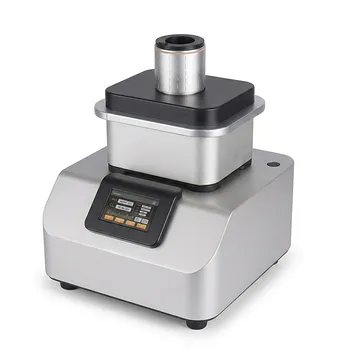
Ultra Centrifugal Mill High Speed Laboratory Grinder for Fibrous and Brittle Sample Preparation
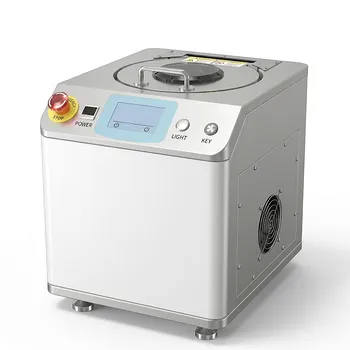
High Efficiency Vacuum Planetary Centrifugal Mixer and Defoaming Machine for Industrial Material Research and Precise Laboratory Powder Dispersion
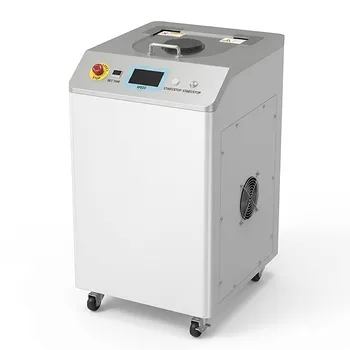
High Viscosity Planetary Centrifugal Vacuum Mixer for Material Defoaming and Uniform Mixing
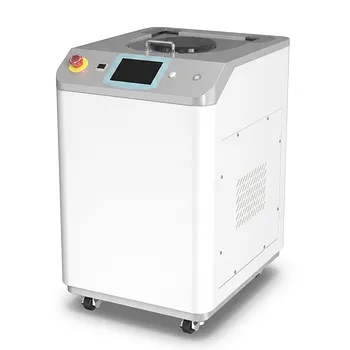
High Viscosity Planetary Centrifugal Mixing and Vacuum Defoaming Machine for Laboratory Material Preparation
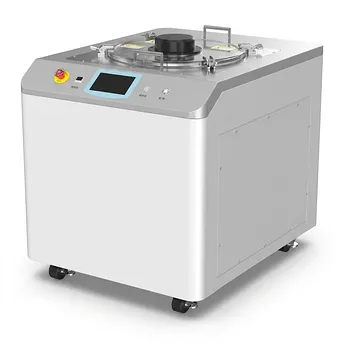
Industrial Planetary Centrifugal Vacuum Defoaming Mixer for High Viscosity Paste and Powder Homogenization
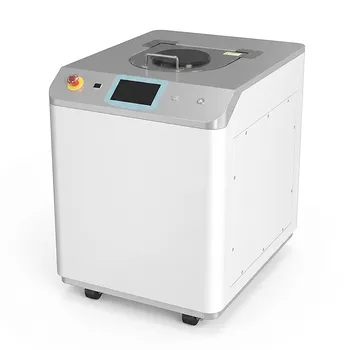
Industrial Planetary Centrifugal Vacuum Defoaming Mixer for High Viscosity Paste and Advanced Material Science
Dual Cup Vacuum Centrifugal Mixer Planetary Paste Defoaming Machine Industrial Material Processor
Ultra Centrifugal Mill for Rapid Laboratory Sample Preparation and Fine Powder Grinding
非介入式材料均质机真空脱泡行星搅拌高粘度混合设备
High-Speed Simple Disperser for Efficient Mixing, Dispersion, and Emulsification
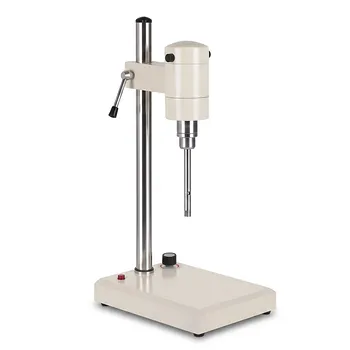
High Speed Dispersing Homogenizer for Laboratory Emulsification Dispersion and Cell Disruption
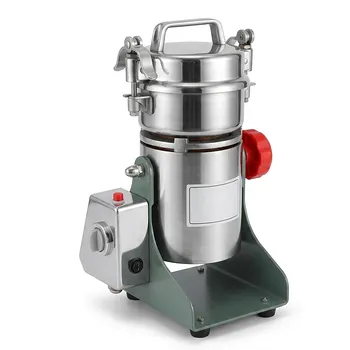
High Speed Swing Type Laboratory Pulverizer for Fine Powder Grinding and Sample Preparation
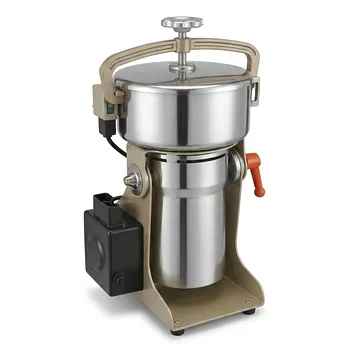
Multifunctional High Efficiency High Speed Laboratory Grinder
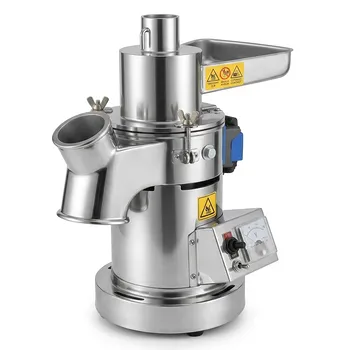
Continuous Feeding Grinder High Efficiency Pulverizer for Lab Sample Preparation
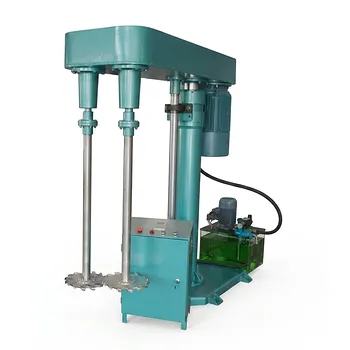
Hydraulic Double Shaft Disperser for High Viscosity Liquid Mixing and Dispersion
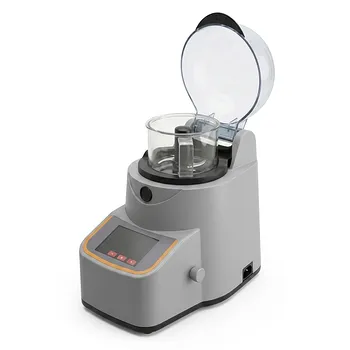
Industrial Knife Mill for Food and Biological Sample Preparation High Speed Laboratory Homogenizer
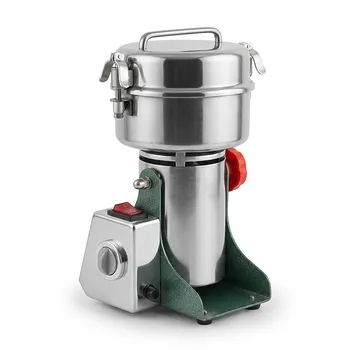
Small High-Speed Swing Grinder for Laboratory Sample Preparation
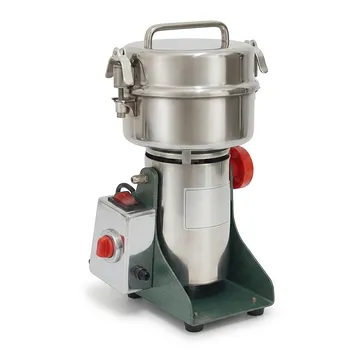
Small High Speed Grinder for Laboratory Sample Preparation