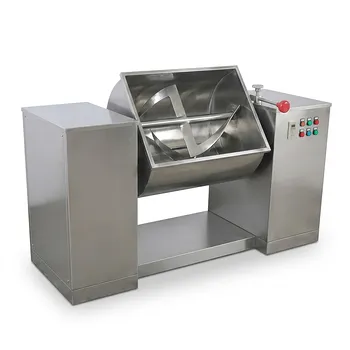
How does the planetary centrifugal mixer's motion facilitate defoaming? Achieve Bubble-Free High-Viscosity Mixing
Updated 3 months ago
The synergy of revolution and rotation in a planetary centrifugal mixer facilitates defoaming by leveraging high G-forces to compress materials while simultaneously generating 3D convective currents. This dual-action motion forces air bubbles—which have lower density than the surrounding medium—to the surface where they burst, ensuring a void-free mixture even in highly viscous fluids.
Core Takeaway: Efficient defoaming is achieved because revolution creates a powerful centrifugal field that separates air from the material based on density, while rotation ensures every part of the mixture is circulated to the surface to release trapped gases.
The Mechanics of Centrifugal Separation
The Power of Revolution
The primary "revolution" of the mixer generates a massive centrifugal force that acts on the entire container. This force presses the high-density liquid or slurry against the outer walls of the vessel.
Density-Driven Buoyancy
Because air bubbles have a much lower specific gravity than the material, they are squeezed toward the low-pressure center of the container. This acceleration of buoyancy allows even microscopic bubbles to overcome the resistance of the medium and migrate toward the surface.
Elimination of Internal Defects
By expelling these micro-bubbles, the mixer prevents internal pores and surface pinholes that often occur during subsequent curing or sintering. This is critical for maintaining the mechanical strength and structural density of materials like ceramics, sols, and nanocomposites.
The Role of Rotation and Convection
Creating 3D Convective Circulation
While revolution handles the separation, the rotation of the container on its own axis (often at a 45-degree tilt) creates a complex flow pattern. This motion induces three-dimensional convective circulation, moving material from the bottom of the container to the top.
Breaking Through High Viscosity
In high-viscosity media, bubbles can become trapped by the material's internal resistance. The intense shear forces and spiral vortexes created by rotation continuously bring "deep-layer" liquid to the surface, ensuring that no air remains trapped in the lower sections of the vessel.
Material Homogenization
Beyond deaeration, this rotation ensures that powders are dispersed and agglomerates are broken down. The result is a dual-process where the material is both perfectly homogenized and completely defoamed in a single cycle.
Understanding the Trade-offs
Heat Generation and Temperature Sensitivity
The high-speed shear and centrifugal forces required for efficient defoaming can generate significant frictional heat. For temperature-sensitive materials, such as certain curing agents or biological samples, excessive processing times can lead to premature reactions or degradation.
Shear-Induced Material Changes
While the intense shearing forces are excellent for dispersing powders, they may damage the molecular structure of delicate polymers or fragile fillers. Users must balance the speed of rotation with the structural integrity required for their specific material.
Complexity of Parameter Tuning
Achieving the perfect balance between revolution (for defoaming) and rotation (for mixing) requires precise adjustment. Different viscosity levels and material densities demand unique speed ratios, which may require extensive trial and error during the initial setup.
Making the Right Choice for Your Goal
To maximize the efficiency of your planetary centrifugal mixer, align your settings with your specific material requirements:
- If your primary focus is removing micro-bubbles from high-viscosity resins: Prioritize a higher revolution-to-rotation ratio to maximize the centrifugal pressure that forces air to the surface.
- If your primary focus is dispersing fine powders into a liquid: Increase the rotation speed to enhance shear forces and ensure the breakdown of agglomerates during the defoaming process.
- If your primary focus is processing temperature-sensitive sols: Utilize shorter cycles or intermittent "pulse" mixing to prevent heat buildup while still achieving the necessary deaeration.
- If your primary focus is structural integrity in sintered ceramics: Ensure a vacuum-assisted mode is used in conjunction with centrifugal motion to remove the smallest sub-micron air pockets.
By mastering the balance between these two distinct motions, you can achieve a level of material purity and uniformity that traditional stirring methods cannot replicate.
Summary Table:
| Motion Component | Physical Mechanism | Impact on Defoaming | Material Benefit |
|---|---|---|---|
| Revolution | High G-Force Centrifugal Field | Forces low-density bubbles to the surface | Eliminates internal pores & pinholes |
| Rotation | 3D Convective Circulation | Moves material from bottom to top layers | Prevents air trapping in viscous media |
| Shear Force | Spiral Vortex & Internal Friction | Breaks down agglomerates and bubbles | Ensures uniform dispersion & purity |
| Synergy | Coupled Motion | Simultaneous mixing and deaeration | Shortens cycle time & improves density |
Elevate Your Material Purity with Precision Engineering
Are you struggling with trapped micro-bubbles or inconsistent dispersion in your high-viscosity samples? [Brand Name] provides complete laboratory sample preparation solutions for material science, specializing in high-performance powder processing and compaction equipment.
From our advanced planetary centrifugal defoaming mixers to our extensive lines of crushers (jaw/roll), liquid nitrogen cryogenic grinders, and planetary ball mills, we ensure your materials meet the highest standards of structural integrity. We also offer a full spectrum of hydraulic presses, including Cold/Warm Isostatic Presses (CIP/WIP), XRF pellet presses, and vacuum hot presses for specialized applications.
Ready to optimize your lab's workflow? Contact our technical experts today to find the perfect equipment solution for your specific material challenges!
References
- Yoshiyuki Komoda, Naoto Ohmura. Estimation of mean shear rate in a vessel of a planetary centrifugal mixer based on the heat balance equation. DOI: 10.1016/j.cherd.2024.01.006
Mentioned Products
- High Viscosity Planetary Centrifugal Vacuum Mixer for Material Defoaming and Uniform Mixing
- High Efficiency Vacuum Planetary Centrifugal Mixer and Defoaming Machine for Industrial Material Research and Precise Laboratory Powder Dispersion
- High Speed Vacuum Planetary Centrifugal Mixer and Defoamer for Industrial Paste Processing
- Industrial Planetary Centrifugal Vacuum Defoaming Mixer for High Viscosity Paste and Powder Homogenization
- High Viscosity Planetary Centrifugal Mixing and Vacuum Defoaming Machine for Laboratory Material Preparation
People Also Ask
- What core functions does a planetary centrifugal mixer perform? Optimize Hard Carbon Anode Slurry & Degassing
- Why is a planetary centrifugal mixer recommended for geopolymer slurries? Achieve high-shear, air-free homogenization.
- Why is a planetary centrifugal mixer utilized for wood powder and HPMC? Achieve uniform dispersion & rapid defoaming.
- Why is an industrial-grade planetary centrifugal mixer used for secondary stirring? Achieve Void-Free Filler Dispersion
- How does the tilt angle of the container influence fluid flow within a planetary centrifugal mixer? Master 3D Convection

Tech Team · PowderPreparation
Last updated on May 14, 2026
Related Products
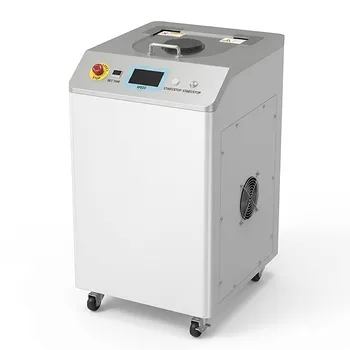
High Viscosity Planetary Centrifugal Vacuum Mixer for Material Defoaming and Uniform Mixing
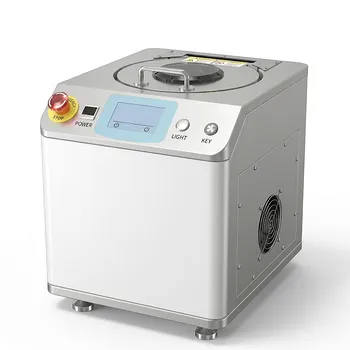
High Efficiency Vacuum Planetary Centrifugal Mixer and Defoaming Machine for Industrial Material Research and Precise Laboratory Powder Dispersion
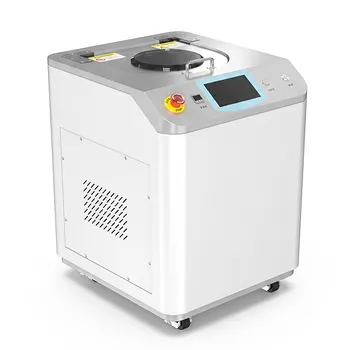
High Speed Vacuum Planetary Centrifugal Mixer and Defoamer for Industrial Paste Processing
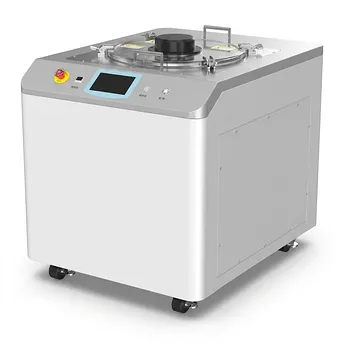
Industrial Planetary Centrifugal Vacuum Defoaming Mixer for High Viscosity Paste and Powder Homogenization
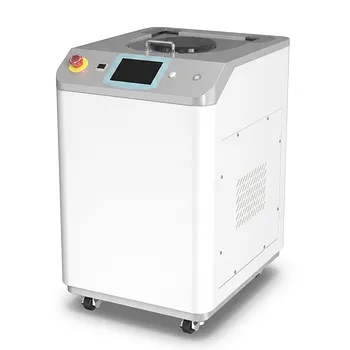
High Viscosity Planetary Centrifugal Mixing and Vacuum Defoaming Machine for Laboratory Material Preparation
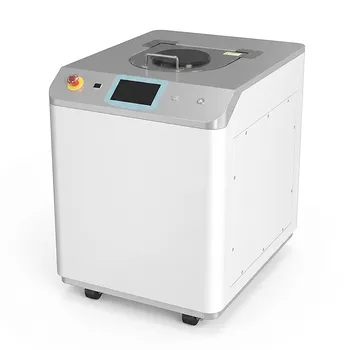
Industrial Planetary Centrifugal Vacuum Defoaming Mixer for High Viscosity Paste and Advanced Material Science
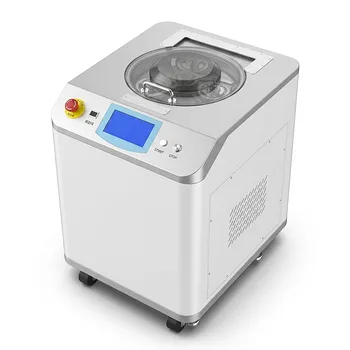
Dual Cup Vacuum Centrifugal Mixer Planetary Paste Defoaming Machine Industrial Material Processor
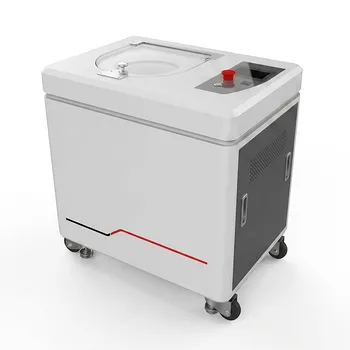
非介入式材料均质机真空脱泡行星搅拌高粘度混合设备

360° Rotating Omnidirectional Laboratory Planetary Ball Mill for Homogeneous Ultra-Fine Grinding and Mixing
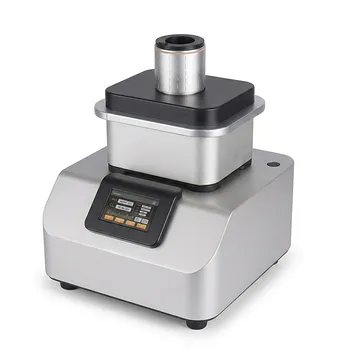
Ultra Centrifugal Mill High Speed Laboratory Grinder for Fibrous and Brittle Sample Preparation
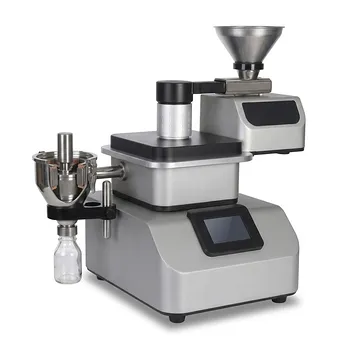
Ultra Centrifugal Mill for Rapid Laboratory Sample Preparation and Fine Powder Grinding

Heavy Duty Horizontal Planetary Ball Mill for Efficient Industrial Grinding and Sample Preparation
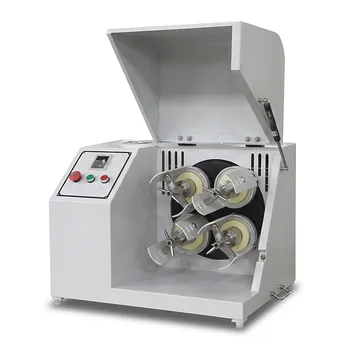
Horizontal Light Duty Planetary Ball Mill for Laboratory Sample Preparation

Vertical Production Planetary Ball Mill for High Throughput Powder Processing
Planetary Ball Mill 12L
High Energy Omnidirectional Planetary Ball Mill 20L
Inclined Mixer for Homogeneous Powder Blending and Grinding

Miniature Planetary Ball Mill with Vacuum Grinding and High Efficiency for Laboratory Sample Preparation

High Energy Omnidirectional Planetary Ball Mill 16L