How does the conical distribution device inside a high-speed centrifugal mixer facilitate material flow? Optimize Mixing
Updated 5 months ago
The conical distribution device serves as the primary flow regulator within a high-speed centrifugal mixer by intercepting and redirecting the vertical fall of raw materials. Positioned directly beneath the feed inlet, it deflects particles away from the center of the mixing chamber to ensure they are scattered evenly across the high-speed rotating disc. This mechanical intervention prevents material accumulation at the axis of rotation, establishing the necessary spatial conditions for rapid, uniform dispersion.
The core function of the conical distribution device is to transform a concentrated bulk stream into a uniform radial spread. By eliminating "dead zones" at the center of the disc, it facilitates the formation of thin-layer material flow, which is essential for high-precision centrifugal mixing.
The Mechanics of Radial Deflection
Eliminating the Central Stagnation Zone
In a centrifugal system, the center of a rotating disc has the lowest linear velocity, making it prone to material stagnation. The conical distribution device physically prevents raw materials from landing in this low-energy zone by deflecting them toward the high-velocity outer regions. This ensures that every particle is immediately subjected to the kinetic energy required for transport.
Optimizing Interaction with the Rotating Disc
By scattering particles evenly across the disc's surface, the conical device prevents "slugging" or uneven loading. This even distribution allows the disc to apply consistent frictional force to the material. This friction is what generates the centrifugal force necessary to eject particles toward the vessel walls at high speeds.
Pre-Conditioning for Dispersion
The act of deflecting particles creates an initial state of spatial dispersion before the mixing logic even begins. This pre-conditioning ensures that when the material reaches the outer edges of the disc, it is already spread out. This allows for better contact with injected moisture or other additives during subsequent mixing stages.
Impact on Mixing Kinetics
Formation of High-Speed Thin Layers
The conical structure is fundamental to creating a thin flowing layer of material on the inner surfaces of the mixer. Moving material in a thin layer promotes cross-mixing between particles of different densities in an extremely short timeframe. This kinetic environment is much more efficient than trying to move a dense, consolidated mass of powder.
Acceleration through Friction
As particles are deflected by the cone onto the rotating disc, they utilize surface friction to gain momentum. The disc accelerates these particles, eitjer through direct contact or wave-like edges, and flings them toward the vessel wall. This high-speed ejection is the primary driver of the intensive mixing action found in centrifugal systems.
Enhancing Uniformity in Complex Materials
For specialized applications like sandy material preparation, the conical device facilitates the overlapping flow of materials. By ensuring materials hit the rotor at various points, it allows the wave-like edges of the rotor to blend components more thoroughly. This results in a highly uniform distribution of components that might otherwise segregate due to size or weight.
Understanding the Trade-offs
Feed Rate Sensitivity
The effectiveness of a conical distribution device is highly dependent on the feed rate of the raw materials. If the input volume exceeds the cone's deflection capacity, material can "bridge" or overflow the cone, leading to the very center-clumping the device was designed to prevent. Precise control of the inlet stream is required to maintain the thin-layer benefit.
Material Abrasiveness and Wear
Because the conical device is the first point of contact for falling materials, it is subject to localized abrasive wear. In high-speed environments, even minor erosion of the cone's geometry can alter the deflection angle. This may lead to uneven disc loading and a subsequent decrease in mixing uniformity over time.
How to Apply This to Your Process
When optimizing your centrifugal mixing operation, consider how the conical distribution device aligns with your specific material characteristics and production goals.
- If your primary focus is rapid cycle times: Ensure your feed rate is calibrated so the conical device can maintain a thin-layer flow, as this maximizes the cross-mixing speed of particles.
- If your primary focus is moisture integration: Verify that the cone is effectively scattering the powder to the disc's periphery, as this provides the necessary surface area for thorough contact with liquid injectors.
- If your primary focus is equipment longevity: Implement a regular inspection schedule for the conical device to identify wear patterns that could disrupt the radial distribution of abrasive materials.
Understanding the conical distribution device allows you to transform a simple gravitational feed into a high-performance, precision-engineered material flow.
Summary Table:
| Feature | Impact on Material Flow | Primary Benefit |
|---|---|---|
| Radial Deflection | Moves particles from the center to the high-velocity outer disc | Eliminates central stagnation "dead zones" |
| Thin-Layer Formation | Creates a spread-out, flowing layer on the inner surfaces | Enables rapid, high-precision cross-mixing |
| Frictional Acceleration | Transmits kinetic energy from the disc to the particles | Drives high-speed ejection for intensive mixing |
| Spatial Dispersion | Pre-conditions the stream before moisture/additive contact | Ensures uniform distribution of complex materials |
Elevate Your Material Consistency with Expert Solutions
Achieving precise material uniformity requires more than just high speed—it requires engineered flow control. At our facility, we provide complete laboratory sample preparation solutions for material science, specializing in high-performance powder processing and compaction equipment.
Our extensive product range is designed to handle your most challenging materials:
- Advanced Milling & Mixing: Planetary ball mills, jet mills, disc/rotor mills, and high-efficiency powder or defoaming mixers.
- Preparation & Sizing: Jaw/roll crushers, liquid nitrogen cryogenic grinders, and vibratory/air-jet sieve shakers.
- Precision Compaction: A full spectrum of hydraulic presses, including Cold/Warm Isostatic Presses (CIP/WIP), vacuum hot presses, XRF pellet presses, and standard lab presses.
Whether you are refining a new alloy or preparing samples for XRF analysis, our equipment ensures the reliability and repeatability your research demands.
Ready to optimize your laboratory workflow? Contact our technical team today for a tailored solution!
References
- Hongjun Li, Ying Zuo. Research and Optimization Design of Mixing Characteristics of High-speed Centrifugal Mixer Based on DEM. DOI: 10.1088/1742-6596/2095/1/012071
Mentioned Products
- High Speed Vacuum Planetary Centrifugal Mixer and Defoamer for Industrial Paste Processing
- High Efficiency Vacuum Planetary Centrifugal Mixer and Defoaming Machine for Industrial Material Research and Precise Laboratory Powder Dispersion
- Ultra Centrifugal Mill High Speed Laboratory Grinder for Fibrous and Brittle Sample Preparation
- High Viscosity Planetary Centrifugal Vacuum Mixer for Material Defoaming and Uniform Mixing
- High Viscosity Planetary Centrifugal Mixing and Vacuum Defoaming Machine for Laboratory Material Preparation
People Also Ask
- Why increase revolution radius for high-viscosity materials? Optimize Mixing Performance with Centrifugal Acceleration
- What is the function of a planetary centrifugal mixer in electrode slurry prep? Achieve high-energy, uniform dispersion.
- Why is a planetary centrifugal mixer utilized for wood powder and HPMC? Achieve uniform dispersion & rapid defoaming.
- How does a planetary centrifugal mixer contribute to the preparation of magnetic polymer composites? Expert Guide
- How does a planetary centrifugal mixer address key challenges in Tyr-CDs@EVA optical films? Ensure Optical Clarity.

Tech Team · PowderPreparation
Last updated on May 14, 2026
Related Products
High Speed Vacuum Planetary Centrifugal Mixer and Defoamer for Industrial Paste Processing
High Efficiency Vacuum Planetary Centrifugal Mixer and Defoaming Machine for Industrial Material Research and Precise Laboratory Powder Dispersion
Ultra Centrifugal Mill High Speed Laboratory Grinder for Fibrous and Brittle Sample Preparation
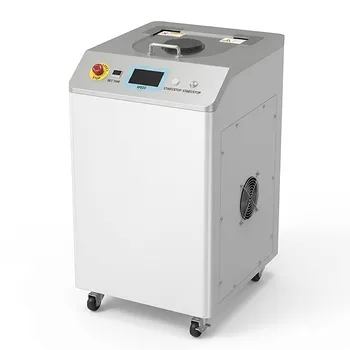
High Viscosity Planetary Centrifugal Vacuum Mixer for Material Defoaming and Uniform Mixing
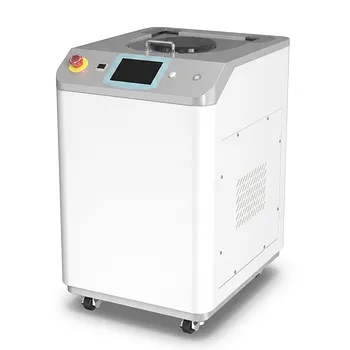
High Viscosity Planetary Centrifugal Mixing and Vacuum Defoaming Machine for Laboratory Material Preparation
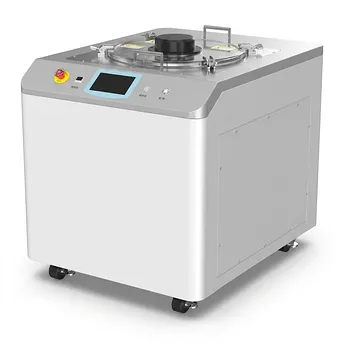
Industrial Planetary Centrifugal Vacuum Defoaming Mixer for High Viscosity Paste and Powder Homogenization
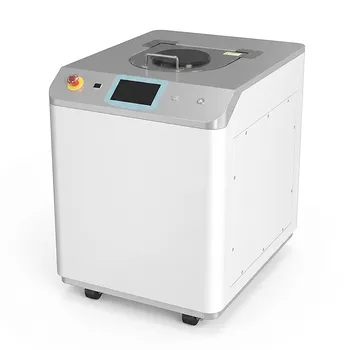
Industrial Planetary Centrifugal Vacuum Defoaming Mixer for High Viscosity Paste and Advanced Material Science
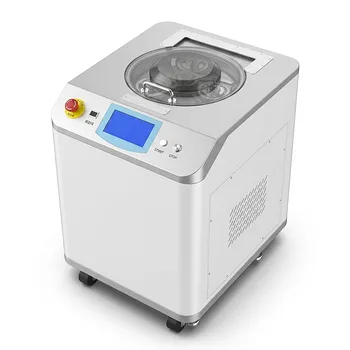
Dual Cup Vacuum Centrifugal Mixer Planetary Paste Defoaming Machine Industrial Material Processor
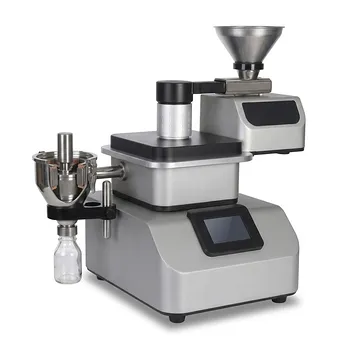
Ultra Centrifugal Mill for Rapid Laboratory Sample Preparation and Fine Powder Grinding
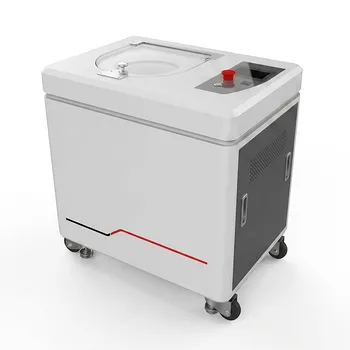
非介入式材料均质机真空脱泡行星搅拌高粘度混合设备
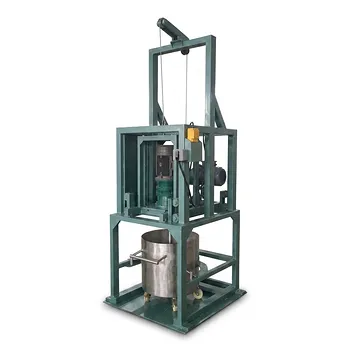
High-Speed Simple Disperser for Efficient Mixing, Dispersion, and Emulsification
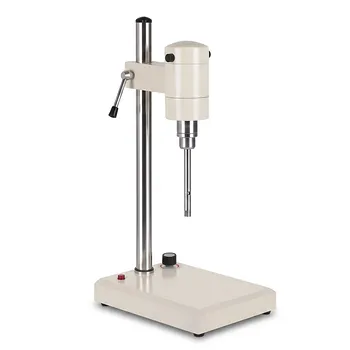
High Speed Dispersing Homogenizer for Laboratory Emulsification Dispersion and Cell Disruption
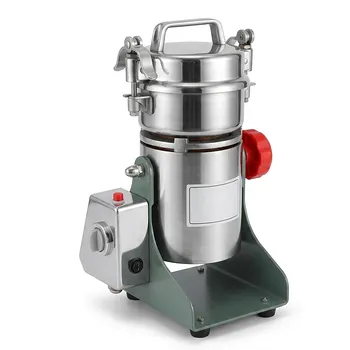
High Speed Swing Type Laboratory Pulverizer for Fine Powder Grinding and Sample Preparation
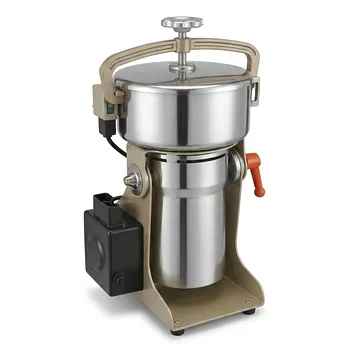
Multifunctional High Efficiency High Speed Laboratory Grinder
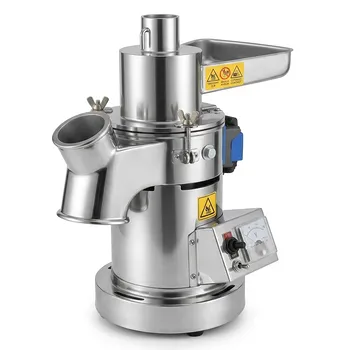
Continuous Feeding Grinder High Efficiency Pulverizer for Lab Sample Preparation
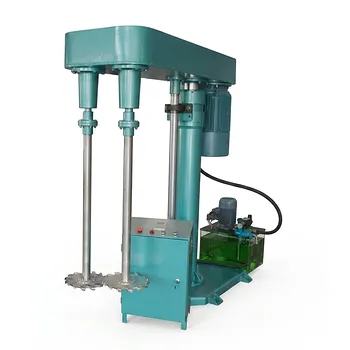
Hydraulic Double Shaft Disperser for High Viscosity Liquid Mixing and Dispersion
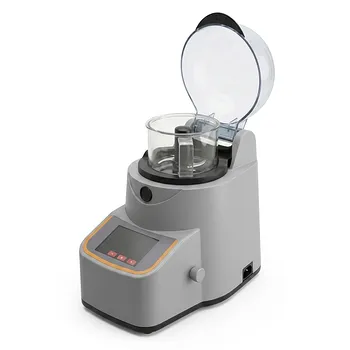
Industrial Knife Mill for Food and Biological Sample Preparation High Speed Laboratory Homogenizer
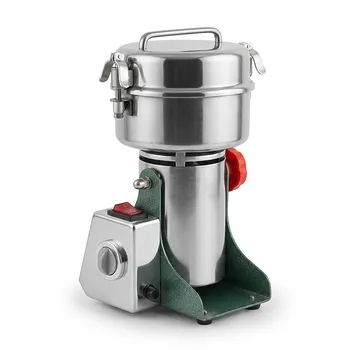
Small High-Speed Swing Grinder for Laboratory Sample Preparation
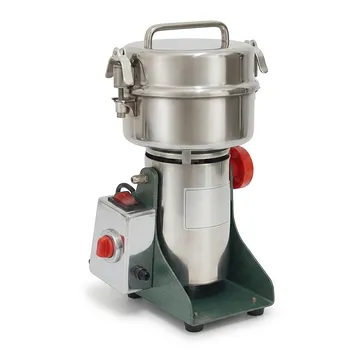
Small High Speed Grinder for Laboratory Sample Preparation