How does rotational speed in a planetary ball mill influence monosaccharide synthesis? Control Energy & Yield
Updated 4 months ago
Rotational speed is the fundamental control mechanism for determining the selectivity and yield of specific monosaccharides. By adjusting the RPM (revolutions per minute) of a planetary ball mill, you directly regulate the mechanical energy input and the micro-regional temperature within the reaction vessel. This control allows for the precise modulation of chemical pathways, shifting the product distribution between three-carbon, four-carbon, and complex multi-carbon sugars such as pentoses and hexoses.
Core Takeaway: Adjusting rotational speed acts as a "process lever" that determines the energy density available to overcome specific chemical barriers. Higher speeds generally drive the synthesis toward longer-chain sugars by increasing the frequency and intensity of molecular collisions and local thermal spikes.
Energy Density and Pathway Selectivity
Regulating Carbon Chain Growth
The rotational speed dictates the intensity of the mechanical energy transferred to the reactants. This energy input is critical for determining the ratio of small-carbon sugars (C3 and C4) to more complex multi-carbon sugars (C5 and C6).
Overcoming Reaction Energy Barriers
Higher rotational speeds provide the necessary driving energy to overcome high energy barriers associated with complex molecular structures. In mechanochemical synthesis, providing sufficient energy density can trigger structural transitions that lower-speed settings cannot achieve.
Impact of Centrifugal Acceleration
A planetary ball mill creates centrifugal accelerations many times the force of gravity through the opposing rotation of the sun wheel and grinding jars. This high-acceleration environment ensures that energy is transferred efficiently to facilitate the formation of specific monosaccharide isomers.
Thermal and Kinetic Regulation
Managing Micro-Regional Temperatures
Mechanical energy is partially converted into heat at the point of impact between the grinding media and the reactants. These micro-regional temperature spikes are essential for activating specific synthesis pathways that are sensitive to thermal input.
Accelerating Reaction Kinetics
Increasing the rotation speed significantly enhances the reaction rate by increasing the frequency of effective collisions. This reduction in the synthesis cycle allows for the rapid production of sugars that might otherwise take significantly longer under traditional liquid-phase chemistry.
The Mixing Degree of Reactants
The speed of the mill directly influences how thoroughly the solid-state reactants are homogenized. Optimal mixing at higher speeds ensures that catalysts and precursors are in constant contact, preventing "dead zones" that would lead to an inconsistent product distribution.
Understanding the Trade-offs
Equipment Wear and Contamination
While higher speeds increase energy input, they also accelerate the wear and tear on grinding components like Zirconia jars and balls. Operating at excessively high speeds (e.g., 400 rpm or higher) can introduce metal or oxide impurities into the sugar product, compromising its purity.
The "Volcano" Effect and Efficiency
There is often an optimal speed range beyond which performance plateaus or declines. If the speed is too high, the grinding balls may enter a "centrifuging" state where they cling to the jar walls, reducing the impact force and wasting energy without benefiting the synthesis.
Risk of Thermal Degradation
Excessive mechanical heat generated at very high speeds can be counterproductive. For sensitive organic molecules like monosaccharides, uncontrolled micro-regional temperatures may lead to the degradation of the product or the deactivation of active catalytic sites.
How to Apply This to Your Synthesis
To achieve your specific research or production goals, the rotational speed must be balanced against the stability of your target molecules and the limits of your equipment.
- If your primary focus is synthesizing complex multi-carbon sugars (Pentoses/Hexoses): Increase the rotational speed to maximize energy density and overcome the higher activation barriers required for longer carbon chains.
- If your primary focus is product purity and minimal contamination: Maintain a moderate speed (e.g., 200 rpm) to reduce the abrasive wear on the grinding media while still providing sufficient energy for the reaction.
- If your primary focus is rapid production and kinetics: Utilize higher speeds (e.g., 800+ rpm) to shorten the synthesis cycle, provided the target sugar is thermally stable enough to withstand the resulting micro-regional heat.
By treating rotational speed as a precise energy-delivery tool rather than a simple mixing setting, you can effectively "tune" your planetary ball mill to produce a specific sugar profile.
Summary Table:
| Factor Affected | Low Rotational Speed | High Rotational Speed |
|---|---|---|
| Energy Density | Lower; suits simple structures | Higher; overcomes complex barriers |
| Sugar Profile | Favors C3 and C4 (short chains) | Drives synthesis of C5 and C6 (long chains) |
| Reaction Rate | Slower; longer synthesis cycles | Rapid kinetics; shorter cycles |
| Thermal Impact | Minimal micro-regional heating | High heat; risk of thermal degradation |
| Purity/Wear | High purity; low media wear | Higher risk of contamination/abrasion |
Precision Equipment for Your Mechanochemical Synthesis
Achieving the perfect monosaccharide profile requires exact control over energy density and reaction kinetics. We provide complete laboratory sample preparation solutions for material science, specializing in high-performance powder processing and compaction equipment.
Whether you are focusing on multi-carbon sugar yield or product purity, our extensive line of equipment is designed to meet rigorous research standards:
- Advanced Milling: Precision planetary ball mills, jet mills, and cryogenic grinders.
- Powder Handling: High-efficiency powder mixers, defoaming mixers, and vibratory sieve shakers.
- Material Compaction: A full spectrum of hydraulic presses, including Cold/Warm Isostatic Presses (CIP/WIP), XRF pellet presses, and vacuum hot presses.
Optimize your synthesis parameters today. Contact our specialists to find the ideal equipment configuration for your material science laboratory!
References
- Maren Haas, Oliver Trapp. Mineral-mediated carbohydrate synthesis by mechanical forces in a primordial geochemical setting. DOI: 10.1038/s42004-020-00387-w
Mentioned Products
- Vertical Semi Circular Planetary Ball Mill for Laboratory Precision Grinding
- High Energy Planetary Ball Mill for Nano Scale Grinding and Mechanical Alloying
- Vertical Production Planetary Ball Mill for High Throughput Powder Processing
- Heavy Duty Horizontal Planetary Ball Mill for Efficient Industrial Grinding and Sample Preparation
- 360° Rotating Omnidirectional Laboratory Planetary Ball Mill for Homogeneous Ultra-Fine Grinding and Mixing
People Also Ask
- What role does a planetary ball mill play in the synthesis of Li6PS5Cl (LPSCl)? Unlock High Ionic Conductivity
- Why is a planetary ball mill essential for SiBCN-rGO wet-spinning? Achieve Superior Dispersion and Spinnability
- Why is an intermittent grinding process required for perovskites in a planetary ball mill? Ensure Stability & Purity
- Why is a planetary ball mill required for PET micronization? Ensure Accurate Chemical Analysis of Reprocessed PET
- How does mechanized planetary ball milling compare to manual agate grinding? Optimize sulfide standard material precision.

Tech Team · PowderPreparation
Last updated on May 14, 2026
Related Products
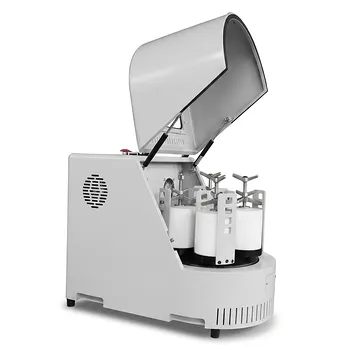
Vertical Semi Circular Planetary Ball Mill for Laboratory Precision Grinding
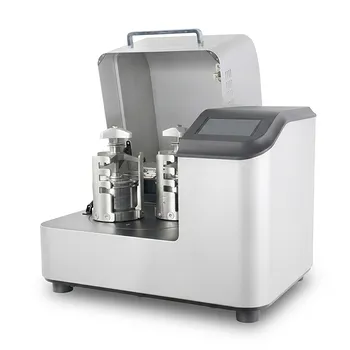
High Energy Planetary Ball Mill for Nano Scale Grinding and Mechanical Alloying
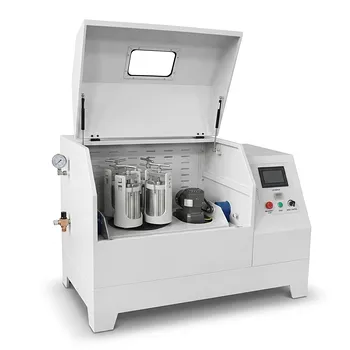
Vertical Production Planetary Ball Mill for High Throughput Powder Processing
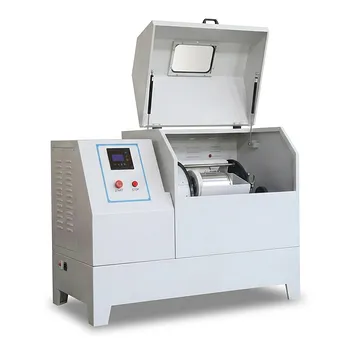
Heavy Duty Horizontal Planetary Ball Mill for Efficient Industrial Grinding and Sample Preparation
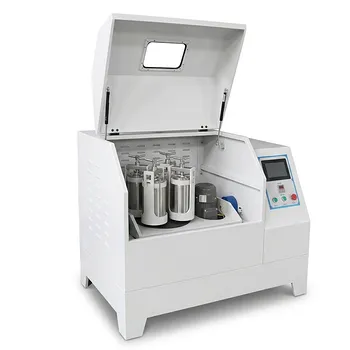
360° Rotating Omnidirectional Laboratory Planetary Ball Mill for Homogeneous Ultra-Fine Grinding and Mixing
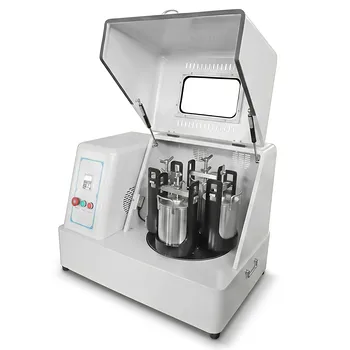
Vertical Square Planetary Ball Mill for Laboratory Sample Preparation and Nanoscale Grinding
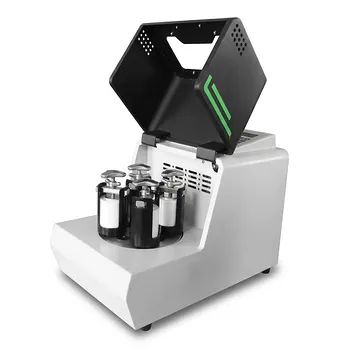
Miniature Planetary Ball Mill with Vacuum Grinding and High Efficiency for Laboratory Sample Preparation
High Energy Laboratory Planetary Ball Mill for Nano Grinding and Material Science Sample Preparation
High Energy Omnidirectional Planetary Ball Mill 16L
High Energy Planetary Ball Mill for Nano Scale Grinding and Colloidal Mixing in Material Science Research
High Energy Laboratory Planetary Ball Mill for Nano Grinding and Colloidal Mixing of Hard and Brittle Materials
High Energy Omnidirectional Planetary Ball Mill 20L
Horizontal Light Duty Planetary Ball Mill for Laboratory Sample Preparation

8L Planetary Ball Mill for Laboratory Grinding and Sample Preparation
Dual Station Planetary Ball Mill 24L
Planetary Ball Mill 12L

Nano High Energy Vibratory Ball Mill for Laboratory Sample Preparation

Multi-Platform Nanoscale High-Energy Vibratory Ball Mill
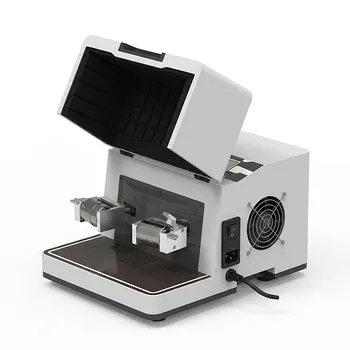
High Energy Hybrid Vibratory Ball Mill for Grinding Mixing and Cell Disruption