How does sieve mesh size deviation affect the quality control of Black Silicon Carbide abrasive powders? Expert Insights
Updated 5 months ago
Sieve mesh size deviation directly alters the particle width boundaries of Black Silicon Carbide (SiC). These deviations cause the abrasive powder's particle size distribution to shift away from the intended normal distribution, leading to inconsistent grading. For quality control, even minor manufacturing tolerances in the mesh can result in "out-of-spec" fractions, particularly in the finer powders or bottom-pan sediments.
Core Takeaway: Variations in sieve mesh dimensions compromise the precision of Black Silicon Carbide grading, leading to non-uniform abrasive performance. Maintaining quality control requires a shift from trusting nominal mesh sizes to implementing rigorous, high-precision calibration protocols.
The Mechanics of Mesh Deviation in SiC Grading
Impact on Particle Width Boundaries
The width of a Black Silicon Carbide particle is the primary factor determining which sieve it passes through. Standard manufacturing tolerances in mesh production mean that two "identical" sieves may actually have slightly different aperture sizes. These deviations redefine the width boundaries of each fraction, causing particles that should be retained to pass through, or vice versa.
Challenges with Finer Fractions
Deviations are most problematic when processing fine fractions or analyzing bottom-pan sediments. In these smaller scales, a microscopic variance in wire diameter or weave consistency represents a larger percentage of the total aperture. This sensitivity makes fine SiC powders highly susceptible to grading errors that can ruin the consistency of the final abrasive product.
Disruption of Normal Distribution
Effective quality control relies on the assumption that particles follow a normal distribution within a specific range. When mesh sizes deviate, the resulting distribution becomes skewed or irregular. This shift undermines the predictability of the powder's behavior during application, such as in precision grinding or coating.
Consequences for Quality Control Consistency
Inconsistent Abrasive Performance
Black Silicon Carbide is valued for its hardness and sharp edges; however, its effectiveness depends on size uniformity. If mesh deviations allow oversized particles to contaminate a fine grade, those larger particles will cause deep, unintended scratches on the workpiece. Conversely, too many undersized particles reduce the material removal rate and efficiency.
The Necessity of Regular Calibration
Because mesh dimensions can change over time due to wear or initial manufacturing flaws, regular calibration is a prerequisite for quality. Using high-precision instruments to verify aperture dimensions ensures that the "nominal" size of the sieve matches its "actual" performance. Without this verification, quality control data becomes unreliable and cannot be compared across different production batches.
Understanding the Trade-offs and Pitfalls
Precision vs. Mesh Longevity
High-precision sieves often utilize finer wires to achieve exact apertures, which can make them more prone to wear and deformation. While these sieves provide superior grading accuracy for Black Silicon Carbide, they require more frequent replacement and gentler handling compared to "utility-grade" sieves.
The Trap of Nominal Sizing
A common pitfall in quality control is relying solely on the labeled mesh size without verifying the actual tolerances. Two sieves from different manufacturers may both be labeled "320 Mesh" but yield significantly different SiC fractions due to allowed manufacturing variances. This "nominal trap" can lead to unexplained variations in product performance between different facilities or suppliers.
How to Apply This to Your Quality Protocol
Implementing a Rigorous Sizing Strategy
To maintain the highest standards of Black Silicon Carbide production, your quality control must move beyond simple sieving toward a verified calibration model.
- If your primary focus is Precision Grading: Invest in certified master sieves and high-precision optical calibration tools to verify every new sieve before it enters the production line.
- If your primary focus is Batch Consistency: Establish a strict schedule for re-calibration to detect mesh stretching or wear caused by the highly abrasive nature of Silicon Carbide.
- If your primary focus is Troubleshooting Performance: Analyze the bottom-pan sediments and fine fractions for shifts in distribution that indicate a failing or out-of-tolerance sieve mesh.
By accounting for mesh deviation through active calibration, you ensure that your abrasive powders meet the exact technical specifications required for high-performance applications.
Summary Table:
| Impact Factor | Effect on Black Silicon Carbide (SiC) Quality | Strategic Quality Control Action |
|---|---|---|
| Particle Boundaries | Shifts size distribution; causes inconsistent grading fractions. | Implement rigorous, high-precision calibration protocols. |
| Fine Fractions | High sensitivity to micro-variances; leads to "out-of-spec" sediment. | Use certified master sieves for fine powder analysis. |
| Distribution | Disrupts normal distribution; creates unpredictable material behavior. | Shift from nominal sizing to verified actual aperture data. |
| Performance | Oversized particles cause scratches; undersized reduce efficiency. | Schedule regular re-calibration to detect mesh wear/stretch. |
Optimize Your Material Consistency with KinTek Solutions
Precision in particle size analysis is the backbone of high-quality material science. At KinTek, we provide complete laboratory sample preparation solutions tailored for the demanding requirements of Black Silicon Carbide processing.
Whether you are refining fine powders or managing bulk production, our specialized equipment ensures accuracy and reliability:
- Sieving & Analysis: Vibratory and air-jet sieve shakers equipped with precision-matched test sieves and meshes.
- Powder Processing: Advanced mills (planetary ball, jet, and rotor) and crushers (jaw/roll) for consistent particle reduction.
- Compaction & Forming: A full spectrum of hydraulic presses, including Cold/Warm Isostatic Presses (CIP/WIP), vacuum hot presses, and XRF pellet presses.
- Mixing: High-efficiency powder and defoaming mixers for uniform material blends.
Don't let mesh deviation compromise your product quality. Contact our technical experts today to find the perfect equipment for your material science lab!
References
- В. А. Носенко, Aleksey Aleksandrov. DEPENDENCE OF THE MEAN AND DISPERSION OF GRAIN WIDTH OF SILICON CARBIDE BLACK GRINDING POWDERS ON THE MESH SIZE OF A PASS SIEVE. DOI: 10.12737/article_58f9c4d9ecb004.36348769
Mentioned Products
- 三维电磁微量振动筛分仪
- Laboratory Vibratory Test Sieve Shaker for Precision Particle Size Analysis and Powder Grading
- Stainless Steel Laboratory Vibratory Test Sieve Shaker
- Small Laboratory Vibrating Sieve Shaker for Precise Particle Size Analysis
- Small Laboratory Vibratory Sieve Shaker for Powder Gradation and Particle Size Analysis
People Also Ask
- Why is a standard sieve shaker essential for CBA powders in geopolymers? Enhance Reactivity & Material Strength
- Why are standard metal sieves and sieve shakers necessary for 5-aminotetrazole mixtures? Optimize Thermal & Kinetic Data
- Why Use Sieve Shakers for Gangue Slurry Experiments? Optimize Particle Grading for Superior Results
- What are the advantages of mechanical vs. manual sieving for road dust analysis? Achieve Superior Data Standardization.
- How do high-precision sieve shakers and powder mixers facilitate material circularity in metal PBF? Optimize AM Cycles

Tech Team · PowderPreparation
Last updated on May 14, 2026
Related Products
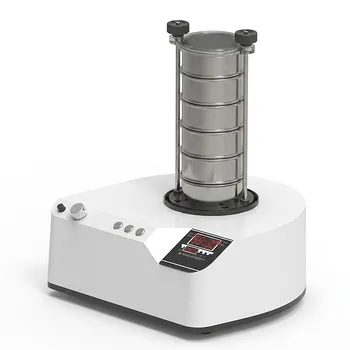
三维电磁微量振动筛分仪
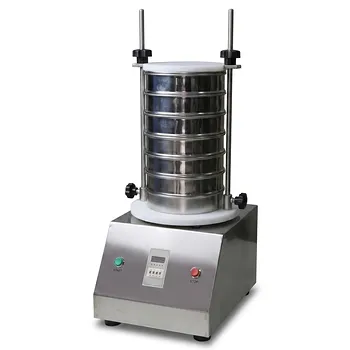
Laboratory Vibratory Test Sieve Shaker for Precision Particle Size Analysis and Powder Grading
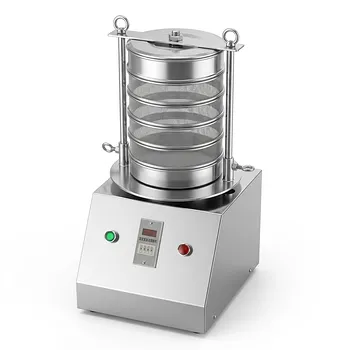
Stainless Steel Laboratory Vibratory Test Sieve Shaker
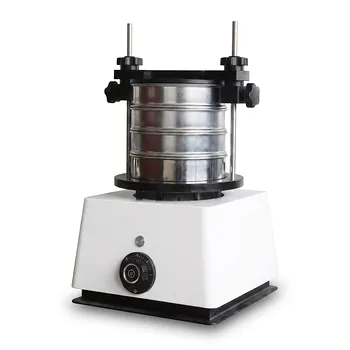
Small Laboratory Vibrating Sieve Shaker for Precise Particle Size Analysis
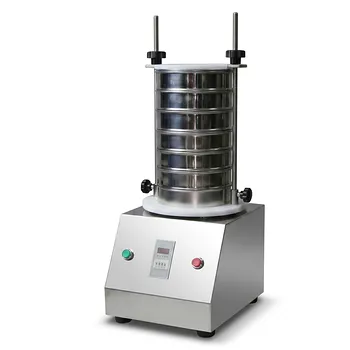
Small Laboratory Vibratory Sieve Shaker for Powder Gradation and Particle Size Analysis
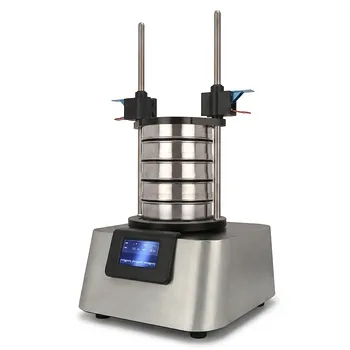
Vibratory Sieve Shaker Electromagnetic 3D Motion Powder Particle Size Analyzer for Dry and Wet Sieving
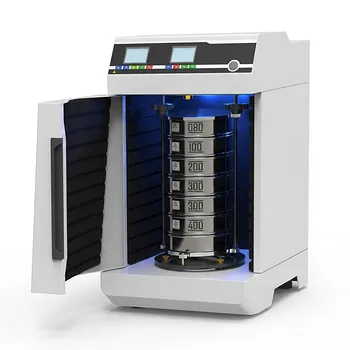
Laboratory Dry and Wet Three Dimensional Vibratory Sieve Shaker for Particle Analysis
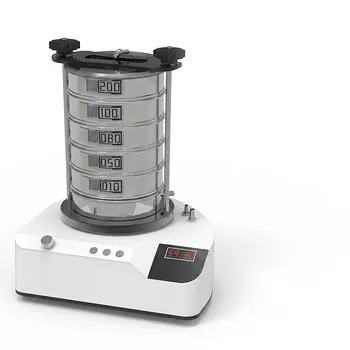
Heavy Duty Dry Three Dimensional Vibratory Sieve Shaker for Particle Separation
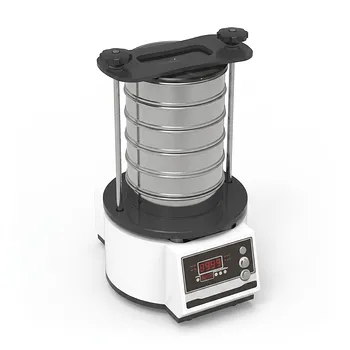
Tapping Oscillating Sieve Shaker for Dry and Wet Particle Size Analysis
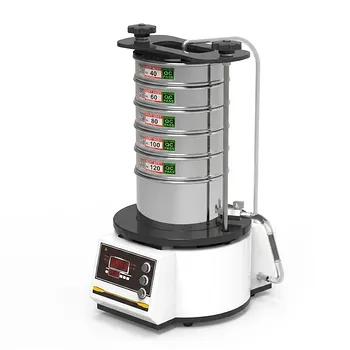
High Frequency Wet Three-Dimensional Vibrating Sieve Shaker for Dry and Wet Particle Size Analysis

Dry Three Dimensional Vibratory Sieve Shaker