How does milling time affect the distribution of lubricating phases in Cu/WS2? Optimize Composite Microstructure
Updated 5 months ago
Milling time is the primary lever for controlling the morphology and dispersion of WS2 within a copper matrix. In planetary ball milling, shorter durations maintain the structural integrity of larger WS2 flakes, while extended milling leads to the mechanical exfoliation and fragmentation of the lubricant, resulting in a significantly more uniform and fine-grained distribution throughout the composite.
The duration of the milling process dictates the balance between preserving coarse lubricating flakes and achieving high-surface-area dispersion, allowing engineers to tune the composite's microstructural architecture for specific friction and wear requirements.
The Mechanics of Structural Evolution
Impact of Short Milling Durations
During the initial stages of milling, the energy transferred to the powder mixture is insufficient to fully break down the WS2 layered structure. This results in the preservation of larger flakes within the copper matrix, which can be beneficial for providing bulk lubrication in certain heavy-load scenarios.
Impact of Extended Milling Durations
As milling time increases, the repeated high-energy impacts of the ball mill subject the WS2 to intense shear forces. These forces cause the layers to exfoliate and fragment into smaller particles, which are then driven into the interstices of the copper powder.
Achieving Homogeneous Dispersion
The most significant effect of prolonged milling is the transition from localized clusters of lubricant to a homogeneous dispersion. This fine-scale distribution ensures that the lubricating phase is available at every point on the contact surface during operation, potentially leading to more stable friction coefficients.
Understanding the Trade-offs
Flake Integrity vs. Fine Dispersion
While fine dispersion is often desirable for consistency, the exfoliation process reduces the size of the WS2 particles. In some applications, larger flakes are preferred as they may provide a more robust lubricating film under specific sliding conditions.
Customization of Tribological Properties
Choosing the correct milling time is not about finding a "perfect" duration, but about matching the microstructure to the application. Short milling preserves the original properties of the WS2, while long milling creates a high-surface-area "composite effect" where the lubricant is intimately integrated with the copper.
How to Optimize Milling Time for Your Application
Selecting the appropriate milling duration depends on whether your priority is the structural integrity of the lubricant or the uniformity of the final composite.
- If your primary focus is maximizing bulk lubricant presence: Shorter milling times are ideal to prevent the excessive fragmentation of WS2 flakes, ensuring the lubricant remains in its original, larger form.
- If your primary focus is consistent friction performance and surface coverage: Extended milling times should be utilized to achieve a fine, even distribution of WS2 fragments throughout the entire copper matrix.
By strategically adjusting the milling duration, you can precisely engineer the internal architecture of Cu/WS2 composites to meet the most demanding wear and friction specifications.
Summary Table:
| Milling Duration | WS2 Morphology | Dispersion Level | Primary Application Focus |
|---|---|---|---|
| Short | Large, intact flakes | Localized clusters | Bulk lubrication & heavy-load scenarios |
| Extended | Fragmented & exfoliated | Fine, homogeneous | Consistent friction & uniform surface coverage |
Precision Engineering for Your Advanced Material Composites
Ready to achieve the perfect balance of dispersion and structural integrity in your Cu/WS2 composites? Contact our technical experts today to find the ideal equipment for your laboratory.
At [Brand Name], we provide complete laboratory sample preparation solutions for material science. We specialize in high-efficiency powder processing and compaction equipment, including:
- Milling & Grinding: High-energy planetary ball mills, jet mills, and cryogenic grinders for precise particle size control.
- Sieving & Mixing: Vibratory sieve shakers and high-performance powder/defoaming mixers to ensure material homogeneity.
- Compaction & Sintering: A full spectrum of hydraulic presses, including Cold/Warm Isostatic Presses (CIP/WIP), vacuum hot presses, and XRF pellet presses.
Let us help you optimize your milling parameters and material architecture with professional-grade solutions tailored to your specific friction and wear requirements.
References
- P. Sarma, Anil Borah. Solid Lubricants in Sustainable Manufacturing: A Review of Processing Techniques, Materials and Applications. DOI: 10.15282/ijame.22.4.2025.1.0978
Mentioned Products
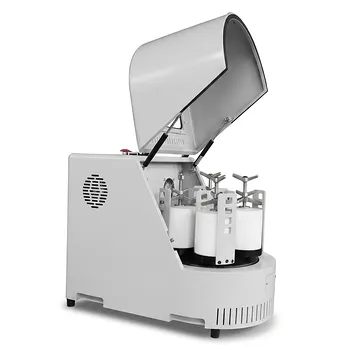
- Vertical Semi Circular Planetary Ball Mill for Laboratory Precision Grinding
- High Energy Planetary Ball Mill for Nano Scale Grinding and Mechanical Alloying
- Vertical Production Planetary Ball Mill for High Throughput Powder Processing
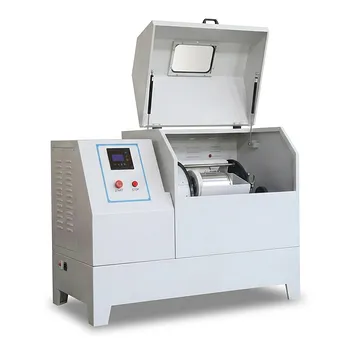
- Heavy Duty Horizontal Planetary Ball Mill for Efficient Industrial Grinding and Sample Preparation
- 360° Rotating Omnidirectional Laboratory Planetary Ball Mill for Homogeneous Ultra-Fine Grinding and Mixing
People Also Ask
- What role does a planetary ball mill play in the synthesis of Li6PS5Cl (LPSCl)? Unlock High Ionic Conductivity
- Why is a planetary ball mill essential for SiBCN-rGO wet-spinning? Achieve Superior Dispersion and Spinnability
- Why is an intermittent grinding process required for perovskites in a planetary ball mill? Ensure Stability & Purity
- Why is a planetary ball mill required for PET micronization? Ensure Accurate Chemical Analysis of Reprocessed PET
- How does mechanized planetary ball milling compare to manual agate grinding? Optimize sulfide standard material precision.

Tech Team · PowderPreparation
Last updated on May 14, 2026
Related Products
Vertical Semi Circular Planetary Ball Mill for Laboratory Precision Grinding

High Energy Planetary Ball Mill for Nano Scale Grinding and Mechanical Alloying

Vertical Production Planetary Ball Mill for High Throughput Powder Processing
Heavy Duty Horizontal Planetary Ball Mill for Efficient Industrial Grinding and Sample Preparation

360° Rotating Omnidirectional Laboratory Planetary Ball Mill for Homogeneous Ultra-Fine Grinding and Mixing

Vertical Square Planetary Ball Mill for Laboratory Sample Preparation and Nanoscale Grinding

Miniature Planetary Ball Mill with Vacuum Grinding and High Efficiency for Laboratory Sample Preparation
High Energy Laboratory Planetary Ball Mill for Nano Grinding and Material Science Sample Preparation

High Energy Omnidirectional Planetary Ball Mill 16L
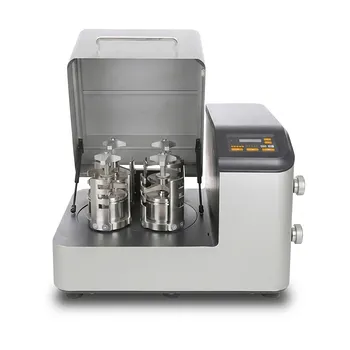
High Energy Planetary Ball Mill for Nano Scale Grinding and Colloidal Mixing in Material Science Research
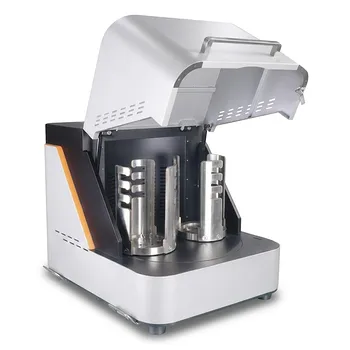
High Energy Laboratory Planetary Ball Mill for Nano Grinding and Colloidal Mixing of Hard and Brittle Materials
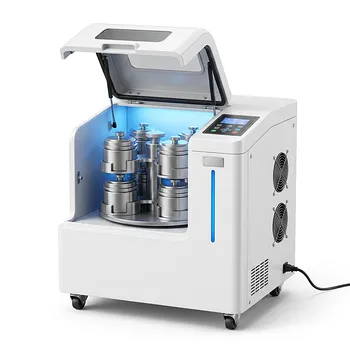
High Energy Omnidirectional Planetary Ball Mill 20L
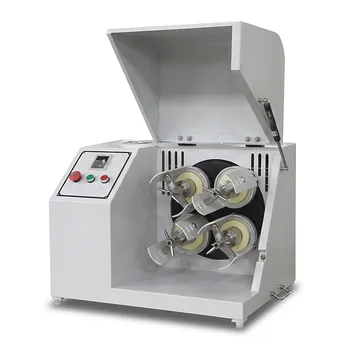
Horizontal Light Duty Planetary Ball Mill for Laboratory Sample Preparation
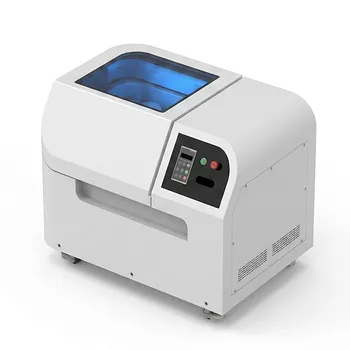
8L Planetary Ball Mill for Laboratory Grinding and Sample Preparation
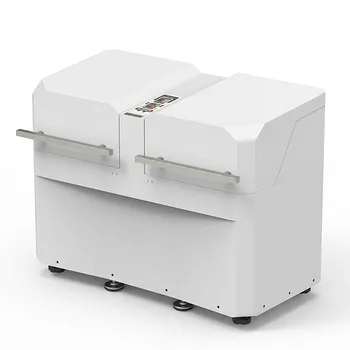
Dual Station Planetary Ball Mill 24L
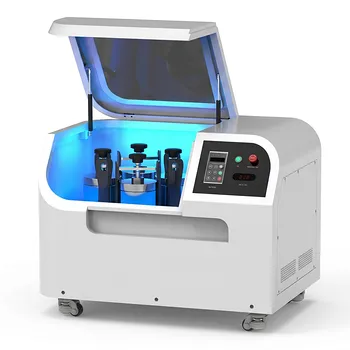
Planetary Ball Mill 12L

Nano High Energy Vibratory Ball Mill for Laboratory Sample Preparation

Multi-Platform Nanoscale High-Energy Vibratory Ball Mill
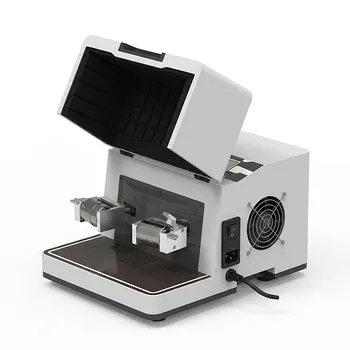
High Energy Hybrid Vibratory Ball Mill for Grinding Mixing and Cell Disruption