How does an 850 μm test sieve function during the primary separation phase of powder recovery from capsules? Guide
Updated 4 months ago
The 850 μm test sieve serves as a critical mechanical filter that isolates large capsule shell debris immediately after the crushing stage. By allowing medicinal powder to pass while trapping coarse fragments, it protects downstream equipment and ensures a streamlined, high-speed recovery workflow.
The 850 μm sieve acts as a "pre-filter" in the powder recovery process, removing the bulk of shell waste to prevent the blinding of finer meshes. This initial grading step is essential for maintaining high throughput and protecting the integrity of the recovered pharmaceutical material.
The Mechanics of Primary Separation
Intercepting Large-Scale Debris
After capsules are crushed, the resulting mixture contains a high volume of large, jagged shell fragments. The 850 μm mesh is specifically sized to intercept these polymer or gelatin pieces before they can interfere with the rest of the process.
Facilitating Powder Throughput
While the shells are caught on the surface, the medicinal powder—which typically consists of much smaller particles—falls freely through the mesh openings. This creates an immediate physical separation between the waste material and the valuable product.
Impact on Downstream Efficiency
Reducing Mechanical Load
By removing the bulk of the shell fragments early, the total volume of material moving to the next stage is significantly reduced. This allows subsequent fine-sieving equipment to operate more efficiently, as it only needs to process the pre-screened powder.
Preventing Mesh Blinding
Small fragments can often wedge themselves into the openings of very fine sieves, a problem known as blinding. The 850 μm sieve prevents these larger shards from reaching sensitive fine-mesh stages, maintaining consistent flow and preventing clogs.
Understanding the Trade-offs
Risk of Micro-Fragment Carryover
While the 850 μm sieve is excellent for bulk separation, it cannot catch shell "slivers" that are smaller than the mesh opening. This means that primary separation is rarely a standalone solution if high purity is required.
Material Interaction and Clumping
If the powder has a high moisture content or electrostatic charge, it may adhere to the shell fragments instead of passing through the mesh. In these cases, the 850 μm sieve may inadvertently trap a portion of the active ingredient, leading to lower recovery yields.
How to Apply This to Your Project
When integrating an 850 μm sieve into your powder recovery workflow, consider your specific production goals to optimize the results.
- If your primary focus is process speed: Use the 850 μm sieve in conjunction with a high-frequency vibratory separator to move material through the primary phase as quickly as possible.
- If your primary focus is maximum purity: Follow the 850 μm primary separation with a secondary fine-mesh sieve (such as 150 or 250 μm) to catch the micro-shards that bypass the initial stage.
- If your primary focus is high-value material yield: Implement a "wash" or agitation step on the 850 μm screen to ensure all powder is dislodged from the trapped shell fragments.
Integrating an 850 μm sieve is the most effective way to balance high throughput with the longevity of your secondary filtration equipment.
Summary Table:
| Function | Mechanism | Primary Benefit |
|---|---|---|
| Debris Interception | Traps large polymer/gelatin shell fragments | Protects downstream fine-mesh sieves |
| Powder Throughput | Allows small medicinal particles to pass freely | Ensures high-speed recovery workflow |
| Load Reduction | Filters out bulk waste early in the process | Increases efficiency of secondary equipment |
| Blinding Prevention | Keeps jagged shards away from sensitive meshes | Maintains consistent flow and prevents clogs |
Optimize Your Powder Recovery with Expert Material Science Solutions
Are you looking to maximize yield and purity in your material processing? Our team specializes in providing complete laboratory sample preparation solutions tailored to your specific needs. From initial breakdown using our jaw and roll crushers to precision separation with our vibratory and air-jet sieve shakers, we offer the tools necessary for high-performance powder recovery.
Our extensive product line includes:
- Grinding & Milling: Liquid nitrogen cryogenic grinders, planetary ball mills, jet mills, and rotor mills.
- Sieving & Mixing: Precision test sieves (all meshes), powder mixers, and defoaming mixers.
- Compaction: A full spectrum of hydraulic presses, including Cold/Warm Isostatic Presses (CIP/WIP), XRF pellet presses, and vacuum hot presses.
Whether you are a researcher aiming for high-purity results or a distributor seeking reliable OEM/ODM support, we bring the technical expertise to enhance your lab's efficiency.
Ready to upgrade your workflow? Contact us today to discuss your project!
References
- Nobue Terakawa, Sanshiro Muramatsu. Simple Decapsulation of Dantrium<sup>®</sup> Capsules 25 mg Using a Planetary Centrifugal Mixer. DOI: 10.5649/jjphcs.50.504
Mentioned Products
- Laboratory Vibratory Test Sieve Shaker for Precision Particle Size Analysis and Powder Grading
- 三维电磁微量振动筛分仪
- Small Laboratory Vibrating Sieve Shaker for Precise Particle Size Analysis
- Vibratory Sieve Shaker Electromagnetic 3D Motion Powder Particle Size Analyzer for Dry and Wet Sieving
- Small Laboratory Vibratory Sieve Shaker for Powder Gradation and Particle Size Analysis
People Also Ask
- What role does a laboratory sieve shaker play in determining PDI? Achieve Precision in Biomass Quality Testing
- What are the functions of sieve shakers for coconut shell powder? Achieve Precise Particle Size & Quality Control.
- What function does a laboratory sieve shaker perform in the PSD analysis of residual soil? Ensure Precise Grading
- What is the role of a laboratory sieve shaker in the preparation of plantain peel adsorbents? Standardize Particle Size
- What is the function of a laboratory vibratory sieve shaker? Enhance Coal Particle Size Distribution (PSD) Analysis

Tech Team · PowderPreparation
Last updated on Jun 03, 2026
Related Products

Laboratory Vibratory Test Sieve Shaker for Precision Particle Size Analysis and Powder Grading

三维电磁微量振动筛分仪

Small Laboratory Vibrating Sieve Shaker for Precise Particle Size Analysis

Vibratory Sieve Shaker Electromagnetic 3D Motion Powder Particle Size Analyzer for Dry and Wet Sieving

Small Laboratory Vibratory Sieve Shaker for Powder Gradation and Particle Size Analysis
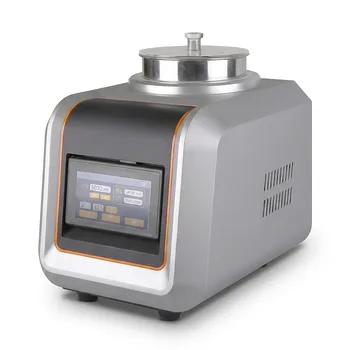
Laboratory Air Jet Sieving Machine for Fine Powder Particle Size Analysis and Deagglomeration
