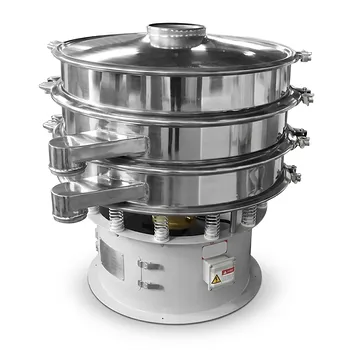
How does a vibratory sieve shaker classify PKS aggregates? Achieve Precise Particle Size Analysis for Your Materials.
Updated 5 months ago
The vibratory sieve shaker classifies Palm Kernel Shell (PKS) aggregates by subjecting a vertical stack of standardized sieves to controlled mechanical vibration. This process forces the raw, irregular PKS particles through a series of mesh screens arranged in descending order of aperture size, effectively segregating the material into precise size fractions ranging from fine powders (sub-1 mm) to coarse aggregates (up to 25 mm).
The core function of a vibratory sieve shaker is to provide a scientifically consistent method for determining particle size distribution, which is essential for optimizing the porosity, density, and structural integrity of materials like lightweight pervious concrete.
The Mechanics of Vibratory Sieving
To achieve accurate classification, the equipment relies on a combination of gravitational force and high-frequency mechanical energy to move particles across the screening surfaces.
The Vertical Stack Arrangement
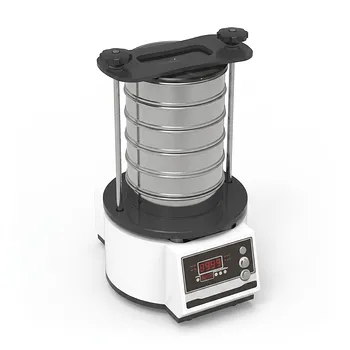
Sieves are stacked with the largest aperture at the top and the smallest at the bottom, typically ending in a collection pan. This arrangement ensures that PKS particles are filtered in stages, preventing the smaller mesh screens from becoming overwhelmed by large debris.
Controlled Mechanical Vibration
The shaker applies constant vibration amplitude and duration—often set for approximately 15 minutes—to ensure repeatable results. This mechanical action ensures that every particle has multiple opportunities to present its smallest dimension to the sieve openings, facilitating "forced screening" of irregular shapes.
Quantitative Sample Analysis
Once the cycle is complete, the mass of the PKS retained on each layer is measured to calculate the Mean Granule Size (MGS). This data allows engineers to plot a particle size distribution curve, which is the baseline for evaluating aggregate quality and uniformity.
Optimizing PKS Performance in Concrete
Classifying PKS is not merely about sorting; it is about engineering the physical properties of the final product, such as lightweight concrete or drilling fluids.
Controlled Porosity and Permeability
In applications like pervious concrete, proper grading (e.g., 0.5 mm to 14 mm) is critical for controlling the void ratio. By ensuring a specific mix of sizes, producers can optimize the permeability of the concrete while maintaining its structural density.
Enhanced Structural Strength
Precise classification allows for medium grading limits, where smaller particles effectively fill the gaps between larger PKS aggregates. This "filling effect" reduces the volume of cement paste required and improves the workability and hardened strength of the concrete.
Consistency in Industrial Fluids
For PKS used in drilling fluids, the shaker ensures a uniform fine powder (often between 75-150 μm). This precision is vital for maintaining rheological stability and preventing the degradation of sealing performance in specialized industrial applications.
Understanding the Trade-offs
While vibratory sieving is the industry standard for PKS classification, there are inherent limitations and technical nuances to consider.
The Challenge of Irregular Particle Shape
PKS particles are naturally angular and irregular, which can lead to "blinding" or clogging of the mesh. If the vibration amplitude is too low, elongated particles may sit across the mesh rather than passing through, skewing the distribution data.
Sieve Wear and Calibration
Continuous use with abrasive materials like crushed palm shells leads to mesh deformation over time. Even microscopic changes in aperture size can invalidate the results, requiring regular calibration against standard reference materials to maintain scientific precision.
Applying Classification to Your Project
Selecting the right sieving parameters depends entirely on the intended industrial application of the Palm Kernel Shells.
- If your primary focus is Structural Concrete: Use a wide sieve range (8 mm to 25 mm) to establish a distribution curve that minimizes voids and maximizes compressive strength.
- If your primary focus is Filtration or Pervious Surfaces: Prioritize the 0.5 mm to 14 mm range to ensure the aggregate grading allows for specific water infiltration rates.
- If your primary focus is Industrial Powders or Additives: Focus on fine-mesh sieving with timed durations to guarantee the majority of particles fall within the 75-150 μm range for optimal absorption.
Accurate particle size classification transforms raw Palm Kernel Shells from an agricultural byproduct into a high-performance, engineered aggregate.
Summary Table:
| Feature | PKS Classification Details |
|---|---|
| Mechanism | Vertical stack arrangement with high-frequency vibration |
| Particle Range | Fine powders (75 μm) to coarse aggregates (25 mm) |
| Analysis Metric | Mean Granule Size (MGS) & Distribution Curves |
| Key Benefits | Optimized porosity, enhanced strength, and consistent grading |
| Applications | Lightweight concrete, filtration surfaces, and drilling fluids |
Elevate Your Material Research with Expert Laboratory Solutions
Achieving the perfect particle size distribution for Palm Kernel Shells (PKS) requires precision, reliability, and the right tools. We provide complete laboratory sample preparation solutions for material science, specializing in high-performance powder processing and compaction equipment.
Our extensive product line is designed to streamline your workflow:
- Classification & Grading: High-precision vibratory and air-jet sieve shakers with a full range of test sieves and meshes.
- Size Reduction: Advanced crushers (jaw/roll), liquid nitrogen cryogenic grinders, and diverse mills (planetary ball, jet, sand/bead, disc, rotor).
- Compaction & Processing: A full spectrum of hydraulic presses, including Cold/Warm Isostatic Presses (CIP/WIP), vacuum hot presses, and powder mixers.
Whether you are engineering high-strength concrete or specialized industrial powders, our equipment ensures repeatable and scientifically sound results.
Contact our technical team today to find the ideal solution for your lab!
References
- Ebenezer Yiwo, Carlos Thomas. The Effect of Untreated Dura-Palm Kernel Shells as Coarse Aggregate in Lightweight Pervious Concrete for Flood Mitigation. DOI: 10.3390/buildings13071588
Mentioned Products
- Vibratory Sieve Shaker Electromagnetic 3D Motion Powder Particle Size Analyzer for Dry and Wet Sieving
- Small Laboratory Vibratory Sieve Shaker for Powder Gradation and Particle Size Analysis
- Dry Three Dimensional Vibratory Sieve Shaker
- Heavy Duty Dry Three Dimensional Vibratory Sieve Shaker for Particle Separation
- Stainless Steel Laboratory Vibratory Test Sieve Shaker
People Also Ask
- How does a vibratory sieve shaker contribute to optimizing the performance of activated carbon? Enhance Adsorption Precision
- Why is a laboratory vibratory sieve shaker necessary for processing magnesium-based borate precursor powders? Boost Activity
- Why use a vibratory sieve shaker to verify coarse aggregate grading in rubberized concrete? Ensure Structural Integrity
- What function do vibratory sieve shakers and standard test sieves serve in the preparation of adsorbents? Key Guide
- What role does a vibratory sieve shaker play in the particle size analysis of ground corn products? Enhance QC Precision

Tech Team · PowderPreparation
Last updated on May 14, 2026
Related Products
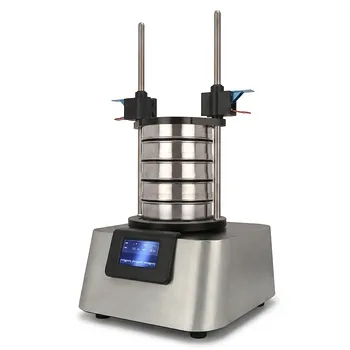
Vibratory Sieve Shaker Electromagnetic 3D Motion Powder Particle Size Analyzer for Dry and Wet Sieving
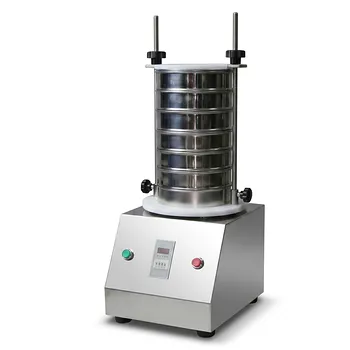
Small Laboratory Vibratory Sieve Shaker for Powder Gradation and Particle Size Analysis
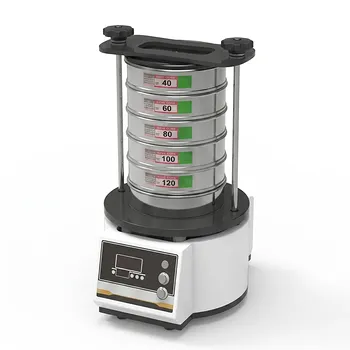
Dry Three Dimensional Vibratory Sieve Shaker
Heavy Duty Dry Three Dimensional Vibratory Sieve Shaker for Particle Separation
Stainless Steel Laboratory Vibratory Test Sieve Shaker
Laboratory Dry and Wet Three Dimensional Vibratory Sieve Shaker for Particle Analysis
Laboratory Vibratory Test Sieve Shaker for Precision Particle Size Analysis and Powder Grading
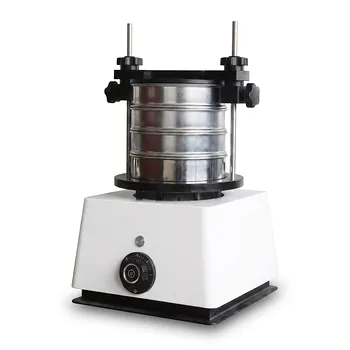
Small Laboratory Vibrating Sieve Shaker for Precise Particle Size Analysis
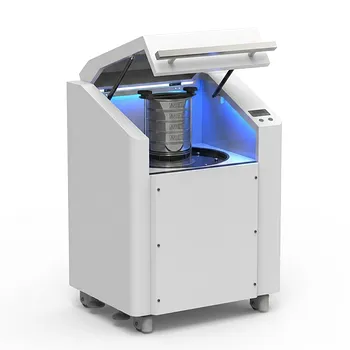
High Frequency Cabinet Type Three-Dimensional Rotary Vibrating Sieve Shaker for Dry Sieving and Particle Classification
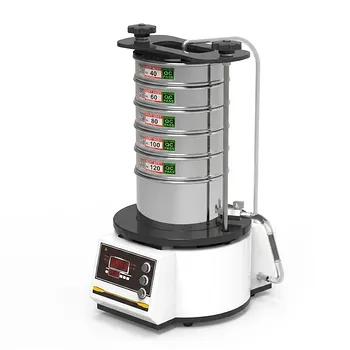
High Frequency Wet Three-Dimensional Vibrating Sieve Shaker for Dry and Wet Particle Size Analysis
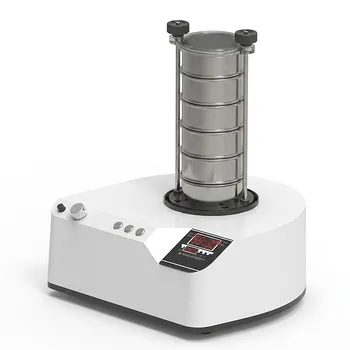
三维电磁微量振动筛分仪
Stainless Steel Rotary Vibrating Sieve High Precision Circular Vibratory Separator Industrial Powder Grading Machine Multi Layer Sifting Equipment
Tapping Oscillating Sieve Shaker for Dry and Wet Particle Size Analysis