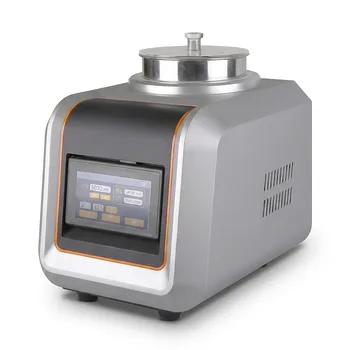
How does a vibratory sieve shaker facilitate the quality inspection of aggregates in concrete? Optimize Your Mix Design.
Updated 4 months ago
The vibratory sieve shaker is the primary tool for validating aggregate grading in concrete production. It employs high-frequency mechanical vibrations to drive aggregate particles through a stack of standard sieves with progressively smaller aperture sizes. This process allows producers to accurately determine particle size distribution and the fineness modulus, ensuring raw materials conform to the technical standards required for high-performance concrete.
Precise sieve analysis transforms raw sand and stone into quantifiable data, enabling the optimization of packing density. By achieving a dense physical structure, producers can significantly reduce porosity and cement paste requirements while enhancing the final mechanical strength of the concrete.
Quantifying Particle Size Distribution
The Mechanics of Precise Separation
A vibratory sieve shaker utilizes vertical or rotational vibrations to ensure that every particle has multiple opportunities to pass through the sieve mesh. This high-frequency motion prevents "blinding" (clogging) of the mesh and ensures that particles are classified strictly by their smallest cross-sectional dimension.
Determining the Fineness Modulus
By weighing the material retained on each sieve, technicians can plot cumulative residue curves and calculate the fineness modulus (FM). This numerical value provides a standardized index of the coarseness or fineness of the aggregate, which is a critical input for consistent mix design.
Compliance with Technical Standards
Automated shakers ensure that the grading process is repeatable and independent of operator error. This consistency is vital for meeting specific technical requirements, such as DIN 4187-8, which dictates the grading zones necessary for structural integrity.
Optimizing the Concrete Matrix
Maximizing Packing Density
Accurate grading allows for a "skeleton" of coarse aggregates where the voids are perfectly filled by finer particles. This dense packing minimizes the volume of empty spaces (porosity) within the dry mix before the binder is added.
Reducing Cement Paste Requirements
When aggregate particles pack closely together, the surface area requiring coating by cement paste is minimized. This optimization reduces the overall cement consumption, lowering material costs and reducing the carbon footprint of the production process.
Enhancing Workability and Fluidity
The distribution of particle sizes directly influences the rheology or flow of the wet concrete. A well-graded aggregate mix, verified by sieve analysis, ensures the concrete remains workable during placement without the risk of segregation.
Advanced Research and Structural Integrity
Mapping the Interfacial Transition Zone (ITZ)
High-precision sifting allows researchers to study the Interfacial Transition Zone, the critical area where the cement paste bonds to the aggregate. Controlling aggregate size ensures a more uniform ITZ, which prevents localized weaknesses in the concrete matrix.
Discrete Element Method (DEM) Simulations
Sieve analysis provides the essential input parameters for numerical modeling and simulations. By feeding accurate grading data into DEM models, engineers can predict how the material will behave under stress before a single cubic meter of concrete is poured.
Mitigating Thermal Shrinkage
In high-temperature environments, the skeletal structure of the aggregate limits the thermal shrinkage of the cement matrix. Properly graded aggregates, classified by a vibratory shaker, preserve the microstructural integrity of the concrete after heat exposure.
Understanding the Trade-offs
Particle Attrition and Degradation
Prolonged exposure to high-frequency vibration can cause softer aggregates to rub against each other, leading to attrition. This generates "fines" that were not present in the original sample, potentially skewing the results and indicating a higher fineness than actually exists.
Sample Size and Representation
A sieve shaker is limited by the volume of material it can process in a single cycle. If the sample size is too small, it may not accurately represent the variability of the stockpile; if it is too large, the sieves become overloaded, leading to incomplete separation.
Equipment Maintenance and Calibration
The accuracy of the inspection depends entirely on the integrity of the sieve mesh. Over time, wires can stretch or tear, and the vibration frequency may drift, necessitating regular calibration against certified reference materials to maintain quality standards.
How to Apply This to Your Project
When integrating vibratory sieve analysis into your quality control workflow, align your methodology with your specific structural goals:
- If your primary focus is maximizing compressive strength: Use the shaker to achieve the highest possible packing density, which minimizes the internal voids that lead to structural failure.
- If your primary focus is cost-optimization: Focus on the fineness modulus to calculate the absolute minimum amount of cement paste required to coat the aggregate surface area.
- If your primary focus is research and modeling: Utilize high-precision sieving to generate exact particle size inputs for DEM simulations to ensure your digital twins match your physical materials.
By mastering the use of the vibratory sieve shaker, you move from "guessing" your mix proportions to "engineering" a high-performance concrete matrix.
Summary Table:
| Key Parameter | Function in Quality Inspection | Impact on Concrete Production |
|---|---|---|
| Particle Size Distribution | Classifies aggregates by cross-sectional dimension | Ensures consistent grading and technical compliance |
| Fineness Modulus (FM) | Provides a standardized index of coarseness | Optimizes the ratio of cement paste to aggregates |
| Packing Density | Identifies optimal particle skeletal structure | Minimizes porosity and reduces cement consumption |
| High-Frequency Vibration | Prevents mesh blinding during analysis | Guarantees repeatable, operator-independent data |
| Rheology Verification | Evaluates particle flow and distribution | Improves workability and prevents mix segregation |
Elevate Your Material Analysis with Industry-Leading Precision
At our core, we provide complete laboratory sample preparation solutions tailored for material science and civil engineering. Whether you are validating aggregate quality for high-performance concrete or conducting advanced DEM research, our specialized equipment ensures accuracy at every stage.
Our extensive product line includes:
- Sieving & Grading: High-precision vibratory and air-jet sieve shakers with a full range of standard test sieves.
- Milling & Grinding: Planetary ball mills, jet mills, and liquid nitrogen cryogenic grinders for fine powder processing.
- Crushing & Mixing: Heavy-duty jaw/roll crushers and high-efficiency powder/defoaming mixers.
- Advanced Compaction: A full spectrum of hydraulic presses, including Cold/Warm Isostatic Presses (CIP/WIP), vacuum hot presses, and XRF pellet presses.
Ready to optimize your laboratory workflow and maximize concrete strength? Contact our technical experts today to find the perfect equipment solution for your material processing needs.
References
- Ifal Rahmadani, Ghina Amalia. PEMANFAATAN LIMBAH CANGKANG KERANG DARA SEBAGAI SUBSTITUSI SEMEN TERHADAP KUAT TEKAN BETON. DOI: 10.24912/jmts.v8i2.32276
Mentioned Products
- Vibratory Sieve Shaker Electromagnetic 3D Motion Powder Particle Size Analyzer for Dry and Wet Sieving
- Laboratory Dry and Wet Three Dimensional Vibratory Sieve Shaker for Particle Analysis
- Stainless Steel Laboratory Vibratory Test Sieve Shaker
- Heavy Duty Dry Three Dimensional Vibratory Sieve Shaker for Particle Separation
- Dry Three Dimensional Vibratory Sieve Shaker
People Also Ask
- How does a vibratory sieve shaker contribute to optimizing the performance of activated carbon? Enhance Adsorption Precision
- Why is a laboratory vibratory sieve shaker necessary for processing magnesium-based borate precursor powders? Boost Activity
- Why use a vibratory sieve shaker to verify coarse aggregate grading in rubberized concrete? Ensure Structural Integrity
- What function do vibratory sieve shakers and standard test sieves serve in the preparation of adsorbents? Key Guide
- What role does a vibratory sieve shaker play in the particle size analysis of ground corn products? Enhance QC Precision

Tech Team · PowderPreparation
Last updated on Jun 03, 2026
Related Products
Vibratory Sieve Shaker Electromagnetic 3D Motion Powder Particle Size Analyzer for Dry and Wet Sieving
Laboratory Dry and Wet Three Dimensional Vibratory Sieve Shaker for Particle Analysis
Stainless Steel Laboratory Vibratory Test Sieve Shaker
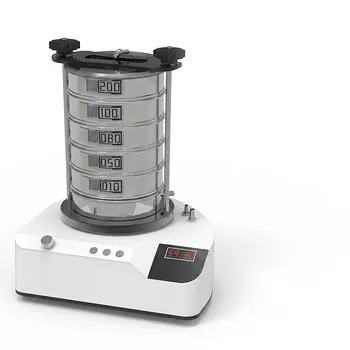
Heavy Duty Dry Three Dimensional Vibratory Sieve Shaker for Particle Separation
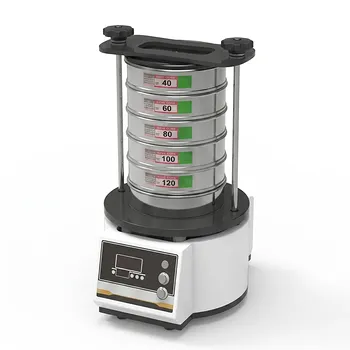
Dry Three Dimensional Vibratory Sieve Shaker
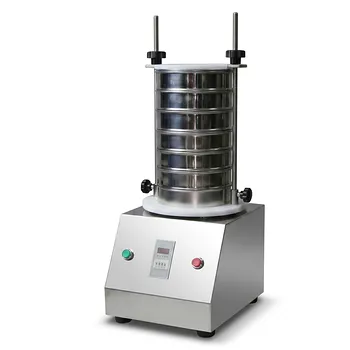
Small Laboratory Vibratory Sieve Shaker for Powder Gradation and Particle Size Analysis
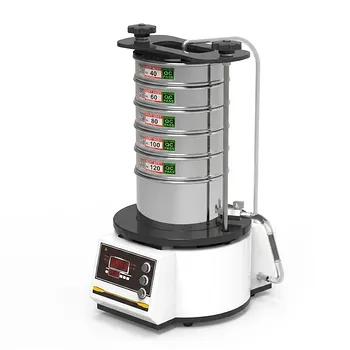
High Frequency Wet Three-Dimensional Vibrating Sieve Shaker for Dry and Wet Particle Size Analysis

Small Laboratory Vibrating Sieve Shaker for Precise Particle Size Analysis
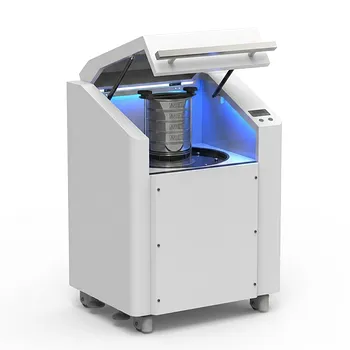
High Frequency Cabinet Type Three-Dimensional Rotary Vibrating Sieve Shaker for Dry Sieving and Particle Classification

Laboratory Vibratory Test Sieve Shaker for Precision Particle Size Analysis and Powder Grading
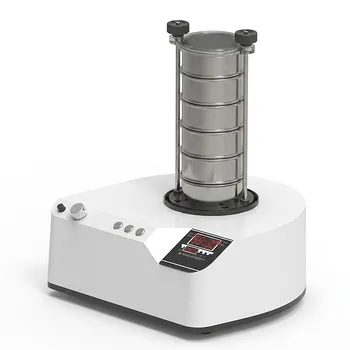
三维电磁微量振动筛分仪
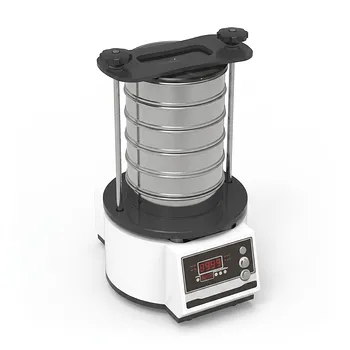
Tapping Oscillating Sieve Shaker for Dry and Wet Particle Size Analysis

Stainless Steel Rotary Vibrating Sieve High Precision Circular Vibratory Separator Industrial Powder Grading Machine Multi Layer Sifting Equipment
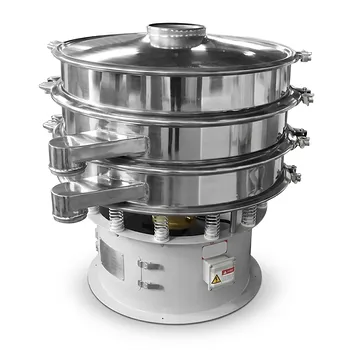
Three Dimensional Rotary Vibrating Sieve
Small Vibrating Ultrafine Grinder for Traditional Chinese Medicine

Automatic Vibrating Powder Feeder for Laboratory Material Processing Precision Vibratory Hopper Feeder for Granular and Powder Material Handling Industrial Grade Vibrating Tray Feeder for Consistent Material Sample Preparation
Vibratory Superfine Grinder for Ultra Fine Laboratory Powder Milling
Vibratory Disc Mill for Rapid Fine Grinding and High Throughput Sample Preparation of Hard and Brittle Materials