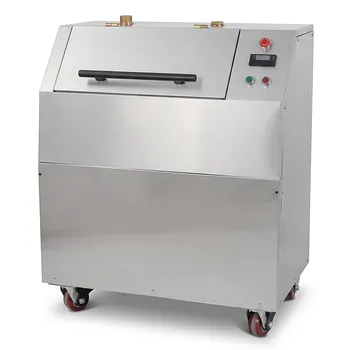
How does a vibratory sieve shaker facilitate the processing of starch and clay nanocomposites? Maximize Recovery
Updated 3 months ago
The vibratory sieve shaker acts as a critical bridge between milling and material application. In the processing of starch and clay nanocomposites, the shaker is primarily used to rapidly separate the fine composite powder from the much larger ceramic grinding media (grinding balls) used during the milling stage. This step ensures a high recovery rate of the nanostructured product and produces a uniform material base essential for subsequent characterization, adsorption experiments, and further processing steps.
After the milling process, a vibratory sieve shaker provides the mechanical energy necessary to isolate the starch-clay powder from grinding media while simultaneously classifying particle sizes to ensure structural uniformity and optimal material performance.
Product Recovery and Media Separation
Segregating the Grinding Media
After the intensive energy of milling, the starch and clay are intimately mixed but remain co-mingled with ceramic grinding balls. The sieve shaker uses specialized mesh screens to act as a mechanical filter, allowing the fine nanocomposite powder to pass through while retaining the much larger grinding media.
Maximizing Powder Yield
Manual separation is often inefficient and leads to significant material loss. The controlled, high-frequency vibration of a laboratory shaker ensures that the majority of the powder is dislodged from the surface of the grinding media, leading to a higher recovery rate of the synthesized product.
Enhancing Material Homogeneity and Performance
Breaking Up Secondary Agglomerates
Milled starch granules often form secondary agglomerates or clusters that can interfere with downstream applications. The vibrational energy of the shaker helps break these clusters apart, ensuring that the raw materials have a strict upper limit on particle size before entering stages like extrusion or 3D printing.
Optimizing Surface Area for Plasticization
By refining the particle size, the shaker increases the effective specific surface area of the starch-clay powder. This facilitates more thorough physical contact with liquid plasticizers (such as glycerol), allowing them to penetrate the starch molecular chains more rapidly and uniformly.
Preventing Structural Weak Points
Uniform particle size distribution is vital for preventing stress concentration phenomena in the final composite. Removing oversized coarse particles or unqualified impurities ensures that the internal structure of the material remains consistent, which is critical for maintaining compressive strength and internal porosity.
Understanding the Trade-offs
The Risk of Mesh Blinding
When dealing with fine powders like starch and clay, particles can often become lodged in the sieve openings, a phenomenon known as blinding. This reduces the effective screening area and can lead to inaccurate classification if the equipment is not maintained or if the vibration frequency is incorrectly calibrated.
Potential for Material Degradation
While vibration is necessary for separation, excessive or prolonged mechanical agitation can lead to secondary attrition. If the process is too aggressive, it may unintentionally alter the particle size distribution beyond the desired parameters established during the milling stage.
How to Apply This to Your Process
Recommendations Based on Project Goals
- If your primary focus is High Product Recovery: Utilize a single-layer sieve with a mesh size significantly smaller than your grinding media to ensure rapid separation with minimal powder retention on the balls.
- If your primary focus is Homogenous Plasticization: Use high-frequency vibration settings to break up starch agglomerates, ensuring a high surface-area-to-volume ratio for better plasticizer penetration.
- If your primary focus is Precision Characterization: Employ a multi-sieve stack with programmed time controls to ensure repeatable particle size distribution data for comparative analytical results.
By integrating a vibratory sieve shaker effectively, you ensure that the transition from raw milled powder to a high-performance nanocomposite is both efficient and scientifically rigorous.
Summary Table:
| Process Phase | Function of Sieve Shaker | Key Benefit for Nanocomposites |
|---|---|---|
| Post-Milling | Media Separation | High recovery rate of fine powder from ceramic grinding balls. |
| Pre-Processing | Agglomerate Breaking | Disperses starch clusters for uniform particle distribution. |
| Material Prep | Surface Area Optimization | Enhances contact with plasticizers for thorough penetration. |
| Quality Control | Size Classification | Prevents stress concentration by removing oversized impurities. |
Elevate Your Material Research with Precision Powder Solutions
Transitioning from raw milling to high-performance nanocomposites requires precision at every stage. Contact us today to learn how our equipment can streamline your laboratory workflow and improve material consistency.
At our core, we provide complete laboratory sample preparation solutions for material science. We specialize in high-efficiency powder processing and compaction equipment, including:
- Milling & Grinding: Planetary ball mills, jet mills, sand/bead mills, disc/rotor mills, and liquid nitrogen cryogenic grinders.
- Sizing & Mixing: Vibratory and air-jet sieve shakers, various test sieves, and advanced powder/defoaming mixers.
- Crushing: Industrial-grade jaw and roll crushers.
- Compaction & Pressing: A full spectrum of hydraulic presses, including Cold/Warm Isostatic Presses (CIP/WIP), standard lab presses, XRF pellet presses, and vacuum hot presses.
Whether you are focusing on high product recovery or precise material characterization, our team is ready to provide the specialized tools your project demands. Get a Quote Now.
References
- Н. Е. Кочкина, Nikolay D. Lukin. MONO-STARCH PHOSPHATE/MONTMORILLONITE NANOCOMPOSITES PREPARED BY VIBRATION MILLING: STRUCTURE AND ADSORPTION CAPACITY TOWARDS METHYLENE BLUE DYE. DOI: 10.35812/cellulosechemtechnol.2019.53.15
Mentioned Products
- Vibratory Sieve Shaker Electromagnetic 3D Motion Powder Particle Size Analyzer for Dry and Wet Sieving
- Laboratory Dry and Wet Three Dimensional Vibratory Sieve Shaker for Particle Analysis
- Dry Three Dimensional Vibratory Sieve Shaker
- Stainless Steel Laboratory Vibratory Test Sieve Shaker
- Heavy Duty Dry Three Dimensional Vibratory Sieve Shaker for Particle Separation
People Also Ask
- How does a vibratory sieve shaker contribute to optimizing the performance of activated carbon? Enhance Adsorption Precision
- Why is a laboratory vibratory sieve shaker necessary for processing magnesium-based borate precursor powders? Boost Activity
- Why use a vibratory sieve shaker to verify coarse aggregate grading in rubberized concrete? Ensure Structural Integrity
- What function do vibratory sieve shakers and standard test sieves serve in the preparation of adsorbents? Key Guide
- What role does a vibratory sieve shaker play in the particle size analysis of ground corn products? Enhance QC Precision

Tech Team · PowderPreparation
Last updated on Jun 03, 2026
Related Products
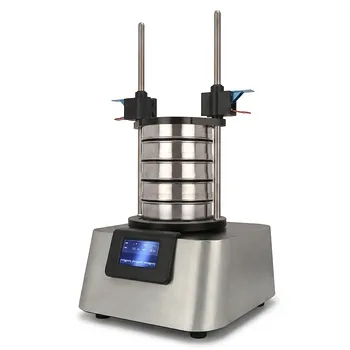
Vibratory Sieve Shaker Electromagnetic 3D Motion Powder Particle Size Analyzer for Dry and Wet Sieving
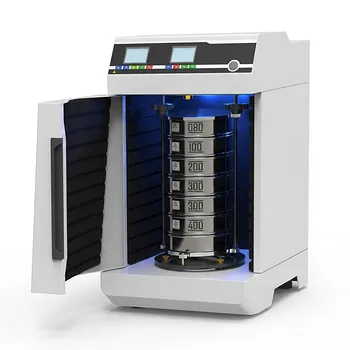
Laboratory Dry and Wet Three Dimensional Vibratory Sieve Shaker for Particle Analysis
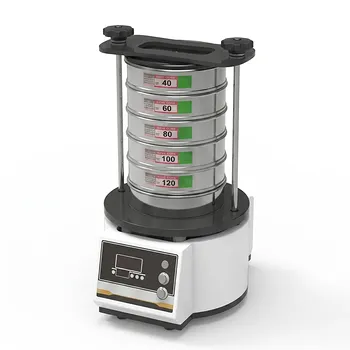
Dry Three Dimensional Vibratory Sieve Shaker
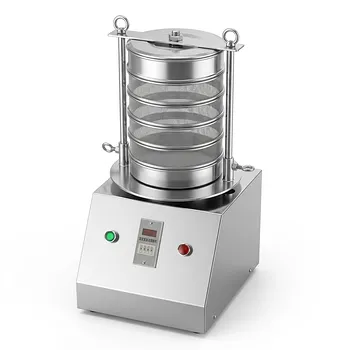
Stainless Steel Laboratory Vibratory Test Sieve Shaker
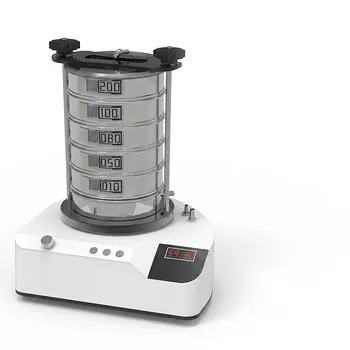
Heavy Duty Dry Three Dimensional Vibratory Sieve Shaker for Particle Separation
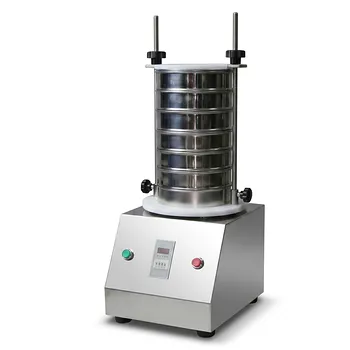
Small Laboratory Vibratory Sieve Shaker for Powder Gradation and Particle Size Analysis
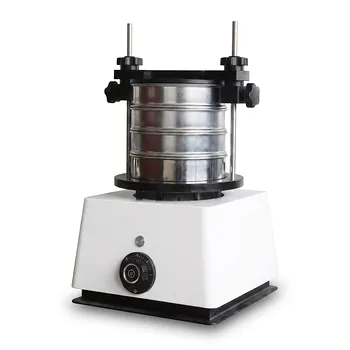
Small Laboratory Vibrating Sieve Shaker for Precise Particle Size Analysis
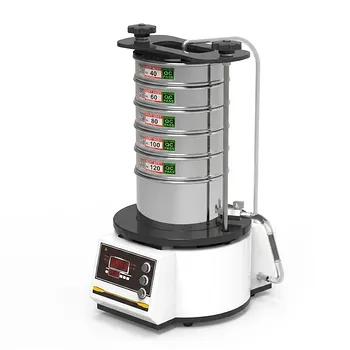
High Frequency Wet Three-Dimensional Vibrating Sieve Shaker for Dry and Wet Particle Size Analysis
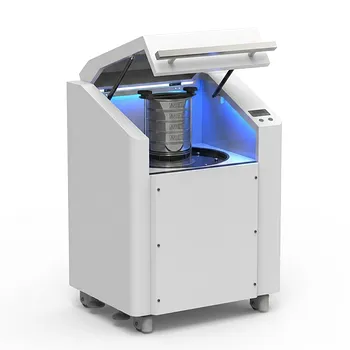
High Frequency Cabinet Type Three-Dimensional Rotary Vibrating Sieve Shaker for Dry Sieving and Particle Classification
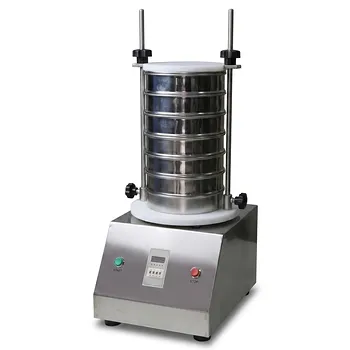
Laboratory Vibratory Test Sieve Shaker for Precision Particle Size Analysis and Powder Grading
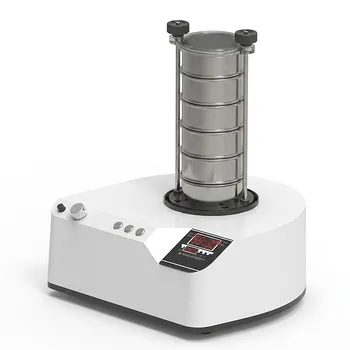
三维电磁微量振动筛分仪
Stainless Steel Rotary Vibrating Sieve High Precision Circular Vibratory Separator Industrial Powder Grading Machine Multi Layer Sifting Equipment
Tapping Oscillating Sieve Shaker for Dry and Wet Particle Size Analysis
Three Dimensional Rotary Vibrating Sieve
Vibratory Superfine Grinder for Ultra Fine Laboratory Powder Milling
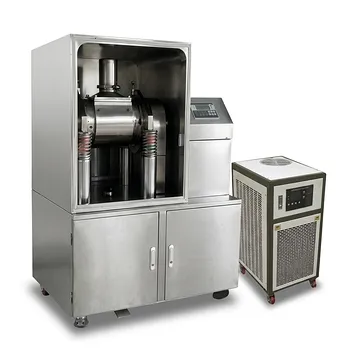
Small Vibrating Ultrafine Grinder for Traditional Chinese Medicine
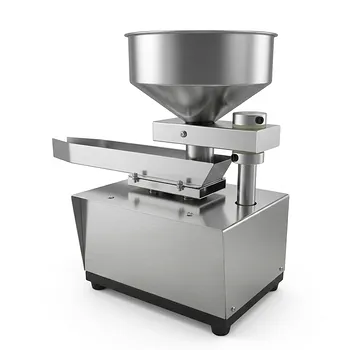
Automatic Vibrating Powder Feeder for Laboratory Material Processing Precision Vibratory Hopper Feeder for Granular and Powder Material Handling Industrial Grade Vibrating Tray Feeder for Consistent Material Sample Preparation