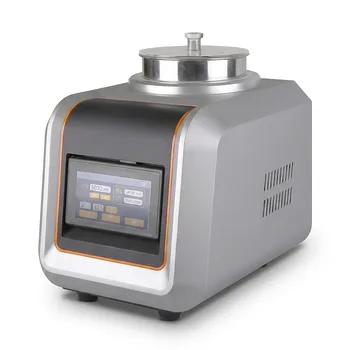
How does a vibratory sieve shaker facilitate the granulometric analysis of sediment samples? Precise Grain Distribution
Updated 3 months ago
A vibratory sieve shaker facilitates granulometric analysis by applying high-frequency mechanical vibrations to a vertical stack of standardized test sieves. This process physically segregates a bulk sediment sample into distinct size fractions—such as gravel, sand, and silt—based on the specific mesh apertures of each sieve. By automating this separation, the device provides the precise mass distribution data required to calculate a sediment’s texture, depositional history, and chemical characteristics.
The vibratory sieve shaker replaces manual methods with a standardized, repeatable process for grading sediment by particle size. This enables researchers to derive critical statistical parameters, such as mean grain size and sorting, which are essential for geological and environmental modeling.
The Mechanics of Particle Separation
High-Frequency Vibration and Tapping
The device utilizes high-frequency mechanical vibrations, often combined with a tapping action, to move particles across the sieve surface. This multi-directional movement ensures that particles are constantly reoriented, giving them multiple opportunities to pass through the mesh apertures.
Vertical Sieve Stacking
Test sieves are arranged in a vertical stack with the largest mesh apertures at the top and the smallest at the bottom. As the shaker operates, the sediment sample cascades through the stack, with each sieve "catching" particles that are smaller than the mesh above it but larger than its own openings.
Precision Timing and Frequency
Modern shakers allow for preset time intervals and adjustable vibration frequencies. This standardization ensures that the energy applied to the sample is consistent across different tests, which significantly improves the repeatability of results compared to manual sieving.
From Physical Separation to Statistical Data
Calculating Mass Percentage
Once the sieving process is complete, the material retained on each sieve is weighed. These individual weights are used to calculate the mass percentage of each grain size component, providing a clear picture of the sample's physical composition.
Generating Distribution Curves
The resulting data allows for the creation of particle size distribution curves, such as D10, D50, and D90. These metrics represent the diameters at which 10%, 50%, and 90% of the sample mass is finer, serving as "ground truth" for sedimentological studies and deep learning models.
Advanced Sedimentological Parameters
By analyzing the weight distribution, researchers can calculate complex statistical characteristics. These include sorting (how uniform the particles are), skewness (the symmetry of the distribution), and kurtosis (the "peakedness" of the distribution), all of which indicate the energy of the environment where the sediment was deposited.
Scientific and Practical Applications
Environmental and Chemical Analysis
Understanding the proportion of fine sediments, such as silt and clay, is critical for assessing a sample's adsorption characteristics. Finer particles have higher surface areas, which directly correlates with their potential to store organic carbon or adsorb heavy metals and radionuclides.
Foundation for Technological Research
In modern data science, the precise measurements provided by a sieve shaker serve as essential label data for image recognition models. These models are trained to identify sediment types from photographs, and they rely on the shaker’s physical results to ensure training accuracy.
Tracking Microplastics and Pollutants
Granulometric analysis helps researchers study the correlation between grain size texture and the distribution of microplastics. By isolating specific size fractions, scientists can determine which sediment layers are most likely to trap and hold environmental contaminants.
Understanding the Trade-offs
The Limitation of Dry Sieving
Vibratory shakers are most effective for dry sediment samples. If a sample has high moisture content or a high concentration of sticky clay, the particles may clump together, leading to inaccurate grading and "blinding" (clogging) of the sieve mesh.
Particle Size Minimums
While vibratory sieving is highly effective for sand and gravel, it reaches its limit at very fine scales. Standard sieving typically goes down to 63 micrometers; analyzing particles smaller than this often requires wet sieving or laser diffraction to avoid errors caused by electrostatic forces or particle cohesion.
Sample Degradation
High-intensity vibration over long durations can cause attrition, where fragile sediment particles break down into smaller pieces during the test. This can artificially inflate the "fine" portion of the data, making it necessary to optimize the vibration duration for delicate materials.
How to Apply This to Your Project
Making the Right Choice for Your Goal
To achieve the best results with a vibratory sieve shaker, tailor your approach to the specific requirements of your study:
- If your primary focus is environmental contamination: Prioritize the isolation of the "fines" fraction (less than 63 micrometers), as this is where heavy metals and organic carbon are most concentrated.
- If your primary focus is geological mapping: Use sieves at half-phi intervals to ensure high-resolution data for calculating skewness and sorting parameters.
- If your primary focus is machine learning training: Ensure your sieving process is strictly standardized in time and frequency to provide the most consistent "ground truth" for your image recognition models.
The vibratory sieve shaker remains a cornerstone of sedimentology by turning raw physical samples into the high-precision data required for modern scientific inquiry.
Summary Table:
| Feature | Mechanism | Impact on Analysis |
|---|---|---|
| Particle Separation | High-frequency 3D vibration | Ensures thorough grading from gravel to silt |
| Data Precision | Standardized time/frequency | Delivers repeatable D10, D50, and D90 metrics |
| Stacking System | Vertical mesh arrangement | Facilitates simultaneous multi-fraction segregation |
| Statistical Insight | Mass distribution curves | Enables calculation of sorting, skewness, and kurtosis |
Enhance Your Material Analysis with Expert Sample Prep Solutions
Precise granulometric analysis requires reliable, standardized equipment. We provide complete laboratory sample preparation solutions tailored for material science and sedimentology. From initial size reduction to final compaction, our specialized equipment ensures your data is accurate and repeatable.
Our Core Solutions Include:
- Sieving & Mixing: High-precision vibratory/air-jet sieve shakers, powder mixers, and defoaming mixers.
- Milling & Grinding: Planetary ball mills, jet mills, cryogenic grinders, and jaw/roll crushers.
- Advanced Pressing: A full spectrum of hydraulic presses, including Cold/Warm Isostatic Presses (CIP/WIP), XRF pellet presses, and vacuum hot presses.
Whether you are conducting environmental research or training AI models, our equipment delivers the "ground truth" your project demands. Contact our technical team today to optimize your lab workflow!
References
- R. Ravisankar, Atef El‐Taher. Effects of physicochemical properties on heavy metal, magnetic susceptibility and natural radionuclides with statistical approach in the Chennai coastal sediment of east coast of Tamilnadu, India. DOI: 10.1007/s13201-019-1031-8
Mentioned Products
- Vibratory Sieve Shaker Electromagnetic 3D Motion Powder Particle Size Analyzer for Dry and Wet Sieving
- Laboratory Dry and Wet Three Dimensional Vibratory Sieve Shaker for Particle Analysis
- Stainless Steel Laboratory Vibratory Test Sieve Shaker
- Heavy Duty Dry Three Dimensional Vibratory Sieve Shaker for Particle Separation
- Dry Three Dimensional Vibratory Sieve Shaker
People Also Ask
- How does a vibratory sieve shaker contribute to optimizing the performance of activated carbon? Enhance Adsorption Precision
- Why is a laboratory vibratory sieve shaker necessary for processing magnesium-based borate precursor powders? Boost Activity
- Why use a vibratory sieve shaker to verify coarse aggregate grading in rubberized concrete? Ensure Structural Integrity
- What function do vibratory sieve shakers and standard test sieves serve in the preparation of adsorbents? Key Guide
- What role does a vibratory sieve shaker play in the particle size analysis of ground corn products? Enhance QC Precision

Tech Team · PowderPreparation
Last updated on Jun 03, 2026
Related Products
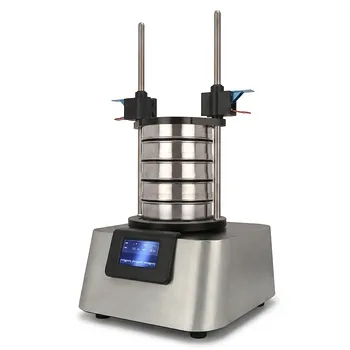
Vibratory Sieve Shaker Electromagnetic 3D Motion Powder Particle Size Analyzer for Dry and Wet Sieving
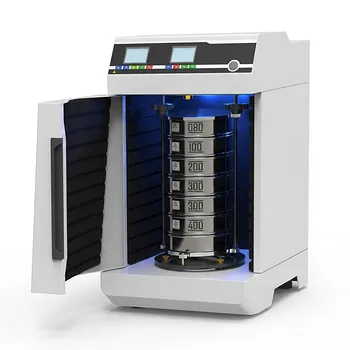
Laboratory Dry and Wet Three Dimensional Vibratory Sieve Shaker for Particle Analysis
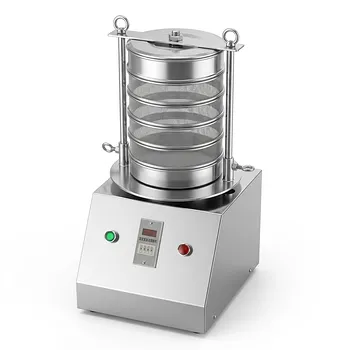
Stainless Steel Laboratory Vibratory Test Sieve Shaker
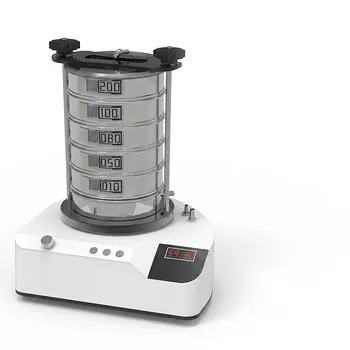
Heavy Duty Dry Three Dimensional Vibratory Sieve Shaker for Particle Separation
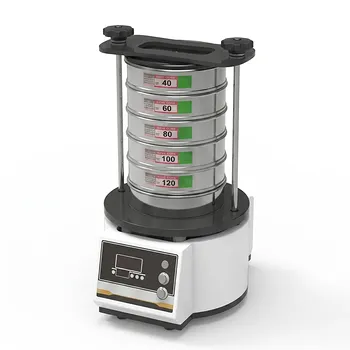
Dry Three Dimensional Vibratory Sieve Shaker
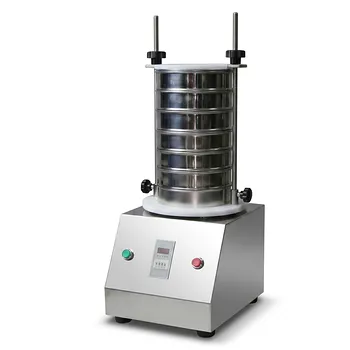
Small Laboratory Vibratory Sieve Shaker for Powder Gradation and Particle Size Analysis
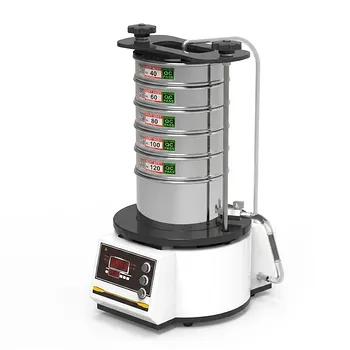
High Frequency Wet Three-Dimensional Vibrating Sieve Shaker for Dry and Wet Particle Size Analysis
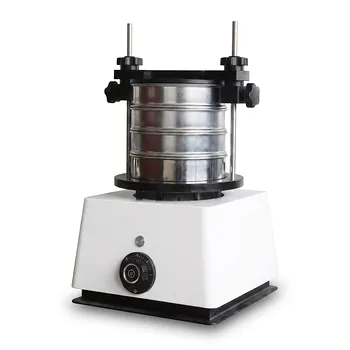
Small Laboratory Vibrating Sieve Shaker for Precise Particle Size Analysis
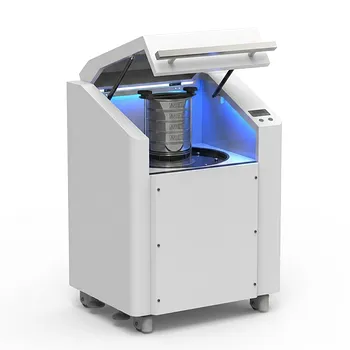
High Frequency Cabinet Type Three-Dimensional Rotary Vibrating Sieve Shaker for Dry Sieving and Particle Classification
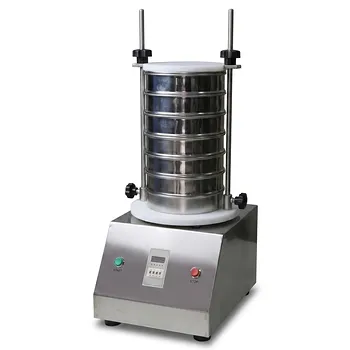
Laboratory Vibratory Test Sieve Shaker for Precision Particle Size Analysis and Powder Grading
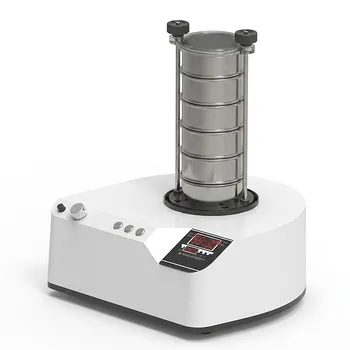
三维电磁微量振动筛分仪
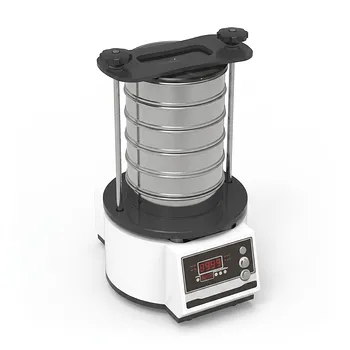
Tapping Oscillating Sieve Shaker for Dry and Wet Particle Size Analysis
Stainless Steel Rotary Vibrating Sieve High Precision Circular Vibratory Separator Industrial Powder Grading Machine Multi Layer Sifting Equipment
Three Dimensional Rotary Vibrating Sieve
Small Vibrating Ultrafine Grinder for Traditional Chinese Medicine
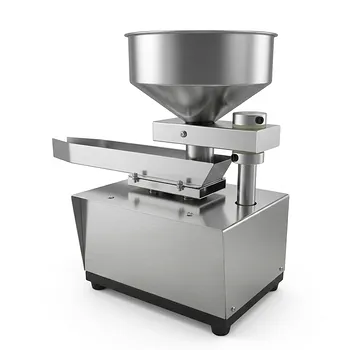
Automatic Vibrating Powder Feeder for Laboratory Material Processing Precision Vibratory Hopper Feeder for Granular and Powder Material Handling Industrial Grade Vibrating Tray Feeder for Consistent Material Sample Preparation
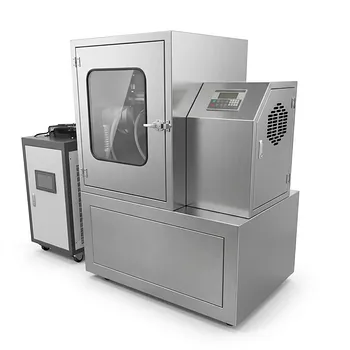
Vibratory Superfine Grinder for Ultra Fine Laboratory Powder Milling
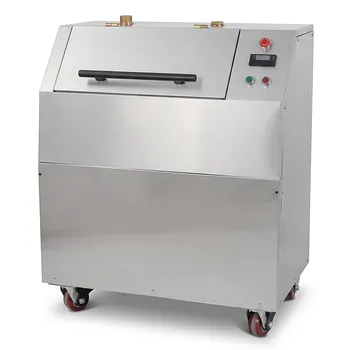
Vibratory Disc Mill for Rapid Fine Grinding and High Throughput Sample Preparation of Hard and Brittle Materials