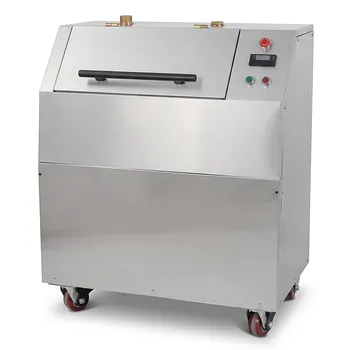
How does a vibratory sieve shaker contribute to the preparation process of metal particle fuels? Optimize Energy Density
Updated 3 months ago
A vibratory sieve shaker is the primary tool for precise particle size grading in metal fuel production. It classifies raw gas-atomized metal powders into specific size categories, such as coarse (150-600 μm), medium (45-150 μm), and fine (less than 45 μm). This precise separation is essential for achieving the high packing density and uniform combustion characteristics required for high-performance fuels.
The vibratory sieve shaker transforms raw, heterogeneous metal powders into engineered fuel components by establishing a definitive particle size distribution. This control allows researchers to maximize energy density through optimized packing ratios and ensure predictable kinetic behavior during combustion.
Optimizing Physical Properties for Energy Density
Precision Classification of Metal Powders
The equipment uses coordinated vibration across multiple layers of standard test sieves to physically separate raw powder. This process allows for the isolation of specific size fractions, which is the physical foundation for establishing particle size distribution (PSD) characteristics.
Achieving Maximum Packing Density
Precise grading allows for the exploration of various particle size combinations to achieve maximum packing density. By applying specific grading ratios or different filling sequences of coarse, medium, and fine powders, researchers can minimize the void space between particles.
Improving Powder Flowability
In fuel delivery systems, the flowability of the powder is critical. By removing oversized particles and fine "dust" that can cause clumping, the sieving process ensures that the metal fuel flows consistently through injectors or into combustion chambers.
Standardizing Combustion Performance
Ensuring Uniform Kinetic Characteristics
Maintaining a consistent particle size is critical for eliminating size effects during combustion experiments. This ensures that the mixed fuels exhibit uniform kinetic characteristics, preventing irregular burn rates that occur when a sample contains a wide, uncontrolled range of particle sizes.
Establishing Quantitative Relationships
Precise separation is a prerequisite for establishing quantitative relationships between particle size and flow transition parameters. This data is essential for identifying the proportion of fine powders, which directly affects the kinetic characteristics of subsequent reduction or oxidation reactions.
Enhancing Sample Representativeness
Mechanical vibration ensures high homogeneity in the fuel samples used for chemical analysis. This improves the repeatability of experimental results, ensuring that small-scale tests accurately reflect the behavior of the bulk fuel material.
Common Pitfalls and Trade-offs
Sieve Blinding and Mesh Wear
A common challenge in vibratory sieving is sieve blinding, where particles become lodged in the mesh apertures. This reduces the effective screening area and can lead to inaccurate grading if the equipment is not maintained or if the vibration frequency is incorrectly calibrated.
Limitations with Ultra-Fine Powders
While vibratory shakers are highly effective for standard ranges, ultra-fine particles (under 20-30 μm) can be difficult to separate due to electrostatic forces and van der Waals interactions. In these cases, standard dry sieving may require supplementary techniques, such as ultrasonic assistance, to maintain accuracy.
Material Degradation
High-frequency vibration can occasionally lead to the attrition of brittle particles, creating unwanted fines during the sieving process. It is vital to balance the vibration intensity with the material properties of the specific metal fuel being processed.
How to Apply This to Your Fuel Project
Strategic Implementation
To maximize the utility of a vibratory sieve shaker in your preparation workflow, tailor the process to your specific performance requirements.
- If your primary focus is Maximum Energy Density: Prioritize the separation of powders into distinct coarse, medium, and fine fractions to calculate the optimal filling ratios for high packing density.
- If your primary focus is Predictable Combustion Kinetics: Focus on narrow-range sieving (e.g., 45-75 μm) to eliminate the "size effect" and ensure that every particle reacts at a consistent rate.
- If your primary focus is System Reliability/Flowability: Use the shaker primarily to remove oversized "satellite" particles and excessive fines that could clog delivery mechanisms or cause irregular feeding.
By mastering the precise grading of metal particles, you ensure that the physical foundation of your fuel meets the rigorous demands of modern combustion and energy applications.
Summary Table:
| Function | Impact on Fuel Quality | Key Benefit for Research |
|---|---|---|
| Precise Grading | Separates coarse, medium, & fine fractions | Achieves maximum packing & energy density |
| Size Standardization | Eliminates size effects in particles | Ensures predictable & uniform combustion kinetics |
| Flow Optimization | Removes oversized particles & dust | Improves consistency in fuel delivery systems |
| Mechanical Homogeneity | High sample representativeness | Increases repeatability of chemical analysis |
Elevate Your Material Science Research with XINGTU
Achieve uncompromising precision in your metal fuel production with our complete laboratory sample preparation solutions. At XINGTU, we specialize in high-performance powder processing and compaction equipment designed to meet the rigorous demands of material science.
Our extensive product line includes:
- Precision Sieving: Vibratory and air-jet sieve shakers with various test sieves and meshes.
- Advanced Milling: Planetary ball mills, jet mills, and cryogenic grinders for ultra-fine particle control.
- Compaction Solutions: A full spectrum of hydraulic presses, including Cold/Warm Isostatic Presses (CIP/WIP), vacuum hot presses, and XRF pellet presses.
- Mixing & Preparation: Specialized powder and defoaming mixers for homogeneous material blends.
Whether you are optimizing packing density or ensuring uniform kinetic behavior, our equipment provides the reliability you need. Contact us today to find the perfect solution for your lab!
References
- Ki‐Hwan Kim, Jeong-Yong Park. Preliminary Study of Frequency-Variable Vibration Packing Fabrication for Atomized Metallic Particulate Fuel Using Surrogate Spherical Powder. DOI: 10.24425/amm.2021.136422
Mentioned Products
- Vibratory Sieve Shaker Electromagnetic 3D Motion Powder Particle Size Analyzer for Dry and Wet Sieving
- Laboratory Dry and Wet Three Dimensional Vibratory Sieve Shaker for Particle Analysis
- Dry Three Dimensional Vibratory Sieve Shaker
- Stainless Steel Laboratory Vibratory Test Sieve Shaker
- Heavy Duty Dry Three Dimensional Vibratory Sieve Shaker for Particle Separation
People Also Ask
- How does a vibratory sieve shaker contribute to optimizing the performance of activated carbon? Enhance Adsorption Precision
- Why is a laboratory vibratory sieve shaker necessary for processing magnesium-based borate precursor powders? Boost Activity
- Why use a vibratory sieve shaker to verify coarse aggregate grading in rubberized concrete? Ensure Structural Integrity
- What function do vibratory sieve shakers and standard test sieves serve in the preparation of adsorbents? Key Guide
- What role does a vibratory sieve shaker play in the particle size analysis of ground corn products? Enhance QC Precision

Tech Team · PowderPreparation
Last updated on Jun 03, 2026
Related Products

Vibratory Sieve Shaker Electromagnetic 3D Motion Powder Particle Size Analyzer for Dry and Wet Sieving
Laboratory Dry and Wet Three Dimensional Vibratory Sieve Shaker for Particle Analysis

Dry Three Dimensional Vibratory Sieve Shaker
Stainless Steel Laboratory Vibratory Test Sieve Shaker

Heavy Duty Dry Three Dimensional Vibratory Sieve Shaker for Particle Separation

Small Laboratory Vibratory Sieve Shaker for Powder Gradation and Particle Size Analysis

Small Laboratory Vibrating Sieve Shaker for Precise Particle Size Analysis
High Frequency Wet Three-Dimensional Vibrating Sieve Shaker for Dry and Wet Particle Size Analysis
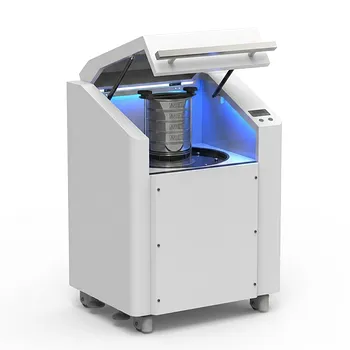
High Frequency Cabinet Type Three-Dimensional Rotary Vibrating Sieve Shaker for Dry Sieving and Particle Classification

Laboratory Vibratory Test Sieve Shaker for Precision Particle Size Analysis and Powder Grading

三维电磁微量振动筛分仪

Stainless Steel Rotary Vibrating Sieve High Precision Circular Vibratory Separator Industrial Powder Grading Machine Multi Layer Sifting Equipment

Tapping Oscillating Sieve Shaker for Dry and Wet Particle Size Analysis

Three Dimensional Rotary Vibrating Sieve
Vibratory Superfine Grinder for Ultra Fine Laboratory Powder Milling
Small Vibrating Ultrafine Grinder for Traditional Chinese Medicine
Automatic Vibrating Powder Feeder for Laboratory Material Processing Precision Vibratory Hopper Feeder for Granular and Powder Material Handling Industrial Grade Vibrating Tray Feeder for Consistent Material Sample Preparation