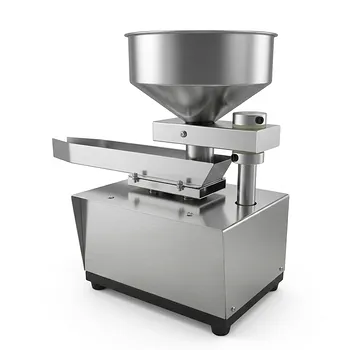
How does a vibratory sieve shaker contribute to the particle size analysis of corn residues? Achieve Precise PSD Data
Updated 5 months ago
A vibratory sieve shaker is the primary tool for standardizing the physical classification of corn residue particles. It applies high-frequency mechanical vibration to a graduated stack of test sieves, enabling the precise, automated separation of cobs, leaves, and stalks into specific size fractions. This mechanized process transforms a raw sample into quantitative data used to calculate mass distribution percentages and evaluate material behavior.
The vibratory sieve shaker replaces the inconsistency of manual sieving with repeatable mechanical force, allowing for a scientific analysis of particle size distribution (PSD). This data is essential for validating predictive models and understanding how the physical structure of corn residue affects its chemical and thermal reactivity.
Standardizing the Separation Process
Eliminating Manual Inconsistency
Traditional manual sieving introduces human error through inconsistent force and duration. A vibratory sieve shaker provides a standardized mechanical motion that ensures every sample is treated with the same energy, leading to highly repeatable results.
Maintaining Constant Vibration Parameters
The equipment allows researchers to set and maintain constant vibration frequencies and durations. By controlling these variables, the shaker ensures that corn cob or stalk particles are thoroughly classified based on their geometric dimensions without the risk of under-separation.
Automated Classification
The shaker facilitates the automatic classification of particles through a vertical stack of sieves. This allows for the simultaneous processing of multiple size fractions, significantly increasing laboratory efficiency while maintaining a high degree of precision.
Quantifying Particle Size Distribution (PSD)
Multi-Layered Fractionation
The device utilizes a stack of standard test sieves with varying mesh sizes, often ranging from 2.00mm down to 0.075mm. This tiered approach separates the corn residue into specific layers, allowing for a granular view of the sample’s composition.
Establishing Distribution Models
By precisely weighing the material residue captured on each sieve layer, researchers can establish a complete particle size distribution model. This is used to calculate the geometric mean diameter (d50), a critical metric for quality control and academic research.
Validating Predictive Models
The quantitative data produced by the shaker is a core requirement for validating the accuracy of Population Balance Models (PBM). It provides the empirical evidence needed to track how the physical structure of corn residues evolves during processes like rumen digestion or chemical extraction.
Impact on Material Performance
Surface Area and Reaction Rates
Particle size directly dictates the specific surface area of corn residues. In corn grits and flour, a vibratory shaker helps correlate surface area with lipid oxidation rates and water absorption indices, which are vital for shelf-life and processing stability.
Thermochemical Behavior
For corn residues used as biomass, the shaker ensures that particles fall within ideal ranges for heating uniformity and flowability. This is essential for maintaining consistent reaction rates within thermochemical reactors.
Structural Evolution Tracking
By comparing PSD results before and after processing, researchers can quantitatively determine how chemical extraction or mechanical grinding modifies the physical integrity of the corn residue.
Understanding the Trade-offs
Limitations of Dry Sieving
Vibratory shakers typically perform dry sieving, which can be challenging for corn residues with high moisture content. Excessive moisture can cause particles to clump or stick to the mesh, leading to inaccurate "blinding" of the sieve.
Material Shape Interference
Corn stalks and leaves are often fibrous and non-spherical. While the vibratory motion helps, elongated particles may sometimes pass through the mesh based on their smallest dimension (width) rather than their length, which can slightly skew the geometric interpretation of the data.
Sieve Wear and Calibration
High-frequency vibration can lead to the gradual wear of the sieve mesh apertures over time. To maintain scientific accuracy, the sieves must be regularly inspected and calibrated to ensure they still meet international standards for mesh precision.
How to Apply This to Your Project
Making the Right Choice for Your Goal
- If your primary focus is biomass energy production: Use the shaker to ensure the majority of particles fall within the specific range required for uniform heating and optimal reactor flow.
- If your primary focus is nutritional research or digestion: Use the shaker to track the evolution of particle size post-extraction to determine how structural changes affect fiber degradation.
- If your primary focus is food processing (corn grits/flour): Prioritize the calculation of d50 and fine powder content to maintain consistent water absorption and prevent lipid oxidation.
Standardizing your sieving process with a vibratory shaker is the most reliable way to convert raw corn residue into actionable, quantitative data.
Summary Table:
| Key Feature | Role in Corn Residue Analysis | Primary Benefit |
|---|---|---|
| Mechanical Vibration | Replaces manual inconsistency with repeatable force | Ensures scientific repeatability |
| Sieve Stack | Simultaneous separation into multiple size fractions | High-efficiency automated classification |
| PSD Modeling | Calculates geometric mean diameter (d50) | Accurate validation of predictive models |
| Controlled Frequency | Maintains constant energy parameters | Prevents under-separation of fibrous material |
| Quantification | Precisely weighs material on each mesh layer | Correlates surface area with reaction rates |
Elevate Your Material Research with Expert Sample Prep
Precision in particle size distribution is the foundation of successful material science. At [Brand Name], we provide complete laboratory sample preparation solutions tailored for powder processing and material analysis.
Whether you are analyzing corn residues or advanced ceramics, our extensive equipment line ensures accuracy and efficiency:
- Sieving & Classification: Vibratory and air-jet sieve shakers with high-precision test sieves.
- Grinding & Milling: Planetary ball mills, jet mills, and liquid nitrogen cryogenic grinders.
- Crushing: Heavy-duty jaw and roll crushers.
- Compaction & Pressing: A full spectrum of hydraulic presses, including Cold/Warm Isostatic Presses (CIP/WIP), vacuum hot presses, and XRF pellet presses.
- Mixing: High-performance powder and defoaming mixers.
Ready to optimize your lab workflow? Contact our experts today to find the perfect equipment for your specific application requirements!
References
- Nilson. PHYSICAL PROPERTIES OF CORN RESIDUES. DOI: 10.3844/ajbbsp.2012.44.53
Mentioned Products
- Vibratory Sieve Shaker Electromagnetic 3D Motion Powder Particle Size Analyzer for Dry and Wet Sieving
- Small Laboratory Vibratory Sieve Shaker for Powder Gradation and Particle Size Analysis
- Laboratory Vibratory Test Sieve Shaker for Precision Particle Size Analysis and Powder Grading
- Stainless Steel Laboratory Vibratory Test Sieve Shaker
- Laboratory Dry and Wet Three Dimensional Vibratory Sieve Shaker for Particle Analysis
People Also Ask
- How does a vibratory sieve shaker contribute to optimizing the performance of activated carbon? Enhance Adsorption Precision
- Why is a laboratory vibratory sieve shaker necessary for processing magnesium-based borate precursor powders? Boost Activity
- Why use a vibratory sieve shaker to verify coarse aggregate grading in rubberized concrete? Ensure Structural Integrity
- What function do vibratory sieve shakers and standard test sieves serve in the preparation of adsorbents? Key Guide
- What role does a vibratory sieve shaker play in the particle size analysis of ground corn products? Enhance QC Precision

Tech Team · PowderPreparation
Last updated on May 14, 2026
Related Products
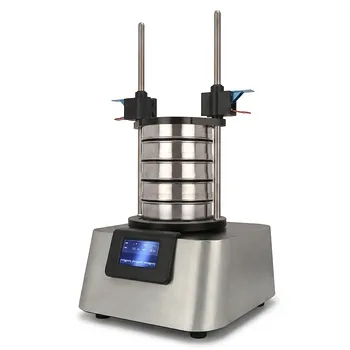
Vibratory Sieve Shaker Electromagnetic 3D Motion Powder Particle Size Analyzer for Dry and Wet Sieving

Small Laboratory Vibratory Sieve Shaker for Powder Gradation and Particle Size Analysis

Laboratory Vibratory Test Sieve Shaker for Precision Particle Size Analysis and Powder Grading
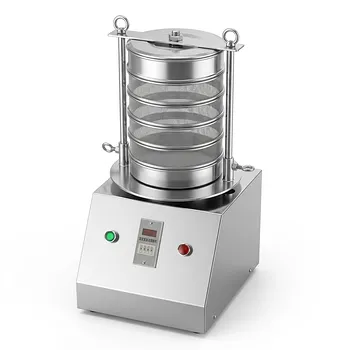
Stainless Steel Laboratory Vibratory Test Sieve Shaker
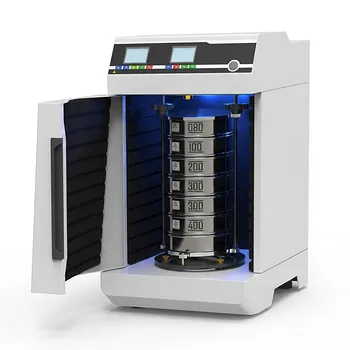
Laboratory Dry and Wet Three Dimensional Vibratory Sieve Shaker for Particle Analysis
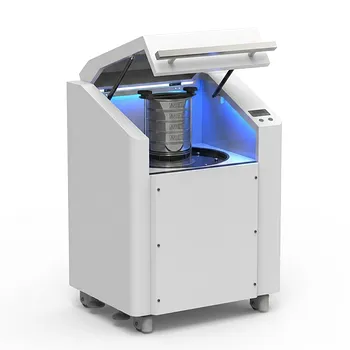
High Frequency Cabinet Type Three-Dimensional Rotary Vibrating Sieve Shaker for Dry Sieving and Particle Classification
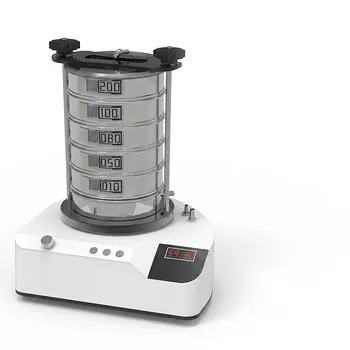
Heavy Duty Dry Three Dimensional Vibratory Sieve Shaker for Particle Separation

Dry Three Dimensional Vibratory Sieve Shaker

Small Laboratory Vibrating Sieve Shaker for Precise Particle Size Analysis
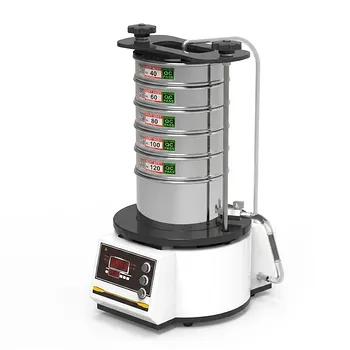
High Frequency Wet Three-Dimensional Vibrating Sieve Shaker for Dry and Wet Particle Size Analysis
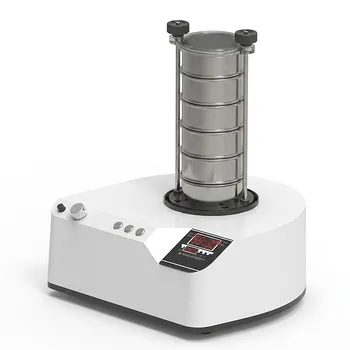
三维电磁微量振动筛分仪
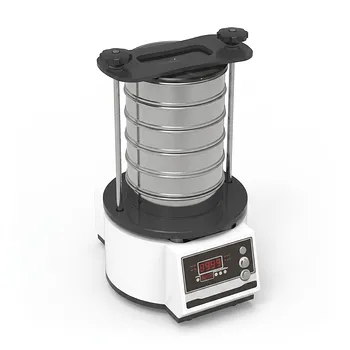
Tapping Oscillating Sieve Shaker for Dry and Wet Particle Size Analysis
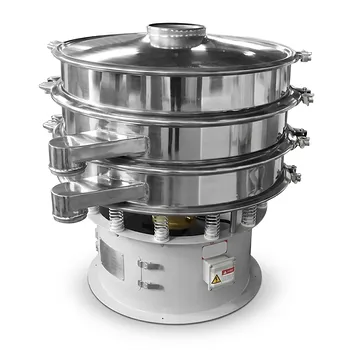
Three Dimensional Rotary Vibrating Sieve
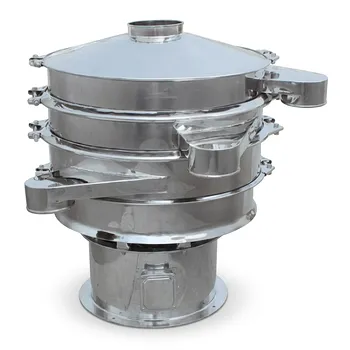
Stainless Steel Rotary Vibrating Sieve High Precision Circular Vibratory Separator Industrial Powder Grading Machine Multi Layer Sifting Equipment