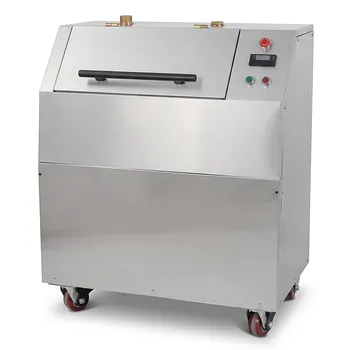
How does a vibratory sieve shaker contribute to the classification of microplastic particle sizes? Enhance Accuracy.
Updated 4 months ago
Vibratory sieve shakers are the standard for microplastic classification because they provide the mechanical energy required to overcome particle friction. By utilizing high-frequency vibrational power, these machines drive ground plastic powders through a stack of graduated test sieves. This process ensures that particles are accurately separated into precise size ranges, which is a prerequisite for reliable density separation and distribution analysis.
The vibratory sieve shaker acts as the gateway to accurate microplastic research by transforming heterogeneous ground samples into uniform, size-specific fractions. This mechanical precision eliminates human error and ensures that downstream processes, such as density recovery, are not compromised by uneven particle distribution.
The Mechanics of Microplastic Separation
High-Frequency Particle Agitation
A vibratory sieve shaker generates high-frequency vibrational power that causes plastic particles to "jump" and bounce across the mesh surface. This three-dimensional motion maximizes the opportunity for every particle to find an opening in the sieve mesh.
Continuous agitation prevents particles from simply sitting on the wire, ensuring that fine dust and non-compliant fragments are effectively filtered out. Without this mechanical energy, smaller microplastics would likely remain trapped atop larger fragments due to static or physical interlocking.
Multi-Layer Precision Screening
The equipment typically holds a stack of standard test sieves arranged by aperture size, often ranging from 1 micrometer up to 5 millimeters. This allows a single operation to classify a sample into multiple specific fractions simultaneously, such as 500–800 µm or 800–1000 µm.
By using controlled vertical vibration and rotational motion, the shaker ensures the sample is distributed evenly across the entire surface of each mesh layer. This systematic approach provides the foundational data required to study how microplastics are distributed across different environmental matrices.
Critical Contributions to Analytical Accuracy
Optimizing Density Separation Recovery
One of the most vital roles of size classification is its impact on subsequent density separation. When particle sizes are uneven, the recovery rates of plastic from sediment or soil become unpredictable and inaccurate.
Precise sieving ensures the particle size is restricted within a narrow, scientifically defined range. This uniformity allows researchers to calibrate their density separation fluids more effectively, leading to higher recovery rates and more reliable data.
Standardizing Experimental Matrices
In laboratory settings, vibratory shakers are used to ensure the particle size of matrix components—such as lactose or polyethylene glycol—matches the microplastics being studied. This matching is essential for creating high-uniformity samples for toxicology or absorption studies.
For environmental samples, such as soil or sediment, the shaker classifies particles according to AASHTO or other standards. This allows researchers to quantify the exact distribution patterns of microplastics within different soil textures (e.g., kaolin vs. lateritic soil).
Understanding the Trade-offs
The Challenge of Electrostatic Charging
Dry sieving of microplastics can often lead to electrostatic charging, where small plastic particles cling to the stainless steel mesh or to each other. This can result in "blinding" (clogging) of the sieve or inaccurate classification of fine particles.
Limits of Dry vs. Wet Sieving
While vibratory shakers are highly efficient for dry powders, extremely fine microplastics (below 50 µm) may require wet sieving to overcome surface tension and static. Relying solely on dry vibration for the smallest fractions can lead to an underestimation of the "fine" content in a sample.
Mesh Wear and Calibration
The accuracy of the classification is entirely dependent on the integrity of the sieve mesh. Over time, high-frequency vibration can cause mesh tension to slacken or apertures to deform, necessitating regular calibration against certified standards to maintain data reproducibility.
Applying This to Your Research Project
How to Optimize Your Classification Process
To achieve the most accurate results when classifying microplastics, you must tailor your sieving parameters to your specific material and research goals.
- If your primary focus is density separation recovery: Use narrow sieve intervals (e.g., 100 µm steps) to ensure maximum particle uniformity, which stabilizes the behavior of the plastic in separation fluids.
- If your primary focus is environmental distribution mapping: Utilize a full stack of sieves ranging from 25 µm to 5 mm to capture the complete profile of microplastic degradation and aging.
- If your primary focus is high-throughput sample preparation: Utilize an automated electric shaker with preset amplitudes and intervals to eliminate human operational error and ensure results are repeatable across different lab technicians.
Properly calibrated vibratory sieving is the technical foundation upon which all credible microplastic quantification and characterization is built.
Summary Table:
| Feature | Function in Microplastic Analysis | Key Benefit |
|---|---|---|
| High-Frequency Vibration | Overcomes particle friction and static | Ensures fine fragments pass through mesh |
| Multi-Layer Stacking | Separates samples into multiple fractions | Provides detailed size distribution data |
| 3D Motion Pattern | Uniformly distributes particles across mesh | Prevents "blinding" and improves throughput |
| Controlled Amplitude | Standardizes mechanical energy input | Eliminates human error and ensures reproducibility |
Elevate Your Material Research with Precision Sample Prep
Accurate microplastic classification is only the beginning. At [Company Name], we provide complete laboratory sample preparation solutions for material science, specializing in advanced powder processing and compaction equipment.
Whether you need to reduce samples with our jaw/roll crushers and liquid nitrogen cryogenic grinders, or achieve ultra-fine classification using our vibratory and air-jet sieve shakers, we have the expertise to support your workflow. Our extensive product line also includes:
- High-Efficiency Mills: Planetary ball, jet, sand/bead, disc, and rotor mills.
- Precision Mixing: Powder mixers and vacuum defoaming mixers.
- Advanced Compaction: A full spectrum of hydraulic presses, including Cold/Warm Isostatic Presses (CIP/WIP), hot presses, and XRF pellet presses.
Ready to optimize your lab's efficiency? Contact our technical experts today to find the perfect equipment solution for your research requirements!
References
- Berit Schütze, Robert Kreuzig. Comparison of different salt solutions for density separation of conventional and biodegradable microplastic from solid sample matrices. DOI: 10.1007/s11356-022-21474-6
Mentioned Products
- Vibratory Sieve Shaker Electromagnetic 3D Motion Powder Particle Size Analyzer for Dry and Wet Sieving
- Laboratory Dry and Wet Three Dimensional Vibratory Sieve Shaker for Particle Analysis
- Dry Three Dimensional Vibratory Sieve Shaker
- Stainless Steel Laboratory Vibratory Test Sieve Shaker
- Heavy Duty Dry Three Dimensional Vibratory Sieve Shaker for Particle Separation
People Also Ask
- How does a vibratory sieve shaker contribute to optimizing the performance of activated carbon? Enhance Adsorption Precision
- Why is a laboratory vibratory sieve shaker necessary for processing magnesium-based borate precursor powders? Boost Activity
- Why use a vibratory sieve shaker to verify coarse aggregate grading in rubberized concrete? Ensure Structural Integrity
- What function do vibratory sieve shakers and standard test sieves serve in the preparation of adsorbents? Key Guide
- What role does a vibratory sieve shaker play in the particle size analysis of ground corn products? Enhance QC Precision

Tech Team · PowderPreparation
Last updated on Jun 03, 2026
Related Products
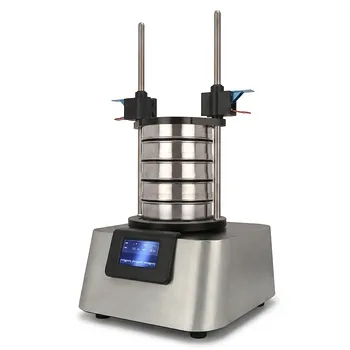
Vibratory Sieve Shaker Electromagnetic 3D Motion Powder Particle Size Analyzer for Dry and Wet Sieving
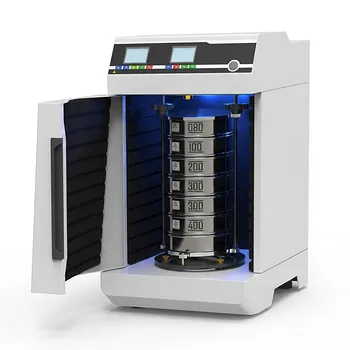
Laboratory Dry and Wet Three Dimensional Vibratory Sieve Shaker for Particle Analysis
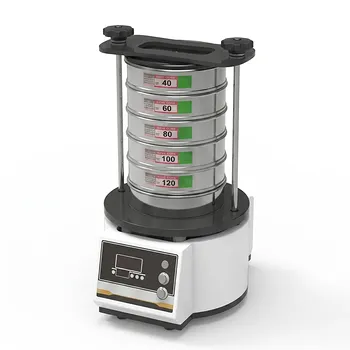
Dry Three Dimensional Vibratory Sieve Shaker
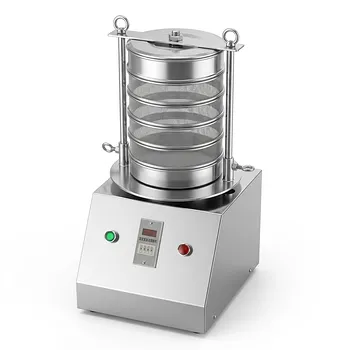
Stainless Steel Laboratory Vibratory Test Sieve Shaker
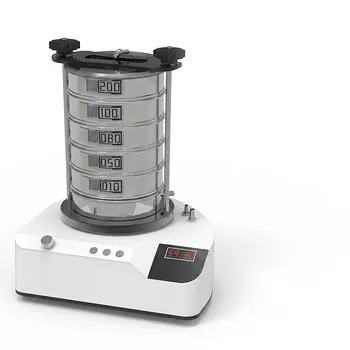
Heavy Duty Dry Three Dimensional Vibratory Sieve Shaker for Particle Separation
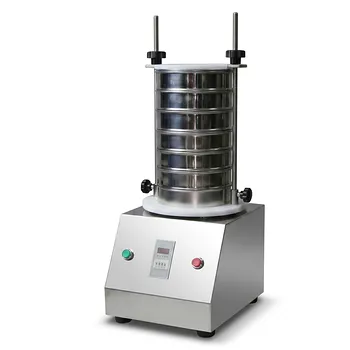
Small Laboratory Vibratory Sieve Shaker for Powder Gradation and Particle Size Analysis
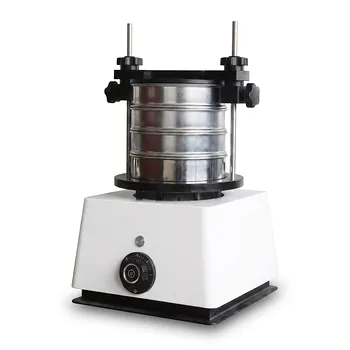
Small Laboratory Vibrating Sieve Shaker for Precise Particle Size Analysis
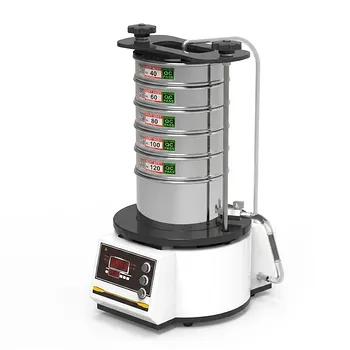
High Frequency Wet Three-Dimensional Vibrating Sieve Shaker for Dry and Wet Particle Size Analysis
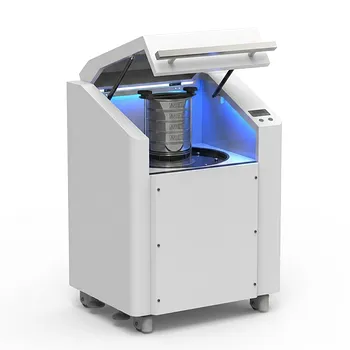
High Frequency Cabinet Type Three-Dimensional Rotary Vibrating Sieve Shaker for Dry Sieving and Particle Classification
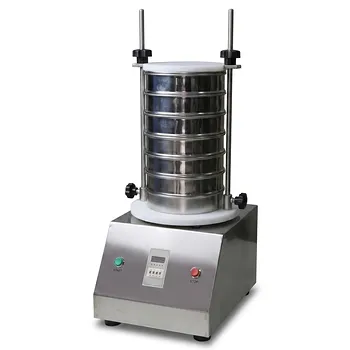
Laboratory Vibratory Test Sieve Shaker for Precision Particle Size Analysis and Powder Grading
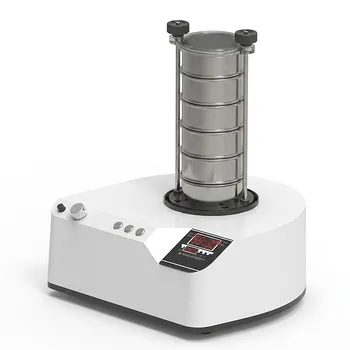
三维电磁微量振动筛分仪
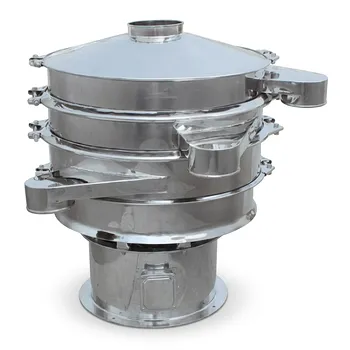
Stainless Steel Rotary Vibrating Sieve High Precision Circular Vibratory Separator Industrial Powder Grading Machine Multi Layer Sifting Equipment
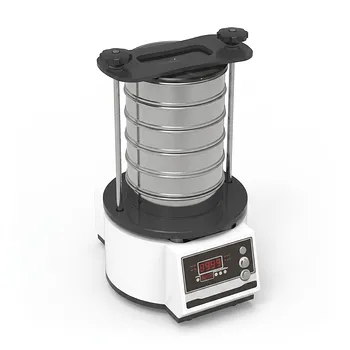
Tapping Oscillating Sieve Shaker for Dry and Wet Particle Size Analysis
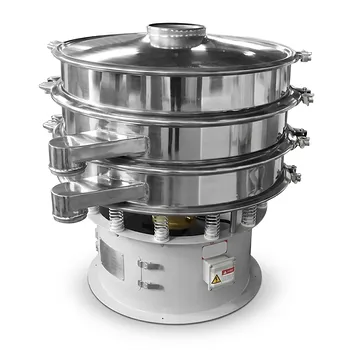
Three Dimensional Rotary Vibrating Sieve
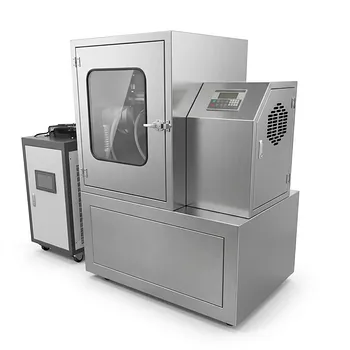
Vibratory Superfine Grinder for Ultra Fine Laboratory Powder Milling
Small Vibrating Ultrafine Grinder for Traditional Chinese Medicine
Automatic Vibrating Powder Feeder for Laboratory Material Processing Precision Vibratory Hopper Feeder for Granular and Powder Material Handling Industrial Grade Vibrating Tray Feeder for Consistent Material Sample Preparation