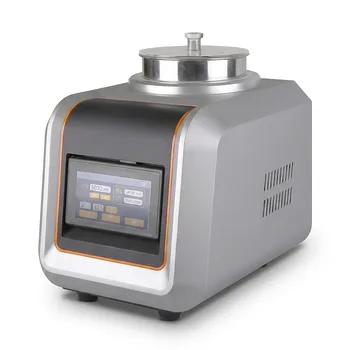
How does a vibratory sieve shaker contribute to the accuracy of rice straw powder dissolution? Ensure Reliable Data
Updated 5 months ago
The vibratory sieve shaker ensures experimental accuracy by isolating particle size as a controlled variable. By utilizing multiple layers of standard sieves, the equipment restricts ball-milled rice straw powder to a strictly defined range, such as 75 to 100 micrometers. This precision eliminates the interference of non-uniform particle sizes, ensuring that observed dissolution kinetics are a result of the material’s structural properties rather than random size variations.
Precise particle size classification is the foundation of scientific validity in dissolution modeling. By removing "particle effects," researchers can confidently attribute changes in data to material characteristics and process parameters rather than inconsistent sample preparation.
Eliminating Kinetic Interference in Dissolution
Standardizing Surface Area for Predictable Reaction
Dissolution is a surface-dependent process where the rate of reaction is directly proportional to the available surface area. Without vibratory sieving, a sample contains a mix of fine and coarse particles that dissolve at different rates, creating "noise" in the data. By narrowing the range, the shaker ensures a uniform surface-to-volume ratio across all experimental trials.
Isolating Structural and Chemical Variables
The deep goal of rice straw experiments is often to understand how pretreatment or internal structure affects solubility. A vibratory sieve shaker ensures that observed changes in light intensity or area during dissolution are solely attributed to these structural characteristics. This isolation is critical for building accurate linear correlation models between material processing and performance.
Enhancing Scientific Comparability
Data collected from non-uniform powders is difficult to replicate or compare across different studies. Using standardized mesh apertures—typically ranging from 300μm down to 75μm—provides a benchmark for reproducibility. This standardization allows other researchers to verify findings using the same precise particle distribution.
The Role of Mechanical Precision in Sample Preparation
Achieving Narrow Distribution Ranges
Vibratory shakers utilize mechanical energy to force particles through specific apertures within a preset time. This process is far more efficient and accurate than manual sieving, which can be prone to human error and inconsistent force. The result is a powder with a controlled median diameter that fits the specific requirements of high-precision dissolution models.
Reducing Baseline Drift and Scattering
In experiments involving spectroscopy or light intensity modeling, inconsistent particle sizes cause scattering noise and baseline drift. Uniform powder produced by a vibratory shaker minimizes these "particle effects," leading to higher stability in Visible-Near Infrared (Vis-NIR) prediction models. This stability is essential for maintaining the integrity of sensitive optical measurements.
Verification of Milling Efficiency
Beyond sample preparation, the sieve shaker serves as a diagnostic tool to evaluate milling performance. It allows researchers to verify if specific grinding methods, such as semi-dry milling, have achieved the target pass rate for fine meshes (e.g., 120-mesh). This feedback loop ensures that the starting material is of the highest possible quality before dissolution begins.
Understanding the Trade-offs and Limitations
Risk of Mesh Clogging and Agglomeration
While highly effective, vibratory sieving of organic materials like rice straw can lead to mesh blinding or clogging. Fine fiber particles often possess moisture-absorbing tendencies that cause them to aggregate, potentially skewing the distribution results if the sieving time and intensity are not correctly calibrated.
Material Loss and Processing Time
Achieving a very narrow particle range (e.g., 75–100 μm) often results in significant material waste, as a large portion of the original ground sample may fall outside the target window. Furthermore, processing large volumes of powder through fine meshes can be time-consuming, requiring a balance between sample precision and laboratory throughput.
Optimizing Your Dissolution Experimental Design
Recommendations for Precision Sieving
- If your primary focus is kinetic modeling accuracy: Prioritize a very narrow sieve stack (e.g., 75 μm to 125 μm) to ensure that surface area remains a constant rather than a variable.
- If your primary focus is evaluating milling techniques: Use a broad range of standard test sieves (from 20 mesh to 120 mesh) to calculate the full particle size distribution and median diameter.
- If your primary focus is optical or spectroscopic analysis: Utilize a vibratory shaker to reach a uniform 2 mm or finer mesh to minimize baseline drift and light scattering.
By mastering the control of particle size through vibratory sieving, you transform a raw agricultural byproduct into a standardized scientific reagent capable of yielding rigorous, repeatable data.
Summary Table:
| Feature | Contribution to Accuracy | Research Benefit |
|---|---|---|
| Particle Size Isolation | Eliminates size as a variable | Confirms data reflects material properties |
| Surface Area Control | Standardizes reaction rates | Enables predictable dissolution kinetics |
| Mechanical Precision | Uniform energy application | Reduces human error vs. manual sieving |
| Noise Reduction | Minimizes light scattering | Increases stability in Vis-NIR models |
| Milling Validation | Verifies target pass rates | Quality control for sample preparation |
Elevate Your Material Research with Precision Sample Preparation
Achieving rigorous, repeatable data in material science starts with standardized sample preparation. At our core, we provide complete laboratory solutions designed to eliminate variables and maximize experimental accuracy.
Whether you are processing biomass or advanced ceramics, our extensive equipment line supports your entire workflow:
- Size Reduction: High-performance crushers (jaw/roll) and advanced mills (planetary ball, jet, sand/bead, disc, rotor, and liquid nitrogen cryogenic grinders).
- Precision Classification: Professional vibratory and air-jet sieve shakers with a wide range of standardized test sieves.
- Mixing & Compaction: High-efficiency powder mixers and a full spectrum of hydraulic presses, including Cold/Warm Isostatic Presses (CIP/WIP), vacuum hot presses, and XRF pellet presses.
Ready to optimize your powder processing workflow? Contact our technical experts today to find the perfect equipment solution for your laboratory needs.
References
- Hlaing Hlaing Myint, Hirofumi Hinode. Dissolution Model of Ball Milled Rice Straw Particles in 1-Ethyl-3-Methyl Imidazolium Acetate at Elevated Temperature. DOI: 10.4172/2155-9821.1000260
Mentioned Products
- Vibratory Sieve Shaker Electromagnetic 3D Motion Powder Particle Size Analyzer for Dry and Wet Sieving
- Laboratory Vibratory Test Sieve Shaker for Precision Particle Size Analysis and Powder Grading
- Small Laboratory Vibratory Sieve Shaker for Powder Gradation and Particle Size Analysis
- Dry Three Dimensional Vibratory Sieve Shaker
- Heavy Duty Dry Three Dimensional Vibratory Sieve Shaker for Particle Separation
People Also Ask
- How does a vibratory sieve shaker contribute to optimizing the performance of activated carbon? Enhance Adsorption Precision
- Why is a laboratory vibratory sieve shaker necessary for processing magnesium-based borate precursor powders? Boost Activity
- Why use a vibratory sieve shaker to verify coarse aggregate grading in rubberized concrete? Ensure Structural Integrity
- What function do vibratory sieve shakers and standard test sieves serve in the preparation of adsorbents? Key Guide
- What role does a vibratory sieve shaker play in the particle size analysis of ground corn products? Enhance QC Precision

Tech Team · PowderPreparation
Last updated on May 14, 2026
Related Products
Vibratory Sieve Shaker Electromagnetic 3D Motion Powder Particle Size Analyzer for Dry and Wet Sieving

Laboratory Vibratory Test Sieve Shaker for Precision Particle Size Analysis and Powder Grading

Small Laboratory Vibratory Sieve Shaker for Powder Gradation and Particle Size Analysis

Dry Three Dimensional Vibratory Sieve Shaker

Heavy Duty Dry Three Dimensional Vibratory Sieve Shaker for Particle Separation
Stainless Steel Laboratory Vibratory Test Sieve Shaker

Laboratory Dry and Wet Three Dimensional Vibratory Sieve Shaker for Particle Analysis

Small Laboratory Vibrating Sieve Shaker for Precise Particle Size Analysis
High Frequency Cabinet Type Three-Dimensional Rotary Vibrating Sieve Shaker for Dry Sieving and Particle Classification

Three Dimensional Rotary Vibrating Sieve
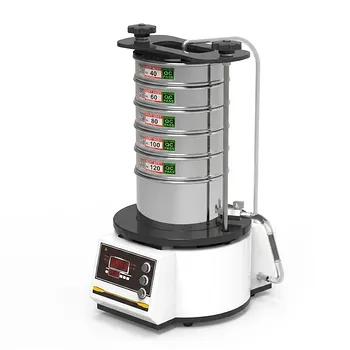
High Frequency Wet Three-Dimensional Vibrating Sieve Shaker for Dry and Wet Particle Size Analysis

三维电磁微量振动筛分仪
Automatic Vibrating Powder Feeder for Laboratory Material Processing Precision Vibratory Hopper Feeder for Granular and Powder Material Handling Industrial Grade Vibrating Tray Feeder for Consistent Material Sample Preparation

Stainless Steel Rotary Vibrating Sieve High Precision Circular Vibratory Separator Industrial Powder Grading Machine Multi Layer Sifting Equipment

Tapping Oscillating Sieve Shaker for Dry and Wet Particle Size Analysis
Vibratory Superfine Grinder for Ultra Fine Laboratory Powder Milling
Vibratory Ultra-Low Temperature Ultrafine Grinder for Cryogenic Powder Processing
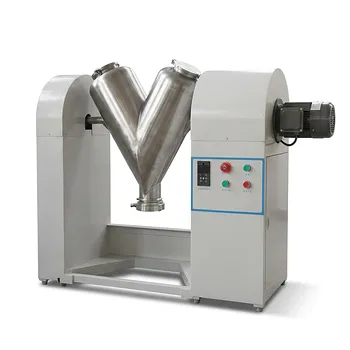
V-Type Powder Mixer for Uniform Blending of Dry Powders and Granules
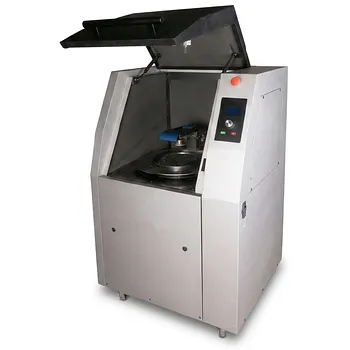
High Speed Vibratory Disc Mill for Spectral Analysis Sample Preparation and Rapid Powder Grinding