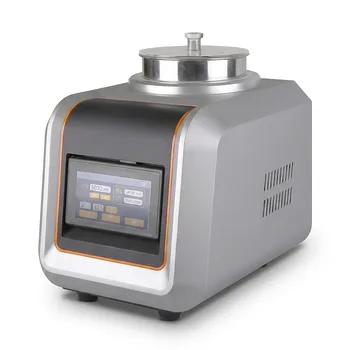
How does a vibratory sieve shaker control fire extinguishing powder PSD? Optimize Fire Suppression & Quality Control
Updated 4 months ago
Vibratory sieve shakers are the primary mechanical gatekeepers in fire extinguishing powder production. By utilizing high-frequency, three-dimensional vibrations to drive powder through a stack of precision mesh sieves, these machines physically classify particles based on their geometric dimensions. This process is critical for ensuring that over 90% of the powder falls within the ideal range—typically below 45 μm—to guarantee maximum fire suppression efficiency.
A vibratory sieve shaker provides the standardized mechanical force necessary to classify fire extinguishing powders into precise mass fraction percentages. This control is essential for achieving the specific particle size distribution (PSD) required for optimal suspension, flame coverage, and penetration during discharge.
Mechanical Classification and Mass Fraction Control
High-Frequency 3D Vibration
The shaker generates a three-dimensional reciprocating motion that ensures every particle has multiple opportunities to pass through the sieve mesh. This automated process is more consistent than manual methods, applying a constant amplitude and duration to the powder sample. The mechanical force efficiently separates the fine active ingredients from any agglomerates or oversized particles that could compromise performance.
Establishing d10, d50, and d90 Metrics
By using a vertical stack of sieves with varying apertures, the equipment allows technicians to calculate the mass mean particle diameter. This provides a detailed characterization of the powder, establishing the d10, d50, and d90 values. These metrics represent the percentage of the sample that falls below a certain size, allowing for a quantitative assessment of the powder's quality and consistency.
Post-Milling Refinement
Following the milling or grinding process, the powder often contains non-uniform particles that can lead to unpredictable behavior. The vibratory shaker acts as a strict size classification tool, removing oversized "tails" from the distribution. This ensures that the final product adheres to predefined geometric dimensions, which is a key quality control step for material consistency.
Enhancing Fire Suppression Efficacy
Optimizing Suspension and Coverage
The ability of a fire suppressant to hang in the air and move with the heat of a fire is directly tied to its particle size. Controlling the distribution ensures the powder is fine enough to optimize suspension performance. This maximizes the coverage area within the flames, allowing the chemical agent to remain in the reaction zone longer.
Improving Flame Base Penetration
While very fine particles are needed for suspension, a balanced distribution is required to ensure the powder has the momentum to penetrate the base of the fire. Precise sieve analysis ensures the powder is not "too fine," which could cause it to be swept away by the fire's updraft before it reaches the fuel source. The shaker helps maintain this delicate balance by verifying the mass fraction of different size ranges.
Understanding the Trade-offs and Limitations
Limitations of Geometric Sizing
Sieve shakers classify particles based on their second-smallest dimension (width), which may not always reflect the true volume of irregular or needle-shaped particles. While it is an intuitive and cost-effective tool, it provides a physical measurement rather than a laser-based optical measurement. This can lead to slight variations in data compared to other analytical methods like laser diffraction.
Sieve Blinding and Material Loss
Fine fire extinguishing powders are often prone to sieve blinding, where particles become lodged in the mesh openings and block the passage of other material. This can skew the results, making the powder appear coarser than it actually is. Frequent cleaning and the use of de-blinding aids (such as balls or rings) are necessary to maintain the scientific reliability of the data.
Applying Sieve Analysis to Your Quality Standards
Successful particle size control requires matching the screening process to your specific production goals.
- If your primary focus is regulatory compliance: Utilize a standardized stack of test sieves ranging from 1.19 mm to 0.074 mm to generate a certified mass fraction report.
- If your primary focus is optimizing discharge performance: Focus on the d90 metric to ensure that at least 90% of the particles are below 45 μm for maximum surface area contact.
- If your primary focus is manufacturing consistency: Use the shaker to monitor the effectiveness of your milling equipment, checking for particle breakage or unintended agglomeration.
Precise vibratory sieving transforms a raw chemical mixture into a high-performance fire suppression agent by ensuring every particle is sized for impact.
Summary Table:
| Key Feature | Contribution to Powder Quality |
|---|---|
| 3D Reciprocating Motion | Provides automated, consistent classification and prevents manual screening errors. |
| Metric Calculation | Establishes d10, d50, and d90 values for precise mass mean diameter analysis. |
| Oversize Removal | Eliminates "tails" and agglomerates post-milling to ensure strict distribution limits. |
| Suspension Optimization | Maintains high surface area (below 45 μm) for better flame coverage and reaction. |
Optimize Your Powder Performance Today
Precision in particle size distribution is the difference between success and failure in fire suppression. We provide complete laboratory sample preparation solutions for material science, specializing in advanced powder processing and compaction equipment.
Our extensive product line includes everything from vibratory and air-jet sieve shakers to high-energy mills (planetary, jet, and rotor) and crushers. For downstream processing, we manufacture a full spectrum of hydraulic presses, including Cold/Warm Isostatic Presses (CIP/WIP), vacuum hot presses, and XRF pellet presses.
Whether you are refining chemical agents or developing new materials, our equipment ensures consistent, repeatable results. Contact our experts today to find the perfect solution for your lab!
References
- Lijing Wang, Haijun Zhang. Enhanced Fire-Extinguishing Performance and Synergy Mechanism of HM/DAP Composite Dry Powder. DOI: 10.3390/ma18030533
Mentioned Products
- Vibratory Sieve Shaker Electromagnetic 3D Motion Powder Particle Size Analyzer for Dry and Wet Sieving
- Laboratory Dry and Wet Three Dimensional Vibratory Sieve Shaker for Particle Analysis
- Stainless Steel Laboratory Vibratory Test Sieve Shaker
- Heavy Duty Dry Three Dimensional Vibratory Sieve Shaker for Particle Separation
- Dry Three Dimensional Vibratory Sieve Shaker
People Also Ask
- How does a vibratory sieve shaker contribute to optimizing the performance of activated carbon? Enhance Adsorption Precision
- Why is a laboratory vibratory sieve shaker necessary for processing magnesium-based borate precursor powders? Boost Activity
- Why use a vibratory sieve shaker to verify coarse aggregate grading in rubberized concrete? Ensure Structural Integrity
- What function do vibratory sieve shakers and standard test sieves serve in the preparation of adsorbents? Key Guide
- What role does a vibratory sieve shaker play in the particle size analysis of ground corn products? Enhance QC Precision

Tech Team · PowderPreparation
Last updated on Jun 03, 2026
Related Products

Vibratory Sieve Shaker Electromagnetic 3D Motion Powder Particle Size Analyzer for Dry and Wet Sieving
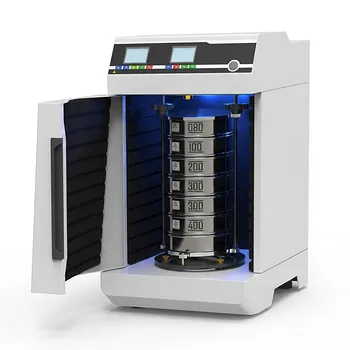
Laboratory Dry and Wet Three Dimensional Vibratory Sieve Shaker for Particle Analysis

Stainless Steel Laboratory Vibratory Test Sieve Shaker

Heavy Duty Dry Three Dimensional Vibratory Sieve Shaker for Particle Separation
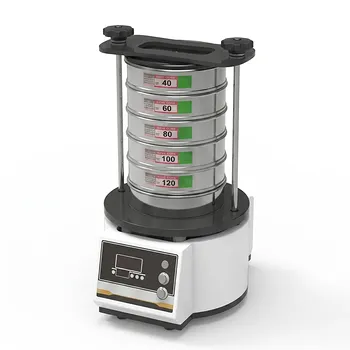
Dry Three Dimensional Vibratory Sieve Shaker

Small Laboratory Vibratory Sieve Shaker for Powder Gradation and Particle Size Analysis

High Frequency Wet Three-Dimensional Vibrating Sieve Shaker for Dry and Wet Particle Size Analysis

Small Laboratory Vibrating Sieve Shaker for Precise Particle Size Analysis
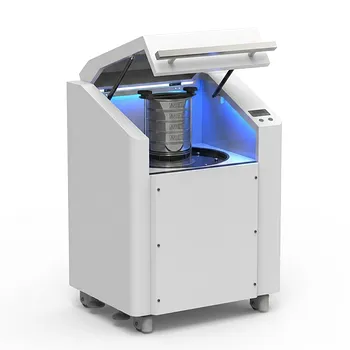
High Frequency Cabinet Type Three-Dimensional Rotary Vibrating Sieve Shaker for Dry Sieving and Particle Classification

Laboratory Vibratory Test Sieve Shaker for Precision Particle Size Analysis and Powder Grading

三维电磁微量振动筛分仪
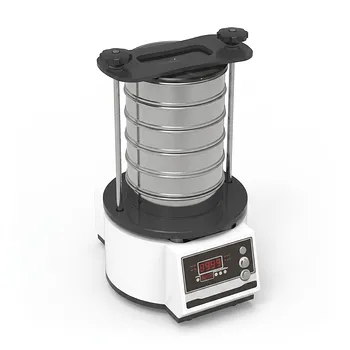
Tapping Oscillating Sieve Shaker for Dry and Wet Particle Size Analysis

Stainless Steel Rotary Vibrating Sieve High Precision Circular Vibratory Separator Industrial Powder Grading Machine Multi Layer Sifting Equipment

Three Dimensional Rotary Vibrating Sieve
Small Vibrating Ultrafine Grinder for Traditional Chinese Medicine
Automatic Vibrating Powder Feeder for Laboratory Material Processing Precision Vibratory Hopper Feeder for Granular and Powder Material Handling Industrial Grade Vibrating Tray Feeder for Consistent Material Sample Preparation
Vibratory Superfine Grinder for Ultra Fine Laboratory Powder Milling
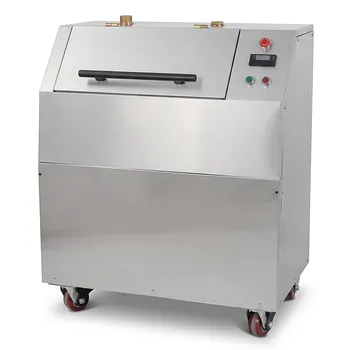
Vibratory Disc Mill for Rapid Fine Grinding and High Throughput Sample Preparation of Hard and Brittle Materials