How does a vibratory sieve shaker contribute to assessing the quality of milled wheat products? Optimize Milling Consistency
Updated 5 months ago
A vibratory sieve shaker provides the empirical data necessary to define the physical characteristics of milled wheat. It uses high-frequency vibrations to categorize flour or bran particles by size across multiple sieve layers, enabling the calculation of the fineness modulus and average particle size. This ensures that the milling process meets strict quality standards for uniformity, digestibility, and downstream processing performance.
The vibratory sieve shaker is a critical quality control tool that transforms raw milling output into quantifiable data. By establishing precise particle size distributions, it allows producers to optimize milling equipment, ensure batch-to-batch consistency, and guarantee that milled products perform predictably in chemical and rheological tests.
Quantifying Particle Size Distribution
The primary role of a vibratory sieve shaker is to separate milled wheat into distinct fractions based on particle diameter. This physical separation is the foundation for all subsequent quality assessments.
Calculating the Fineness Modulus (FM)
By measuring the mass of material retained on each sieve level—typically ranging from 16 mesh to 200 mesh—technicians can calculate the fineness modulus. This single numerical value represents the average particle size of the sample, providing a quick benchmark for batch consistency.
Establishing Relative Particle Size (RPS)
Beyond a simple average, the shaker allows for the determination of the Relative Particle Size (RPS). This metric helps quality control teams verify if the grinding process has achieved the specific fineness required for different product types, such as cake flour versus semolina.
Ensuring Equipment Performance Uniformity
The sieve shaker acts as a diagnostic tool for the milling machinery itself. By monitoring shifts in particle distribution over time, operators can identify equipment wear or calibration issues before they result in out-of-spec product.
Impact on Downstream Product Quality
The size of wheat particles directly influences how the flour or bran will behave when mixed with other ingredients or consumed.
Improving Rheological and Chemical Analysis
Uniform particle size is essential for accurate laboratory testing. It eliminates interference caused by uneven distribution during tests for water holding capacity, swelling capacity, and dough rheology, ensuring that the data reflects the wheat's chemical properties rather than its physical grind.
Controlling Digestibility and Nutrition
Particle size is a major determinant of digestibility requirements in food products. Finer grinds increase the surface area available for enzymatic action, while specific bran fractions are graded to meet fiber and nutritional profiles for health-focused products.
Minimizing Material Damage
Unlike more aggressive mechanical methods, vibratory shakers offer a gentle vibration that minimizes damage to fragile materials. This preserves the integrity of the starch granules and bran layers, which is vital for maintaining the functional properties of the wheat.
Optimizing the Milling Process
The data gathered from sieve analysis allows for the fine-tuning of the entire production chain, from raw grain to final powder.
Evaluating Moisture Tempering and Peeling
Sieve analysis is used to determine how different moisture tempering conditions affect the bran. By measuring the integrity of the bran retained on the sieves, millers can optimize the peeling process to ensure the bran remains in large, easy-to-separate flakes rather than shattering into "fine dust" that contaminates the flour.
Distinguishing Broken vs. Whole Seeds
In the early stages of processing, the shaker can be equipped with longitudinal openings to perform physical grading of dehulled seeds. This quantifies the proportion of grain damage, providing the data needed to adjust hulling equipment for maximum yield.
Understanding Technical Limitations and Trade-offs
While highly effective, the use of vibratory sieve shakers involves specific technical considerations to ensure data accuracy.
Sample Fragility vs. Vibration Intensity
Selecting the correct vibration frequency is a delicate balance. Excessive intensity can lead to unintended particle attrition, where the particles break down further during the test itself, leading to an inaccurately fine reading.
Blinding and Clogging
Fine or moist wheat products can "blind" the sieve mesh, where particles become stuck in the apertures. In these cases, wet sieving or the use of sieve cleaners (such as balls or cubes) may be necessary to maintain the precision of the data and prevent clogging.
How to Apply This to Your Milling Project
Effective quality assessment depends on aligning your sieving protocol with your specific production goals.
- If your primary focus is nutritional consistency: Prioritize the precise grading of medium and fine bran fractions to ensure stable water holding and swelling capacities in your final dough.
- If your primary focus is equipment optimization: Use regular fineness modulus calculations to track mill performance and schedule preventative maintenance before the grind profile shifts.
- If your primary focus is high-precision food products: Implement wet sieving capabilities for any sticky or moist samples to ensure your particle size distribution data is not skewed by mesh clogging.
Mastering vibratory sieve analysis ensures that every batch of milled wheat meets the rigorous physical standards required for modern food production.
Summary Table:
| Aspect | Function in Wheat Milling | Quality Impact |
|---|---|---|
| Particle Size Distribution | Calculates Fineness Modulus (FM) & RPS | Ensures batch-to-batch consistency |
| Equipment Diagnostics | Monitors mill wear & calibration | Prevents out-of-spec production |
| Material Integrity | Gentle vibration prevents starch damage | Preserves functional & chemical properties |
| Process Optimization | Evaluates moisture tempering & peeling | Maximizes yield and bran separation |
| Lab Accuracy | Prepares uniform samples for testing | Ensures reliable rheological & chemical data |
Elevate Your Milling Precision with [Your Brand Name]
Achieving the perfect grind requires more than just a mill—it requires precise analysis and specialized equipment. At [Your Brand Name], we provide complete laboratory sample preparation solutions tailored for material science and powder processing.
Whether you are optimizing wheat milling or developing advanced materials, our extensive product line supports your entire workflow:
- Size Reduction: High-performance crushers (jaw/roll), liquid nitrogen cryogenic grinders, and precision mills (planetary ball, jet, sand/bead, disc, rotor).
- Classification: Vibratory and air-jet sieve shakers with a full range of high-accuracy test sieves and meshes.
- Mixing & Compaction: Advanced powder and defoaming mixers, plus a full spectrum of hydraulic presses, including Cold/Warm Isostatic Presses (CIP/WIP), standard lab presses, XRF pellet presses, and vacuum hot presses.
Ready to improve your quality control and production efficiency? Contact our experts today to discover how our specialized equipment can bring unmatched accuracy to your laboratory.
References
- SN Singh, M. G. Varma. Effect of moisture content and pulley shaft speed on grinding characteristics of wheat (Triticum aestivum). DOI: 10.33545/26174693.2024.v8.i3g.775
Mentioned Products
- Vibratory Sieve Shaker Electromagnetic 3D Motion Powder Particle Size Analyzer for Dry and Wet Sieving
- Laboratory Dry and Wet Three Dimensional Vibratory Sieve Shaker for Particle Analysis
- Stainless Steel Laboratory Vibratory Test Sieve Shaker
- Heavy Duty Dry Three Dimensional Vibratory Sieve Shaker for Particle Separation
- Dry Three Dimensional Vibratory Sieve Shaker
People Also Ask
- How does a vibratory sieve shaker contribute to optimizing the performance of activated carbon? Enhance Adsorption Precision
- Why is a laboratory vibratory sieve shaker necessary for processing magnesium-based borate precursor powders? Boost Activity
- Why use a vibratory sieve shaker to verify coarse aggregate grading in rubberized concrete? Ensure Structural Integrity
- What function do vibratory sieve shakers and standard test sieves serve in the preparation of adsorbents? Key Guide
- What role does a vibratory sieve shaker play in the particle size analysis of ground corn products? Enhance QC Precision

Tech Team · PowderPreparation
Last updated on May 14, 2026
Related Products

Vibratory Sieve Shaker Electromagnetic 3D Motion Powder Particle Size Analyzer for Dry and Wet Sieving
Laboratory Dry and Wet Three Dimensional Vibratory Sieve Shaker for Particle Analysis
Stainless Steel Laboratory Vibratory Test Sieve Shaker

Heavy Duty Dry Three Dimensional Vibratory Sieve Shaker for Particle Separation

Dry Three Dimensional Vibratory Sieve Shaker

Small Laboratory Vibratory Sieve Shaker for Powder Gradation and Particle Size Analysis
High Frequency Wet Three-Dimensional Vibrating Sieve Shaker for Dry and Wet Particle Size Analysis

Small Laboratory Vibrating Sieve Shaker for Precise Particle Size Analysis
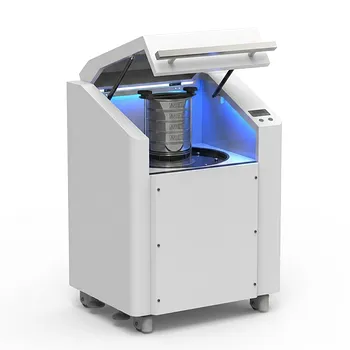
High Frequency Cabinet Type Three-Dimensional Rotary Vibrating Sieve Shaker for Dry Sieving and Particle Classification

Laboratory Vibratory Test Sieve Shaker for Precision Particle Size Analysis and Powder Grading

三维电磁微量振动筛分仪

Tapping Oscillating Sieve Shaker for Dry and Wet Particle Size Analysis

Stainless Steel Rotary Vibrating Sieve High Precision Circular Vibratory Separator Industrial Powder Grading Machine Multi Layer Sifting Equipment

Three Dimensional Rotary Vibrating Sieve
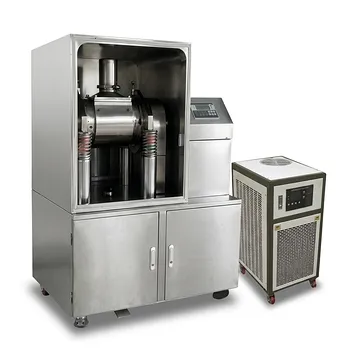
Small Vibrating Ultrafine Grinder for Traditional Chinese Medicine
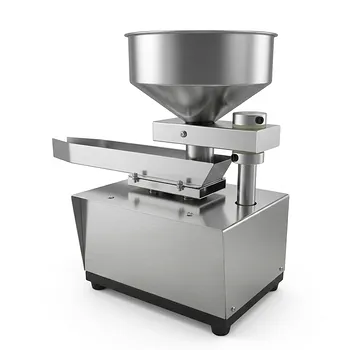
Automatic Vibrating Powder Feeder for Laboratory Material Processing Precision Vibratory Hopper Feeder for Granular and Powder Material Handling Industrial Grade Vibrating Tray Feeder for Consistent Material Sample Preparation
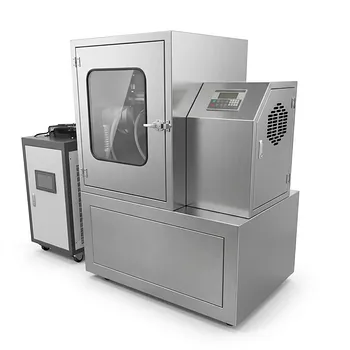
Vibratory Superfine Grinder for Ultra Fine Laboratory Powder Milling
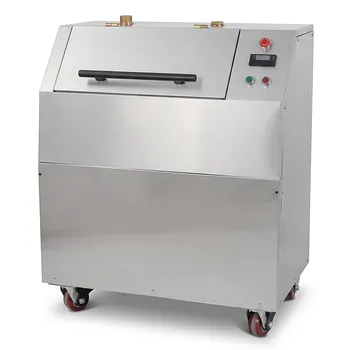
Vibratory Disc Mill for Rapid Fine Grinding and High Throughput Sample Preparation of Hard and Brittle Materials