How does a standardized compaction device function in the molding process of recycled mixture specimens? Achieve Precise Lab Density
Updated 4 months ago
Standardized compaction devices function by applying controlled mechanical energy to recycled mixtures to simulate field conditions and establish material density standards. These devices, such as the Marshall compactor, deliver a specific number of impact blows—often 50 or 75 per side—to a mixture of aggregate, cement, and emulsified asphalt within a steel mold. This process consolidates the material to a target density, allowing engineers to determine the critical relationship between moisture content and dry unit weight.
Core Takeaway: The primary function of a standardized compaction device is to replicate the energy of field construction equipment in a laboratory setting, enabling the precise determination of the Optimum Moisture Content (OMC) and Maximum Dry Density (MDD) required for structural durability.
The Mechanics of Energy Application
Impact Blows and Particle Rearrangement
The device uses a sliding hammer of a specific weight dropped from a standard height to apply impact energy to the specimen. This mechanical work forces the recycled particles, cement, and binders to rearrange into their tightest possible configuration.
Standardization of Molding Forces
By using a fixed number of blows, the device ensures that every specimen is subjected to the same energy baseline. This consistency is vital for evaluating how different additives, such as fly ash or fibers, affect the mixture's physical properties without the variable of inconsistent compaction.
Geometric Definition via Molds
Standardized steel molds define the geometric dimensions of the final specimen. This ensures that subsequent tests for strength, permeability, or air void ratios are performed on samples with uniform volume and shape.
Determining Material Benchmarks
The Compaction Curve
Compaction devices are used to test mixtures at varying moisture levels to generate a compaction curve. This curve identifies the Optimum Moisture Content (OMC), the point where water acts as a lubricant to help particles reach the Maximum Dry Density (MDD).
Simulating Field Construction
The energy applied in the lab is designed to mirror the compaction power of rollers used on-site. By matching lab density to field requirements, engineers can provide clear guidance on how much water and mechanical effort are needed during actual road or building construction.
Establishing Bulk Density and Air Voids
In asphalt and recycled mixtures, the device helps establish the bulk density and air void ratio. These metrics are primary indicators of how well the pavement will resist aging, moisture damage, and deformation under heavy traffic loads.
Understanding the Trade-offs
The Risk of Over-Compaction
Excessive compaction energy can be counterproductive, particularly in porous paving blocks. Over-compacting can crush aggregates and eliminate the necessary pores, effectively destroying the material's intended permeability and drainage capabilities.
Consequences of Insufficient Energy
If the compaction energy is too low, the contact area between aggregates remains minimal, leading to inadequate structural strength. This results in a specimen that cannot support design loads and is prone to premature failure and high air void volumes.
Material Fragility and Aggregate Breakage
In recycled mixtures containing brittle components, standardized impact blows can sometimes cause aggregate degradation. It is critical to monitor whether the laboratory energy levels are fracturing the recycled materials, as this would result in a density reading that does not reflect field reality.
Applying Compaction Standards to Your Project
Recommendations Based on Project Goals
- If your primary focus is structural load-bearing capacity: Use higher compaction energy (e.g., 75 blows) to minimize air voids and maximize the dry density of the stabilized mixture.
- If your primary focus is environmental permeability: Precisely limit compaction energy to ensure that the internal pore structure remains open while still achieving basic sacrificial strength.
- If your primary focus is field-to-lab correlation: Use the compaction curve generated by the device to specify the exact water addition required for your field machinery's power rating.
By mastering the application of standardized compaction energy, you ensure that recycled materials transition from laboratory theory to durable, high-performance infrastructure.
Summary Table:
| Feature/Process | Function & Mechanism | Impact on Specimen |
|---|---|---|
| Impact Blows | Delivers controlled mechanical energy (sliding hammer) | Forces particle rearrangement into tightest configuration. |
| Steel Molds | Provides geometric definition and confinement | Ensures uniform volume and shape for subsequent strength tests. |
| Energy Standardization | Fixes number of blows (e.g., 50 or 75) | Eliminates variables, ensuring a consistent energy baseline. |
| Compaction Curve | Tests various moisture levels vs. density | Identifies the Optimum Moisture Content (OMC) and Max Dry Density (MDD). |
| Field Simulation | Replicates the power of construction rollers | Predicts site performance and establishes material benchmarks. |
Optimize Your Material Preparation with Precision Equipment
Achieving the perfect specimen density is critical for reliable material science research. At KINTEK, we provide complete laboratory sample preparation solutions tailored for advanced powder processing and material compaction.
Our extensive product line is designed to help you master every stage of the process:
- Sample Reduction: High-performance crushers (jaw/roll) and diverse mills (planetary ball, jet, sand/bead, rotor).
- Particle Analysis: Sieve shakers (vibratory/air-jet) and precision test sieves.
- Advanced Compaction: A full spectrum of hydraulic presses, including Cold/Warm Isostatic Presses (CIP/WIP), standard lab presses, XRF pellet presses, and vacuum hot presses.
- Homogenization: High-efficiency powder mixers and defoaming mixers.
Whether you are working with recycled mixtures, ceramics, or advanced composites, our equipment ensures the structural integrity and repeatable results your project demands.
Ready to elevate your lab's capabilities? Contact our experts today for a customized solution!
References
- Diyanti, Sri Indah Setiyaningsih. Performance Analysis of Recycled Asphalt Material Foundation Layer and Top Foundation Layer Reviewed from Primary Displacement. DOI: 10.29303/jppipa.v10i11.9182
Mentioned Products
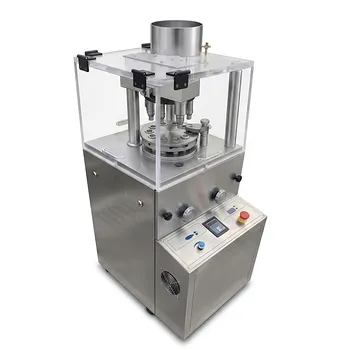
- Enhanced 9 Punch Rotary Tablet Press for Powder Compaction
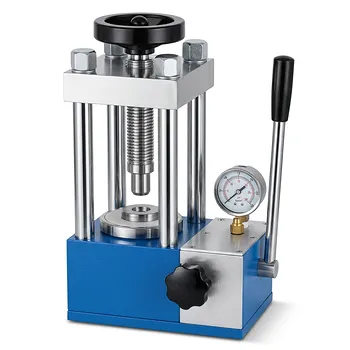
- Manual Tablet Press with Dual Scale Pressure Gauge for Pharmaceutical Food Chemical Laboratory Sample Preparation
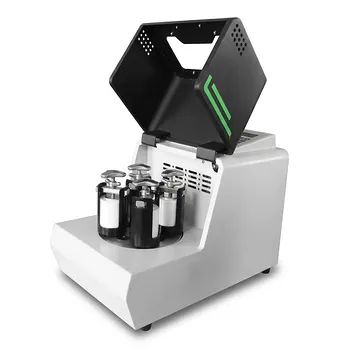
- Miniature Planetary Ball Mill with Vacuum Grinding and High Efficiency for Laboratory Sample Preparation
- 6-Ton Small Single-Punch Tablet Press — Laboratory Powder & Granule Tableting Equipment / Tablet Forming Machine
- Heavy Duty Dry Three Dimensional Vibratory Sieve Shaker for Particle Separation
People Also Ask
- What is the purpose of adding lubricants like zinc stearate during Al-Al2O3 powder pressing? Achieve Superior Density
- Why is a laboratory hydraulic press required for FT-IR KBr pellets? Achieve Precise Sample Clarity for ZrC–SiC Analysis
- What role does a high-strength stainless steel mold kit play in the uniaxial die compaction process? Ensuring Precision
- Why is a laboratory hydraulic press required to compress oyster shell powder before XRF analysis? Improve Data Accuracy.
- Why is vacuum sealing and flexible packaging necessary for Aluminum Titanate powders during CIP? Ensure Peak Density

Tech Team · PowderPreparation
Last updated on Jun 03, 2026
Related Products
Enhanced 9 Punch Rotary Tablet Press for Powder Compaction
Manual Tablet Press with Dual Scale Pressure Gauge for Pharmaceutical Food Chemical Laboratory Sample Preparation
Miniature Planetary Ball Mill with Vacuum Grinding and High Efficiency for Laboratory Sample Preparation
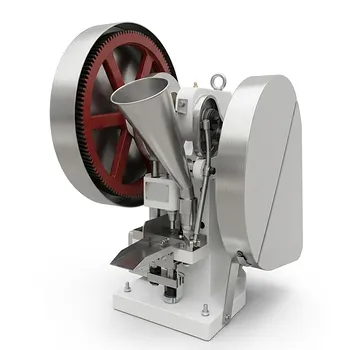
6-Ton Small Single-Punch Tablet Press — Laboratory Powder & Granule Tableting Equipment / Tablet Forming Machine

Heavy Duty Dry Three Dimensional Vibratory Sieve Shaker for Particle Separation