Why use a powder pellet press for slag corrosion tests? Ensure precise results for Calcia-Stabilized Zirconia.
Updated 4 months ago
Standardizing experimental conditions is critical for high-temperature material science. Utilizing a powder pellet press to compact mold slag into cylindrical pellets ensures a consistent contact area and standardized volume during corrosion trials at 1550°C. This specific pretreatment eliminates experimental errors that arise from inconsistent bulk density in loose powders, allowing for an accurate assessment of how different dopant compositions influence the corrosion resistance of Calcia-Stabilized Zirconia.
Core Takeaway: Pre-pressing mold slag into pellets is a necessary step to normalize the geometric shape and internal density of the reactant. This process ensures that any observed corrosion on the Calcia-Stabilized Zirconia is a result of the material’s chemical properties rather than physical inconsistencies in the slag application.
Standardizing the Physical Interface
Eliminating Bulk Density Variations
Loose mold slag powder inherently possesses variable bulk density, which can lead to unpredictable melting behavior and uneven distribution across the specimen surface. By applying mechanical pressure, the powder is consolidated into a high-density, tablet-like form that remains stable during the initial heating phase.
Ensuring Consistent Contact Area
For a corrosion test to be valid, the interface between the molten slag and the Calcia-Stabilized Zirconia must be uniform across all samples. Pelleting ensures that every test begins with a slag sample of the exact same diameter and weight, providing a repeatable "footprint" for the chemical attack.
Optimizing Reaction Kinetics
Enhancing Heat Transfer Efficiency
Compacting the powder significantly reduces the porosity between particles, which optimizes the initial heat transfer when the furnace reaches 1550°C. This reduction in gaps ensures that the slag melts and reacts with the zirconia substrate in a predictable, synchronized manner.
Preventing Sample Dispersion and Loss
In high-temperature environments, loose powders are susceptible to "splashing" or displacement due to gas evolution or furnace atmosphere movement. Pressed pellets provide a dense, solid mass that maintains its position until it reaches its melting point, preventing the loss of material that could skew the final corrosion measurements.
Understanding the Trade-offs
The Risk of Pressure-Induced Deformation
While high pressure is necessary to form a stable pellet, excessive force can sometimes lead to micro-fractures in the slag particles or influence the initial melting characteristics. It is vital to find a pressure threshold—often around 20 kg/cm² to 1,500 kgm⁻² depending on the binder—that ensures density without altering the slag's fundamental thermochemical properties.
Potential for Binder Contamination
In cases where the slag powder does not easily adhere, researchers may introduce a chemical binder to assist in pellet formation. These binders must be carefully selected to ensure they burn off completely or do not introduce trace elements that could catalyze or inhibit the corrosion of the Calcia-Stabilized Zirconia.
Applying This Methodology to Your Project
Recommendations for Experimental Design
- If your primary focus is comparative chemical analysis: Use the pellet press to ensure that physical geometry is a constant variable, allowing you to isolate the effects of specific dopants on corrosion rates.
- If your primary focus is kinetic reaction modeling: Ensure high-density compaction to minimize porosity, as this provides a more accurate representation of the solid-liquid interface during the early stages of smelting.
- If your primary focus is minimizing experimental noise: Standardize the weight and diameter of every pellet to the milligram and millimeter to ensure your data is repeatable across multiple trials.
Precise sample preparation through pelleting transforms loose powder into a controlled technical variable, ensuring that your corrosion data reflects true material performance.
Summary Table:
| Key Factor | Benefit of Pelleting | Impact on Test Accuracy |
|---|---|---|
| Bulk Density | Eliminates variations in loose powder | Ensures predictable melting and distribution |
| Contact Area | Creates a standardized footprint | Validates chemical attack comparisons |
| Porosity | Minimizes internal air gaps | Optimizes heat transfer and reaction kinetics |
| Physical Form | Prevents powder splashing/loss | Maintains sample integrity at 1550°C |
Elevate Your Material Science Research with KINTEK SOLUTION
Precision in sample preparation is the foundation of reliable data. At KINTEK SOLUTION, we provide complete laboratory sample preparation solutions tailored for advanced material science. Whether you are conducting high-temperature corrosion tests or complex powder analysis, our specialized equipment ensures consistency and repeatability.
Our Expertise Includes:
- Powder Processing: High-performance crushers (jaw/roll), liquid nitrogen cryogenic grinders, and an extensive range of mills (planetary ball, jet, rotor).
- Compaction Excellence: A full spectrum of hydraulic presses, including Cold/Warm Isostatic Presses (CIP/WIP), standard lab presses, XRF pellet presses, and vacuum hot presses.
- Sieving & Mixing: Precision sieve shakers and advanced powder/defoaming mixers for perfect homogeneity.
Don't let physical inconsistencies compromise your research. Contact KINTEK SOLUTION today to find the perfect compaction solution for your laboratory and ensure your data reflects true material performance.
References
- Hwanseok Lee, Heesoo Lee. Phase Stability and Slag-Induced Destabilization in MnO2 and CeO2-Doped Calcia-Stabilized Zirconia. DOI: 10.3390/ma16227240
Mentioned Products
- Enhanced 9 Punch Rotary Tablet Press for Powder Compaction
- 6-Ton Small Single-Punch Tablet Press — Laboratory Powder & Granule Tableting Equipment / Tablet Forming Machine
- Manual Tablet Press with Dual Scale Pressure Gauge for Pharmaceutical Food Chemical Laboratory Sample Preparation
- 6 Ton Variable Frequency Single Punch Tablet Press
- Small Swing Granulator Efficient Powder Granulation for Pharmaceutical Chemical Food Industries
People Also Ask
- What is the purpose of adding lubricants like zinc stearate during Al-Al2O3 powder pressing? Achieve Superior Density
- Why is a laboratory hydraulic press required for FT-IR KBr pellets? Achieve Precise Sample Clarity for ZrC–SiC Analysis
- What role does a high-strength stainless steel mold kit play in the uniaxial die compaction process? Ensuring Precision
- Why is a laboratory hydraulic press required to compress oyster shell powder before XRF analysis? Improve Data Accuracy.
- Why is vacuum sealing and flexible packaging necessary for Aluminum Titanate powders during CIP? Ensure Peak Density

Tech Team · PowderPreparation
Last updated on Jun 03, 2026
Related Products
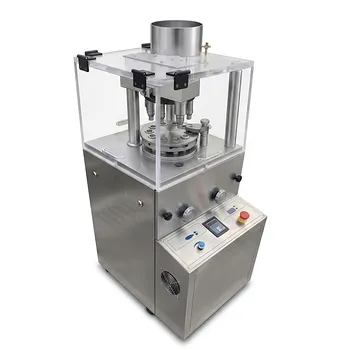
Enhanced 9 Punch Rotary Tablet Press for Powder Compaction
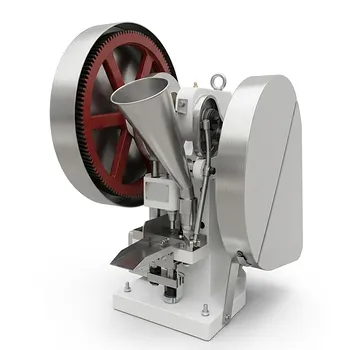
6-Ton Small Single-Punch Tablet Press — Laboratory Powder & Granule Tableting Equipment / Tablet Forming Machine
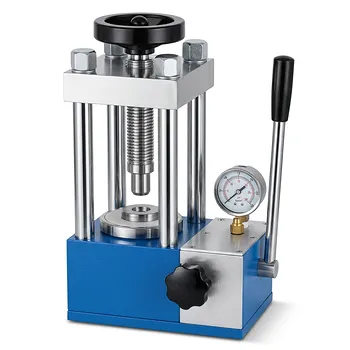
Manual Tablet Press with Dual Scale Pressure Gauge for Pharmaceutical Food Chemical Laboratory Sample Preparation
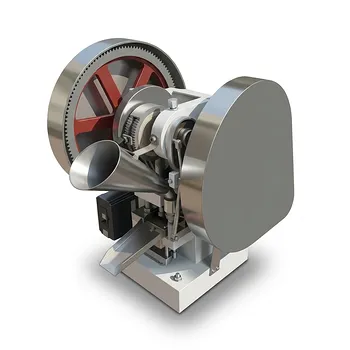
6 Ton Variable Frequency Single Punch Tablet Press
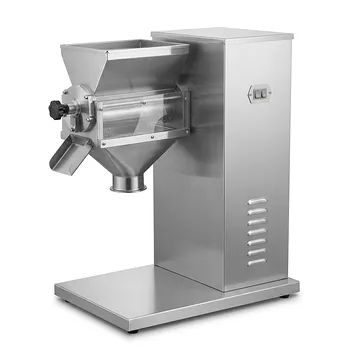
Small Swing Granulator Efficient Powder Granulation for Pharmaceutical Chemical Food Industries
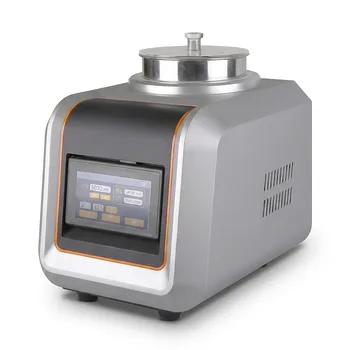
Laboratory Air Jet Sieving Machine for Fine Powder Particle Size Analysis and Deagglomeration
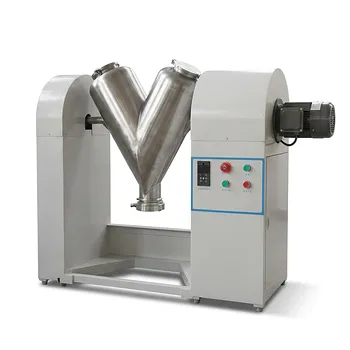
V-Type Powder Mixer for Uniform Blending of Dry Powders and Granules
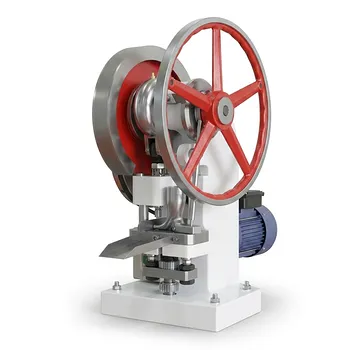
5 Ton Single Punch Tablet Press Laboratory Small Batch Production
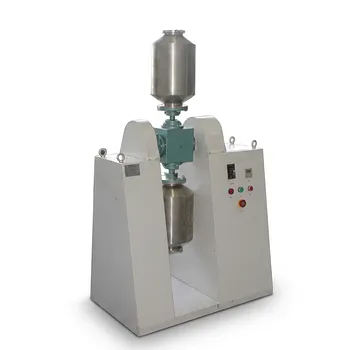
Multi Dimensional Universal Mixer for High Uniformity Powder Blending
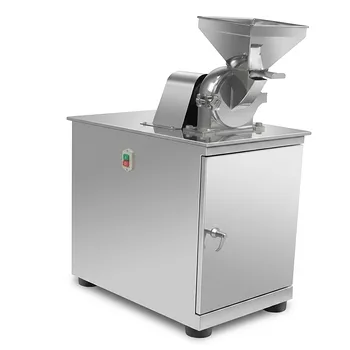
Universal Laboratory Pulverizer Grinder for Small Batch Powder Processing and Material Science Research
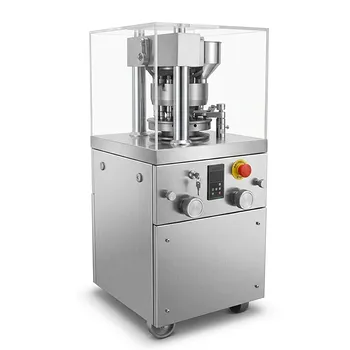
Ordinary Type Rotary Tablet Press for Pharmaceutical Chemical Food Electronic Industries
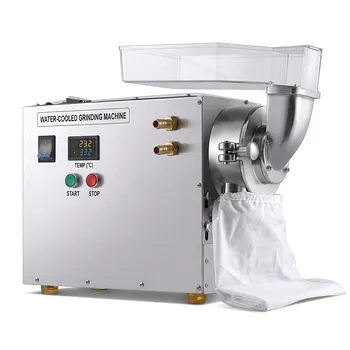
Water Cooled Graduated Continuous Feed Pulverizer for Industrial Powder Processing and Laboratory Material Preparation
