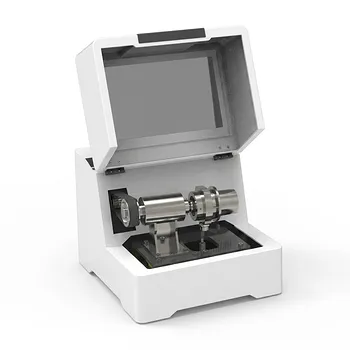
How does a planetary ball mill optimize hard carbon anode powders? Boost Surface Area & Battery Performance
Updated 5 months ago
Planetary ball milling is a high-energy mechanical process that transforms carbonized blocks into optimized micron-scale powders. By utilizing the simultaneous forces of revolution and rotation, this equipment precisely controls particle size distribution and disrupts the disordered stacking of carbon blocks. This refinement is critical for increasing the specific surface area and exposing active sites, which directly improves both the battery's rate capability and the manufacturing quality of the electrode slurry.
The planetary ball mill optimizes hard carbon anodes by using high-energy impact and shear forces to reduce material to a micron-scale powder with an increased specific surface area. This process enhances the electrochemical kinetics of the anode and ensures a stable, uniform conductive network during electrode fabrication.
Mechanical Mechanisms of Refinement
High-Energy Impact and Shear Forces
A planetary ball mill operates through the dual motion of grinding jars rotating around a central axis while simultaneously spinning on their own axes. This complex movement generates intense impact and shear forces between the grinding media and the hard carbon blocks. These forces are significantly more powerful than traditional milling, allowing for the rapid reduction of hard, carbonized materials.
Precise Control of Particle Size Distribution
The high-frequency collisions within the jar allow for the grinding of carbonized blocks into particles typically below 0.1 mm. Achieving a uniform micron-scale distribution is essential for creating a consistent material profile. This precision ensures that the final powder possesses the physical foundation required for high-quality battery components.
Disruption of Disordered Carbon Stacking
Beyond simple size reduction, the mechanical energy disrupts the disordered stacking of the carbon blocks. This structural modification is a key benefit of planetary milling, as it alters the internal geometry of the material. By breaking down these stacks, the process makes the carbon more receptive to further chemical or thermal processing.
Enhancing Electrochemical and Processing Performance
Increasing Specific Surface Area
One of the most critical outcomes of planetary milling is the significant increase in the specific surface area of the hard carbon. A higher surface area provides more contact points between the active material and the electrolyte. This expansion is vital for optimizing the performance of the electrode during charge and discharge cycles.
Improving Sodium-Ion Intercalation
In sodium-ion battery applications, the refinement process exposes more active sites for ion intercalation. By increasing the accessibility of these sites, the planetary ball mill directly enhances the rate capability of the resulting battery. This allows the battery to handle higher currents without significant loss of efficiency.
Optimizing Slurry Coating and Conductive Networks
Refining the powder into a uniform suspension is necessary for the slurry coating process during electrode manufacturing. A well-milled powder enables the formation of a stable, uniform conductive network within the electrolyte. This ensures that the active material is distributed evenly across the current collector, preventing performance hot spots.
Understanding the Trade-offs
Risk of Surface Damage and Amorphization
While high-energy milling is effective, excessive processing can lead to unwanted structural damage or complete amorphization of the carbon. Over-milling may degrade the crystalline regions necessary for optimal ion storage. It is crucial to balance milling time with the desired structural integrity of the hard carbon.
Thermal Management Challenges
The intense energy generated during the milling process can lead to significant heat accumulation within the grinding jars. Excessive heat may cause side reactions or oxidation of the carbon powder if not properly managed. Many high-end planetary mills require cooling breaks or specialized atmosphere-controlled jars to maintain material purity.
How to Apply This to Your Project
Recommendations for Optimization
To achieve the best results with planetary ball milling, you must align your milling parameters with your specific electrochemical goals.
- If your primary focus is high-rate performance: Utilize longer milling times at moderate speeds to maximize specific surface area and expose the greatest number of active sites for ion intercalation.
- If your primary focus is manufacturing consistency: Prioritize a narrow particle size distribution by selecting specific grinding media ratios to ensure the resulting slurry is easy to coat and free of large aggregates.
- If your primary focus is structural integrity: Use intermittent milling cycles with cooling periods to prevent overheating and preserve the disordered carbon structure needed for long-term cycle stability.
By mastering the mechanical forces of the planetary ball mill, you can tailor the physical properties of hard carbon to meet the rigorous demands of modern energy storage systems.
Summary Table:
| Feature | Mechanism | Benefit for Hard Carbon |
|---|---|---|
| Energy Delivery | High-energy impact & shear forces | Efficiently breaks down hard, carbonized blocks |
| Particle Size | Precise micron-scale refinement | Ensures uniform slurry coating & stable networks |
| Surface Area | Massive increase in contact points | Exposes active sites to enhance rate capability |
| Structure | Disruption of disordered stacking | Improves sodium-ion intercalation kinetics |
| Quality Control | Controlled milling parameters | Balances structural integrity with performance |
Elevate Your Battery Material Research Today
Are you looking to achieve the perfect micron-scale refinement for your hard carbon anodes? [Your Brand Name] provides complete laboratory sample preparation solutions for material science, specializing in high-performance powder processing and compaction equipment.
Our extensive product line is designed to meet the rigorous demands of battery research and production, including:
- Advanced Milling: Planetary ball mills, jet mills, liquid nitrogen cryogenic grinders, and rotor mills.
- Powder Processing: Crushers (jaw/roll), sieve shakers (vibratory/air-jet), and high-precision powder mixers.
- Compaction Solutions: A full spectrum of hydraulic presses, including Cold/Warm Isostatic Presses (CIP/WIP), standard lab presses, and vacuum hot presses for dense pellet preparation.
Whether you are focusing on maximizing rate capability or ensuring manufacturing consistency, our expert team is ready to help you select the right tools for your specific workflow.
Ready to optimize your material processing? Contact us today to discuss your project!
References
- Sonya Harizanova, Mariya Kalapsazova. The Beneficial Impact of Mineral Content in Spent-Coffee-Ground-Derived Hard Carbon on Sodium-Ion Storage. DOI: 10.3390/ma17051016
Mentioned Products
- Vertical Semi Circular Planetary Ball Mill for Laboratory Precision Grinding
- High Energy Planetary Ball Mill for Nano Scale Grinding and Mechanical Alloying
- Vertical Production Planetary Ball Mill for High Throughput Powder Processing
- Heavy Duty Horizontal Planetary Ball Mill for Efficient Industrial Grinding and Sample Preparation
- 360° Rotating Omnidirectional Laboratory Planetary Ball Mill for Homogeneous Ultra-Fine Grinding and Mixing
People Also Ask
- What role does a planetary ball mill play in the synthesis of Li6PS5Cl (LPSCl)? Unlock High Ionic Conductivity
- Why is a planetary ball mill essential for SiBCN-rGO wet-spinning? Achieve Superior Dispersion and Spinnability
- Why is an intermittent grinding process required for perovskites in a planetary ball mill? Ensure Stability & Purity
- Why is a planetary ball mill required for PET micronization? Ensure Accurate Chemical Analysis of Reprocessed PET
- How does mechanized planetary ball milling compare to manual agate grinding? Optimize sulfide standard material precision.

Tech Team · PowderPreparation
Last updated on May 14, 2026
Related Products

Vertical Semi Circular Planetary Ball Mill for Laboratory Precision Grinding

High Energy Planetary Ball Mill for Nano Scale Grinding and Mechanical Alloying
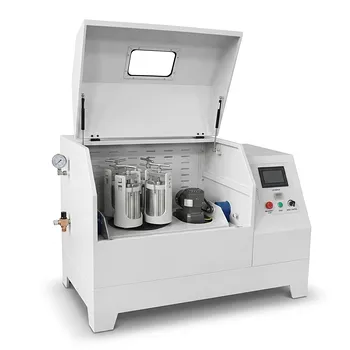
Vertical Production Planetary Ball Mill for High Throughput Powder Processing
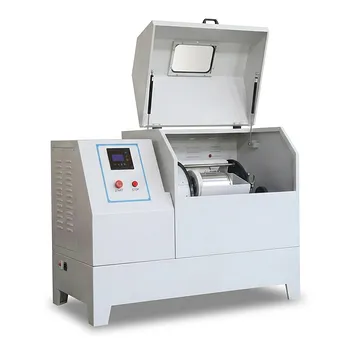
Heavy Duty Horizontal Planetary Ball Mill for Efficient Industrial Grinding and Sample Preparation
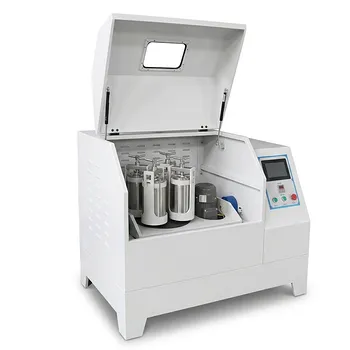
360° Rotating Omnidirectional Laboratory Planetary Ball Mill for Homogeneous Ultra-Fine Grinding and Mixing
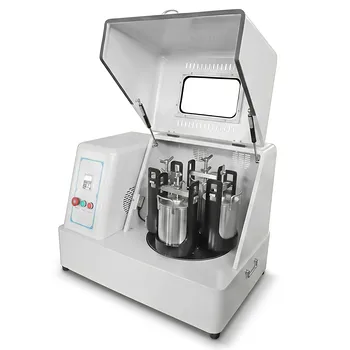
Vertical Square Planetary Ball Mill for Laboratory Sample Preparation and Nanoscale Grinding

Miniature Planetary Ball Mill with Vacuum Grinding and High Efficiency for Laboratory Sample Preparation

High Energy Laboratory Planetary Ball Mill for Nano Grinding and Material Science Sample Preparation
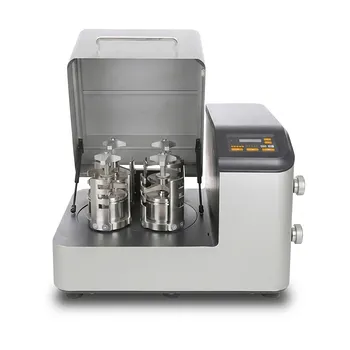
High Energy Planetary Ball Mill for Nano Scale Grinding and Colloidal Mixing in Material Science Research
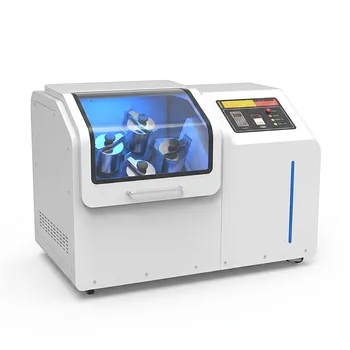
High Energy Omnidirectional Planetary Ball Mill 16L

High Energy Laboratory Planetary Ball Mill for Nano Grinding and Colloidal Mixing of Hard and Brittle Materials
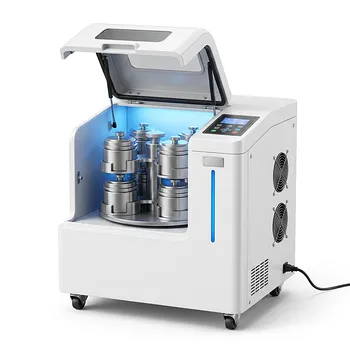
High Energy Omnidirectional Planetary Ball Mill 20L
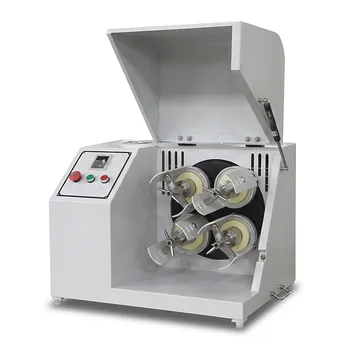
Horizontal Light Duty Planetary Ball Mill for Laboratory Sample Preparation

8L Planetary Ball Mill for Laboratory Grinding and Sample Preparation
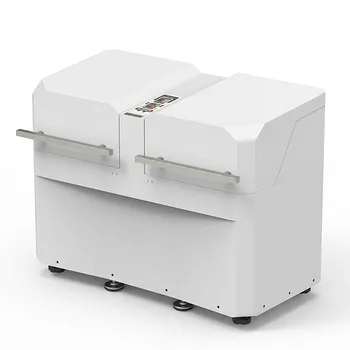
Dual Station Planetary Ball Mill 24L
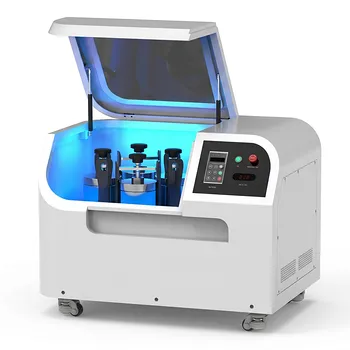
Planetary Ball Mill 12L

Nano High Energy Vibratory Ball Mill for Laboratory Sample Preparation

Multi-Platform Nanoscale High-Energy Vibratory Ball Mill

High Energy Hybrid Vibratory Ball Mill for Grinding Mixing and Cell Disruption