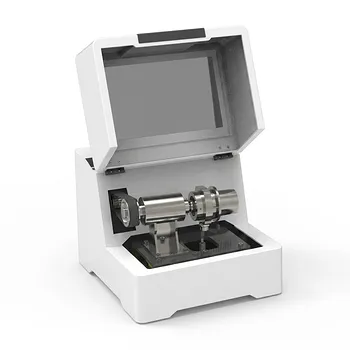
How does a planetary ball mill improve LaCoO3 (LCO) powders? Enhance cathode ink performance and material reactivity.
Updated 5 months ago
Planetary ball milling enhances LaCoO3 (LCO) powder performance by utilizing high-energy mechanical forces to achieve superior homogenization and particle size control.
This process employs centrifugal, impact, and shear forces to break down powder agglomerates and ensure a uniform dispersion within liquid media like ethanol. By precisely regulating the particle size distribution and increasing the specific surface area, the milling process enables the formation of a high-performance, porous cathode layer with optimized sintering activity and electrochemical reactivity.
Core Takeaway: High-energy planetary milling transforms raw LCO powders into a highly reactive, uniform precursor. This mechanical activation is essential for achieving the precise dispersion and surface energy required to produce high-quality, stable cathode inks.
The Mechanics of High-Energy Homogenization
Overcoming Particle Agglomeration
Raw LCO powders often form stable clusters or agglomerates during synthesis or storage. The high-speed rotation of a planetary ball mill generates intense impact and shear forces that physically disrupt these clusters. This ensures that the powder transitions from large, irregular chunks to a discrete, manageable particulate state.
Achieving Precise Particle Size Distribution
The milling process allows for systematic reduction of the average particle size ($d_{50}$), often moving from approximately 10 micrometers down to sub-micron levels (around 0.5 micrometers). By adjusting milling time and frequency, engineers can tailor the powder to meet the specific thickness and porosity requirements of the cathode layer.
Improving Dispersion in Liquid Media
Uniformity is critical for screen-printing or coating applications. High-energy milling facilitates the molecular-level mixing of LCO within ethanol or other solvents, preventing sedimentation and ensuring the ink remains stable. This results in a homogeneous raw material base that is essential for producing high-quality, high-density pastes.
Enhancing Material Reactivity and Connectivity
Increasing Specific Surface Area
As particle size decreases, the specific surface area of the LCO powder increases significantly. This higher surface-to-volume ratio provides more active sites for electrochemical reactions. Furthermore, the increased surface energy acts as a driver for improved sintering activity, allowing for better densification during the final heat treatment.
Structural Activation and Lattice Defects
The intense mechanical action does more than just reduce size; it introduces lattice defects, dislocations, and localized amorphization into the LCO structure. These "imperfections" reduce the activation energy required for chemical transitions. This mechanical activation creates favorable kinetic conditions, improving the overall rate capability of the cathode.
Optimizing the Dual-Conduction Network
The milling sequence can be used to regulate the coating state between the LCO active material and other additives, such as carbon or electrolytes. By mixing conductive additives before or during the addition of LCO, the mill helps construct effective networks for both ions and electrons. This ensures that the finished cathode layer has high electrical conductivity and efficient ionic transport.
Critical Trade-offs and Process Limitations
The Risk of Media Contamination
The high-energy nature of the process can lead to wear on the grinding jars and milling balls. If the material of the milling media (e.g., zirconia or alumina) sheds into the powder, it can introduce impurities that degrade the electrochemical performance of the LCO cathode.
Potential for Over-Processing
Excessive milling can lead to extreme amorphization or the unintended phase transformation of the LCO crystal structure. While some defects are beneficial for reactivity, over-milling may destroy the desired perovskite structure, leading to a loss of performance in the final device.
Thermal Management During Milling
The friction and impacts within a planetary ball mill generate significant heat. For certain sensitive ink formulations, this temperature rise can lead to the premature evaporation of solvents or the degradation of organic binders. Precise control of milling intervals and cooling cycles is often necessary.
Implementing Effective Milling Strategies
To achieve the best results with LaCoO3 powders, your milling strategy should align with your specific performance targets.
- If your primary focus is maximized reactivity: Prioritize longer milling durations to introduce lattice defects and maximize specific surface area, ensuring high sintering activity.
- If your primary focus is ink consistency and coatability: Use high-frequency, short-duration wet milling in ethanol to ensure a narrow particle size distribution and stable dispersion.
- If your primary focus is electrical conductivity: Adjust the material addition sequence to mill carbon additives and LCO together, ensuring a uniform conductive coating across all active particles.
By mastering the mechanical variables of the planetary ball mill, you can precisely engineer LCO powders to meet the rigorous demands of advanced cathode ink production.
Summary Table:
| Key Mechanism | Performance Impact | Result for Cathode Inks |
|---|---|---|
| Particle Size Reduction | Decreases $d_{50}$ from ~10µm to sub-micron | Superior ink stability and coatability |
| Mechanical Activation | Introduces lattice defects and amorphization | Lower activation energy for chemical transitions |
| Homogenization | Breaks clusters via high-speed rotation | Consistent, high-density printable pastes |
| Surface Area Increase | Higher surface-to-volume ratio | Increased electrochemical active sites |
| Mixing Optimization | Uniform coating of carbon/additives | Enhanced ionic and electronic conductivity |
Elevate Your Material Research with Precision Powder Solutions
Achieving the perfect cathode ink requires more than just high-quality precursors—it demands precise mechanical control. At our facility, we specialize in providing complete laboratory sample preparation solutions for material science, focusing on high-performance powder processing and compaction.
Our extensive product line is engineered to help you achieve superior homogenization and particle control:
- Advanced Milling: Planetary ball mills, jet mills, and liquid nitrogen cryogenic grinders for sub-micron precision.
- Preparation & Sifting: Sieve shakers (vibratory/air-jet) and high-efficiency powder or defoaming mixers.
- Compaction Equipment: A full spectrum of hydraulic presses, including Cold/Warm Isostatic Presses (CIP/WIP), vacuum hot presses, and XRF pellet presses.
Whether you are a researcher aiming for specific lattice defects or a distributor looking for reliable OEM/ODM support and certified equipment, we bring the expertise to optimize your workflow.
Ready to transform your material performance?
Contact our technical team today for a tailored solution!
References
- Shunya Mihara, Yoshio Sakka. Chemical Reactivity and Cathode Properties of LaCoO<sub>3</sub> on Lanthanum Silicate Oxyapatite Electrolyte. DOI: 10.4028/www.scientific.net/kem.616.120
Mentioned Products
- 360° Rotating Omnidirectional Laboratory Planetary Ball Mill for Homogeneous Ultra-Fine Grinding and Mixing
- Vertical Semi Circular Planetary Ball Mill for Laboratory Precision Grinding
- High Energy Omnidirectional Planetary Ball Mill 20L
- Planetary Ball Mill 12L
- High Energy Omnidirectional Planetary Ball Mill 16L
People Also Ask
- What role does an omni-directional planetary ball mill play in brass/cobalt antimonide pretreatment? Achieve Nano-Scale Homogeneity.
- What is the function of an omni-directional planetary ball mill? Achieve Streak-Free Glass Homogenization
- Why is an intermittent grinding process required for perovskites in a planetary ball mill? Ensure Stability & Purity
- Why is a planetary ball mill essential for SiBCN-rGO wet-spinning? Achieve Superior Dispersion and Spinnability
- What role does a planetary ball mill play in the synthesis of Li6PS5Cl (LPSCl)? Unlock High Ionic Conductivity

Tech Team · PowderPreparation
Last updated on May 14, 2026
Related Products
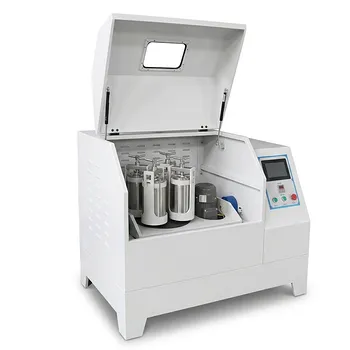
360° Rotating Omnidirectional Laboratory Planetary Ball Mill for Homogeneous Ultra-Fine Grinding and Mixing
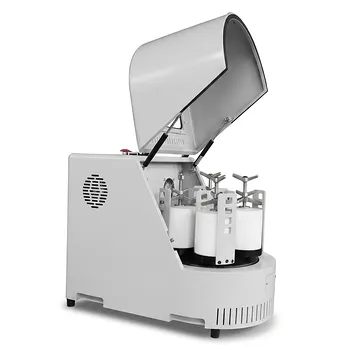
Vertical Semi Circular Planetary Ball Mill for Laboratory Precision Grinding
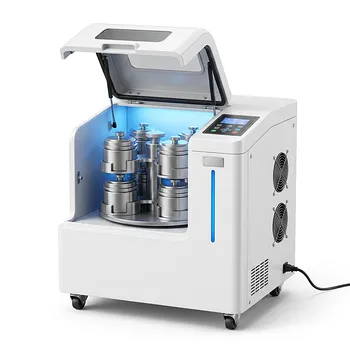
High Energy Omnidirectional Planetary Ball Mill 20L
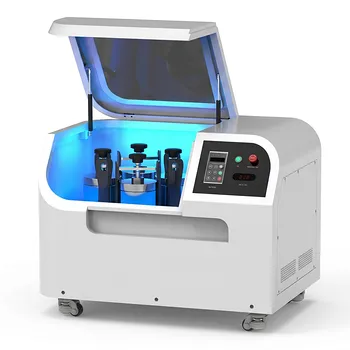
Planetary Ball Mill 12L
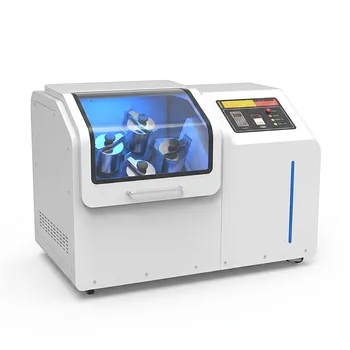
High Energy Omnidirectional Planetary Ball Mill 16L
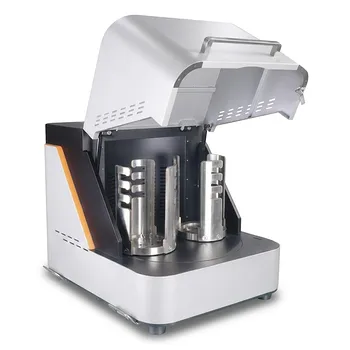
High Energy Laboratory Planetary Ball Mill for Nano Grinding and Colloidal Mixing of Hard and Brittle Materials
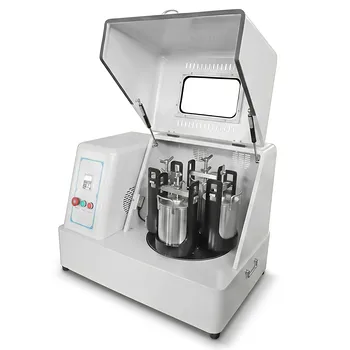
Vertical Square Planetary Ball Mill for Laboratory Sample Preparation and Nanoscale Grinding

High Energy Laboratory Planetary Ball Mill for Nano Grinding and Material Science Sample Preparation
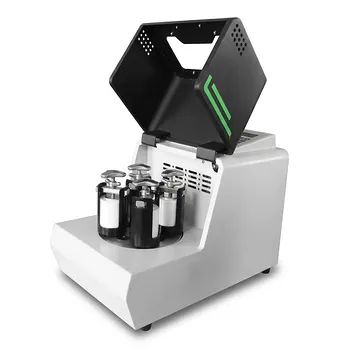
Miniature Planetary Ball Mill with Vacuum Grinding and High Efficiency for Laboratory Sample Preparation

High Energy Planetary Ball Mill for Nano Scale Grinding and Mechanical Alloying

8L Planetary Ball Mill for Laboratory Grinding and Sample Preparation
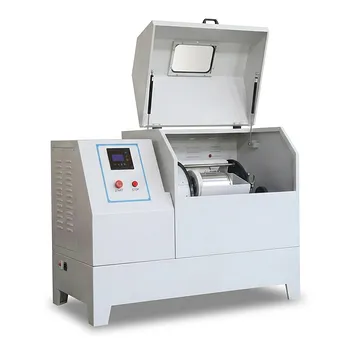
Heavy Duty Horizontal Planetary Ball Mill for Efficient Industrial Grinding and Sample Preparation
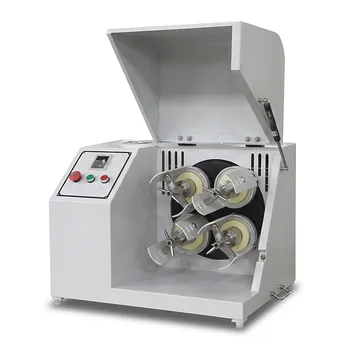
Horizontal Light Duty Planetary Ball Mill for Laboratory Sample Preparation
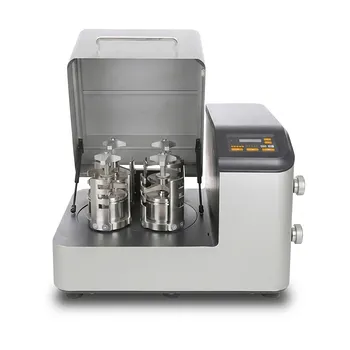
High Energy Planetary Ball Mill for Nano Scale Grinding and Colloidal Mixing in Material Science Research
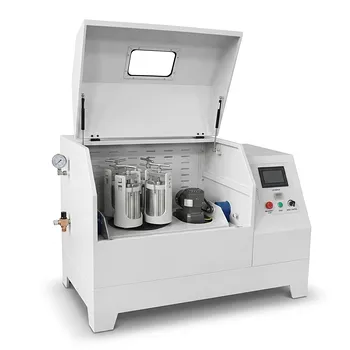
Vertical Production Planetary Ball Mill for High Throughput Powder Processing
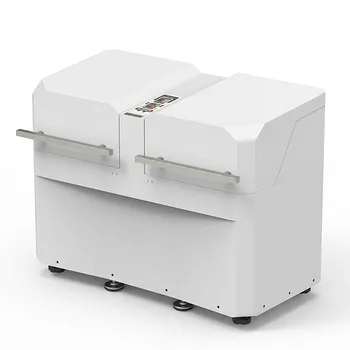
Dual Station Planetary Ball Mill 24L
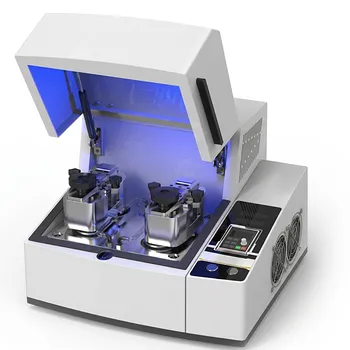
Laboratory Nano High Energy Ball Mill Ultrafine Grinding Mechanical Alloying

Multi-Platform Nanoscale High-Energy Vibratory Ball Mill
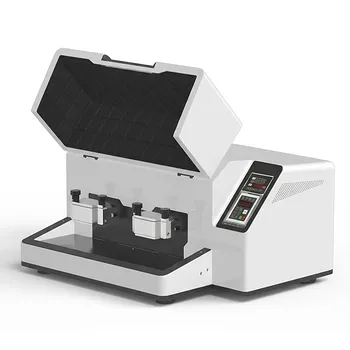
Nanoscale High-Energy Vibratory Ball Mill for Laboratory Sample Preparation, Mechanochemistry, and Mechanical Alloying