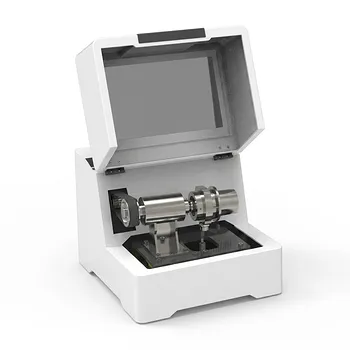
How does a planetary ball mill ensure mixing quality when blending graphene-coated copper (Gr@Cu) particles with 6061 aluminum powder?
Updated 5 months ago
The planetary ball mill ensures mixing quality through a high-energy mechanical alloying process that utilizes simultaneous revolution and rotation. This dual-axis motion generates multi-directional, high-frequency collisions that embed graphene-coated copper (Gr@Cu) particles directly into the 6061 aluminum matrix, preventing phase separation and breaking up stubborn particle clusters.
Core Takeaway: By combining high-impact shearing with mechanical embedding, the planetary ball mill transforms simple surface contact into a stable, integrated composite powder, ensuring the reinforcement phase remains uniformly distributed during subsequent thermal processing.
The Mechanics of Composite Motion
Revolution and Rotation Dynamics
A planetary ball mill operates by rotating the milling jars in the opposite direction of the main sun disk's revolution.
This composite motion generates intense centrifugal forces that cause the grinding balls to move in complex trajectories, resulting in high-frequency collisions.
The resulting mechanical stirring action creates a convective flow within the powder, ensuring that the Gr@Cu particles are distributed evenly throughout the 6061 aluminum matrix.
High-Energy Impact and Shearing
The kinetic energy produced during high-speed rotation allows the grinding media to apply significant impact and shear forces to the powder.
These forces are critical for overcoming the van der Waals forces that typically cause graphene-coated particles to agglomerate.
By continuously fracturing and re-welding the particles, the mill achieves atomic-level mixing that is impossible with low-energy blending methods.
Achieving Structural Integration
Mechanical Embedding and Anchoring
As the grinding balls strike the powders, the relatively soft 6061 aluminum particles undergo plastic deformation.
The harder Gr@Cu particles are forcibly embedded or anchored into the surface and interior of the aluminum particles.
This mechanical anchoring is essential for maintaining a stable mixture, as it prevents the reinforcement from separating due to density differences between copper, graphene, and aluminum.
Morphological Evolution
The high-energy process causes the aluminum powder to transition from a spherical shape to a flake-like morphology.
This increase in surface area provides more sites for the graphene-coated copper to adhere to the matrix.
As the milling continues, these flakes are cold-welded back together, trapping the reinforcement phase inside a dense, composite particle.
Enhancing Interfacial Properties
Breaking Agglomerates and Nano-scale Dispersion
Graphene-coated particles naturally tend to form clusters that can act as defect sites in a final composite.
The planetary mill utilizes high-energy grinding to break these clusters into individual nanosheets and coated particles.
This results in a nano-scale pre-dispersion, ensuring that the reinforcement is distributed at a microscopic level before the material is ever cast or sintered.
Improving Physical Wettability
The mechanical alloying process reduces the number of graphene layers and physically forces the materials into intimate contact.
This action enhances the physical wettability between the carbon-based reinforcement and the metal matrix.
By establishing a strong interfacial bonding strength, the mill ensures that the Gr@Cu remains stable within the metal melt during subsequent fabrication steps.
Understanding the Trade-offs
Potential for Contamination
The high-energy nature of planetary milling can lead to wear and tear of the grinding balls and jars.
Small amounts of material from the milling media (such as steel or zirconia) can migrate into the 6061 aluminum powder.
Using milling jar linings and balls made of the same material as the matrix can mitigate this risk but may increase operational costs.
Risk of Structural Damage
Excessive milling time or speed can lead to the structural degradation of the graphene coating.
If the energy input is too high, the crystalline structure of the graphene may be destroyed, reducing its effectiveness as a reinforcement.
Precise control of the ball-to-powder ratio and rotation speed is required to balance mixing quality with structural integrity.
How to Apply This to Your Project
Making the Right Choice for Your Goal
- If your primary focus is maximizing dispersion uniformity: Use a higher ball-to-powder ratio (e.g., 15:1) and moderate speeds to ensure thorough mechanical embedding without damaging the graphene.
- If your primary focus is preventing phase separation: Prioritize longer milling times at lower speeds to allow for sufficient cold-welding and morphological evolution of the aluminum flakes.
- If your primary focus is minimizing contamination: Utilize jars and grinding media made from hardened steel or aluminum-compatible alloys and mill under an inert atmosphere.
By mastering the high-energy dynamics of the planetary ball mill, you can create a stable, uniform precursor that ensures the performance of the final aluminum matrix composite.
Summary Table:
| Mixing Mechanism | Physical Action | Resulting Mixing Quality |
|---|---|---|
| Dual-Axis Motion | Simultaneous revolution and rotation | Multi-directional, high-frequency collisions |
| High-Energy Impact | Intense shear forces | Breaks van der Waals forces & nano-clusters |
| Plastic Deformation | Particle flattening/morphology change | Mechanical embedding of Gr@Cu into Al matrix |
| Mechanical Alloying | Continuous cold-welding | Atomic-level mixing and stable phase integration |
Elevate Your Material Research with Precision Powder Solutions
Achieving perfect dispersion in metal matrix composites requires more than just equipment—it requires the right process. At our facility, we provide complete laboratory sample preparation solutions tailored for advanced material science.
Whether you are blending nano-reinforcements or preparing dense compacts, our extensive line of equipment ensures peak performance:
- Advanced Milling: High-energy planetary ball mills, jet mills, and cryogenic grinders for nano-scale dispersion.
- Sample Preparation: Precision crushers, sieve shakers (vibratory/air-jet), and high-efficiency powder mixers.
- Compaction & Sintering: A full spectrum of hydraulic presses, including Cold/Warm Isostatic Presses (CIP/WIP), vacuum hot presses, and XRF pellet presses.
Ready to optimize your Gr@Cu and 6061 Al blending process? Contact our technical experts today to find the ideal equipment configuration for your specific research goals and ensure superior interfacial bonding in your composites.
References
- Xue Zhang, Shuai Zhang. Research on microstructure and properties of Gr@Cu reinforced 6061 aluminum matrix composites. DOI: 10.1088/1742-6596/3112/1/012096
Mentioned Products
- Vertical Semi Circular Planetary Ball Mill for Laboratory Precision Grinding
- High Energy Planetary Ball Mill for Nano Scale Grinding and Mechanical Alloying
- Vertical Production Planetary Ball Mill for High Throughput Powder Processing
- Heavy Duty Horizontal Planetary Ball Mill for Efficient Industrial Grinding and Sample Preparation
- 360° Rotating Omnidirectional Laboratory Planetary Ball Mill for Homogeneous Ultra-Fine Grinding and Mixing
People Also Ask
- What role does a planetary ball mill play in the synthesis of Li6PS5Cl (LPSCl)? Unlock High Ionic Conductivity
- Why is a planetary ball mill essential for SiBCN-rGO wet-spinning? Achieve Superior Dispersion and Spinnability
- Why is an intermittent grinding process required for perovskites in a planetary ball mill? Ensure Stability & Purity
- Why is a planetary ball mill required for PET micronization? Ensure Accurate Chemical Analysis of Reprocessed PET
- How does mechanized planetary ball milling compare to manual agate grinding? Optimize sulfide standard material precision.

Tech Team · PowderPreparation
Last updated on May 14, 2026
Related Products
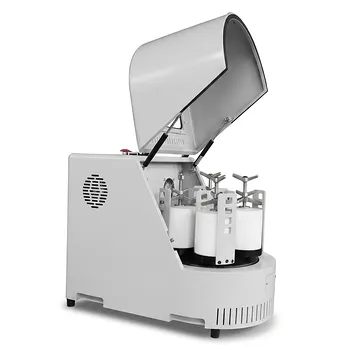
Vertical Semi Circular Planetary Ball Mill for Laboratory Precision Grinding

High Energy Planetary Ball Mill for Nano Scale Grinding and Mechanical Alloying

Vertical Production Planetary Ball Mill for High Throughput Powder Processing
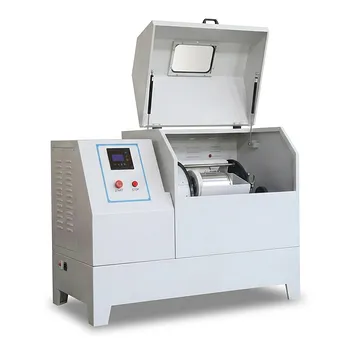
Heavy Duty Horizontal Planetary Ball Mill for Efficient Industrial Grinding and Sample Preparation
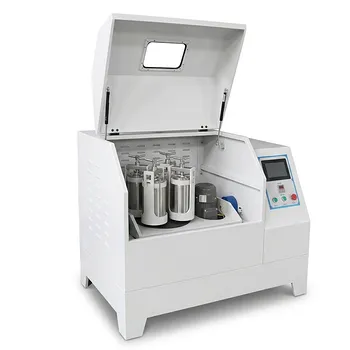
360° Rotating Omnidirectional Laboratory Planetary Ball Mill for Homogeneous Ultra-Fine Grinding and Mixing

Vertical Square Planetary Ball Mill for Laboratory Sample Preparation and Nanoscale Grinding

Miniature Planetary Ball Mill with Vacuum Grinding and High Efficiency for Laboratory Sample Preparation

High Energy Laboratory Planetary Ball Mill for Nano Grinding and Material Science Sample Preparation

High Energy Omnidirectional Planetary Ball Mill 16L
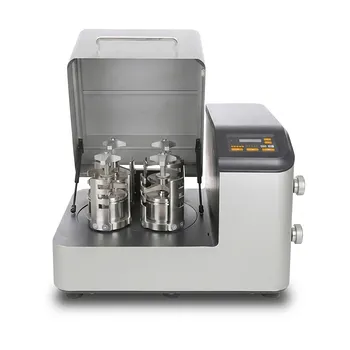
High Energy Planetary Ball Mill for Nano Scale Grinding and Colloidal Mixing in Material Science Research
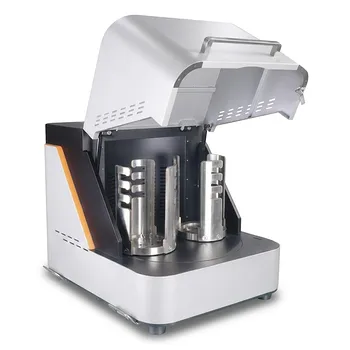
High Energy Laboratory Planetary Ball Mill for Nano Grinding and Colloidal Mixing of Hard and Brittle Materials

High Energy Omnidirectional Planetary Ball Mill 20L
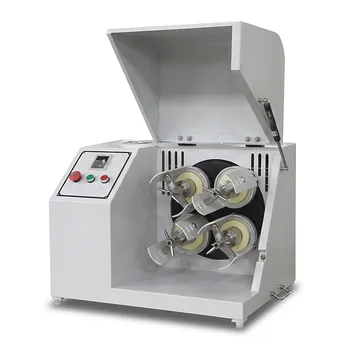
Horizontal Light Duty Planetary Ball Mill for Laboratory Sample Preparation
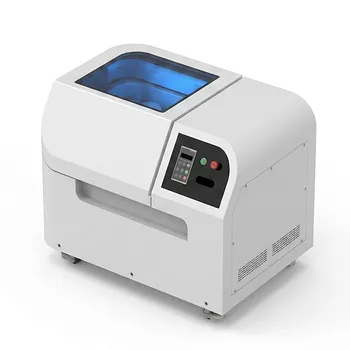
8L Planetary Ball Mill for Laboratory Grinding and Sample Preparation
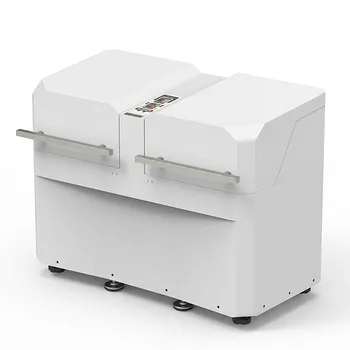
Dual Station Planetary Ball Mill 24L
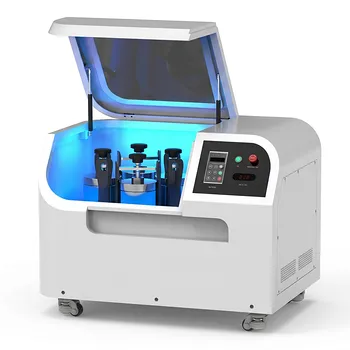
Planetary Ball Mill 12L

Nano High Energy Vibratory Ball Mill for Laboratory Sample Preparation

Multi-Platform Nanoscale High-Energy Vibratory Ball Mill
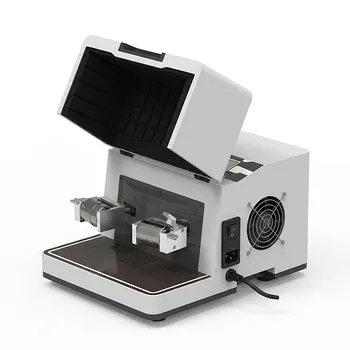
High Energy Hybrid Vibratory Ball Mill for Grinding Mixing and Cell Disruption