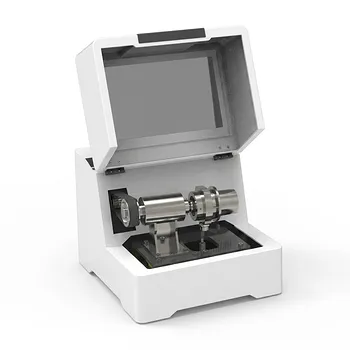
How does a planetary ball mill contribute to the nanostructuring of ZrNiSn? Boost ZT with High-Energy Milling
Updated 4 months ago
Planetary ball milling serves as the fundamental mechanical driver for the nanostructuring of ZrNiSn thermoelectric materials. It utilizes high-energy collisions and intense shear forces generated by high-speed rotation to rapidly refine bulk powder grain sizes to the nanometer scale. This structural transformation is critical for introducing a high density of grain boundaries and defects, which are essential for optimizing thermoelectric performance.
The planetary ball mill enables nanostructuring by inducing severe plastic deformation and particle fracture, creating a "phonon glass" environment. This process significantly reduces lattice thermal conductivity by scattering heat-carrying phonons while maintaining the electrical pathways necessary for a high thermoelectric figure of merit (ZT).
Mechanisms of Mechanical Refinement
High-Energy Impact and Shear Forces
The planetary ball mill operates by rotating a grinding jar while it simultaneously revolves around a central axis. This dual-rotation generates powerful centrifugal forces that drive grinding balls to deliver high-energy impacts and shear against the ZrNiSn powder.
Particle Fracture and Plastic Deformation
The mechanical energy from these collisions breaks the chemical bonds of large-sized bulk materials. This induces constant particle fracture and plastic deformation, which serves as the physical catalyst for transforming materials from the micrometer to the nanometer scale.
Rapid Grain Size Refinement
Through sustained milling, the internal crystalline structure of the ZrNiSn is progressively refined. This process can reduce particles to sub-micron levels or even specific nanometer ranges (often below 15 nm) within a matter of hours.
Impact on Thermoelectric Properties
Phonon Scattering via Grain Boundaries
Nanostructuring significantly increases the volume of grain boundaries within the ZrNiSn matrix. These boundaries act as obstacles that scatter phonons—the primary carriers of heat in semiconductors—thereby drastically reducing the lattice thermal conductivity.
Introduction of Structural Defects
The intense mechanical action introduces a large number of dislocations and structural defects into the powder. These features provide additional scattering centers for phonons across a broad spectrum of wavelengths, further enhancing the material's thermal resistance.
Improvement of the Figure of Merit (ZT)
By selectively hindering heat flow (phonons) without severely disrupting charge carrier flow (electrons), nanostructuring optimizes the power factor. This refinement is a critical step in enhancing the overall thermoelectric figure of merit (ZT) for ZrNiSn-based compounds.
Secondary Benefits of High-Energy Milling
Uniform Mixing and Doping
Planetary ball milling ensures the uniform distribution of dopants and additives at the microscopic scale. This is particularly vital for ZrNiSn materials that require precise alloying to achieve high-performance electronic properties.
Enhanced Chemical Reactivity
The process significantly increases the specific surface area of the powder, which raises its chemical reactivity. This heightened activity facilitates faster atomic diffusion during the subsequent sintering stage, leading to more stable and dense final structures.
Suppression of Secondary Phases
The high-precision mixing and mechanical activation help suppress the formation of undesirable secondary phases. This ensures the synthesis of a pure, stable phase, which is essential for consistent thermoelectric behavior.
Understanding the Trade-offs and Challenges
Potential for Material Contamination
The high-energy environment can lead to wear and tear of the grinding media (balls and jars). If stainless steel or specialized ceramic tools are used, small amounts of these materials can leach into the ZrNiSn powder, potentially altering its electronic properties.
Oxidation Risks
Because the milling process drastically increases the surface area and reactivity of the powder, the material becomes highly susceptible to oxidation. Exposure to air during or after milling can introduce oxygen impurities that degrade thermoelectric efficiency.
Energy and Time Intensity
Achieving a true nanometer scale requires extended processing times and significant energy input. Balancing the milling duration is necessary to prevent excessive grain growth from frictional heat or the introduction of too much structural strain.
Optimizing the Process for Your Project
How to Apply This to Your Material Synthesis
- If your primary focus is reducing thermal conductivity: Prioritize longer milling durations and higher speeds to maximize the density of grain boundaries and structural defects.
- If your primary focus is maintaining material purity: Utilize grinding jars and balls made of the same material as your powder (if possible) or high-density zirconia to minimize contamination.
- If your primary focus is preventing oxidation: Always perform the milling process under an inert atmosphere, such as high-purity Argon, and handle the resulting nanopowders in a glove box.
Strategic nanostructuring via planetary ball milling is the most effective way to decouple thermal and electrical conductivity in ZrNiSn, paving the way for high-efficiency thermoelectric devices.
Summary Table:
| Feature | Mechanism in Nanostructuring | Benefit to ZrNiSn Thermoelectrics |
|---|---|---|
| Mechanical Refinement | High-energy impact and shear forces | Rapidly reduces grain size to <15 nm |
| Phonon Scattering | Increased density of grain boundaries | Drastically lowers lattice thermal conductivity |
| Structural Defects | Induction of dislocations/strain | Creates additional scattering centers for heat |
| Material Uniformity | Microscopic mixing and doping | Ensures pure phase and consistent ZT performance |
Elevate Your Material Research with Precision Powder Solutions
Achieving the perfect nanostructure in thermoelectric materials like ZrNiSn requires high-performance equipment that balances energy intensity with material purity. At [Brand Name], we provide complete laboratory sample preparation solutions tailored for material science.
Whether you are refining grains or compacting final pellets, our extensive product line supports every stage of your workflow:
- Powder Processing: High-energy planetary ball mills, jet mills, disc mills, and cryogenic grinders.
- Size Control: Vibratory and air-jet sieve shakers with precision test sieves.
- Mixing: Advanced powder and vacuum defoaming mixers for uniform doping.
- Compaction & Sintering: A full spectrum of hydraulic presses, including Cold/Warm Isostatic Presses (CIP/WIP), XRF pellet presses, and vacuum hot presses.
Ready to optimize your ZT values? Contact our experts today to find the ideal equipment for your specific material challenges.
References
- José Luis Garrido-Álvarez, Cristina Echevarria-Bonet. Synergistic effects of Sb doping and nanostructuring on spark plasma-sintered ZrNiSn thermoelectrics. DOI: 10.1039/d5ma01100k
Mentioned Products
- Vertical Semi Circular Planetary Ball Mill for Laboratory Precision Grinding
- High Energy Planetary Ball Mill for Nano Scale Grinding and Mechanical Alloying
- Vertical Production Planetary Ball Mill for High Throughput Powder Processing
- Heavy Duty Horizontal Planetary Ball Mill for Efficient Industrial Grinding and Sample Preparation
- 360° Rotating Omnidirectional Laboratory Planetary Ball Mill for Homogeneous Ultra-Fine Grinding and Mixing
People Also Ask
- What role does a planetary ball mill play in the synthesis of Li6PS5Cl (LPSCl)? Unlock High Ionic Conductivity
- Why is a planetary ball mill essential for SiBCN-rGO wet-spinning? Achieve Superior Dispersion and Spinnability
- Why is an intermittent grinding process required for perovskites in a planetary ball mill? Ensure Stability & Purity
- Why is a planetary ball mill required for PET micronization? Ensure Accurate Chemical Analysis of Reprocessed PET
- How does mechanized planetary ball milling compare to manual agate grinding? Optimize sulfide standard material precision.

Tech Team · PowderPreparation
Last updated on Jun 03, 2026
Related Products

Vertical Semi Circular Planetary Ball Mill for Laboratory Precision Grinding

High Energy Planetary Ball Mill for Nano Scale Grinding and Mechanical Alloying

Vertical Production Planetary Ball Mill for High Throughput Powder Processing
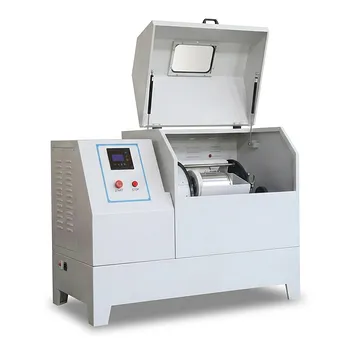
Heavy Duty Horizontal Planetary Ball Mill for Efficient Industrial Grinding and Sample Preparation
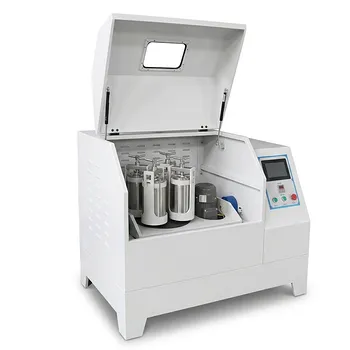
360° Rotating Omnidirectional Laboratory Planetary Ball Mill for Homogeneous Ultra-Fine Grinding and Mixing
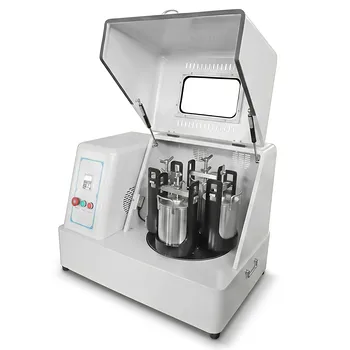
Vertical Square Planetary Ball Mill for Laboratory Sample Preparation and Nanoscale Grinding
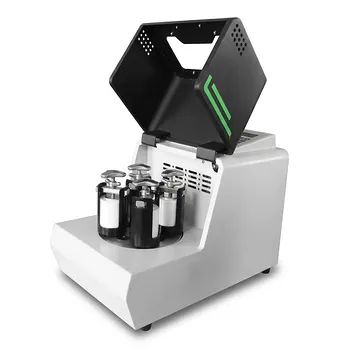
Miniature Planetary Ball Mill with Vacuum Grinding and High Efficiency for Laboratory Sample Preparation
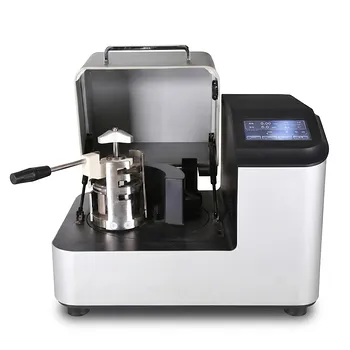
High Energy Laboratory Planetary Ball Mill for Nano Grinding and Material Science Sample Preparation

High Energy Omnidirectional Planetary Ball Mill 16L
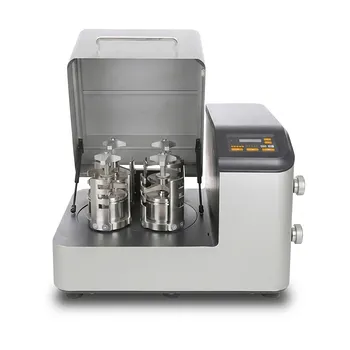
High Energy Planetary Ball Mill for Nano Scale Grinding and Colloidal Mixing in Material Science Research
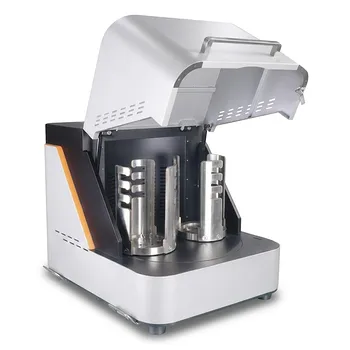
High Energy Laboratory Planetary Ball Mill for Nano Grinding and Colloidal Mixing of Hard and Brittle Materials
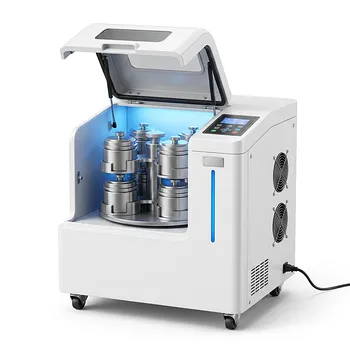
High Energy Omnidirectional Planetary Ball Mill 20L
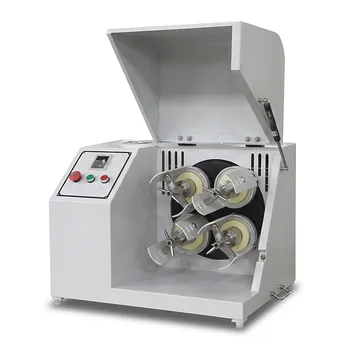
Horizontal Light Duty Planetary Ball Mill for Laboratory Sample Preparation

8L Planetary Ball Mill for Laboratory Grinding and Sample Preparation
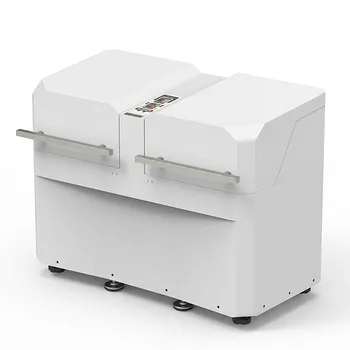
Dual Station Planetary Ball Mill 24L
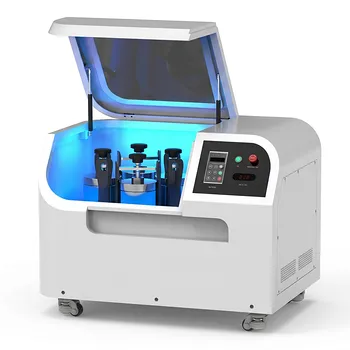
Planetary Ball Mill 12L

Nano High Energy Vibratory Ball Mill for Laboratory Sample Preparation

Multi-Platform Nanoscale High-Energy Vibratory Ball Mill

High Energy Hybrid Vibratory Ball Mill for Grinding Mixing and Cell Disruption