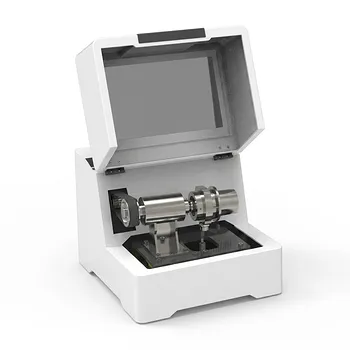
How does a planetary ball mill contribute to the mechanical activation process of halloysite-rich kaolin? Boost Reactivity
Updated 4 months ago
A planetary ball mill acts as the primary engine for mechanochemical activation by converting high-speed rotational energy into intense physical stress. This process pulverizes halloysite nanotubes, shortens their length, and induces amorphization of the mineral's crystal lattice. By increasing surface defects and porosity, the mill transforms inert halloysite-rich kaolin into a highly reactive material with significantly enhanced adsorption and chemical capabilities.
Core Takeaway: The planetary ball mill utilizes high-energy shear and impact forces to physically deconstruct halloysite nanotubes and chemically disrupt their crystalline structure. This dual-action process maximizes the specific surface area and exposes active sites, which are essential for applications ranging from CO2 adsorption to nutrient release.
Physical Deconstruction of Halloysite Nanostructures
Depolymerization and Pulverization
The mill utilizes high-speed rotation to generate powerful centrifugal, impact, and shear forces. These forces act directly on the halloysite nanotubes (HNTs), leading to their depolymerization and pulverization.
Morphological Alteration
As the process continues, the characteristic tubular structures of the halloysite are significantly shortened. The mechanical stress can also cause partial exfoliation or flattening of the mineral, transitioning it from a tube-like state to a more fragmented or sheet-like morphology.
Particle Size Reduction
The intensive energy input achieves ultra-fine grinding, often reducing material particles to the micron level. This reduction is critical for breaking down nanotube aggregates, ensuring the powder is uniform and easier to process in subsequent chemical modifications.
Mechanochemical and Structural Transformation
Crystal Lattice Disruption
Beyond simple physical size reduction, the planetary ball mill induces mechanochemical activation. This involves breaking the internal crystal lattice of the mineral, leading to a state of amorphization where the ordered structure becomes disordered.
Chemical Bond Manipulation
The high-frequency collisions provide enough energy to disrupt specific chemical bonds, such as O-H bonds. In some cases, this leads to local dehydroxylation, transforming the clay from a chemically inert state into a highly reactive pozzolanic material.
Molecular Level Mixing
In composite applications, the mill ensures that halloysite-rich kaolin and other additives are thoroughly mixed at a molecular level. This creates a foundation for a uniform microstructure during future thermal treatments or sintering processes.
Maximizing Surface Energy and Reactivity
Increasing Specific Surface Area
One of the most measurable impacts of the planetary ball mill is the dramatic increase in effective specific surface area. By refining the pore size and breaking down smooth layered structures, the mill creates more "available" material for chemical reactions.
Exposure of Active Sites
Mechanical activation significantly increases surface defects and porosity. This physical change exposes a much higher number of active sites, which serve as the foundation for improved adsorption efficiency for molecules like CO2 or Vitamin D3.
Enhancement of Chemical Reactivity
The cumulative effect of lattice distortion and increased surface energy is a substantial boost in chemical reactivity. This is particularly vital in environmental applications, where it facilitates the release of trapped nutrients (like potassium) or enhances the material's ability to bond within cement systems.
Understanding the Trade-offs
Loss of Specific Morphology
While the goal is often activation, excessive milling can lead to the complete destruction of the halloysite’s tubular structure. If the specific "nanotube" shape is required for a project (such as for nanocontainers), over-processing will negate the mineral's unique geometric advantages.
Energy Consumption and Heat
Planetary ball mills are energy-intensive pieces of equipment. Additionally, the high-energy impacts generate significant internal heat, which may cause unintended phase transitions or premature dehydroxylation if not carefully monitored through milling intervals.
Media Contamination
Extended milling durations increase the risk of contamination from the grinding media (balls) or the vial itself. This can introduce impurities into the halloysite-rich kaolin, potentially altering its chemical purity and performance in sensitive catalyst or medical applications.
How to Apply This to Your Project
Recommendations for Implementation
- If your primary focus is gas adsorption (CO2): Prioritize high-speed milling to maximize surface defects and porosity, as these sites are critical for capturing gas molecules.
- If your primary focus is carrier functionality (Nanocontainers): Use shorter milling durations or lower speeds to ensure the tubular structure is activated but not entirely pulverized.
- If your primary focus is chemical reactivity (Cement/Soil): Target the amorphization phase by extending milling time until the crystal lattice is sufficiently disrupted to allow for nutrient or ion release.
- If your primary focus is composite uniformity: Utilize the mill for molecular-level mixing to ensure that kaolin and secondary minerals are perfectly integrated before sintering.
By precisely controlling the energy input of the planetary ball mill, you can tailor the reactivity of halloysite-rich kaolin to meet the specific demands of your technical application.
Summary Table:
| Activation Stage | Mechanical Process | Structural Impact | Key Outcome |
|---|---|---|---|
| Physical | High-energy shear & impact | Deconstruction of nanotubes | Particle size reduction & exfoliation |
| Mechanochemical | Rotational centrifugal force | Crystal lattice amorphization | Disruption of O-H bonds & dehydroxylation |
| Surface-Level | Intensive ultra-fine grinding | Increased porosity & defects | Maximized surface area & active site exposure |
Elevate Your Material Research with Precision Powder Solutions
Unlock the full potential of your materials with our comprehensive laboratory sample preparation equipment. At [Company Name], we specialize in providing high-performance solutions for material science, focusing on advanced powder processing and compaction.
Whether you need to achieve the perfect mechanical activation of halloysite-rich kaolin or require uniform microstructure for advanced composites, our extensive product line is designed to meet your rigorous standards:
- Advanced Milling: Planetary ball mills, jet mills, and cryogenic grinders for ultra-fine particle reduction.
- Sizing & Mixing: Vibratory/air-jet sieve shakers and high-efficiency powder/defoaming mixers.
- Precision Compaction: A full spectrum of hydraulic presses, including Cold/Warm Isostatic Presses (CIP/WIP), vacuum hot presses, and XRF pellet presses.
Ready to optimize your laboratory workflow? Contact our experts today to discover the perfect equipment for your specific application.
References
- Siavash Davoodi, Ravi Naidu. Carbon Capture Efficiency of Mechanically Activated Australian Halloysite-Rich Kaolin with Varying Iron Impurities and Its Potential Reuse for Removing Dyes from Water. DOI: 10.3390/min15040399
Mentioned Products
- Vertical Semi Circular Planetary Ball Mill for Laboratory Precision Grinding
- High Energy Planetary Ball Mill for Nano Scale Grinding and Mechanical Alloying
- Vertical Production Planetary Ball Mill for High Throughput Powder Processing
- Heavy Duty Horizontal Planetary Ball Mill for Efficient Industrial Grinding and Sample Preparation
- 360° Rotating Omnidirectional Laboratory Planetary Ball Mill for Homogeneous Ultra-Fine Grinding and Mixing
People Also Ask
- What role does a planetary ball mill play in the synthesis of Li6PS5Cl (LPSCl)? Unlock High Ionic Conductivity
- Why is a planetary ball mill essential for SiBCN-rGO wet-spinning? Achieve Superior Dispersion and Spinnability
- Why is an intermittent grinding process required for perovskites in a planetary ball mill? Ensure Stability & Purity
- Why is a planetary ball mill required for PET micronization? Ensure Accurate Chemical Analysis of Reprocessed PET
- How does mechanized planetary ball milling compare to manual agate grinding? Optimize sulfide standard material precision.

Tech Team · PowderPreparation
Last updated on Jun 03, 2026
Related Products
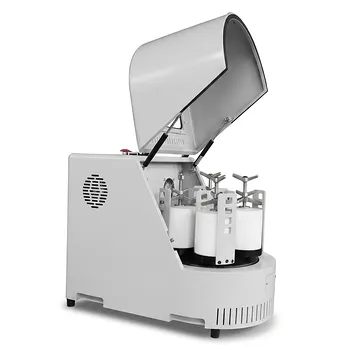
Vertical Semi Circular Planetary Ball Mill for Laboratory Precision Grinding

High Energy Planetary Ball Mill for Nano Scale Grinding and Mechanical Alloying
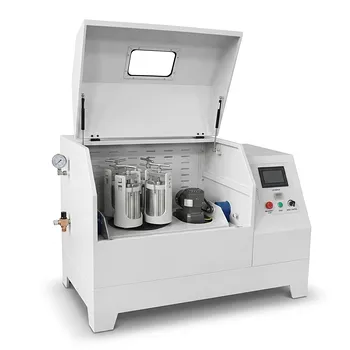
Vertical Production Planetary Ball Mill for High Throughput Powder Processing
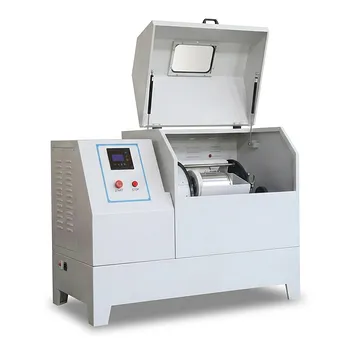
Heavy Duty Horizontal Planetary Ball Mill for Efficient Industrial Grinding and Sample Preparation
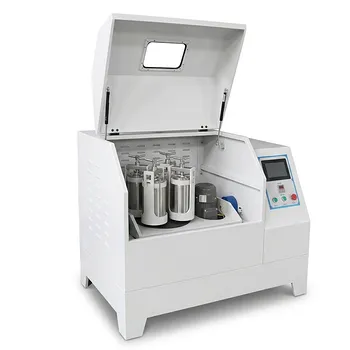
360° Rotating Omnidirectional Laboratory Planetary Ball Mill for Homogeneous Ultra-Fine Grinding and Mixing
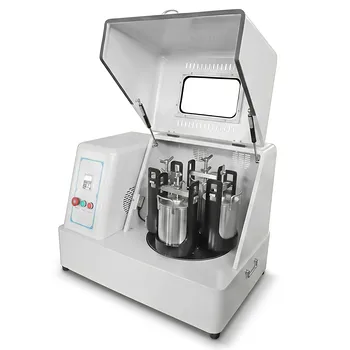
Vertical Square Planetary Ball Mill for Laboratory Sample Preparation and Nanoscale Grinding

Miniature Planetary Ball Mill with Vacuum Grinding and High Efficiency for Laboratory Sample Preparation

High Energy Laboratory Planetary Ball Mill for Nano Grinding and Material Science Sample Preparation
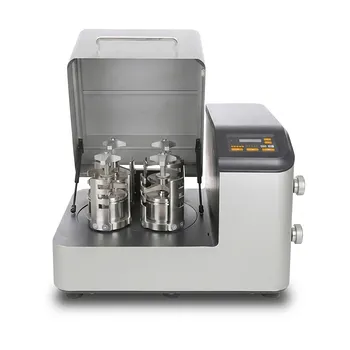
High Energy Planetary Ball Mill for Nano Scale Grinding and Colloidal Mixing in Material Science Research
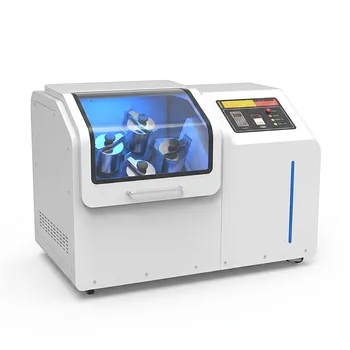
High Energy Omnidirectional Planetary Ball Mill 16L

High Energy Laboratory Planetary Ball Mill for Nano Grinding and Colloidal Mixing of Hard and Brittle Materials
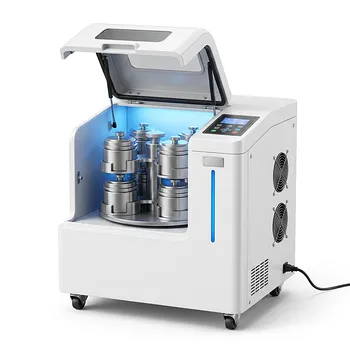
High Energy Omnidirectional Planetary Ball Mill 20L
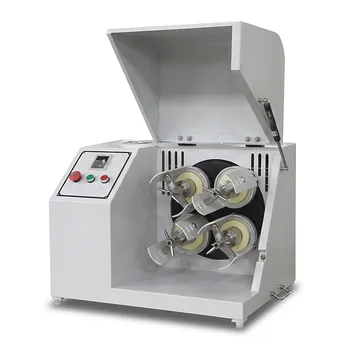
Horizontal Light Duty Planetary Ball Mill for Laboratory Sample Preparation

8L Planetary Ball Mill for Laboratory Grinding and Sample Preparation

Dual Station Planetary Ball Mill 24L
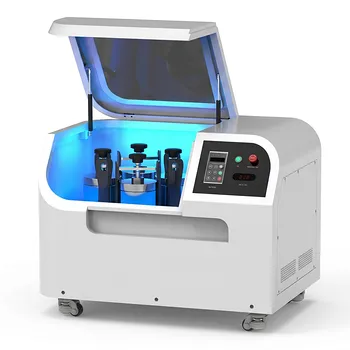
Planetary Ball Mill 12L

Nano High Energy Vibratory Ball Mill for Laboratory Sample Preparation

Multi-Platform Nanoscale High-Energy Vibratory Ball Mill

High Energy Hybrid Vibratory Ball Mill for Grinding Mixing and Cell Disruption