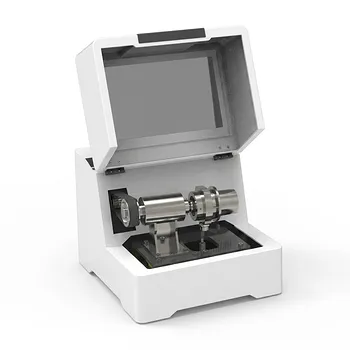
How does a planetary ball mill disperse CNTs in aluminum? Master High-Energy Mixing for Advanced Nanocomposites
Updated 5 months ago
The planetary ball mill overcomes carbon nanotube (CNT) agglomeration through high-energy mechanical forces that physically decouple clusters. By utilizing the synchronized revolution and rotation of the milling jars, the equipment generates intense impact and shear forces that break down the Van der Waals forces holding CNTs together. This process facilitates the mechanical anchoring and uniform distribution of the nanotubes within the aluminum matrix, preventing structural defects in the final composite.
The core takeaway is that a planetary ball mill acts as a high-energy mechanical processor that uses a cycle of cold welding and fragmentation to embed CNTs into aluminum powder. This ensures a truly isotropic dispersion that cannot be achieved through simple mixing.
The Mechanics of Agglomeration Breakup
Overcoming Van der Waals Forces
Carbon nanotubes naturally exist as tangled "bundles" or clusters due to strong Van der Waals forces. The planetary ball mill provides the specific energy levels—often operating at speeds like 300 rpm—required to pull these bundles apart.
The Role of Revolution and Rotation
The dual-action movement of the planetary mill creates a multidirectional force field. This ensures that the aluminum powder and CNTs are subjected to high-frequency impacts from the grinding media, ensuring no "dead zones" remain in the mixture.
Shear Force and Fragmentation
Beyond direct impact, the shear forces generated during the milling process are critical for sliding nanotubes away from one another. This mechanical action effectively shortens the nanotubes where necessary and increases their specific surface area, preparing them for better bonding with the aluminum.
The Process of Mechanical Alloying
Repeated Cold Welding and Deformation
As the aluminum powder is struck by the grinding balls, it undergoes significant plastic deformation. The CNTs are trapped between colliding particles, leading to a process where the aluminum flakes are cold welded back together, sealing the nanotubes inside the metal.
Achieving Deep Compositing
Through continuous cycles of fracturing and welding, the reinforcement phase is moved from the surface of the aluminum to its interior grains. This "deep compositing" is what allows the final material to maintain high-performance interconnected network structures.
Particle Size and Grain Refinement
The high-energy environment does more than just disperse the CNTs; it actively refines the grain size of the aluminum powder. Smaller grain sizes provide a larger total surface area for the CNTs to inhabit, which is a foundation for achieving superior mechanical properties.
Understanding the Trade-offs
The Risk of Structural Damage
While high-energy milling is necessary for dispersion, excessive milling duration or intensity can lead to structural defects in the carbon nanotubes themselves. If the nanotubes are fractured too severely, their aspect ratio decreases, which can diminish the tensile strength and electrical conductivity of the composite.
Heat Generation and Material Oxidation
The intense mechanical energy converted during milling often results in a significant temperature rise within the jars. If not managed with process control agents or cooling cycles, this heat can promote oxidation of the aluminum powder or cause unwanted chemical reactions at the CNT-Al interface.
Optimization of Milling Duration
Finding the "sweet spot" is the primary challenge for engineers. Insufficient milling leaves CNT clusters intact, creating weak points in the composite, while over-milling destroys the very reinforcement phase you are trying to integrate.
How to Apply This to Your Project
When utilizing a planetary ball mill for aluminum-based nanocomposites, your parameters must align with your desired material performance.
- If your primary focus is maximum tensile strength: Prioritize a longer milling duration to ensure deep embedding and grain refinement, even if it slightly reduces the CNT aspect ratio.
- If your primary focus is electrical or thermal conductivity: Use a lower energy setting or shorter duration to maintain the structural integrity and length of the nanotubes while achieving "just enough" dispersion.
- If your primary focus is preventing oxidation: Conduct the milling process in an inert gas atmosphere (such as Argon) and use a process control agent (PCA) like stearic acid to manage the cold-welding rate.
By precisely controlling the mechanical energy of the planetary mill, you can transform a heterogeneous mixture into a high-performance, isotropic nanocomposite.
Summary Table:
| Milling Mechanism | Action on Materials | Key Benefit for Nanocomposites |
|---|---|---|
| Impact & Shear Forces | Breaks Van der Waals forces | Decouples CNT clusters and bundles |
| Cold Welding | Traps CNTs between Al particles | Ensures deep embedding and isotropic dispersion |
| Plastic Deformation | Flattens and fragments powder | Refines grain size for higher tensile strength |
| Atmosphere Control | Uses inert gas (Argon) | Prevents oxidation and unwanted chemical reactions |
Elevate Your Material Research with Precision Powder Solutions
Achieving the perfect dispersion of carbon nanotubes requires more than just high energy—it demands precision and reliability. At [Company Name], we provide complete laboratory sample preparation solutions for material science, specializing in the equipment you need to bridge the gap between theory and high-performance composites.
From our high-energy planetary ball mills, jet mills, and rotor mills designed for uniform dispersion, to our full spectrum of hydraulic presses—including Cold/Warm Isostatic Presses (CIP/WIP), vacuum hot presses, and XRF pellet presses—we empower your lab to produce superior nanocomposites. Whether you are crushing raw materials with our jaw crushers or achieving final refinement with vibratory sieve shakers, our equipment ensures structural integrity and process repeatability.
Ready to optimize your Al-CNT composite workflow? Contact our technical experts today to find the ideal milling and compaction configuration for your specific application.
References
- P. Sarma, Anil Borah. Solid Lubricants in Sustainable Manufacturing: A Review of Processing Techniques, Materials and Applications. DOI: 10.15282/ijame.22.4.2025.1.0978
Mentioned Products
- Vertical Semi Circular Planetary Ball Mill for Laboratory Precision Grinding
- High Energy Planetary Ball Mill for Nano Scale Grinding and Mechanical Alloying
- Vertical Production Planetary Ball Mill for High Throughput Powder Processing
- Heavy Duty Horizontal Planetary Ball Mill for Efficient Industrial Grinding and Sample Preparation
- 360° Rotating Omnidirectional Laboratory Planetary Ball Mill for Homogeneous Ultra-Fine Grinding and Mixing
People Also Ask
- What role does a planetary ball mill play in the synthesis of Li6PS5Cl (LPSCl)? Unlock High Ionic Conductivity
- Why is a planetary ball mill essential for SiBCN-rGO wet-spinning? Achieve Superior Dispersion and Spinnability
- Why is an intermittent grinding process required for perovskites in a planetary ball mill? Ensure Stability & Purity
- Why is a planetary ball mill required for PET micronization? Ensure Accurate Chemical Analysis of Reprocessed PET
- How does mechanized planetary ball milling compare to manual agate grinding? Optimize sulfide standard material precision.

Tech Team · PowderPreparation
Last updated on May 14, 2026
Related Products
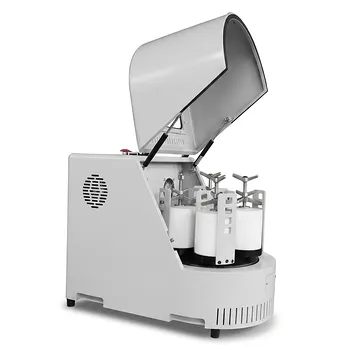
Vertical Semi Circular Planetary Ball Mill for Laboratory Precision Grinding

High Energy Planetary Ball Mill for Nano Scale Grinding and Mechanical Alloying

Vertical Production Planetary Ball Mill for High Throughput Powder Processing

Heavy Duty Horizontal Planetary Ball Mill for Efficient Industrial Grinding and Sample Preparation
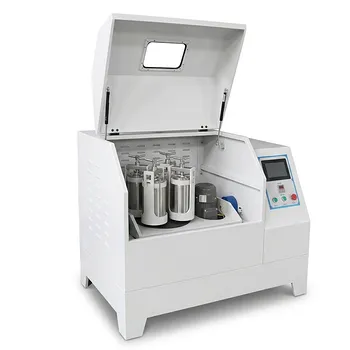
360° Rotating Omnidirectional Laboratory Planetary Ball Mill for Homogeneous Ultra-Fine Grinding and Mixing

Vertical Square Planetary Ball Mill for Laboratory Sample Preparation and Nanoscale Grinding

Miniature Planetary Ball Mill with Vacuum Grinding and High Efficiency for Laboratory Sample Preparation

High Energy Laboratory Planetary Ball Mill for Nano Grinding and Material Science Sample Preparation

High Energy Omnidirectional Planetary Ball Mill 16L
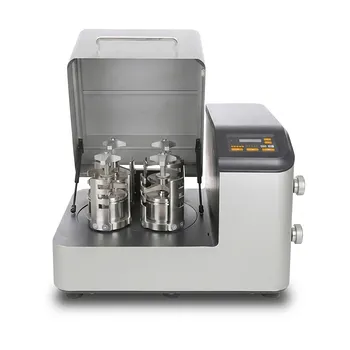
High Energy Planetary Ball Mill for Nano Scale Grinding and Colloidal Mixing in Material Science Research
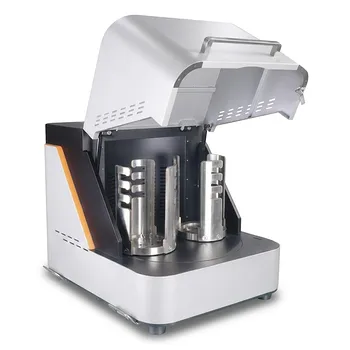
High Energy Laboratory Planetary Ball Mill for Nano Grinding and Colloidal Mixing of Hard and Brittle Materials
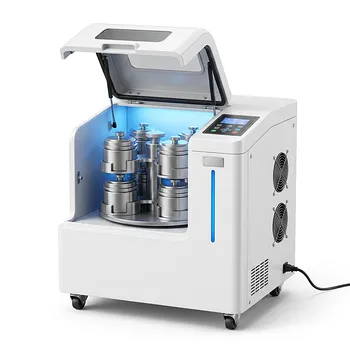
High Energy Omnidirectional Planetary Ball Mill 20L
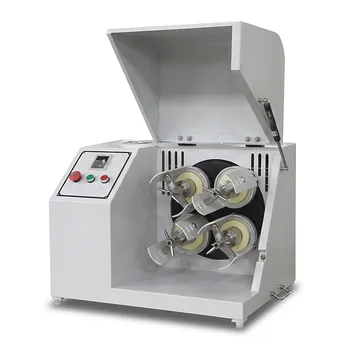
Horizontal Light Duty Planetary Ball Mill for Laboratory Sample Preparation

8L Planetary Ball Mill for Laboratory Grinding and Sample Preparation
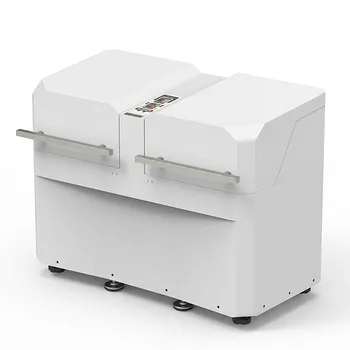
Dual Station Planetary Ball Mill 24L
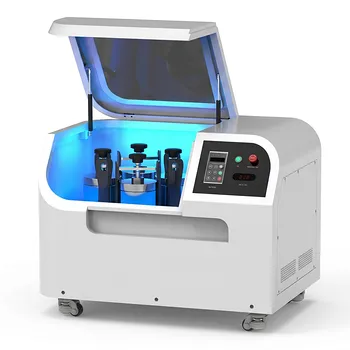
Planetary Ball Mill 12L

Nano High Energy Vibratory Ball Mill for Laboratory Sample Preparation

Multi-Platform Nanoscale High-Energy Vibratory Ball Mill

High Energy Hybrid Vibratory Ball Mill for Grinding Mixing and Cell Disruption